# RWA Related Articles

HTX News Center provides the latest articles and in-depth analysis on "RWA", covering market trends, project updates, tech developments, and regulatory policies in the crypto industry.

2026 Survival Guide for Non-Institutional Participants Under Hong Kong's Stablecoin Compliance Framework

"Hong Kong's 2026 stablecoin regulatory framework fundamentally redefines the compliance status of stablecoins for non-institutional participants. The HKMA now treats fiat-referenced stablecoins (FRS) as systemic payment tools, not just commodities. While holding offshore stablecoins like USDT is not illegal, their use within Hong Kong's licensed financial ecosystem (banks, VATPs) faces significant 'compliance friction' and 'asset isolation risk' due to stringent due diligence and travel rule requirements. The core shift is from global utility to onshore settlement safety. Licensed platforms act as risk filters, often suspending deposits from non-KYC'd wallets or those with tainted transaction histories. Banks rigorously scrutinize the Source of Funds (SOF) and Source of Wealth (SOW), leading to account restrictions for funds from unregulated channels. The upcoming FRS' licensed stablecoins offer a 'white list' alternative with legal protections: bankruptcy-remote reserves, a legal claim for holders, and guaranteed 1:1 redemption. This creates a secure, HKD-aligned digital payment medium, safeguarding against systemic risks like those seen with Terra/Luna or FTX. The government's goal is to prevent uncontrolled 'digital quasi-currencies' from eroding the Hong Kong dollar's status and to build a foundation for Real-World Asset (RWA) tokenization. The guidance for users is clear: segregate offshore speculative assets from onshore settlement assets, exclusively use licensed channels for fiat conversions, and understand that compliance is the key to security in the new digital finance order."

marsbit01/16 11:32

2026 Survival Guide for Non-Institutional Participants Under Hong Kong's Stablecoin Compliance Framework

marsbit01/16 11:32

Encrypted 'Fat Protocols': Key Players in 10 Core Profit Areas

This article, originally titled "Fat Protocols: Key Players in 10 Core Profitability Areas," argues that the original "fat protocol" thesis, where value disproportionately accrues to the base blockchain layer, is outdated. By 2026, value will instead flow to "control points"—entities that capture fees regardless of which chain or application wins. These include interfaces controlling user intent, trading venues internalizing liquidity, issuers with strong balance sheets, and protocols tokenizing inefficient assets. The summary ranks the top 10 "fat" layers based on revenue, users, ARPU, and market dominance: 1. **Fat Wallets (e.g., Phantom):** Dominant on the intent layer, evolving into active financial venues with significant revenue from swaps and perpetual trading. 2. **Fat Blockchains (e.g., Ethereum):** Remains the core settlement layer for high-value transactions and MEV, with strong defensive moats. 3. **Fat Perp DEX (e.g., Hyperliquid):** The most profitable trading format, with Hyperliquid monopolizing the market by integrating liquidity and execution on a dedicated chain. 4. **Fat Lending (e.g., Aave):** The leading DeFi lending platform, characterized by scale, resilience, and steady institutional capital. 5. **Fat RWA Protocols (e.g., BlackRock BUIDL):** Growth is driven by scale and trust, bridging TradFi and on-chain finance with tokenized assets like U.S. Treasuries. 6. **Fat LRT/Restaking (e.g., EigenLayer):** Profits by renting Ethereum's security to Active Validation Services (AVS) and expanding into off-chain compute. 7. **Fat Aggregators (e.g., Jupiter):** Capture value by controlling routing, pricing, and execution quality on DEX trades. 8. **Fat Stablecoin Issuers (e.g., Tether):** Extremely profitable by earning yield on treasury holdings backing the stablecoin supply. 9. **Fat Prediction Markets (e.g., Polymarket):** Profit from attention and event-driven trading, creating a highly profitable layer with strong narrative power. 10. **Fat MEV (e.g., Flashbots):** MEV is an invisible tax on block space, with entities like Flashbots institutionalizing its extraction and redistribution. The key takeaway is that value accumulation has shifted from the base protocol to specific, high-control business models and infrastructure layers across the crypto ecosystem.

marsbit01/16 09:45

Encrypted 'Fat Protocols': Key Players in 10 Core Profit Areas

marsbit01/16 09:45

Farewell to 'Storytelling' for Funding: What Kind of Projects Can Survive Beyond 2026

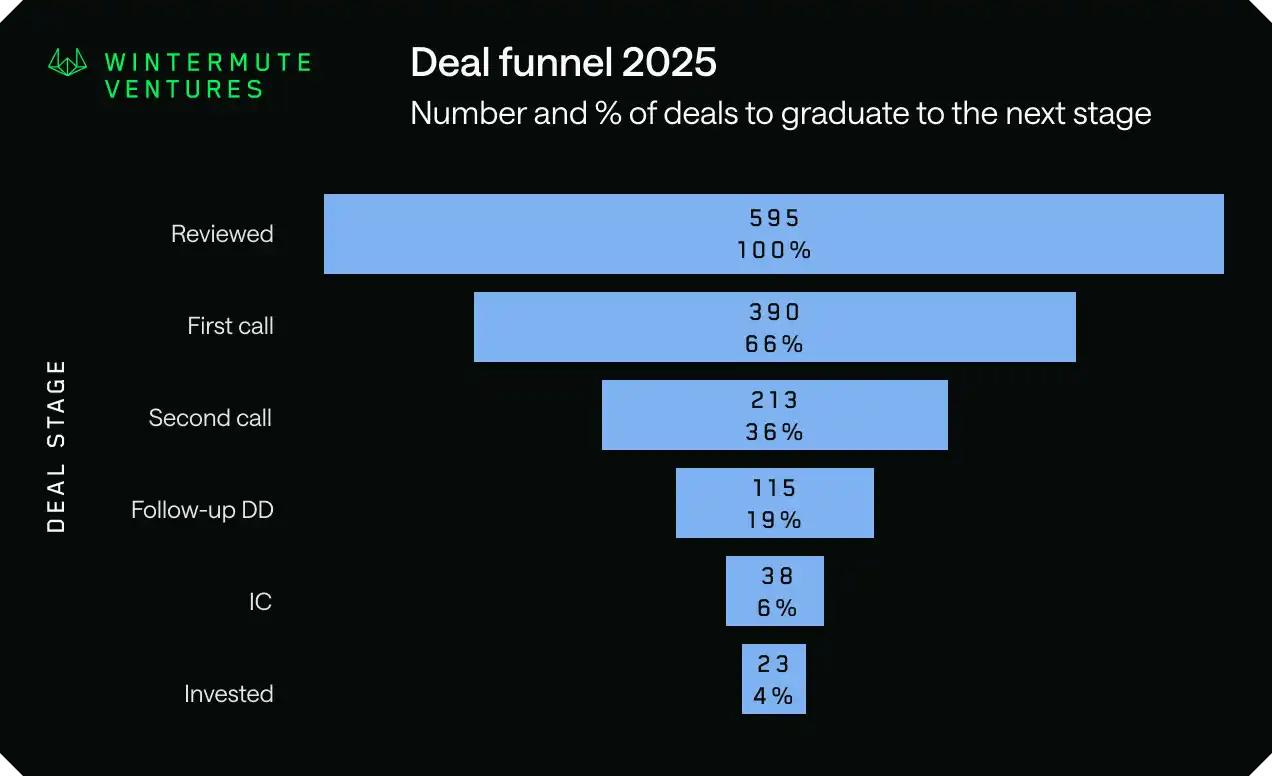
Title: Beyond Storytelling: What Projects Will Survive Beyond 2026 The venture capital landscape in crypto has fundamentally shifted. In 2025, top market maker and investor Wintermute Ventures approved only 4% of the 600 projects it reviewed. This reflects a broader trend: total crypto VC deals plummeted 60% from 2024, with capital concentrating heavily in later-stage rounds (56% of total funding). The driver is a radical change in market structure. Institutional capital now dominates (75% of liquidity), but it is largely trapped in major assets like BTC and ETH. The altcoin narrative cycle collapsed from 61 days to just 19-20 days, leaving little time for money to flow to smaller projects. The traditional four-year bull cycle is broken; a 2026 recovery requires a major catalyst. Consequently, VC investment logic has moved from "spray and pray" to a survival-of-the-fittest model. Funding now targets projects that can prove viability from the seed stage. Key requirements for survival include: 1. **Hard Proof of Product-Market Fit:** Real data points are mandatory, such as 1,000+ active users or $100k+ in monthly revenue, with a DAU/MAU ratio above 50%. 2. **Capital Efficiency & Default Alive Status:** Startups must achieve "default alive" status, with monthly burn not exceeding 30% of revenue. Large, cash-burning teams are untenable. 3. **AI Integration & Technical Sophistication:** AI is no longer optional; it's essential for reducing development cycles and optimizing operations. Privacy tech like zero-knowledge proofs is critical for compliance, especially in RWA tokenization. 4. **Liquidity & Exchange Compatibility:** Projects must plan their exchange listing path from day one, ensuring compatibility with institutional liquidity channels like ETFs. For investors, the mandate is clear: adapt or fail. The new standard is not "how big the story can be" but "can this project prove its ability to generate revenue from seed." Investment must focus on AI-crypto fusion, compliance, and emerging markets. The era of betting on narratives is over; execution and sustainable profitability are now the only metrics that matter.

marsbit01/16 09:13

Farewell to 'Storytelling' for Funding: What Kind of Projects Can Survive Beyond 2026

marsbit01/16 09:13

When Big Money Gets Serious, RWA Liquidity Issues Come to the Fore

Liquidity is the foundation of asset confidence, but the reality for tokenized real-world assets (RWA) like gold and stocks reveals a critical structural flaw. While tokenization promises enhanced capital fluidity and DeFi integration, most tokenized assets suffer from dangerously thin liquidity, making them impractical for meaningful capital deployment. Analysis shows extreme slippage in major tokenized gold assets (PAXG, XAUT). A $4 million trade incurs nearly 150 basis points (bps) of slippage on perpetual exchanges, compared to just 3 bps for a $20 million trade in traditional CME gold futures. Spot markets for these assets offer less than $3 million in effective depth. In AMM DEXs like Uniswap, average slippage consistently ranges between 25–50 bps, with individual trades experiencing premiums as high as 68%. The problem extends to tokenized equities. A $1 million trade in tokenized Tesla (TSLAx) sees ~5% slippage, while NVIDIA (NVDAx) reaches an unworkable 80%. Traditional markets handle the same trades with ~15 bps impact. This liquidity scarcity isn't just about high transaction costs; it destabilizes the entire market structure. Thin order books are prone to manipulation and price anomalies. A 10% price swing on a centralized exchange (CEX) can trigger cascading liquidations across interconnected DeFi protocols, demonstrating how localized illiquidity amplifies systemic risk. The core issue is structural. Market makers face high friction: slow, costly minting/redemption processes (10-50 bps fees, T+1 to T+5 settlement), inability to hedge efficiently, and significant opportunity cost compared to deeper crypto markets. Current solutions (AMMs, order books) disperse rather than concentrate liquidity. For RWA to scale, a new market structure is needed—one that leverages off-chain liquidity for price discovery, eliminates redemption delays, and doesn't force market makers to hold illiquid inventory. Tokenization hasn't failed; the supporting market infrastructure has yet to be built.

Odaily星球日报01/16 04:25

When Big Money Gets Serious, RWA Liquidity Issues Come to the Fore

Odaily星球日报01/16 04:25

活动图片