# Proof-of-Stake Related Articles

HTX News Center provides the latest articles and in-depth analysis on "Proof-of-Stake", covering market trends, project updates, tech developments, and regulatory policies in the crypto industry.

Why Ethereum Staking Will Change in 2026

The article discusses the evolving role of Ethereum (ETH) staking, shifting from a niche crypto enthusiast topic to a mainstream portfolio management tool for financial advisors and institutional investors. It explains how staking works in Ethereum's Proof-of-Stake network, detailing validator requirements and methods like solo staking, pools, exchanges, and liquid staking protocols, each with its own risk-reward profile (e.g., liquidity, control, technical requirements). A key point is staking's growing importance for corporate treasuries, where staking rewards represent a significant income stream, unlike non-yielding Bitcoin holdings. Looking ahead, the article highlights the anticipated 'Glamsterdam' upgrade in late 2026 as a pivotal development expected to enhance scalability, decentralization, and post-quantum resistance, further solidifying Ethereum's institutional appeal. It also emphasizes that while staking offers passive income and network participation, risks include technical failures, slashing penalties, platform/custodial risks, and regulatory uncertainty. For advisors, the conclusion stresses the need to evaluate staking providers beyond just promised yields, focusing on reliability, fees, withdrawal terms, security, and the specifics of reward structures (protocol vs. MEV-based). The regulatory landscape and infrastructure maturity around digital asset custody are noted as critical adjacent topics to monitor.

cryptonews.ru12h ago

Why Ethereum Staking Will Change in 2026

cryptonews.ru12h ago

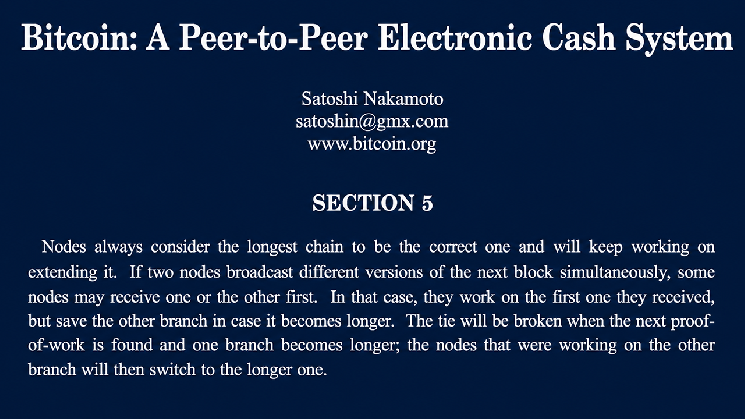
From Bitcoin to Solana: How 8 Cryptocurrency Networks Achieve Consensus

This article explains how eight major cryptocurrency networks achieve consensus, moving beyond the simple proof-of-work (PoW) vs. proof-of-stake (PoS) distinction. Bitcoin established the "Nakamoto consensus" model, where miners compete through PoW, and the valid chain is the one with the most cumulative computational work. Dogecoin and Zcash follow this core model but use different mining algorithms (Scrypt and Equihash, respectively) and have faster difficulty adjustment periods. Ethereum transitioned to a PoS system called Gasper after The Merge. Validators stake ETH to propose and vote on blocks, with finality reached in about 12.8 minutes through a combination of the LMD-GHOST fork-choice rule and Casper FFG. Other networks employ more delegated or permissioned structures. BNB Smart Chain uses a Proof-of-Staked-Authority model with 45 elected validators for high speed, achieving finality in under a second. Solana combines Proof-of-History (a cryptographic clock) with a stake-weighted Tower BFT algorithm for voting, targeting finality in about 12.8 seconds. Tron uses delegated PoS where 27 super representatives take turns producing blocks on a schedule, with finality requiring confirmation by 19 of them. The XRP Ledger takes a unique approach, relying on Unique Node Lists (UNLs). Each server maintains a list of trusted validators, and consensus is reached through repeated rounds of voting until an 80% quorum agrees, typically within 4-5 seconds, without mining or staking lotteries. The core takeaway is that consensus mechanisms fundamentally define who or what the network trusts: anonymous miners' computational work (Bitcoin), economic stake (Ethereum), elected validator committees (BNB Chain, Solana, Tron), or pre-vetted validator lists (XRPL). The trade-offs involve balancing decentralization, speed, and security assumptions.

cryptonews.ru08/24 15:55

From Bitcoin to Solana: How 8 Cryptocurrency Networks Achieve Consensus

cryptonews.ru08/24 15:55

活动图片