# Progress Related Articles

HTX News Center provides the latest articles and in-depth analysis on "Progress", covering market trends, project updates, tech developments, and regulatory policies in the crypto industry.

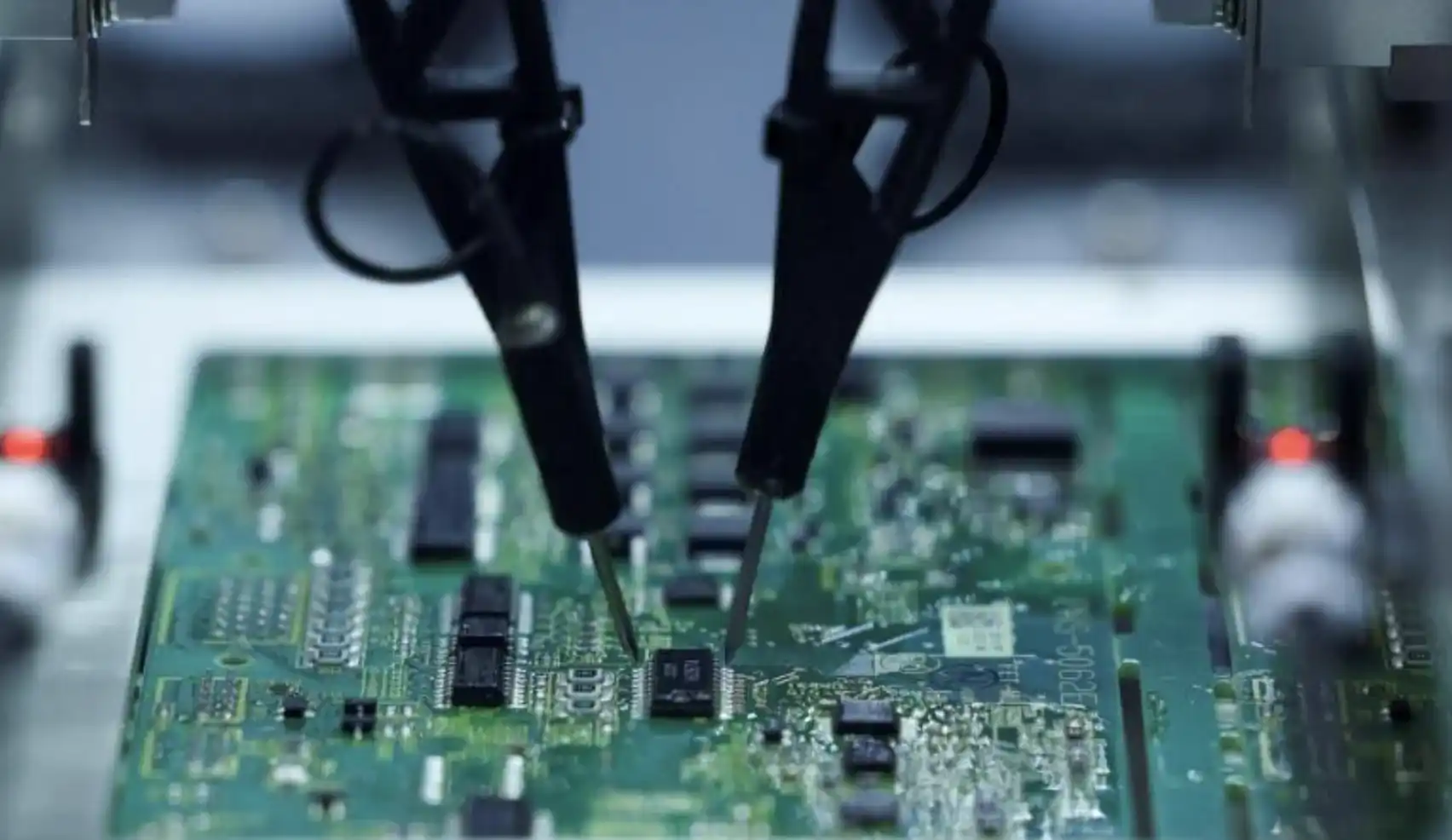
Take a Calm Look at Domestic Lithography Machines: 5 Units Delivered, How Far Are We from Challenging ASML?

This article analyzes recent news about China's domestic DUV lithography machines, advising a measured perspective. A state-backed enterprise plans to deliver about 5 immersion DUV systems this year, with a 2027 target of 20 units, aimed at 28nm processes. While this marks a step from R&D into initial customer validation, the author cautions against over-optimism. The piece clarifies this is DUV, not EUV technology. DUV is crucial but cannot economically solve challenges for advanced nodes like 5nm or below, where EUV is key. The 5-unit volume is minimal compared to ASML's annual output of over 130 such machines. The author highlights unverified claims regarding specs like 90% yield and warns against conflating this news with unconfirmed reports about Shanghai Micro Electronics' production. China's EUV efforts, while progressing with a prototype, remain in early testing, facing significant hurdles in core components like high-precision optics. The analogy of a "DeepSeek moment" is deemed misleading, as lithography involves slow, iterative precision engineering, not rapid software-like breakthroughs. Current progress represents establishing a potential second supply source and gaining vital engineering experience rather than an imminent industry disruption. For investors, the key indicators to watch are formal customer acceptance, stable operational performance, repeat orders, and growth in production volume and component localization. The conclusion is that this is a positive but early-stage development, far from altering the global competitive landscape.

marsbit19h ago

Take a Calm Look at Domestic Lithography Machines: 5 Units Delivered, How Far Are We from Challenging ASML?

marsbit19h ago

Three Years of 'Decentralization' Promises Unfulfilled: Is Base Still at a Standstill?

**Summary: "Three Years of 'Decentralization' Promises Unfulfilled – Has Base Stagnated?"** This article critically examines Coinbase's layer-2 blockchain, Base, arguing that its three-year promise of decentralization remains unfulfilled. Originally launched in 2023 with a roadmap towards decentralization, Base has consistently been rated at "Stage 0" (fully centralized) by industry monitors like L2Beat, indicating no meaningful decentralization progress. Key points include: * **Broken Promises:** Coinbase's 2023 and 2024 decentralization roadmaps and commitments, made in partnership with Optimism, have been largely abandoned without substantial progress. In 2026, Coinbase scrapped its original plan and consolidated all administrative control (via multi-signature wallets) under its own authority. * **Centralized Reality:** The article asserts Base is effectively a centralized, inefficient distributed database run by Coinbase employees, not a decentralized network. This was highlighted by two network outages in June 2026, where Coinbase directly modified code and rolled back the blockchain to fix issues. * **Regulatory and Legal Concerns:** The author raises significant questions about compliance. Base operates without mandatory KYC/AML checks, which may conflict with Coinbase's existing financial licenses that require such oversight. The prolonged lack of progress challenges the legitimacy of continued regulatory forbearance. * **Broader Industry Problem:** The stagnation is framed as part of a wider industry failure, where most Ethereum layer-2s have made slow or no progress toward the technically challenging "Stage 2" full decentralization envisioned by figures like Vitalik Buterin. In conclusion, the article posits that Base represents a case of "decentralization theater," where marketing and complex terminology obscure a centrally-controlled service that may be operating in a regulatory gray area for an unreasonably long period without delivering on its core promise.

marsbit07/20 09:19

Three Years of 'Decentralization' Promises Unfulfilled: Is Base Still at a Standstill?

marsbit07/20 09:19

1600 Lines of Code Create an Underwater Manhattan, Fable 5 Leaves Karpathy Stunned

Title: Fable 5 Stuns Karpathy with 3D Worlds Built from 1600 Lines of Code An AI model, Fable 5, has demonstrated a remarkable leap in generating complex, interactive 3D worlds with minimal code. Showcased by Peter Gostev of Arena.ai, the model created 63 diverse 3D environments across themes like immersive cityscapes, explorable famous paintings, natural wonders, and cosmic phenomena. Many were generated in a single attempt. A standout creation is a detailed, submerged Manhattan built with only 1600 lines of Three.js code. Other highlights include traversable versions of Van Gogh's "Starry Night," a bear catching a salmon with realistic physics, and a split Red Sea. The model's ability to cohesively manage vast numbers of elements within a scene represents a significant technical advancement. Andrej Karpathy, who recently joined Anthropic's pre-training team, expressed amazement, particularly at how the model intuitively understood and rendered complex real-world interactions like a fish struggling when caught. He coined the term "fablemaxxing" to describe this qualitative leap. While Fable 5 excels at world-building, Gostev notes current limitations in creating engaging, long-form gameplay. The model also sometimes requires prompting to fully utilize its capabilities. Having topped the Agent Arena benchmark for real-world task completion, Fable 5 signals that the boundaries of AI-generated content are rapidly expanding, with its full potential yet to be discovered.

marsbit07/06 09:48

1600 Lines of Code Create an Underwater Manhattan, Fable 5 Leaves Karpathy Stunned

marsbit07/06 09:48

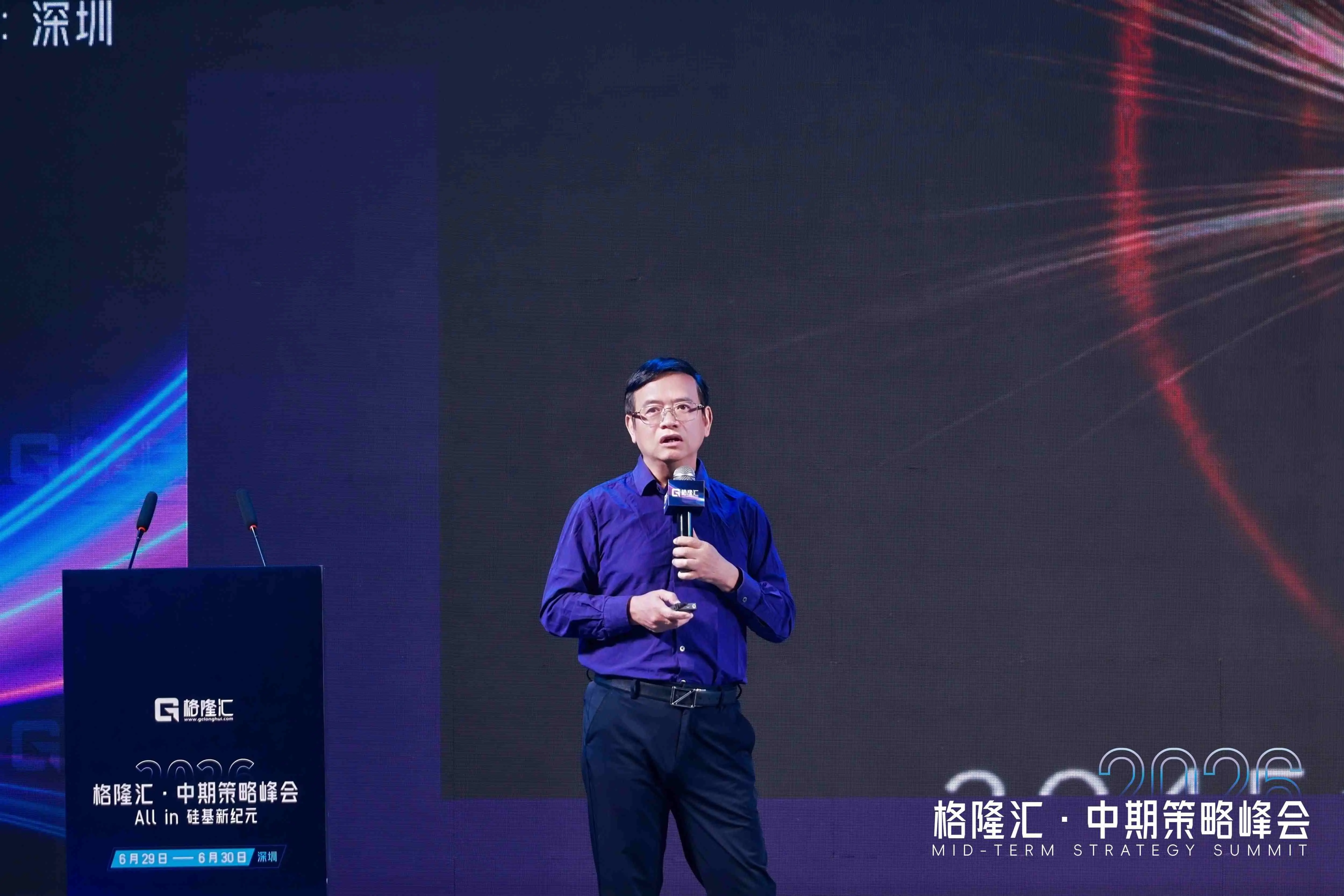
Latest Speech by Dan Bin: Do Not Miss Out on a Great Era

Dan Bin, Chairman of Dongfang Harbor, delivered a keynote speech titled "Don't Miss a Great Era" at the Glonghui "2026—All in Silicon-Based New纪元" Mid-Year Strategy Summit on June 29th. Addressing concerns about an AI bubble, he argued from an industrial cycle perspective that the risk of missing an entire epoch far outweighs the risk of short-term泡沫. He positioned humanity at the dawn of the AI era, which he views as potentially more disruptive than the electronic, internet, and mobile internet eras. Dan Bin suggested the AI wave is unlikely to end in just three to four years. Drawing a parallel to the internet era's decade-long cycle starting from the 1994 Netscape IPO, he indicated that with ChatGPT's late-2022 launch as a marker, a key risk assessment point might not arrive until around 2033. He emphasized that technological progress is the primary driver of long-term capital market growth, with factors like trade wars and interest rates being secondary. Expanding his perspective to a civilizational scale, Dan Bin presented a thought experiment on silicon-based life potentially replacing carbon-based life as a direction for延续 Earth's civilization, especially given cosmic timescales and interstellar travel challenges. He noted AI's必然 weaponization, citing examples from the Russia-Ukraine war, and stated that neither the U.S. nor China can afford to lose the AI race, with each having distinct competitive advantages. Reflecting on investment lessons, he mentioned Warren Buffett's recent moves into tech like Google and查理·芒格's expressed regret about missing Microsoft's massive growth, underscoring the need for continuous认知迭代. Dan Bin concluded by urging investors to maintain a long-term perspective, focus on core technological trends, and rationally embrace the opportunities of this transformative era, so as not to辜负 this "great时代" defined by波澜壮阔 change.

链捕手07/02 15:11

Latest Speech by Dan Bin: Do Not Miss Out on a Great Era

链捕手07/02 15:11

OpenAI's 'Blueprint for the Future': Making AI Beneficial for Every Person on the Planet

A new transformative technology emerges every few generations. OpenAI draws a parallel with the advent of electricity in the 1920s, which initially brought convenience but ultimately enabled unprecedented progress in medicine, engineering, and living standards by empowering people to create new possibilities. AI is poised to recreate this phenomenon. Its true significance lies not in the technology itself, but in what people can achieve with it—from understanding a medical bill or starting a business to aiding scientific discovery. OpenAI believes AI should be universally accessible, allowing everyone to use it according to their own needs. This future, however, is not guaranteed. While transformative tech can centralize power, OpenAI's philosophy is that AI must serve humanity, augmenting human capabilities and broadly distributing its benefits. The company's first commitment is to build AI for human service, aiming to empower the many rather than concentrate power in a few. Safety, alignment with human intent, and oversight are paramount. OpenAI is optimistic about AI's potential to expand human welfare but remains clear-eyed about risks. The goal is to help people achieve more, not to replace them. Full automation is not the desired future; human judgment, values, and direction will become even more critical. OpenAI outlines three core goals: 1. Build automated AI researchers to accelerate and increasingly automate the research process itself, maintaining close human collaboration. The internal projection is that by March 2028, a significant portion of their research will be conducted by AI systems working alongside human researchers. 2. Accelerate economic development by advancing science, boosting productivity, and fostering growth, while ensuring the fruits are widely shared. 3. Provide a personal AGI for everyone on Earth, allowing individuals to benefit from this transformative technology in their own way. The company is entering its third phase, moving from foundational AGI research (Phase 1) to product deployment and learning from real-world use (Phase 2). The current challenge is making advanced AI abundant, affordable, safe, practical, and usable for all individuals and organizations. OpenAI concludes that a widely distributed power structure leads to a more resilient, adaptable, and free society. A positive AI future should not be controlled by a handful of entities but built, benefited from, and owned by many. If realized correctly, AI can become a cornerstone for enhancing global productivity, creativity, scientific advancement, and economic opportunity, fulfilling the mission to ensure AGI benefits all of humanity.

marsbit06/09 11:09
OpenAI's 'Blueprint for the Future': Making AI Beneficial for Every Person on the Planet

marsbit06/09 11:09

2026 is Not the Year of AI, But the Starting Point of a Great Reshuffle of Human Professions

The author, an AI entrepreneur and investor, argues that 2026 will not be the "Year of AI" but rather the starting point of a massive reshuffling of human professions. He states that the current pace of AI advancement, driven by a small number of researchers at companies like OpenAI and Anthropic, is exponential and will soon impact nearly all white-collar industries, not in a decade but within 1-5 years. He provides a personal account of how the latest models (e.g., GPT-5.3 Codex, Opus 4.6) can now autonomously complete complex tasks, such as writing flawless code for an entire software application and testing it, with human-level judgment and decision-making. The author emphasizes that public perception lags far behind reality, as those using free, outdated models are unaware of the capabilities of current paid versions. Key points include: AI is now involved in its own development, creating a feedback loop that accelerates progress ("intelligence explosion"); it will replace cognitive work across law, finance, medicine, and more; and the common belief that AI cannot replicate human judgment, creativity, or empathy is becoming uncertain. The author advises readers to act now by: 1) Seriously using top-tier AI tools in their daily work, 2) Gaining a competitive advantage in their careers by mastering AI before others, 3) Strengthening their financial resilience, 4) Focusing on skills AI cannot easily replace (e.g., building trust, in-person work), 5) Rethinking education for children to emphasize creativity and AI collaboration, and 6) Pursuing personal dreams with AI's help. He concludes that this is a pivotal moment for civilization, posing both immense opportunities (e.g., curing diseases) and existential risks (e.g., uncontrollable AI, weaponization). The future is already here for the tech industry and is imminent for everyone else. Success belongs to those who embrace this reality with curiosity and urgency.

marsbit03/12 00:43

2026 is Not the Year of AI, But the Starting Point of a Great Reshuffle of Human Professions

marsbit03/12 00:43

How Can Ordinary People 'Survive' the Impact of the AI Wave?

In this urgent warning, HyperWrite CEO Matt Shumer argues that AI advancement is progressing far faster than most people realize, with transformative impacts imminent across all sectors. He draws a parallel to the rapid onset of the COVID-19 pandemic, suggesting the current technological shift is even more profound. Shumer, an AI industry insider, states that a small group of researchers at leading labs like OpenAI and Anthropic are driving exponential progress. He shares his personal experience: recent models like GPT-5.3 Codex and Claude Opus 4.6 can now autonomously build and test complex software applications from a simple English description, requiring zero human correction. This represents a qualitative leap from being an assistant to a superior executor. He emphasizes that this disruption, which began with coding, will soon affect all knowledge work—law, finance, medicine, writing, and analysis—within 1-5 years, not decades. Free versions of AI tools are outdated; the paid, cutting-edge models are vastly more capable. Metrics show AI's autonomous task-completion time is doubling every few months. Crucially, AI is now used to build and improve subsequent AI models, creating a self-accelerating feedback loop toward artificial general intelligence (AGI). Shumer's advice for "surviving" is to start using the most powerful AI tools *now*. Subscribe to premium models, integrate them into core professional tasks, and experiment daily. Financial prudence and developing adaptability are key. He concludes that while AI poses immense risks (from job loss to security threats), it also offers unprecedented opportunities for creativity and problem-solving if approached with curiosity and urgency. The time to prepare is immediately.

marsbit02/18 04:27

How Can Ordinary People 'Survive' the Impact of the AI Wave?

marsbit02/18 04:27

活动图片