OpenAI's 'Blueprint for the Future': Making AI Beneficial for Every Person on the Planet

marsbitPublished on 2026-06-09Last updated on 2026-06-09

Abstract

A new transformative technology emerges every few generations. OpenAI draws a parallel with the advent of electricity in the 1920s, which initially brought convenience but ultimately enabled unprecedented progress in medicine, engineering, and living standards by empowering people to create new possibilities. AI is poised to recreate this phenomenon. Its true significance lies not in the technology itself, but in what people can achieve with it—from understanding a medical bill or starting a business to aiding scientific discovery. OpenAI believes AI should be universally accessible, allowing everyone to use it according to their own needs. This future, however, is not guaranteed. While transformative tech can centralize power, OpenAI's philosophy is that AI must serve humanity, augmenting human capabilities and broadly distributing its benefits. The company's first commitment is to build AI for human service, aiming to empower the many rather than concentrate power in a few. Safety, alignment with human intent, and oversight are paramount. OpenAI is optimistic about AI's potential to expand human welfare but remains clear-eyed about risks. The goal is to help people achieve more, not to replace them. Full automation is not the desired future; human judgment, values, and direction will become even more critical. OpenAI outlines three core goals: 1. Build automated AI researchers to accelerate and increasingly automate the research process itself, maintaining close human co...

Every few generations, a new technology comes along that changes everything.

Imagine a remote American town in the 1920s as electricity arrived.

Before the transmission lines came, daily life was constrained by physical limits: hauling water, washing clothes by hand, preserving food with ice, with most activities ceasing after sunset. Electricity didn't transform every home overnight, and its benefits were not equally shared by everyone at first.

But as access became widespread, ordinary life quietly transformed. Electric lights extended the usable day; electric pumps, household appliances, and refrigerators lifted much of the burden of daily chores; radios brought news, music, and emotional connections from hundreds of miles away into homes and public spaces.

Electricity's initial purpose was to make life more convenient, but its deeper impact came from the new possibilities it created as more people could use it. Over time, new possibilities kept emerging—machines and computers dramatically accelerated progress in medicine, engineering, and countless other fields.

By the end of the 20th century, average human life expectancy had increased by over 20 years, and median income, adjusted for inflation, had roughly tripled.

These achievements were largely driven by improvements in healthcare, sanitation, and standards of living, many of which were enabled or accelerated by the widespread availability of electricity and related technological progress.

AI is poised to replay this pattern. AI is reaching remarkable capabilities. But the focus isn't on the technology itself, it's on what people can do with it.

It can help people understand a medical bill, learn a new skill, start a small business, care for an aging parent, make sense of a legal or financial decision, turn an idea into reality, or even advance a scientific discovery.

The novelty of electric light at night might fade quickly, but what people decide to do with that light does not. And because technology has been a reliable pathway to prosperity, we believe AI should be accessible to everyone, allowing each person to use it as they need, wherever they are, and in whatever way they choose.

But such a future will not happen on its own.

Transformative technology can concentrate power or disperse it; it can make life more convenient for a few or expand opportunity for the many. Our philosophy is based on a conviction: AI should serve people—helping them pursue their goals, augmenting their capabilities, and spreading the benefits of this technology as widely as possible.

Our first commitment is to build AI that serves humanity. This means we aim to empower broadly, not concentrate power in the hands of a few companies, governments, or individuals.

We believe a safer future is one where power is widely distributed, enabling more people in the world to participate in building a resilient ecosystem.

We are optimistic about AI because we believe it can expand human capability and well-being.

But we are also sober about the risks. Powerful systems must be safe, must be aligned with human intent, and must remain under human oversight and control. OpenAI's mission is to ensure that AGI benefits all of humanity. This means building systems that help people do more of what they choose to do themselves, not replace them.

Full automation of everything is not the future we want.

That would be bleak and dangerous. AI should help people be more, not less. As AI systems become more capable, the human role becomes more important: setting direction, making trade-offs, exercising judgment, and bringing values, taste, care, and accountability into the work.

In the future, a core human mission will be deciding what is worth doing.

We believe that, in the coming years, AI conducting AI research will be a key determinant of the pace of progress.

This is crucial because 'alignment' itself is a deep research problem. To make rapid and substantive progress, our researchers will need AI systems to test ideas, find mistakes, explore alternatives, and iterate alongside us.

However, faster technological progress makes human judgment and public collaboration more important, not less. The future should be shaped by people, institutions, and societies collectively, not only by the companies building the most powerful systems.

As frontier AI development continues, we expect coordination at national and global levels to become increasingly important.

We have long believed that ultimately, an international organization should be established to coordinate major AI efforts and collectively mitigate catastrophic risks.

Establishing cooperation and common safety as a norm is also a critical part of the path forward—especially because the problems posed by commercial and national competition are hard to avoid.

One goal of such an organization should be to enable the world to act in a coordinated manner, including, when necessary, slowing frontier development to allow societal resilience, safety, and alignment capabilities to keep pace with technical progress.

Currently, OpenAI has three core goals:

Build automated AI researchers—an AI system capable of accelerating and increasingly automating the research process itself, while remaining steerable, accountable, and deeply connected to humans.

Our internal estimation is that by March 2028, a significant portion of our research may be conducted by AI systems working in collaboration with our own researchers.

To make sufficient progress on alignment research, we believe we need AI to iterate with us. This will help us collectively navigate the transition to a 'post-AGI world,' allowing us to collectively decide the path forward.

Accelerate economic progress—by accelerating scientific advancement, raising productivity, and driving economic growth, while committing to ensuring the benefits are shared widely.

Everyone should have the opportunity to share meaningfully in the prosperity AI creates.

Provide a personal AGI for every person on the planet—empowering them to benefit from one of humanity's most transformative technologies in ways they choose.

To achieve all this, we are entering the third phase of OpenAI.

OpenAI's first phase was research-focused around AGI.

The second phase began as our research started connecting with the real world, and we became a product company: deploying our systems, learning from how people use them, and continuing to advance toward AGI safely and in alignment with our mission.

Now, we are entering the third phase.

The economy is being reshaped around AI. The central questions have become: How do we make advanced AI abundant, affordable, safe, useful, and usable enough that every person and organization can benefit?

Frontier capabilities are only part of the work; the larger task is turning that capability into tools people can actually use to create and build.

Most importantly, we believe widespread distribution of power will lead to a better future. Human history shows that concentrated power makes societies brittle, while broadly shared power makes them more resilient, adaptive, and free.

This is why ubiquity matters, and why safety, privacy, affordability, an open ecosystem, and public oversight matter.

A good AI future is not one where a few institutions hold most of the capability and benefit.

It is one where many people, numerous businesses, communities everywhere, and countries around the world can build, benefit, and hold power. We believe this transformation should belong to everyone.

If we get this right, AI can become a cornerstone of increased productivity, creativity, scientific progress, and economic opportunity for the many, and we will achieve our mission: ensuring that AGI benefits all of humanity.


Trending Cryptos

Related Questions

QWhat is the core belief about AI's role in society according to OpenAI's blueprint?

AAI should serve humanity—helping people pursue their goals, augment their capabilities, and distribute its benefits as widely as possible.

QWhat is OpenAI's first key commitment regarding the development of AI?

ATo build AI that serves humanity, aiming to broadly empower people rather than concentrating power in a few companies, governments, or individuals.

QWhat is one of OpenAI's three core goals as mentioned in the article?

ATo build automated AI researchers—AI systems that can accelerate and increasingly automate the research process itself, while remaining steerable, accountable, and closely connected to humans.

QWhat future scenario involving AI does OpenAI explicitly state is not desired?

AA future where everything is fully automated. OpenAI believes that future would be bleak and dangerous, and that AI should help people be more, not replace them.

QWhat is the ultimate aim of OpenAI's mission regarding AGI?

ATo ensure that AGI benefits all of humanity.

Related Reads

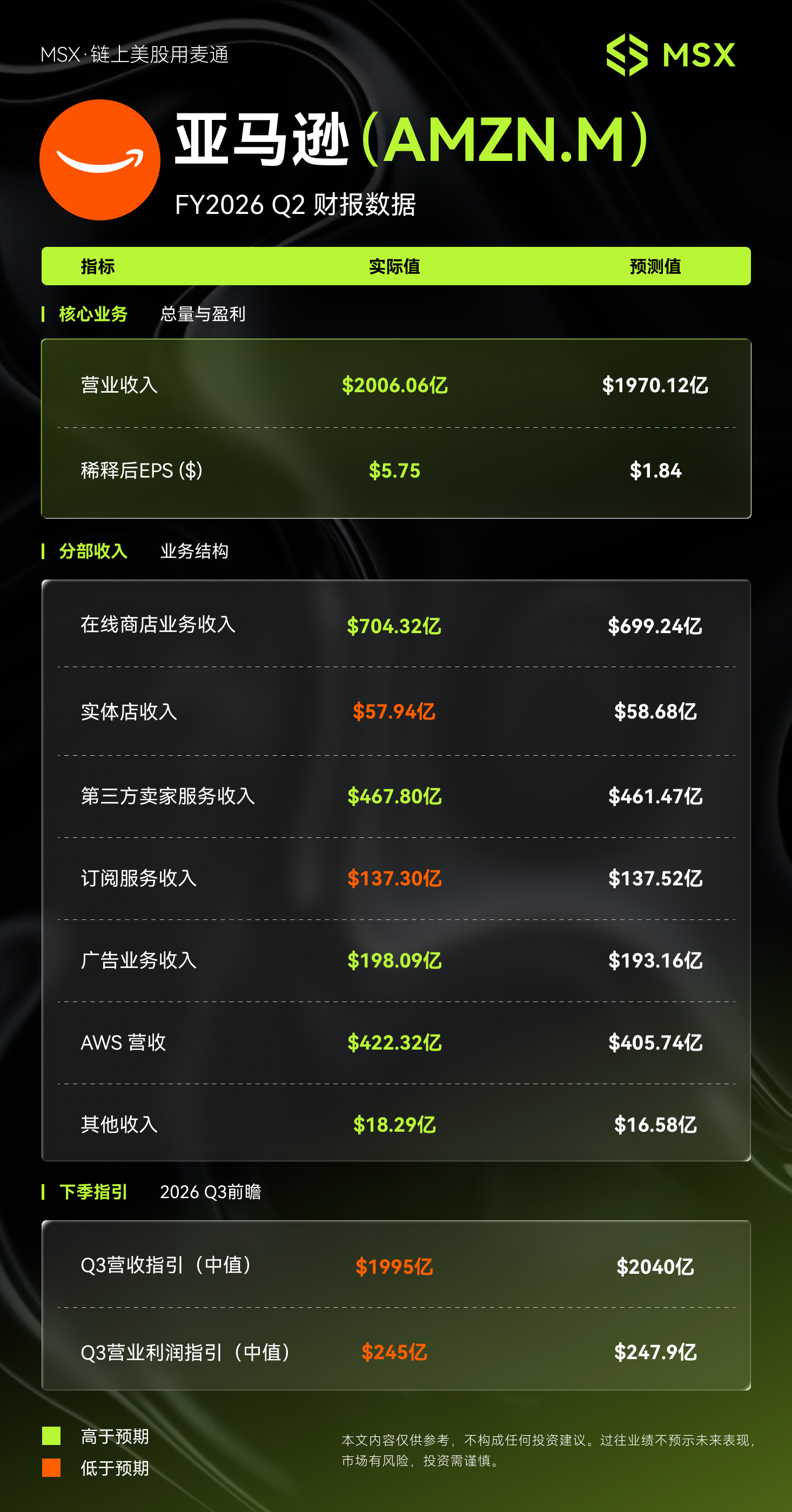
MSX US Stock Daily Insight: Amazon 2026 Q2 Earnings: AWS Records Fastest Growth in Five Years

**MSX Daily US Stock Observation: Amazon's Q2 2026 Earnings: AWS Achieves Fastest Growth in Five Years** Amazon's latest quarterly results exceeded expectations, driven by a strong performance from its cloud computing unit. The company reported revenue of $200.66 billion, surpassing estimates of approximately $197 billion. The key highlight was Amazon Web Services (AWS), which generated $42.232 billion in revenue, surging 37% year-over-year. This marked the segment's fastest growth pace in 18 quarters, indicating robust demand for cloud services. Reported Earnings Per Share (EPS) of $5.75 significantly exceeded the $1.84 forecast. However, this figure included a substantial one-time, non-operating gain of $53.4 billion, primarily from the revaluation of Amazon's investment in AI company Anthropic. Excluding this item, core operating profit was $27.461 billion, a strong increase of 43% compared to the same period last year. Despite the positive results, Amazon provided guidance for the upcoming third quarter that fell short of market expectations. The company's revenue guidance midpoint is $199.5 billion, below the consensus estimate of around $204 billion. Operating profit guidance of $24.5 billion also slightly missed expectations of approximately $247.9 billion. Furthermore, Amazon raised its forecast for full-year capital expenditures to $220 billion, citing rising memory chip costs, which weighed on investor sentiment regarding future profitability. In summary, Amazon's quarter showcased accelerating momentum in its core AWS business. The underlying operational profit growth remains solid. However, cautious forward guidance and increased investment spending present key areas for monitoring in the coming quarters, as the market assesses whether the current growth phase will translate into sustained profit margin expansion.

Odaily星球日报5m ago

MSX US Stock Daily Insight: Amazon 2026 Q2 Earnings: AWS Records Fastest Growth in Five Years

Odaily星球日报5m ago

Cyclical Stock or Growth Stock? Coinbase's Q2 Earnings Report Reveals 'Valuation Disagreement'

Coinbase's Q2 2026 financial results revealed a mixed performance, reigniting debate over whether the company should be valued as a cyclical stock tied to crypto markets or a growth stock with future potential. Total revenue missed expectations at $1.22 billion, down 19% year-over-year. Transaction revenue fell to $599 million, with retail crypto spot trading revenue dropping 30% to $452 million, back to 2023 levels. The company reported a net loss of $359 million, marking its third consecutive quarterly loss. Despite CEO Brian Armstrong's positive commentary on metrics like a 10.3% overall crypto trading market share and 106% growth in prediction markets, the market reacted negatively, with shares dropping over 5% after-hours. A key issue is the decline in core retail trading. While Coinbase touted record market share, this figure includes derivatives and new products. Its traditional crypto spot trading share is likely shrinking. New ventures like prediction markets, while growing, contributed less than $30 million, insufficient to offset the core revenue decline. The valuation debate hinges on perspective. As a cyclical stock, Coinbase remains deeply tied to the crypto bear market, with user attrition and competitive pressures justifying a lower valuation. The company's strategy appears focused on surviving until the next bull cycle. Viewed as a growth stock, however, Coinbase shows promising diversification. Subscription and service revenue reached $555 million, nearly matching transaction revenue. Stablecoin revenue, its second-largest source at $292 million, remains strong through its partnership with Circle. Critically, Coinbase is positioning itself as a leader in the emerging on-chain "agent economy." Over 90% of agent-based stablecoin transactions occur on its Base network, which it believes could handle trillions in future agent transactions. The recent acquisition of Deribit also aims to boost its international derivatives offering. In summary, Coinbase's present struggles are clear, but its future hinges on whether its investments in revenue diversification, stablecoins, and the agent economy can ultimately transform its business model and justify a growth premium.

Odaily星球日报25m ago

Cyclical Stock or Growth Stock? Coinbase's Q2 Earnings Report Reveals 'Valuation Disagreement'

Odaily星球日报25m ago

Global Market Share Survey: Japanese Firms Lead in Semiconductor Materials

Global Market Share Survey: Japanese Firms Lead in Semiconductor Materials According to the 2025 "Major Goods and Services Market Share Survey" by Nikkei, Japanese companies maintain strong positions in semiconductor-related materials. In silicon wafers, Shin-Etsu Chemical ranks first with a 26.3% share, followed by SUMCO at 17.8%. Together, they hold 44.1% of the market, widening their lead over competitors from Taiwan, Germany, and South Korea. In photoresists, Tokyo Ohka Kogyo, JSR, and Shin-Etsu Chemical occupy the top three spots, with a combined share of 60.5%. Despite their strength in materials, Japanese firms have a weaker presence in core semiconductor segments like DRAM and NAND flash memory, where South Korean and U.S. companies dominate. For instance, SK Hynix and Samsung lead in DRAM, while China’s CXMT doubled its share to 6% in 2025. The semiconductor market is projected to grow rapidly, with WSTS forecasting a 90% increase to $1.5112 trillion by 2026. Major players like Samsung, SK Hynix, and Micron are making massive investments to expand capacity. To maintain their edge in materials, Japanese companies must similarly commit to large-scale, risk-taking investments. In contrast, Japan’s automotive sector shows stagnation. Toyota remains the global leader but with only a slight share increase to 12.3%, while Japanese brands are absent from the top five in the EV market. In shipbuilding, Imabari Shipbuilding rose to third place globally with a 7.2% share, benefiting from large container ship deliveries. However, Chinese and South Korean firms dominate the sector, holding the top two positions. Japan aims to revitalize its shipbuilding industry through government and corporate efforts, targeting a near doubling of output by 2035. Addressing labor shortages and adopting advanced technologies like physical AI will be critical for competitiveness.

marsbit50m ago

Global Market Share Survey: Japanese Firms Lead in Semiconductor Materials

marsbit50m ago

Trading

Spot

Hot Articles

Discussions

Welcome to the HTX Community. Here, you can stay informed about the latest platform developments and gain access to professional market insights. Users' opinions on the price of S (S) are presented below.

活动图片