# Prediction Related Articles

HTX News Center provides the latest articles and in-depth analysis on "Prediction", covering market trends, project updates, tech developments, and regulatory policies in the crypto industry.

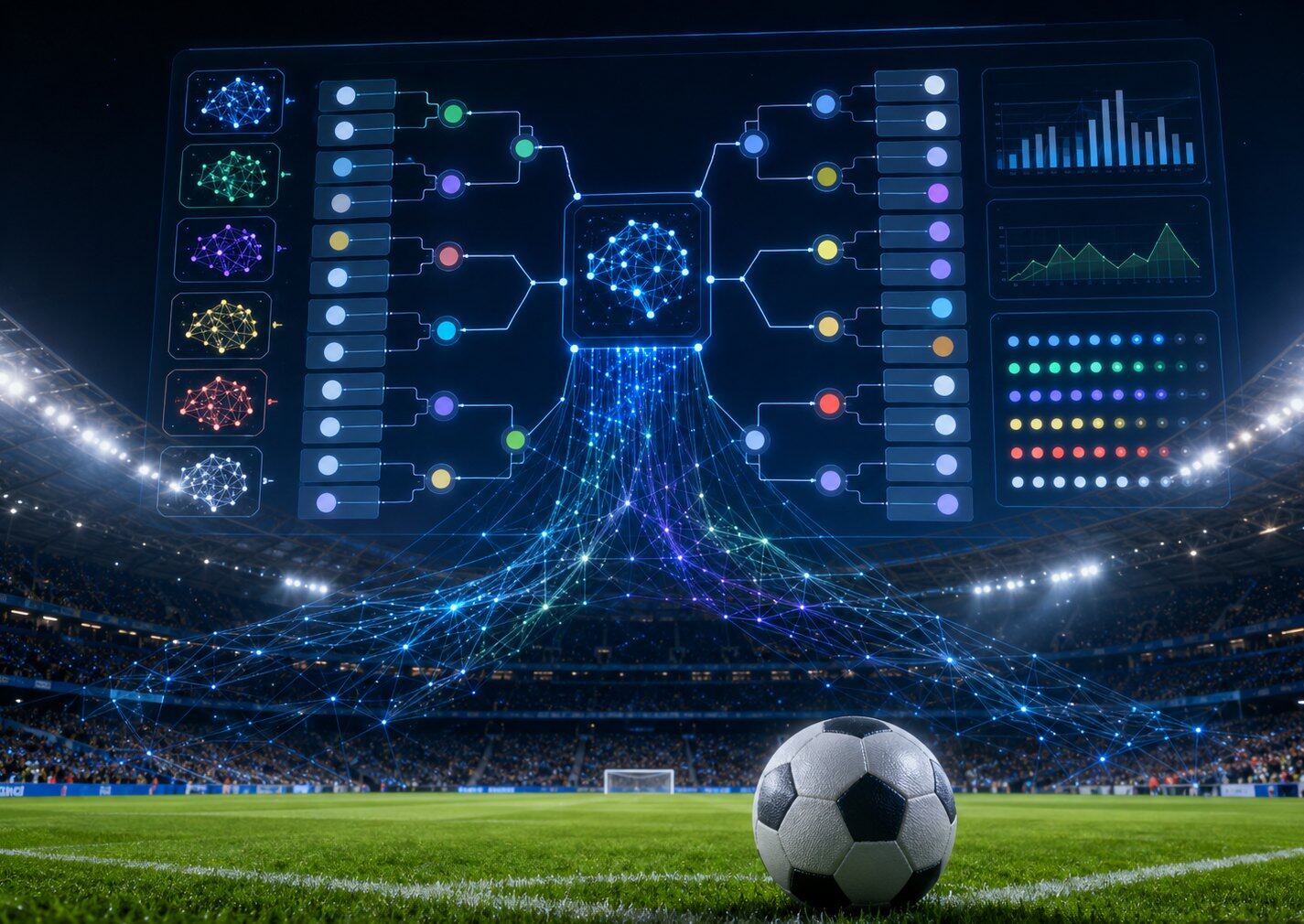
Predicting World Cup Knockout Matches: Why Are Different AI Models So Far Apart?

AI performance in predicting the 2026 FIFA World Cup knockout matches varied significantly, according to an analysis of models including ChatGPT, Grok, DeepSeek, Gemini, and Claude. The standout predictions came from DeepSeek and Gemini for the Netherlands vs. Morocco match. Gemini precisely forecasted a 1-1 draw and a penalty shootout win for Morocco, while DeepSeek correctly identified the high probability of a draw and Morocco's potential to advance via a defensive and counter-attacking strategy. Grok and Tongyi Qianwen (千问) demonstrated strength in predicting accurate scores for matches with clearer favorites. They correctly called the narrow 1-0 win for Canada over South Africa and Brazil's 2-1 victory over Japan, as well as Norway's 2-1 win over Ivory Coast. ChatGPT and Claude excelled more in match process analysis than in predicting exact scores or upsets. They frequently identified potential challenges for favorites, such as Japan's pressing against Brazil or DR Congo's defensive tactics against England, even when predicting the favorite's ultimate victory. A notable failure was the unanimous misjudgment of Germany vs. Paraguay. All models incorrectly favored Germany, underestimating Paraguay's ability to force a penalty shootout and cause an upset. In summary, Gemini and DeepSeek showed the most insight for high-stakes, unpredictable matches. Grok and Qianwen were reliable "score predictors" for less volatile games. ChatGPT and Claude were strong "analytical models," adept at outlining match dynamics but often hesitant to predict upsets.

Odaily星球日报07/02 01:44

Predicting World Cup Knockout Matches: Why Are Different AI Models So Far Apart?

Odaily星球日报07/02 01:44

Introduction to the Concept of World Models: A Story from Psychology to the Main Battlefield of AI

**World Models: From Psychology to AI's Core Concept** "World model" is a trending but often confusing term in AI, describing a system that allows machines to internally simulate, predict, and rehearse potential outcomes before taking real-world action—like a mental "sandbox." While definitions vary—Yann LeCun emphasizes physical understanding, OpenAI's Sora is a video-based "world simulator," Google DeepMind's Genie 3 creates interactive 3D environments, and companies like Alibaba and Tesla focus on practical applications—the core goal is consistent: reduce reliance on vast real-world data by creating an internal, predictive model for safer and more efficient AI. The concept has deep roots, tracing back to psychologist Kenneth Craik (1943). In AI, it was revitalized by researchers like David Ha and Jürgen Schmidhuber (2018). Major technical approaches include: 1) generative video models (e.g., Sora) for visual realism; 2) abstract predictive models (e.g., LeCun's JEPA) for efficiency and physical reasoning; and 3) explicit 3D simulators (e.g., NVIDIA Omniverse) for precision. Fei-Fei Li proposes a classification based on the AI action loop: renderers (output observations), simulators (output world states), and planners (output actions). The emerging "World Action Model" (WAM) paradigm aims to unify future prediction and action generation. An industry framework is forming: upstream (data, compute, sensors), midstream (general and vertical platforms), and downstream applications (autonomous driving, robotics, gaming, etc.). Autonomous driving is currently the most mature use case. The current lack of a unified definition reflects the field's early, dynamic stage, similar to past tech revolutions. Different approaches—focusing on pixels, physics, or behavior—represent parallel explorations of how best to compress and understand the world. This diversity, while seemingly chaotic, signals that world models have moved from an academic idea to a critical industrial battleground, ultimately aiming to give machines the ability to understand, imagine, and reason about the world.

marsbit06/29 05:09

Introduction to the Concept of World Models: A Story from Psychology to the Main Battlefield of AI

marsbit06/29 05:09

Interview with PPP: How the World Cup Ignited the Prediction Market, and How to Find "Replicable Smart Money"?

Interview with PPP: World Cup Ignites Prediction Markets, How to Find “Replicable Smart Money”? With the World Cup underway, prediction markets are experiencing a historic surge in data and activity. However, most ordinary users struggle to achieve consistent profits amidst the volatility. Simply chasing "smart money" signals on social media is often ineffective due to slow manual execution. Even dedicated copy-trading tools can be misleading, as high total profits don't guarantee a strategy is suitable or sustainable for others to follow. Prediction market strategy platform PPP (Prediction Position Platform) argues that not all profitable addresses are fit for copying. Truly replicable "smart money" must demonstrate stable, long-term profitability across key metrics like win rate, max drawdown, and strategy consistency. PPP aims to solve this by building a system that structures complex on-chain data into actionable strategies for users. It employs a dual AI-modeling and manual-review process to analyze addresses based on performance, risk, capital allocation, and more, filtering out偶然性盈利 to identify statistically reliable strategies. The platform categorizes these strategies into two main products: a "Strategy Square" featuring long-term, vetted strategies with strict criteria like a six-month minimum track record, and a "Trading Leaderboard" highlighting shorter-term, high-performing opportunities from the past 30 days. Both are presented with clear style descriptions (e.g., "high implied win rate, high volatility"). Currently accessible via a Telegram Bot, PPP offers features like one-click trading, address copying, and an AI address analysis tool. It uses a subscription model and a non-custodial wallet. A trial run by the author yielded significant short-term gains, though subsequent drawdowns highlighted the importance of risk management and adjusting copy parameters per strategy. PPP’s core value lies not just in copy-trading, but in compiling and structuring混沌的交易信号 into replicable strategies, reducing information asymmetry in prediction markets. While it can’t guarantee future profits, it provides a more systematic, higher-probability entry point for users navigating the uncertain but opportunity-rich landscape, especially during events like the World Cup.

Odaily星球日报06/26 02:30

Interview with PPP: How the World Cup Ignited the Prediction Market, and How to Find "Replicable Smart Money"?

Odaily星球日报06/26 02:30

Standard Chartered Bank’s 50-Fold Fantasy: Predicting AAVE to Reach $3,500

Standard Chartered Bank has issued an optimistic research report predicting that the AAVE token could surge 50-fold to $3,500 by 2030. This forecast is based on the projection that the total value locked (TVL) in DeFi will grow 37x to approximately $2.7 trillion, driven by stablecoin expansion and the tokenization of real-world assets (RWA). The bank's model links Aave's potential valuation directly to its protocol revenue, which is primarily driven by net interest margins. The report highlights Aave's current dominant position, noting it captures over 80% of the net earnings ("protocol retained earnings") in the lending sector while holding only about half of its TVL. It also points to the recent launch of the Aave V4 architecture and a healthy revenue stream of $142 million in 2025 as positive fundamentals. Grayscale's separate analysis, applying traditional valuation metrics like DCF, concluded AAVE is currently undervalued. However, the article notes significant challenges. Aave's peer-to-pool lending model suffers from inherent capital inefficiency, with an estimated $52 million annual "deadweight loss" due to idle funds needed for liquidity buffers. This structural flaw was exposed during the April KelpDAO exploit, which locked a WETH pool at 100% utilization for days. Emerging protocols like Morpho, with more efficient point-to-point models, are cited as growing competitive threats. In summary, while institutional forecasts paint a macro picture of massive growth fueled by RWA adoption, Aave's path forward hinges on addressing its core structural limitations and competitive pressures within the evolving DeFi lending landscape.

链捕手06/25 11:41

Standard Chartered Bank’s 50-Fold Fantasy: Predicting AAVE to Reach $3,500

链捕手06/25 11:41

Zoomex X Space Recap With Djibril Cissé and the World Cup Trading Panel

Zoomex hosted a World Cup-themed X Space with Champions League winner Djibril Cissé and four crypto traders, discussing pressure management, analysis, and philosophy, and launching a charity pledge. Cissé emphasized embracing pressure in critical moments, drawing from his experience taking a penalty in a Champions League final. The traders agreed that managing stress comes from systematic preparation and clear risk parameters before executing a trade. The conversation explored parallels between football and trading. Cissé highlighted pace as his key weapon, but stressed that output (goals) matters more than tools. The traders debated timing versus speed of execution, concluding that timing is paramount and relative to one's timeframe. Discussing resilience, Cissé shared his mindset after major injuries: focusing on recovery and finding the positive. Similarly, traders emphasized learning from losses rather than avoiding them. Cissé declined to speculate on alternate histories, like France's 2006 World Cup run without his injury, stating one must work only with reality—a principle directly applicable to trading. In a lighter segment, traders mapped cryptocurrencies to national teams (e.g., Bitcoin to Brazil/France). The core lesson was that high performers, in both fields, thrive on uncertainty by relying on tested systems and focusing solely on actionable information. The session was part of Zoomex's World Cup Impact Pledge, which includes charity donations tied to guest predictions.

TheNewsCrypto06/22 10:40

Zoomex X Space Recap With Djibril Cissé and the World Cup Trading Panel

TheNewsCrypto06/22 10:40

Will UNI Reach $100 in Four Years? Can Standard Chartered's Prediction Come True?

TL;DR: Standard Chartered Bank predicts UNI token will reach $100 by 2030, based on the growth of tokenized assets fueling demand for open DeFi liquidity and Uniswap's potential to capture fees from that trading. However, institutional tokenized products like BlackRock's BUIDL fund show that strict access controls and permissioned systems remain major barriers. Standard Chartered's $100 price target for Uniswap's (UNI) governance token by 2030 projects massive growth from current levels. The bank's thesis hinges on tokenized real-world assets (RWA) reaching trillions in value and a significant portion flowing into open, decentralized markets for trading and liquidity, rather than remaining in closed, permissioned systems. Uniswap's position as a leading decentralized exchange (DEX) infrastructure could allow it to capture a major share of this future trading activity. A key challenge is whether tokenized assets like bonds, funds, and stocks will trade openly on DEXs or be restricted to controlled, institutional platforms. The case of BlackRock's BUIDL fund exemplifies this tension: while it uses Uniswap's technology for settlements, trading is strictly limited to pre-approved, whitelisted institutional participants. This hybrid model provides DeFi efficiency but maintains traditional access barriers. For UNI to achieve such a high valuation, Uniswap must not only see increased trading volume from tokenized assets but also implement effective value-capture mechanisms for token holders. Recent governance proposals aim to direct protocol fees to UNI stakers, creating a clearer link between platform usage and token value. Ultimately, the realization of Standard Chartered's prediction depends on the future structure of the tokenized asset market. If open liquidity pools and reduced restrictions prevail, Uniswap's role could expand far beyond crypto-native trading. If permissioned, walled-garden systems dominate, its growth from institutional tokenization may be limited. The prediction itself signals growing institutional recognition of DeFi's potential role in the future of finance.

marsbit06/17 09:38

Will UNI Reach $100 in Four Years? Can Standard Chartered's Prediction Come True?

marsbit06/17 09:38

活动图片