# Policy Related Articles

HTX News Center provides the latest articles and in-depth analysis on "Policy", covering market trends, project updates, tech developments, and regulatory policies in the crypto industry.

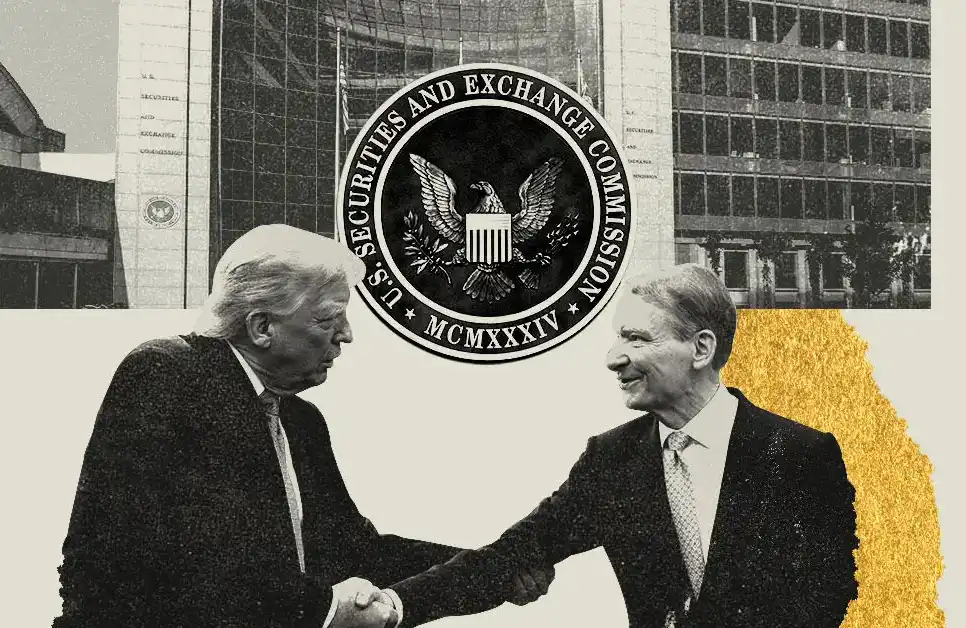
The New York Times: After Trump's Return to the White House, Major Retreat in SEC's Crypto Lawsuits

In a significant policy reversal following Donald Trump's return to the White House, the U.S. Securities and Exchange Commission (SEC) has dramatically scaled back its enforcement actions against the cryptocurrency industry. An investigation by The New York Times found that over 60% of ongoing crypto-related cases were either paused, settled favorably, or dropped entirely under the new administration. Key findings include the SEC dropping seven crypto cases, five of which involved firms with known financial ties to Trump. An additional seven cases saw reduced charges or lenient settlements, with three linked to Trump associates. The remaining nine active cases involve entities with no known connection to the former president. The SEC stated its shift was based on legal and policy considerations, not political favoritism, citing long-standing internal opposition to many crypto lawsuits. However, the timing coincides with Trump’s pro-crypto stance and his family’s business ventures in the sector, including the World Liberty Financial project. Notable cases dropped or softened include those against Binance, Ripple Labs, and Gemini Trust. The latter is operated by the Winklevoss twins, who have financial and business ties to the Trump family. While no direct evidence of presidential pressure was found, the pattern suggests a stark departure from the aggressive enforcement seen under the Biden administration. The policy shift has raised concerns among former SEC officials about investor protection and market integrity, while the crypto sector celebrates reduced regulatory pressure.

marsbit12/16 09:22

The New York Times: After Trump's Return to the White House, Major Retreat in SEC's Crypto Lawsuits

marsbit12/16 09:22

New York Times Investigation: Internal Strife, Favoritism... What Details Lie Behind Trump's 'Crypto Amnesty'?

An investigation by The New York Times reveals a dramatic shift in the U.S. SEC’s enforcement approach toward the cryptocurrency industry following former President Donald Trump's return to office. The analysis of court records and internal documents shows the SEC halted, dropped, or softened more than 60% of ongoing crypto cases inherited from the Biden administration. Notably, the agency dropped seven cases outright—five of which involved defendants with public ties to Trump—and made concessions in seven others. In contrast, it maintained its legal stance only in cases where no clear connection to Trump existed. The SEC defended the policy reversal as based on legal and jurisdictional concerns, not political favoritism. The report highlights that multiple companies that benefited from the SEC’s pullback had financial links to Trump or his family—including through his cryptocurrency venture, World Liberty Financial—or had contributed to his political efforts. Examples include Binance, Ripple, Tron, Cumberland, and Gemini, operated by the Winklevoss twins. Under the Biden administration, the SEC filed 105 crypto-related cases, compared to zero since Trump’s return. Current and former SEC officials expressed concern that the agency’s retreat risks undermining investor protection and encouraging unchecked industry practices.

比推12/15 21:44

New York Times Investigation: Internal Strife, Favoritism... What Details Lie Behind Trump's 'Crypto Amnesty'?

比推12/15 21:44

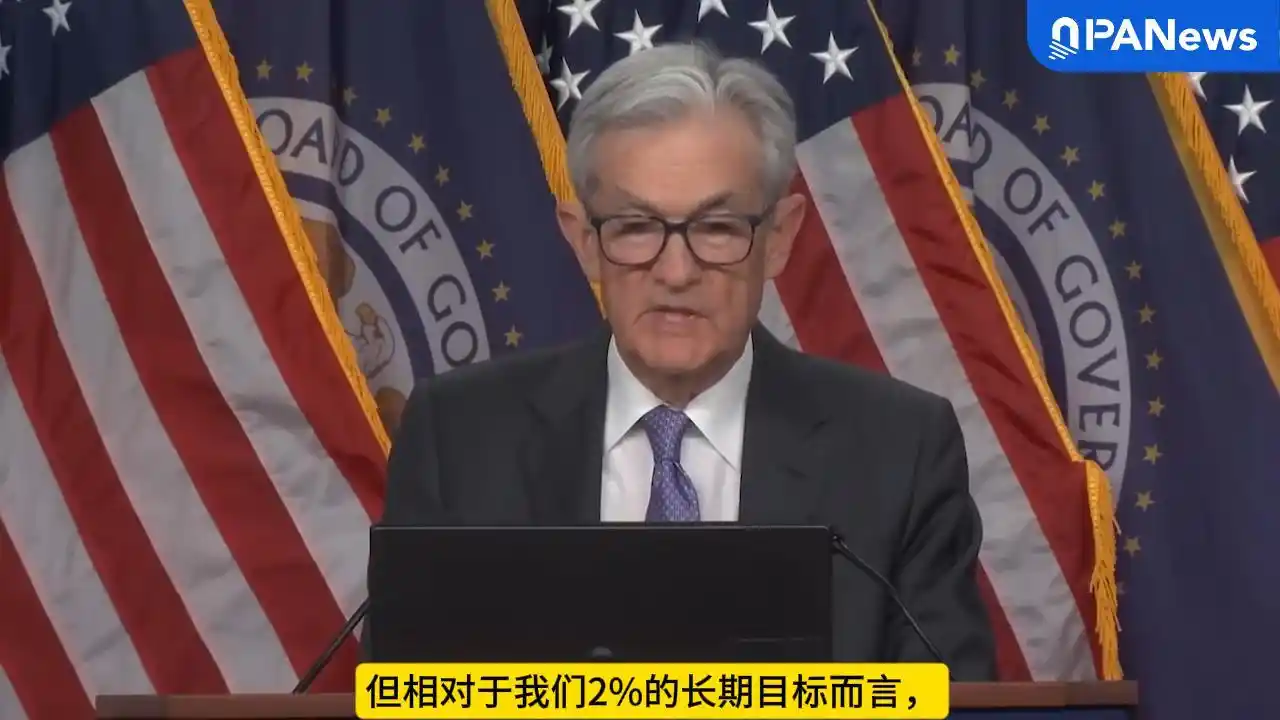
Powell: Weakening Employment, Inflation Still High, No One Talks About Rate Hikes Now

In his latest address, Federal Reserve Chair Powell highlighted a noticeable cooling in the U.S. labor market, marked by slower hiring and reduced layoffs, declining challenges in recruitment, and diminished household expectations for job opportunities. The unemployment rate has risen to approximately 4.4%, with employment gains significantly weaker than at the start of the year. This slowdown stems partly from reduced labor supply—due to decreased immigration and lower participation rates—but also reflects weakening labor demand itself. On inflation, core PCE remains at 2.8% year-on-year, above the long-term 2% target. While goods inflation has edged up due to tariffs, service inflation continues to moderate. Although overall inflation has declined substantially from its 2022 peak, it has not yet reached a level that fully assures the Fed. The FOMC responded by cutting rates by 25 basis points and initiating short-term Treasury purchases to maintain ample reserves and ensure effective policy transmission. Powell emphasized that, with rising employment risks and persistently elevated inflation, there is no "risk-free" policy path. The Fed must carefully balance its dual mandate constraints. He noted that interest rates are nearing a neutral range, and future policy decisions will be data-dependent, avoiding preset directions and instead being assessed meeting by meeting based on economic conditions and risks.

marsbit12/11 04:02

Powell: Weakening Employment, Inflation Still High, No One Talks About Rate Hikes Now

marsbit12/11 04:02

Regulatory Crossroads: The United States, Europe, and the Future of Crypto Assets

The article "Regulatory Crossroads: The US, Europe, and the Future of Crypto Assets" examines the divergent regulatory paths shaping the cryptocurrency landscape. It begins by contrasting Bitcoin’s origins as a decentralized, anti-establishment innovation with its current status as a heavily industrialized, energy-intensive asset. The piece draws parallels between the unregulated pre-1933 US stock market and today's crypto space, arguing that a shift from a libertarian "wild west" to a compliant asset class is inevitable. The US approach is portrayed as increasingly pragmatic and institutionally friendly. Key developments include the GENIUS Act, which mandates 1:1 Treasury backing for stablecoins, the repeal of restrictive accounting rules, and a perceived regulatory "regime change" at the SEC under Paul Atkins. This framework aims to integrate crypto into traditional finance, with major banks like JPMorgan now offering crypto-backed loans and the Treasury viewing stablecoins as tools for extending dollar hegemony. In stark contrast, the EU’s Markets in Crypto-Assets (MiCA) regulation is criticized as a risk-averse, innovation-stifling "bureaucratic masterpiece." Its high compliance burdens, treatment of crypto founders like sovereign banks, and effective ban on non-euro stablecoins like USDT are seen as creating a "regulatory moat" that drives talent and startups to more favorable jurisdictions like Switzerland and the UAE. The article concludes that the US is poised to become the dominant global crypto financial center by normalizing DeFi, while Europe risks becoming a "financial museum" due to its oppressive regulatory framework. It calls for urgent, decisive action to build a functional crypto industry that protects investors and allows for safe institutional capital entry before the window of opportunity closes.

深潮12/10 03:43

Regulatory Crossroads: The United States, Europe, and the Future of Crypto Assets

深潮12/10 03:43

活动图片