# NLP Related Articles

HTX News Center provides the latest articles and in-depth analysis on "NLP", covering market trends, project updates, tech developments, and regulatory policies in the crypto industry.


Making the Silent Oracle Bones Speak for Three Thousand Years: The First AI-Assisted Interpretation System Mimicking Human Expert Workflow

Breaking the silence of three-thousand-year-old oracle bone inscriptions (OBI) poses immense challenges for researchers, who traditionally rely on laborious cross-referencing across fragmented historical materials. To address this, researchers from Huazhong University of Science and Technology and collaborating institutions have developed AlphaOracle, the first AI system designed to simulate the expert workflow for deciphering OBI. The system integrates a four-step, evidence-based pipeline: 1) parsing and reading-order reconstruction of oracle bone rubbings; 2) morphological analysis of character evolution across historical scripts; 3) contextual verification using large-scale OBI corpora and a specialized masked language model; and 4) literature validation against classical texts and modern scholarly works. AlphaOracle generates comprehensive, traceable reports with candidate interpretations, confidence scores, and source citations for expert review, functioning as an intelligent assistant rather than a final arbiter. In evaluations involving 86 domain experts, 78.7% found the system helpful, estimating an average 64% reduction in analysis time. The system achieved a top-1 accuracy of 23.1% on deciphering withheld known characters and significantly outperformed general-purpose large language models in contextual reasoning tasks. AlphaOracle successfully analyzed several controversial characters, with some results incorporated into authoritative OBI databases. This work demonstrates a promising paradigm where AI enhances the breadth and efficiency of material retrieval and hypothesis generation, while human experts retain the crucial role of deep scholarly judgment, paving the way for systematic AI-assisted research in paleography.

marsbitYesterday 08:41

Making the Silent Oracle Bones Speak for Three Thousand Years: The First AI-Assisted Interpretation System Mimicking Human Expert Workflow

marsbitYesterday 08:41

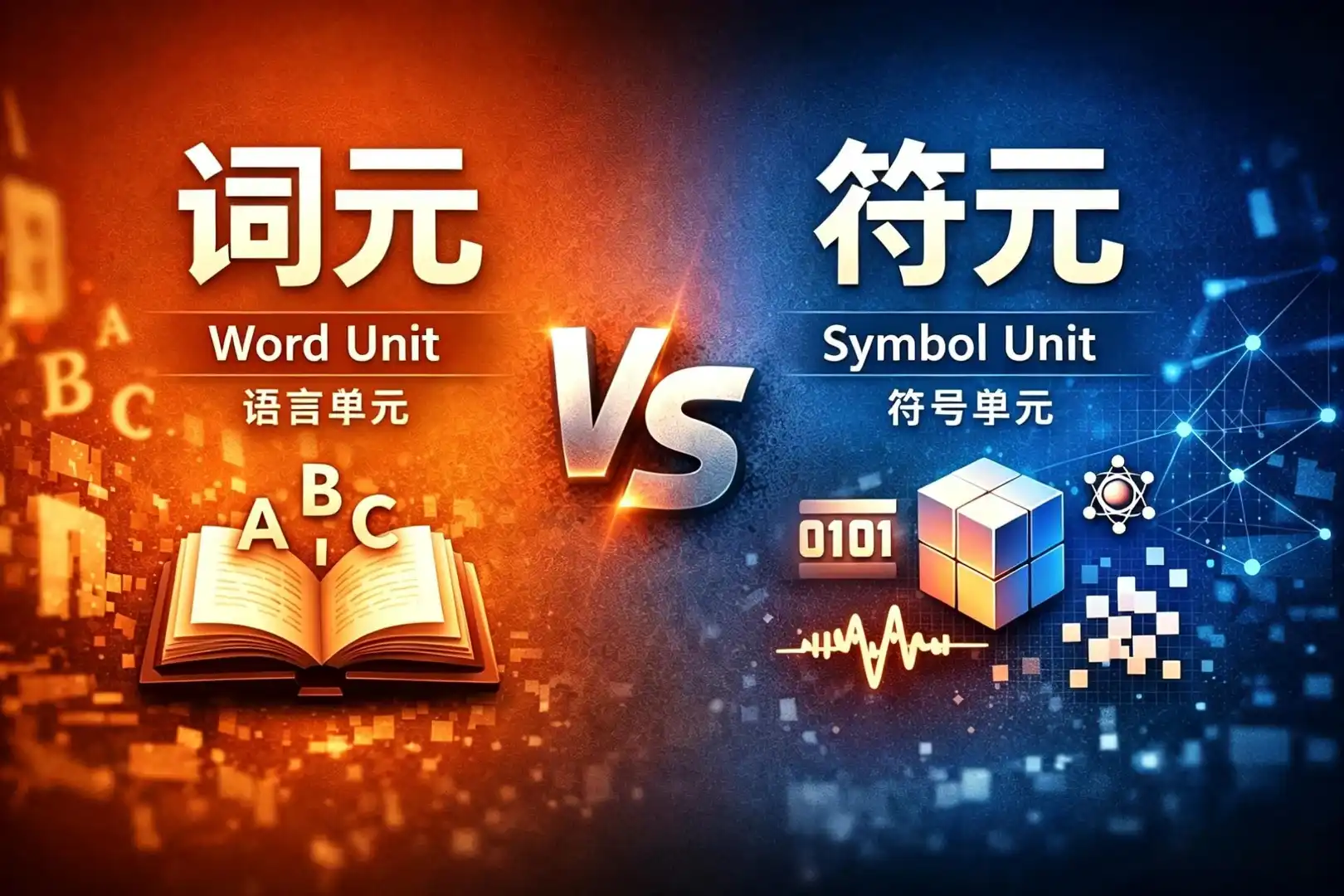
From 'Word Unit' to 'Symbol Unit': The Debate Over the Chinese Translation of 'Token' and Its Underlying AI Cognitive Implications

Recent discussions have emerged regarding the official Chinese translation of the AI term "Token," which has been recommended as “词元” (Cíyuán, meaning "word unit") by the National Committee for Terminology in Science and Technology. While this translation is argued to align with historical usage in natural language processing (NLP) and is considered concise and communicable, this article presents a critical counterview advocating for “符元” (Fúyuán, meaning "symbol unit") as a more structurally accurate and future-proof alternative. The author argues that defining Token based on its origin in NLP—as a linguistic semantic unit—overlooks its evolution into a general-purpose, discrete symbolic unit used across multimodal systems (text, image, audio, etc.). Using “词元” ties the concept too narrowly to language, causing cognitive misalignment and semantic drift when applied in non-linguistic contexts. By contrast, “符元” reflects Token’s fundamental role as a symbol in information theory and computation, independent of modality. The article further critiques the reliance on metaphorical extensions (e.g., comparing image patches to “words”) as insufficient for rigorous terminology. It highlights risks including confusion with existing linguistic terms like Lemma (also translated as “词元”), poor cross-lingual reversibility (e.g., difficult back-translation to English), and systemic misunderstanding among non-expert audiences. In conclusion, the author emphasizes that terminology should align with computational essence—not historical usage or explanatory convenience—to ensure conceptual clarity and scalability in AI’s multidisciplinary future. “符元” is proposed as a more neutral, stable, and structurally coherent translation for Token.

marsbit04/10 10:43

From 'Word Unit' to 'Symbol Unit': The Debate Over the Chinese Translation of 'Token' and Its Underlying AI Cognitive Implications

marsbit04/10 10:43

活动图片