# Jobs Related Articles

HTX News Center provides the latest articles and in-depth analysis on "Jobs", covering market trends, project updates, tech developments, and regulatory policies in the crypto industry.


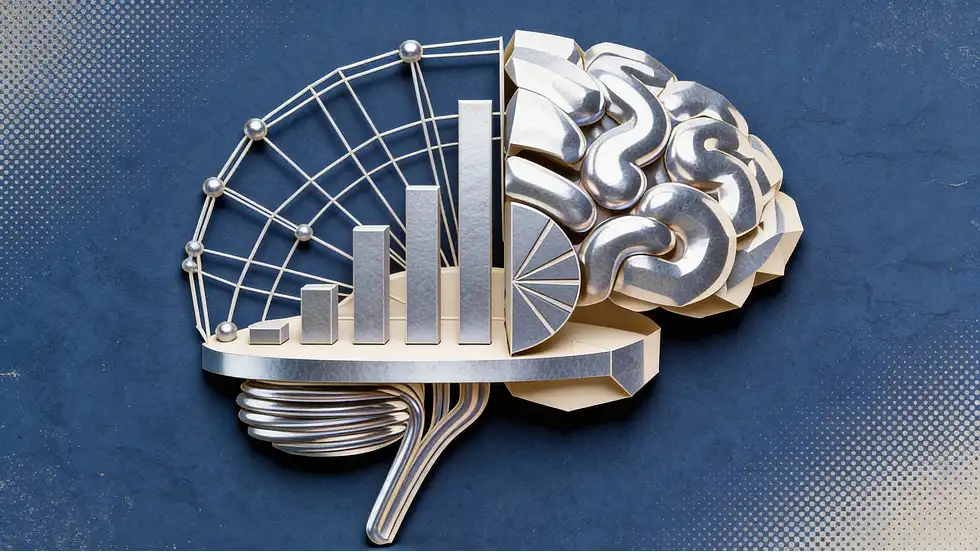
When AI Takes Over Productivity, Which Web3 Jobs Begin to Disappear?

In the evolving landscape of Web3, the integration of AI and automation is reshaping the job market, leading to the decline of certain roles while creating new opportunities. Jobs that involve repetitive or standardized tasks are increasingly being automated. These include: - Junior Solidity developers, as AI can generate standard smart contract code. - Web3 researchers/analysts, with AI handling data analysis and report generation. - Community managers and customer support roles, replaced by AI-driven communication systems. - Crypto traders, outperformed by AI in speed, data processing, and execution. - NFT content creators and low-barrier NFT creators, as generative AI produces art quickly, reducing demand for basic creative work. Simultaneously, new roles are emerging that require interdisciplinary skills: - AI × Web3 architects, designing integrated AI-blockchain systems. - AI Agent training coordinators, managing multi-agent behaviors in DeFi and DAOs. - Web3 prompt engineers, crafting prompts for code generation and AI interactions. - AI on-chain data analysts, extracting insights from blockchain data using AI models. - AI-powered smart contract auditors, enhancing security with automated tools. - Web3 automation strategy designers, developing algorithmic systems for DeFi. Overall, Web3 teams are becoming smaller but more efficient, with a growing emphasis on advanced, cross-disciplinary expertise in architecture, security, and innovation. AI is not diminishing Web3’s potential but is driving it into a new phase of growth, where creativity and technical depth are paramount.

比推03/05 06:00

When AI Takes Over Productivity, Which Web3 Jobs Begin to Disappear?

比推03/05 06:00

How Can Ordinary People 'Survive' the Impact of the AI Wave?

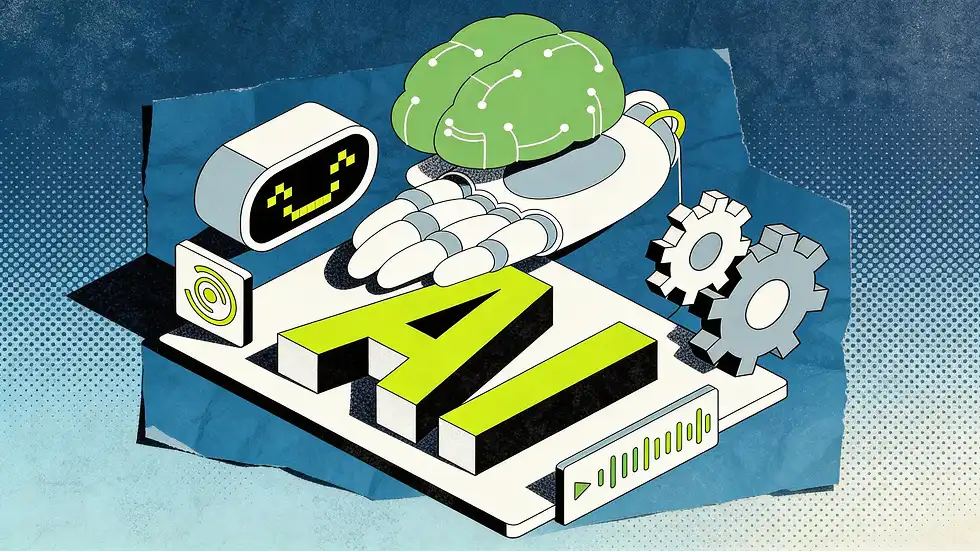
In this urgent warning, HyperWrite CEO Matt Shumer argues that AI advancement is progressing far faster than most people realize, with transformative impacts imminent across all sectors. He draws a parallel to the rapid onset of the COVID-19 pandemic, suggesting the current technological shift is even more profound. Shumer, an AI industry insider, states that a small group of researchers at leading labs like OpenAI and Anthropic are driving exponential progress. He shares his personal experience: recent models like GPT-5.3 Codex and Claude Opus 4.6 can now autonomously build and test complex software applications from a simple English description, requiring zero human correction. This represents a qualitative leap from being an assistant to a superior executor. He emphasizes that this disruption, which began with coding, will soon affect all knowledge work—law, finance, medicine, writing, and analysis—within 1-5 years, not decades. Free versions of AI tools are outdated; the paid, cutting-edge models are vastly more capable. Metrics show AI's autonomous task-completion time is doubling every few months. Crucially, AI is now used to build and improve subsequent AI models, creating a self-accelerating feedback loop toward artificial general intelligence (AGI). Shumer's advice for "surviving" is to start using the most powerful AI tools *now*. Subscribe to premium models, integrate them into core professional tasks, and experiment daily. Financial prudence and developing adaptability are key. He concludes that while AI poses immense risks (from job loss to security threats), it also offers unprecedented opportunities for creativity and problem-solving if approached with curiosity and urgency. The time to prepare is immediately.

marsbit02/18 04:27

How Can Ordinary People 'Survive' the Impact of the AI Wave?

marsbit02/18 04:27

Elon Musk's Latest Interview: The Next 3-7 Years Will Be Very Tough

In a recent 3-hour interview, Elon Musk shared his predictions and concerns about the next 3–7 years, describing it as a turbulent transition period. He warned that white-collar jobs—such as those in law, accounting, and design—will be the first to be disrupted by AI, as artificial intelligence excels at information processing. He also cautioned that traditional higher education is rapidly losing value due to soaring costs and outdated curricula, while AI-powered tutors could revolutionize learning. Looking further ahead, Musk envisions a future of extreme material abundance, where most goods and services become nearly free due to automation, making retirement savings less relevant. He predicts that within three years, surgical robots will surpass human surgeons in capability, thanks to exponential improvements in AI software, processing power, and mechanical dexterity. Energy, measured in watts, will become the true currency of the future. Musk advocates for solar power as the primary energy source and even proposes moving AI data centers to space for unlimited solar energy access—a goal driving SpaceX’s Starship development. He also highlighted China’s growing advantage in AI compute power, citing its massive investments in energy infrastructure, manufacturing scale, and chip production capacity. Musk concluded by emphasizing the importance of instilling AI with a sense of truth-seeking, curiosity, and aesthetic appreciation—rather than rigid rules—to ensure a future more like "Star Trek" than "Terminator." He urged individuals to stay adaptable and proactive in navigating coming changes.

marsbit01/23 04:52

Elon Musk's Latest Interview: The Next 3-7 Years Will Be Very Tough

marsbit01/23 04:52

活动图片