# Investor Related Articles

HTX News Center provides the latest articles and in-depth analysis on "Investor", covering market trends, project updates, tech developments, and regulatory policies in the crypto industry.

AFX Trade Promises to Present "Goodwill Plan" on August 3 Following $24 Million Loss Incident

AFX Trade, a cryptocurrency platform, announced it will present a "goodwill plan" on August 3rd, following a security incident on July 22nd that resulted in a loss of $24.15 million. The company's brief update offered no specific details on compensation for affected users, investors, and employees, only urging calm while the team formulates next steps. The theft occurred from a USDC custody account on Arbitrum, with the stolen funds converted to Ethereum. Blockchain analysts traced the funds to a single wallet. AFX Trade and Arbitrum clarified the exploit targeted a third-party bridge, not Arbitrum's native bridge. An investigation revealed the attack began on July 9th with a social engineering scheme targeting a developer. The attacker then deployed malicious code within AFX's internal JFrog repository and infrastructure, eventually compromising bridge validators to authorize the fraudulent withdrawal. The company stated the exploit leveraged a "trust vulnerability," not a smart contract bug. AFX Trade's head of business development made an offer to the attacker, proposing they keep 30% of the funds as a white hat bounty if 70% is returned. The incident fits a 2026 trend identified by TRM Labs: while the number of crypto hacks hit a record, total losses decreased. However, infrastructure and operational breaches, though fewer, accounted for the majority of financial losses. The AFX breach is classified as an infrastructure incident involving private key compromise.

cryptonews.ru07/31 12:41

AFX Trade Promises to Present "Goodwill Plan" on August 3 Following $24 Million Loss Incident

cryptonews.ru07/31 12:41

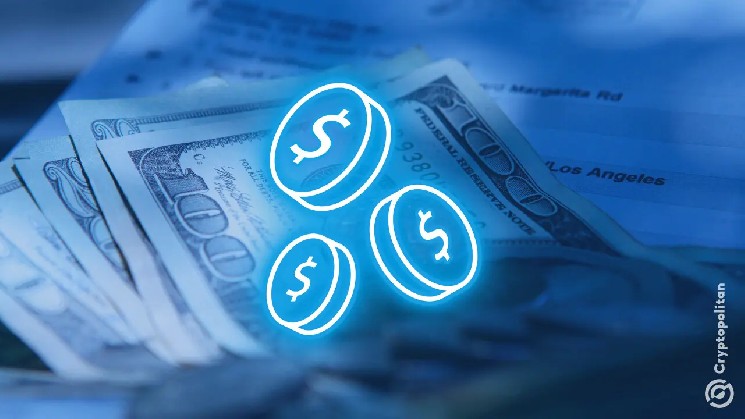
Strategy's Accounting Gimmick: The Cap on BTC Sales Far Exceeds $1.25 Billion

The article, originally from Bankless, discusses how MicroStrategy's (MSTR) recent Bitcoin (BTC) sales reveal a much larger potential selling capacity than the widely reported $1.25 billion "reserve-building" cap. On July 7, MicroStrategy disclosed a sale of 3,588 BTC (~$216M) to pay dividends for its STRAT (STRC) preferred shares and replenish its USD Reserve. Crucially, the company stated this sale did not count against its stated $1.25 billion "reserve-building capacity." The analysis explains that MicroStrategy's "BTC Monetization Plan," part of its broader "Digital Credit Capital Framework," actually outlines three main purposes for selling BTC, only one of which has the $1.25B cap: 1. **Building the USD Reserve** (capped at $1.25B). 2. **Covering preferred share/ debt costs** (replenishing the reserve after payments). 3. **Funding buybacks** (up to $10B for preferred shares and $10B for MSTR common stock). The key nuance is the accounting distinction between "building" the reserve (selling BTC before making payments) and "replenishing" it (selling BTC after using reserve funds for payments). While functionally the same—converting BTC to cash for obligations—only "building" counts against the publicized $1.25B limit. This means sales for "replenishing" and the $20B+ buyback pool allow for total potential sales exceeding $30B. The article frames this as part of MicroStrategy's shift from a simple "buy and hold" Bitcoin narrative to an "active capital management" model, where BTC becomes a balance-sheet tool to manage pressures between its common stock, preferred shares, dollar reserve, and Bitcoin holdings. This creates complex trade-offs and potential conflicts of interest. The conclusion warns investors that the $1.25B figure is not a total sales ceiling. Understanding terms like "build," "replenish," and "repurchase" in MicroStrategy's disclosures is now critical, as the company navigates a new, more complex role as an actively managed entity rather than a passive Bitcoin accumulator.

Odaily星球日报07/10 04:29
Strategy's Accounting Gimmick: The Cap on BTC Sales Far Exceeds $1.25 Billion

Odaily星球日报07/10 04:29

Fundraising is Like a Strange Dance: The 'Absurd Drama' of Silicon Valley Founders' Capital Raises

The article details a series of absurd and revealing anecdotes shared by Silicon Valley founders about their venture capital fundraising experiences, sparked by Greg Isenberg's story of pitching to a sleeping a16z partner. Founders describe surreal pitch meetings: one faced a barefoot, peanut-eating investor who offered triple the requested amount after 30 seconds; another performed a pitch in a VC's parked car; a founder discovered his audience understood no English beyond "yes." These stories highlight the often irrational and performative nature of fundraising. Beyond the absurdity, darker power imbalances are exposed. Stories include investors suggesting founders fire co-founders for their equity, blatant market misjudgments, disrespectful behavior from LPs, and discriminatory remarks. A debate also emerges around "Sequoia's" practice of splitting a round into two valuations. However, the thread isn't solely critical. Positive counter-narratives celebrate supportive VCs who offered crucial advice during crises, respected founders' timelines, and showed simple gestures of respect—like a partner personally fetching coffee before a major pitch. Ultimately, the collective sharing acts as a pressure release, illustrating that fundraising is a complex dance of power, trust, and sometimes sheer theater. It underscores that beyond capital, mutual respect and integrity remain the most enduring foundations of the founder-investor relationship.

marsbit06/09 09:47

Fundraising is Like a Strange Dance: The 'Absurd Drama' of Silicon Valley Founders' Capital Raises

marsbit06/09 09:47

活动图片