Artículos Relacionados con FOMC

El Centro de Noticias de HTX ofrece los artículos más recientes y un análisis profundo sobre "FOMC", cubriendo tendencias del mercado, actualizaciones de proyectos, desarrollos tecnológicos y políticas regulatorias en la industria de cripto.
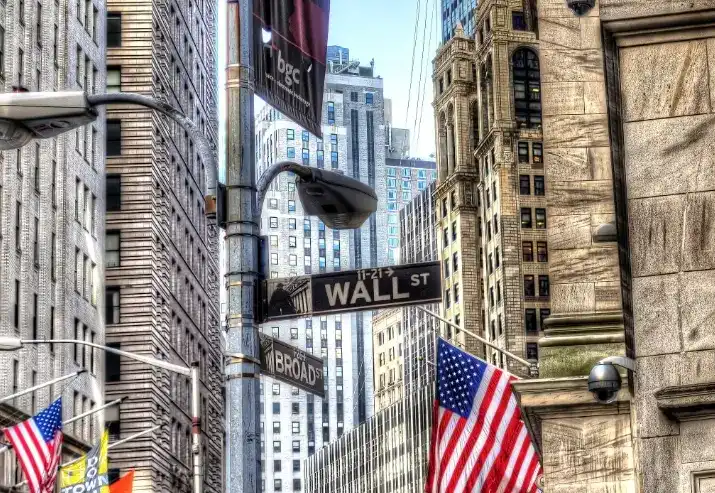
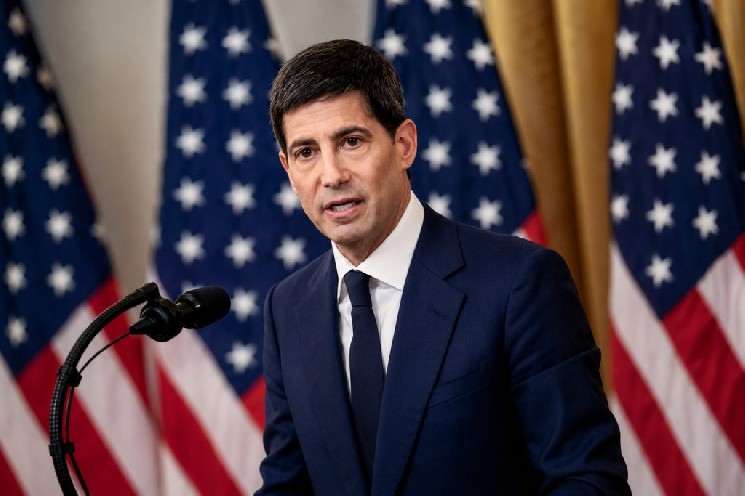
How Does Wall Street View Warsh's Jackson Hole Debut? Hawkish 'Correction' of July Communication; Failure to Hike in September May Further Damage Fed Credibility

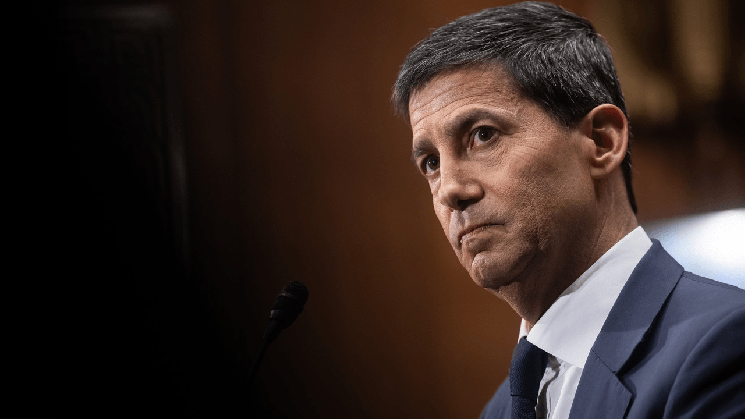
Wall Street widely interpreted Fed Chair Wash's first speech at the Jackson Hole symposium as a "hawkish correction" to the Fed's July FOMC communications. Wash firmly reiterated the Fed's unwavering commitment to the 2% inflation target, indicated that overall financial conditions are not restrictive, and stated that recent positive PCE and CPI data are not enough to show meaningful improvement in underlying inflation trends. He said if confidence is lacking that inflation is falling "clearly and fast enough," the Fed "has more work to do," with Reuters calling it his closest admission yet that another rate hike may be needed. This shifted market focus to the September meeting. JPMorgan's Priya Misra called it a "hawkish speech" that cleaned up July's communication "misstep." Aberdeen's Matthew Amis warned that if the Fed doesn't hike in September, its credibility could take another hit. Barclays and Société Générale now forecast 25-basis-point hikes in September and December, with SocGen adding a March hike expectation. However, analysts noted Wash provided principles but no explicit forward guidance. The "new Fed whisperer," Nick Timiraos, observed Wash gave a more hawkish diagnosis but no clear "reaction function." The CME's FedWatch Tool showed the probability of a September hike jumped from about 35% to around 50-60% after the speech. The bond market reaction was telling: short-term yields rose more than long-term yields, indicating traders were repricing near-term rate hikes. In essence, Wash rebuilt a hawkish policy logic: if the economy remains resilient and inflation doesn't fall fast enough, more tightening is possible. The consensus is that he successfully delivered a hawkish reset. While a September hike is now a serious possibility, the final decision will hinge on incoming data, creating a credibility test for the Fed if data doesn't improve and it holds rates steady.

marsbitAyer 02:16

How Does Wall Street View Warsh's Jackson Hole Debut? Hawkish 'Correction' of July Communication; Failure to Hike in September May Further Damage Fed Credibility

marsbitAyer 02:16

A Crucial Event is Approaching, Pay Attention to Friday: This Could Be the Fed's Most Important Event This Year

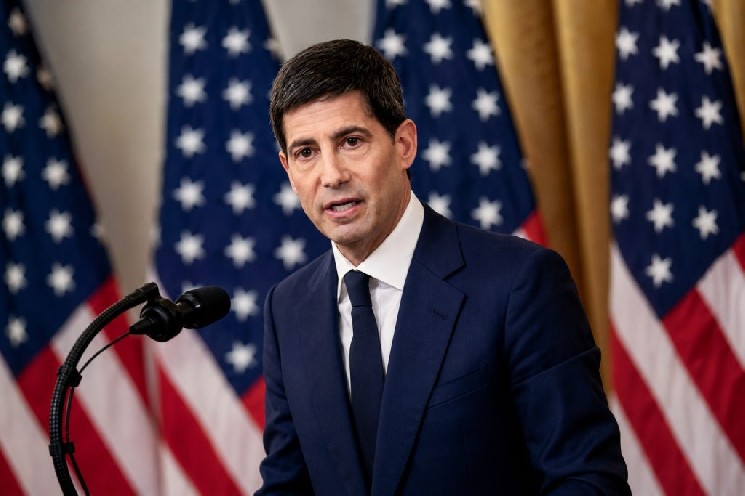
Federal Reserve Chair Kevin Warsh is preparing to deliver one of his most significant speeches this week at the Jackson Hole symposium. Markets and Fed officials are focused on a fundamental question: Is persistently high U.S. inflation due to temporary shocks like tariffs and the war with Iran, or is the economy still too strong from a demand perspective? The answer could determine whether the Fed will raise interest rates in the coming period. Investors will scrutinize Warsh's Friday speech for clues about his economic assessment and the conditions under which he might tighten monetary policy. The outlook is interpreted through two scenarios. One suggests inflation has exceeded the Fed's 2% target for over a year due to temporary shocks and may recede spontaneously. The other warns these events mask deeper economic imbalances, where strong demand allows companies to keep raising prices, potentially necessitating rate hikes. While recent softer inflation data has eased pressure for a September rate hike, concerns remain that the Iran war, new tariffs, and a surge in AI investment could exert lasting upward pressure on prices. Divisions within the Fed are growing, with some officials pushing for further tightening, citing robust consumer spending and labor demand, while others believe price pressures may ease on their own. A notable feature of Warsh's tenure has been his reduced guidance to markets, arguing central bankers talk too much. However, this reluctance to share his own views may be making it harder to build consensus, as evidenced by three dissenting votes for a rate hike last month—the highest in nearly a decade. Market reactions are being closely watched. Following the July meeting, the yield on the 30-year U.S. Treasury note rose to its highest level since 2007, suggesting investors believe the Fed might tolerate slightly higher near-term inflation but could require more significant future rate increases. Therefore, the Jackson Hole speech is crucial not only for near-term rate expectations but also for understanding how Fed policy communication will be shaped under Warsh's leadership.

cryptonews.ru08/26 16:46

A Crucial Event is Approaching, Pay Attention to Friday: This Could Be the Fed's Most Important Event This Year

cryptonews.ru08/26 16:46

LATEST NEWS: Long-awaited Fed meeting minutes released! Here's what you absolutely need to read

The Federal Reserve has released the highly anticipated minutes from its Federal Open Market Committee (FOMC) meeting held on July 28-29. The minutes revealed that while most Fed officials supported holding the federal funds rate steady at 3.50-3.75%, a minority advocated for a 25-basis-point increase. A key consensus was that interest rates may need to remain high for longer, and further hikes could be necessary if inflation does not continue to decline. Inflation concerns were central to the discussion. Officials broadly agreed that risks to inflation remain elevated, with some noting that current financial conditions might not be sufficiently restrictive to bring inflation back to the Fed's 2% target. They observed that price increases have been broad-based across many categories of goods and services. The minutes noted that financial conditions had tightened between meetings, partly driven by market expectations of tighter Fed policy. Some officials viewed this market-driven tightening as having already done some of the Fed's work. Staff economic forecasts saw little change in inflation outlook but a slightly downgraded growth forecast. Other points included assessments of financial stability, with some officials flagging a potential sharp correction in AI-related stocks as a risk. The minutes also covered operational topics, such as the effective handling of a payment system glitch and a proposal—though not adopted—to reduce the number of annual policy meetings. The committee affirmed its commitment to maintaining the phrase "will ensure price stability" in its policy statement.

cryptonews.ru08/19 18:36

LATEST NEWS: Long-awaited Fed meeting minutes released! Here's what you absolutely need to read

cryptonews.ru08/19 18:36

Walsh May "Beat Around the Bush" at Global Central Bankers' Conference, but Internal Fed Division Is the Real Focus?

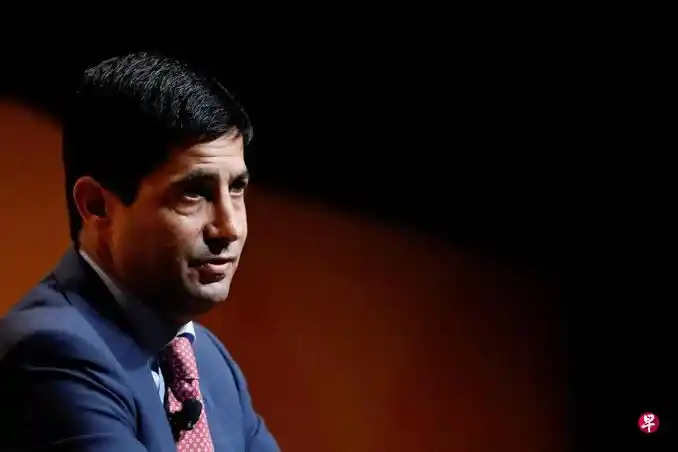
With the annual Jackson Hole symposium approaching, market expectations are rising for clues from Federal Reserve Chair Kevin Wash's upcoming speech on September monetary policy. However, analysts caution that expectations for clear guidance may be overstated, while underestimating the Fed's growing internal divisions. Since taking office in May, Wash has adopted a notably less communicative style than his predecessor, downplaying forward guidance and emphasizing policy independence from market pricing. His scheduled speech on "Financial Innovation in Payments" is thus more likely to focus on broad narratives than near-term policy signals. The more significant focus lies within the Fed itself. At Wash's first meeting in June, nearly half the committee's dot plot projections hinted at a 2026 rate hike need. The July meeting saw three regional Fed presidents dissent in favor of an immediate rate increase—an unusually high level of early-term dissent. This internal rift presents a clearer signal of policy uncertainty than any public speech. Market pricing currently shows high conviction for a September pause, with prediction markets assigning roughly a 74% probability to unchanged rates. Despite this consensus, traders remain wary of potential hawkish surprises amid mixed economic data. Analysts suggest that for investors, tracking the evolving voting patterns within the FOMC may offer more insight into future rate direction than parsing Wash's likely guarded Jackson Hole remarks.

marsbit08/18 10:56

Walsh May "Beat Around the Bush" at Global Central Bankers' Conference, but Internal Fed Division Is the Real Focus?

marsbit08/18 10:56

Consolidation and Jackson Hole: Trader Assesses Bitcoin and Ethereum Movement Scenarios

**Analysis: Bitcoin and Ethereum Consolidation Ahead of Jackson Hole** Bitcoin (BTC) is consolidating near $63,513, with liquidity accumulating around the $62,484 support level. The primary resistance is an unfilled 4-hour Fair Value Gap (FVG) at $64,000-$65,000. Analysts outline three potential scenarios: A) a rejection from the FVG leading to a cascade down to $60,000-$61,000; B) a bullish breakout above the FVG targeting $65,373 and higher; C) (prioritized) a quick stop-loss hunt below $62,484 followed by a rapid reversal upward into the imbalance. Ethereum (ETH) is similarly stagnant, failing to test $2,000 and remaining within its own 4H FVG. Key resistance is at $1,931.50 (PWH). Scenarios include: A) a genuine breakout and hold above this level; B) a deep liquidity grab below $1,852 followed by a powerful reversal; C) a false breakout above resistance leading to a cascading dump towards $1,780-$1,800. Despite ETF inflows, ETH's price lacks momentum. The US Dollar Index (DXY) broke below key support at 99.475, opening a path toward lower FVGs near 99,000. This weakness, if sustained, could support crypto markets. Key triggers this week are FOMC meeting minutes and preliminary PMI data, with positioning ahead of the Jackson Hole symposium being crucial. The overall sentiment is cautiously positive, but the recommended strategy is to stay out of medium-term positions in major assets until a clear directional move occurs, favoring intraday trading on lower timeframes with strict risk control.

cryptonews.ru08/17 11:22

Consolidation and Jackson Hole: Trader Assesses Bitcoin and Ethereum Movement Scenarios

cryptonews.ru08/17 11:22

Why Every Investor Needs to Pay Attention to the Federal Reserve

Why Every Investor Should Follow the Federal Reserve Key developments on August 12, 2026, demonstrate how crucial the Fed is. Following the CPI report that matched expectations, markets instantly repriced stocks, bonds, and currencies, adjusting the probability of a September Fed rate hike. The Federal Reserve controls the federal funds rate, the anchor for all borrowing costs. Its "dual mandate" is to maintain stable prices and maximum employment. The current policy rate is 3.50%-3.75% after a series of cuts from 2024-2025. Understanding Fed actions is vital for your portfolio: - **Rate Hikes:** Slow the economy to fight inflation. They pressure growth/tech stocks (due to higher discount rates) and lower bond prices but can initially benefit banks. - **Rate Cuts:** Stimulate the economy. They typically boost growth stocks and bond prices while lowering borrowing costs for consumers and businesses. - **Holding Steady:** Still impactful. Current restrictive policy, with positive real interest rates, continues to weigh on the economy. Market-moving signals now come more from economic data than official guidance. A key change is new Fed Chair Kevin Warsh, who has reduced forward guidance, making each data release (CPI, PCE, jobs reports, GDP) more critical for predicting Fed moves. In this environment, investors should track key reports, compare data to market expectations, and understand what is already "priced in." The focus now is on the September 15-16 FOMC meeting. The August CPI (due Sep 11) and jobs report (Sep 5) will be decisive. Ultimately, interest rates are a powerful, continuous force on all assets. Learning to interpret the data that drives Fed policy is an essential skill for navigating today's markets.

marsbit08/13 10:27

Why Every Investor Needs to Pay Attention to the Federal Reserve

marsbit08/13 10:27

US Consumer Price Index Drops to 3.4% as Expected, Bitcoin Rises

U.S. Consumer Price Index (CPI) inflation for July met expectations, easing concerns about a Federal Reserve interest rate hike this year. Following the data release, Bitcoin recovered, rising above the key psychological level of $64,000. The U.S. CPI fell to 3.4% year-over-year and 0.1% month-over-month, aligning with forecasts. The core CPI also matched expectations, dropping to 2.5% annually and 0.2% monthly. Bitcoin climbed to around $64,100, recovering from an intraday low near $63,400. However, trading remains in a narrow range due to uncertainty from U.S.-Iran tensions and their potential impact on energy prices. Fed Presidents Austan Goolsbee and Neel Kashkari have indicated inflation is a top concern, with Kashkari advocating for rate hikes. Despite this, the probability of a Fed rate hike at the September FOMC meeting decreased after the CPI report, which is viewed as positive for Bitcoin and the broader crypto market. Market forecasts now suggest a 67% chance rates will remain unchanged. Data from prediction platform Polymarket shows the likelihood of a rate hike this year has fallen to 54%, down from a recent peak of 60% and a July high of 79% amid escalating U.S.-Iran tensions. Market attention now shifts to tomorrow's Producer Price Index (PPI) report for a more complete picture of inflation. A low PPI reading could further reduce rate hike fears, especially following July's jobs report which indicated ongoing labor market instability.

cryptonews.ru08/12 21:00

US Consumer Price Index Drops to 3.4% as Expected, Bitcoin Rises

cryptonews.ru08/12 21:00

活动图片