# Identity Related Articles

HTX News Center provides the latest articles and in-depth analysis on "Identity", covering market trends, project updates, tech developments, and regulatory policies in the crypto industry.

AI Agents Can Be Verified, But Who Protects Their Privacy?

As AI Agents evolve from automated tools into active participants in on-chain economies, a critical challenge emerges: establishing trust while preserving privacy. While standards like ERC-8004 aim to provide verifiable identity and reputation for agents, their public nature could expose sensitive operational strategies, user preferences, and business relationships in fields like DeFi, governance, and prediction markets. The proposed ACTA (Anonymous Credentials for Trustless Agents) framework addresses this by adding a privacy layer. It allows agents to cryptographically prove they meet certain criteria (e.g., having passed an audit or possessing sufficient reputation) without revealing the underlying sensitive data, using zero-knowledge proofs. This shifts trust from "public identity" to "policy-based proof." This shift is crucial because agents act dynamically on behalf of users, making their behavior a potential proxy for user intent. ACTA would enable verification of an agent's legitimacy or authorization without creating a permanent, public map of all its activities and relationships. ACTA remains a research direction with open challenges, including scalability, decentralization of credential issuers, and implementation costs. However, it highlights a fundamental need: a robust Agent economy requires not just mechanisms for verification, but also for protecting the privacy of agents, their users, and the protocols they interact with.

marsbit2 days ago 01:27

AI Agents Can Be Verified, But Who Protects Their Privacy?

marsbit2 days ago 01:27

From KYC to KYA, Is It Time to Give AI Agents Their Own 'ID Cards'?

Titled "From KYC to KYA: Is It Time to Issue 'Identity Cards' for AI Agents?", this article discusses the emerging concept of Know Your Agent (KYA) as AI agents become increasingly autonomous. In Agent-to-Agent (A2A) scenarios, where agents execute contracts, payments, and trades without human intervention, the lack of a shared identity standard creates risks like unauthorized transactions, fraud, and accountability gaps. KYA acts as a trust layer to verify an agent's origin, authority, and accountability. The need for KYA is most critical outside centralized platforms (like Google or Coinbase), such as in decentralized exchanges (DEX), A2A payments, and merchant payments. Several key players are building KYA infrastructure: - **ERC-8004**: A proposed Ethereum standard that issues a unique AgentID as an NFT, building on-chain identity, reputation, and validation systems. - **Visa TAP**: Visa's solution issues agent identity credentials, with transactions verified via triple signatures (legitimacy, delegator, payment method). - **Trulioo**: Extends its KYC/KYB compliance infrastructure using a Digital Passport for Agents (DAP), issued after verifying both the developer and user, and refreshed per transaction. - **Sumsub**: Focuses on post-issuance real-time verification, detecting agent anomalies during transactions using its existing compliance systems. Regulatory bodies are also acting. The EU AI Act mandates operator identification in logs for high-risk AI systems, the US NIST prioritizes agent identity management standards, and Singapore has released a national AI governance framework. Similar to how the 2019 FATF Travel Rule impacted crypto exchanges, possessing KYA infrastructure may determine market entry in the AI agent era. The market is expected to segment rather than produce a single winner, with success depending on integrations with merchants, payment networks, and KYC client bases.

marsbit05/10 05:45

From KYC to KYA, Is It Time to Give AI Agents Their Own 'ID Cards'?

marsbit05/10 05:45

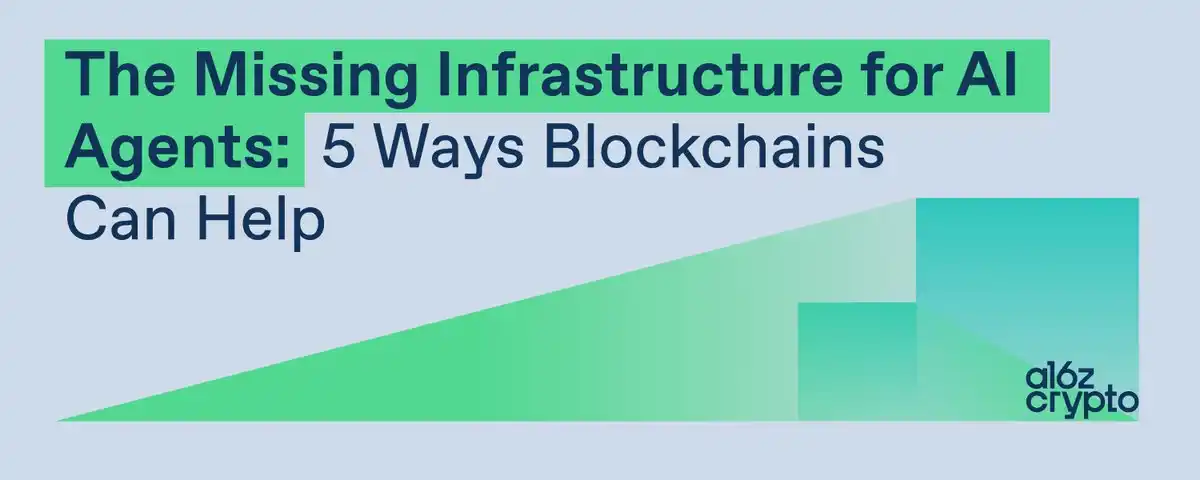
How Blockchain Fills the Identity, Payment, and Trust Gaps for AI Agents?

AI Agents are rapidly evolving into autonomous economic participants, but they face critical gaps in identity, payment, and trust infrastructure. They currently lack standardized ways to prove who they are, what they are authorized to do, and how they should be compensated across different environments. Blockchain technology is emerging as a solution to these challenges by providing a neutral coordination layer. Public ledgers offer auditable credentials, wallets enable portable identities, and stablecoins serve as a programmable settlement layer. A key bottleneck is the absence of a universal identity standard for non-human entities—akin to "Know Your Agent" (KYA)—which would allow Agents to operate with verifiable, cryptographically signed credentials. Without this, Agents remain fragmented and face barriers to interoperability. Additionally, as AI systems take on governance roles, there is a risk that centralized control over models could undermine decentralized governance in practice. Cryptographic guarantees on training data, prompts, and behavior logs are essential to ensure Agents act in users' interests. Stablecoins and crypto-native payment rails are becoming the default for Agent-to-Agent commerce, enabling seamless, low-cost transactions for AI-native services. These systems support permissionless, programmable payments without traditional merchant onboarding. Finally, as AI scales, human oversight becomes impractical. Trust must be built into system architecture through verifiable provenance, on-chain attestations, and decentralized identity systems. The future of Agent economies depends on cryptographically enforced accountability, allowing users to delegate tasks with clearly defined constraints and transparent operation logs.

marsbit04/21 09:19

How Blockchain Fills the Identity, Payment, and Trust Gaps for AI Agents?

marsbit04/21 09:19

Ant Digital Tech Proposes New Architecture for Agent Economy, Covering Four Layers: Identity, Payment, Risk Control, and Compliance

Ant Digital Technologies (Ant Digital) has introduced a new architectural framework for the agentic economy, named the "4R Full-Stack Architecture," at the Hong Kong Web3 Festival. The framework is designed to address four core challenges in AI agent operations: identity, payment, risk control, and compliance. The four layers include: - **Agentic Runtime**, featuring DTClaw with the CARLI security model to enforce behavioral constraints and ensure controllability and auditability; - **Payment Rails**, which provide on-chain payment channels supporting smart decision-making, verifiable credentials, instant settlement, and cross-chain asset transfers; - **Agent Registry**, leveraging DIDs and the ERC-8004 standard to assign verifiable on-chain identities to agents; - **Root Infrastructure**, built on Jovay Layer2 and ZKVM technology to enable high-speed micro-payments and trusted off-chain computation with on-chain verification. According to CTO Yan Ying, the architecture aims to resolve fundamental gaps in the current agent economy—such as execution vulnerabilities, identity issues, payment barriers, and trust deficits—by redesigning underlying infrastructure rather than applying superficial fixes. The initiative builds on Ant Digital’s extensive experience in financial-grade security, privacy computing, and blockchain.

marsbit04/20 09:24

Ant Digital Tech Proposes New Architecture for Agent Economy, Covering Four Layers: Identity, Payment, Risk Control, and Compliance

marsbit04/20 09:24

New York Times' Blockbuster Investigation Reignites Satoshi Nakamoto Identity Mystery, Adam Back Quickly Denies After Being Identified

The New York Times published an extensive investigation suggesting that Blockstream CEO and cryptographer Adam Back is the most plausible candidate for being Bitcoin’s pseudonymous creator, Satoshi Nakamoto. The report, by Pulitzer-winning journalist John Carreyrou, analyzed linguistic patterns, technical ideas, and historical context from decades of online archives and cryptographic mailing lists. It highlighted Back’s early work on Hashcash—a proof-of-work system used in Bitcoin—as well as his consistent advocacy for digital cash and privacy technologies since the 1990s. The investigation also pointed to stylistic similarities in writing and aligned ideological views between Back and Satoshi. However, Back quickly denied the claims, calling the evidence coincidental and statistically biased due to his high volume of posts in crypto circles. He reiterated that he is not Satoshi and argued that Satoshi’s anonymity benefits Bitcoin. The crypto community responded with skepticism; some developers criticized the report for relying on circumstantial evidence, while others accused Back of exaggerating his role in Bitcoin’s origins. Past attempts to identify Satoshi, including high-profile claims involving Dorian Nakamoto and Craig Wright, have all failed due to lack of conclusive proof. The mystery remains unsolved, and Bitcoin’s value continues to stem from global adoption rather than its creator’s identity.

marsbit04/09 10:34

New York Times' Blockbuster Investigation Reignites Satoshi Nakamoto Identity Mystery, Adam Back Quickly Denies After Being Identified

marsbit04/09 10:34

$20 for a Face: The Underground Business of Crypto KYC

Crypto KYC Bypass: A $20 Underground Industry Despite stringent KYC (Know Your Customer) requirements from major crypto exchanges, a thriving underground market exists to bypass these checks for as low as $20. Users often face geo-blocks or lengthy verifications, preventing access to services. This has fueled demand for illicit KYC services. Reports indicate over 500,000 participants in underground KYC markets, with more than 1 million listings selling verified profiles from platforms like Coinbase and Kraken. These accounts often include real personal data, sometimes without the original owners' knowledge. Fraud techniques have evolved, including deepfake attacks (up 2000% in three years), screen-based spoofing, and AI-generated fake documents. The virtual currency sector is the primary target, accounting for over 78% of KYC attacks. An investigation into a Telegram-based KYC vendor revealed a TRON address with over $59,000 in USDT from 600 transactions over two years, all eventually transferred to an OKX hot wallet. An interview with a KYC service provider, "Maoli," who operates in Chinese-speaking regions, detailed the process: clients pay for accounts verified by "foreigners" recruited globally, often from lower-income regions, who perform the KYC steps for a small fee. These accounts are sold with warnings against holding large funds due to fraud risks and potential reclaiming by the original identity owners. Maoli described the business as a "three-way win": users gain access, exchanges get user numbers, and he profits. However, this ignores the victims of identity theft whose data is used without consent. The KYC system, while intended for security, functions as a permeable barrier, with a vast shadow economy ensuring access for those willing to pay.

marsbit03/30 07:36

$20 for a Face: The Underground Business of Crypto KYC

marsbit03/30 07:36

活动图片