# Fed Policy Related Articles

HTX News Center provides the latest articles and in-depth analysis on "Fed Policy", covering market trends, project updates, tech developments, and regulatory policies in the crypto industry.

Gold Plunged Over 4%, Silver Crashed 11%, Did the US Stock Market Plunge Trigger Algorithmic Selling in Precious Metals?

Gold and silver prices plummeted sharply on Thursday, with gold dropping over 4% and silver plunging nearly 11%, amid a broader sell-off in metals triggered by a significant decline in U.S. equities. The Nasdaq fell more than 2%, prompting some traders to liquidate commodity positions—including gold, silver, copper, platinum, and palladium—to cover losses in equities and seek liquidity. A strong dollar and risk-off sentiment contributed to the decline. The sharp and sudden downturn was largely attributed to algorithmic and momentum-driven trading. After a period of sustained gains, metals faced heavy selling pressure as key technical levels were breached, leading to automated sell orders. Some analysts characterized the move as a "vacuum-style drop," typical of systematic trading strategies during periods of market stress. Despite the sell-off, many analysts remain bullish on gold’s longer-term prospects, citing ongoing geopolitical risks, questions around Federal Reserve policy, and a broader shift away from traditional assets. Major banks, including J.P. Morgan and Deutsche Bank, maintain positive year-end targets. Market participants are now closely watching upcoming U.S. economic data, particularly the CPI release, for clues on the Fed’s interest rate path, as lower rates generally support non-yielding assets like precious metals.

marsbit02/13 02:57

Gold Plunged Over 4%, Silver Crashed 11%, Did the US Stock Market Plunge Trigger Algorithmic Selling in Precious Metals?

marsbit02/13 02:57

Derive and Strands Introduce Off-Exchange Custody for On-Chain Derivatives

On February 6th, a sudden and severe market crash occurred across multiple asset classes without a clear catalyst. Bitcoin plunged 16% to $60,000, silver dropped 17%, and the tech-heavy Nasdaq fell 1.5%, resulting in $2.6 billion in crypto liquidations. The simultaneous decline in these diverse assets—often seen as a hedge (silver), a growth bet (tech stocks), and a high-risk casino (crypto)—suggests a severe liquidity crisis. In equities, AMD and Alphabet reported strong earnings but provided future guidance that disappointed overly optimistic markets, triggering a sector-wide selloff in chips and tech. The massive capital expenditure plans from Big Tech (over $500 billion collectively) raised concerns that AI is a capital-intensive endeavor rather than a guaranteed profit engine, threatening high valuations. Silver, after a massive 68% rally in January, crashed 50% in three days. Its dual nature as both an industrial metal and a safe-haven asset became a curse. The selloff was exacerbated by increased margin requirements, reduced market maker activity, and the surprise nomination of a hawkish Fed chair by Trump, which reduced fears of inflationary monetary policy. The crypto market, which had been artificially propped up by massive institutional buying throughout 2025, was hit hardest as it is often the first asset sold in a liquidity crunch to cover losses elsewhere. The true epicenter of the crisis may be Japan, where the 40-year government bond yield surged past 4% for the first time. This shattered the foundation of the massive Yen carry trade, forcing global funds to unwind positions in various assets to cover their soaring costs, creating a systemic liquidity black hole.

marsbit02/10 13:14

Derive and Strands Introduce Off-Exchange Custody for On-Chain Derivatives

marsbit02/10 13:14

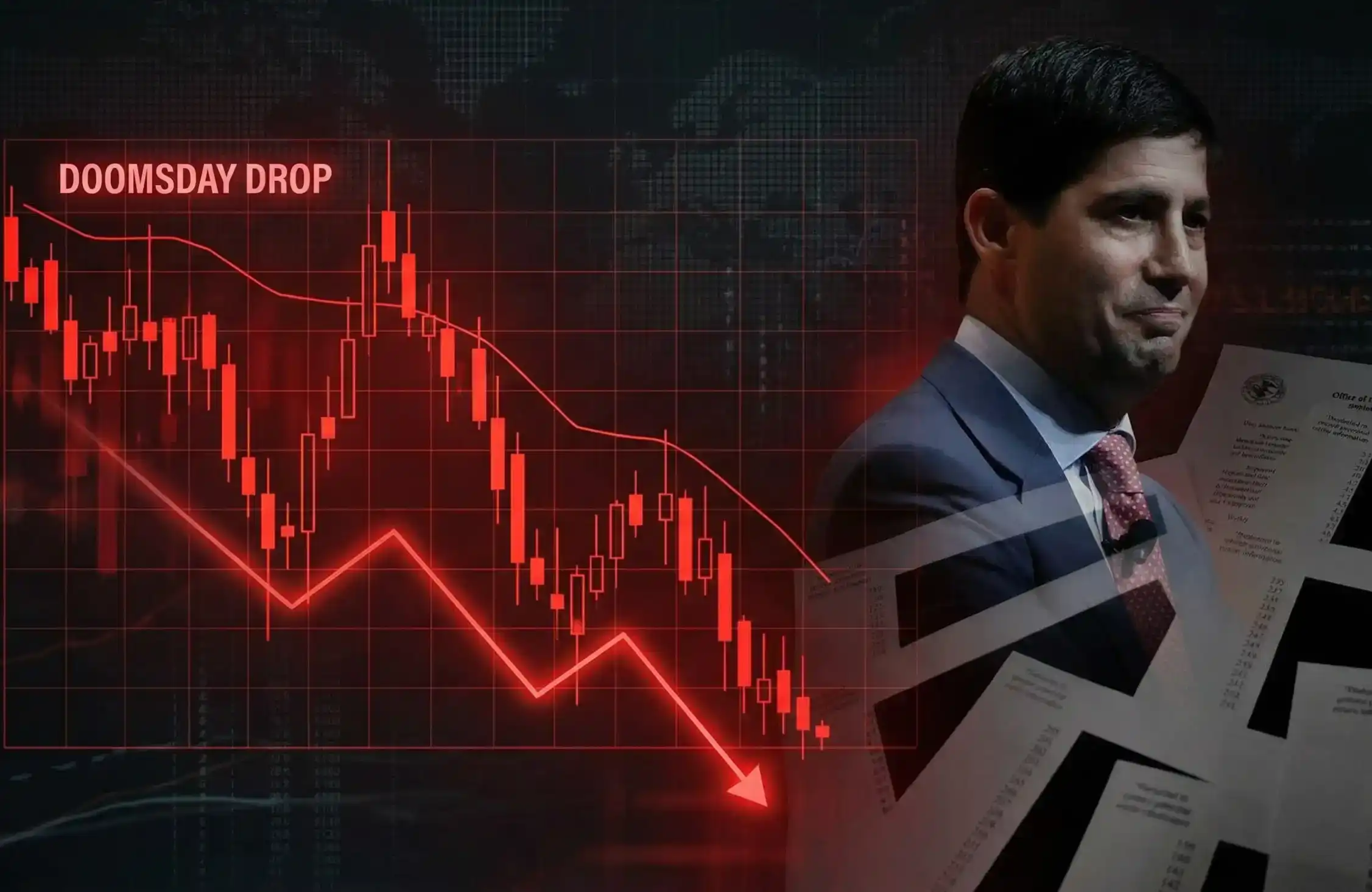
The Real Culprit Behind the Crypto Crash: The Warsh Effect

The cryptocurrency market crash, termed the "Warsh Effect," is attributed to former Federal Reserve Governor Kevin Warsh's potential nomination as the next chair. Following the announcement, Bitcoin fell to $78,214 (down 6.9% in 24 hours, 12.4% weekly), Ethereum to $2,415 (down 10.5% in 24 hours, 18.2% weekly), and other major altcoins like Solana also experienced significant double-digit losses. Warsh, known as a monetary policy hawk, has historically emphasized inflation vigilance and criticized post-2008 crisis stimulus measures. Markets reacted negatively due to expectations of tighter monetary policy, higher real interest rates, and reduced liquidity—conditions unfavorable for risk assets like crypto. This triggered over $1 billion in net outflows from US Bitcoin and Ethereum ETFs, initiating a cascade of liquidations that accelerated the sell-off. However, Warsh has also expressed constructive views on Bitcoin, calling it a valuable policy barometer and highlighting the US strategic interest in leading crypto development. His appointment requires Senate confirmation and, even if approved, he would only be one vote on the FOMC, which currently holds a cautious consensus on rate cuts. The market's reaction reflects a clash between the bearish narrative of tighter liquidity and a bullish perspective that considers Warsh's pro-innovation stance and political context. The key upcoming event is his Senate confirmation hearing, which will provide clearer signals on future monetary and regulatory policy.

Odaily星球日报02/01 11:13

The Real Culprit Behind the Crypto Crash: The Warsh Effect

Odaily星球日报02/01 11:13

BitMart Insights: January Crypto Market Review and Hotspot Analysis

BitMart Insights: January Crypto Market Review and Key Analysis In January, the Federal Reserve maintained interest rates, signaling cautious policy amid persistent inflation and resilient employment. U.S. stocks rose, driven by AI and earnings, but faced political and external risks. The crypto market saw mixed activity: total trading volume and market cap fluctuated, indicating ongoing uncertainty. New token launches were dominated by VC-backed projects like Brevis and Sentient, while meme coins lacked sustained momentum. BTC and ETH spot funds recorded net inflows of $2.23 billion and $500 million, respectively, reflecting renewed institutional interest. Stablecoin circulation dipped slightly, but emerging options like USD1 and USDE grew. Technically, BTC and ETH broke key support levels, suggesting short-term weakness, with critical supports at $84,000 and $2,623. SOL found support near $117 but remained under pressure. Key developments included World Liberty Trust’s application for a U.S. trust bank license to issue USD1 stable币, and progress on the CLARITY Act, which faces partisan challenges. X’s crackdown on InfoFi projects led to sector declines, highlighting shifts in platform incentives. The launch of ERC-8004 and integration with x402 protocols set the foundation for decentralized AI agent economies. Looking ahead, regulatory clarity, AI ecosystem growth, and USD1’s expansion will be critical areas in February.

marsbit01/30 11:58

BitMart Insights: January Crypto Market Review and Hotspot Analysis

marsbit01/30 11:58

Small-Cap Index Hits New High Again: Will History Predict This Crypto Bull Market?

Small-cap stock index Russell 2000 has reached a new all-time high in early 2026, sparking discussions about its historical correlation with Bitcoin bull markets. The index, which tracks 2,000 smaller U.S. companies, is seen as a gauge of risk appetite, as these firms are more sensitive to interest rate changes due to their reliance on bank financing. Historical data shows that previous breakouts in Russell 2000—in 2016 and 2020—coincided with major Bitcoin rallies. In 2016, post-halving supply constraints and improved risk appetite fueled a bull run. In 2020, massive monetary easing and institutional adoption drove Bitcoin’s surge. However, the current cycle differs. Bitcoin had already reached $100,000 by November 2024, and its post-halving gains—around 50% since April 2024—are modest compared to previous cycles (5x and 27x). Factors like institutional involvement through ETFs, reduced volatility, diminishing halving effects, and earlier price peaks may explain the slower momentum. While some analysts link Russell 2000’s performance to crypto market movements due to shared sensitivity to macro liquidity, the correlation remains speculative with only two historical instances. Notably, despite the index’s rise, small-cap ETFs saw significant outflows in 2025, and many Russell 2000 companies reported negative earnings—raising questions about the sustainability of the risk-on narrative. The article concludes that while Russell 2000’s breakout is an interesting macro indicator, it should not be used as a direct trading signal for crypto, given structural market changes and limited historical evidence.

比推01/23 13:34

Small-Cap Index Hits New High Again: Will History Predict This Crypto Bull Market?

比推01/23 13:34

活动图片