# Cross-Border Related Articles

HTX News Center provides the latest articles and in-depth analysis on "Cross-Border", covering market trends, project updates, tech developments, and regulatory policies in the crypto industry.

The Last Mile of Stablecoins: MoneyGram Connects Crypto Wallets to Cash Outlets in Over 170 Countries

Stablecoins have revolutionized cross-border payments with speed and low cost, but a fundamental barrier remains: converting digital money into physical cash in most parts of the world. On August 11th, global remittance giant MoneyGram announced its "MoneyGram Ramps" crypto-cash service is now live on the Solana blockchain. This allows developers, via a simple API, to connect their applications to MoneyGram's network of nearly 500,000 cash agent locations across over 170 countries. Users can now walk into a local MoneyGram agent to convert their USDC into local currency cash or use cash to purchase USDC for their wallets. Solana wallet Rift is the first to integrate the service. MoneyGram, founded in 1940 and historically second only to Western Union in global remittance volume, was privatized in 2023. Since then, it has accelerated its shift into a fintech platform, opening its compliance capabilities, cash network, and settlement infrastructure as services for developers. Its involvement with crypto is not new, having previously partnered with Ripple, Stellar, and Circle, and even issuing its own stablecoin, MGUSD, on Stellar in 2026. The Ramps API solves a critical physical obstacle to stablecoin adoption. While a USDC transfer from New York to Lagos takes seconds and costs cents on-chain, the recipient often lacks a bank account to access the funds. MoneyGram's extensive physical agent network, prevalent in regions like Sub-Saharan Africa, Southeast Asia, and Latin America, bridges this gap, connecting on-chain dollars to the offline cash-based economy. No crypto-native company could replicate this network quickly. MoneyGram chose Solana for its multi-chain expansion due to its extremely low transaction fees (often less than a cent) and fast confirmation times, making it ideal for small-value, frequent remittances. Solana's developer ecosystem is also geared toward consumer-facing applications. This partnership represents a pragmatic path for stablecoins in everyday remittances. Users don't need to understand blockchain or have a bank account; they simply visit a trusted local agent. The underlying settlement shifts from SWIFT to Solana, but the user experience remains familiar. The true path to stablecoin adoption is being paved by an 85-year-old remittance company, using its physical network to solve the "last mile" problem for crypto.

marsbit08/12 04:31

The Last Mile of Stablecoins: MoneyGram Connects Crypto Wallets to Cash Outlets in Over 170 Countries

marsbit08/12 04:31

Why Are Crypto VCs Focusing on Stablecoin Infrastructure?

Crypto VC Focuses on Stablecoin Payment Infrastructure Despite an overall cooling crypto VC market in Q1 2026, investment in stablecoin payment infrastructure is gaining momentum. Capital is concentrating on mature projects with existing users, transaction volume, and clearer revenue models over purely speculative token-based ventures. Stablecoins are evolving from trading tools into backend infrastructure for efficient, 24/7 cross-border payments (e.g., B2B, remittances, payroll). Startups are building along the entire payment stack—connecting stablecoins to bank accounts, cards, forex liquidity, and local compliance systems. Recent large funding rounds for companies like Rain (cards), OpenFX (cross-border), and RedotPay highlight this trend. VC interest stems from several factors: solving real inefficiencies in traditional cross-border settlement, established fee-based revenue models (transaction fees, forex spreads), stablecoins becoming an invisible backend tool for end-users, clearer US regulatory frameworks attracting traditional finance, and acquisition exits to companies like Stripe and Mastercard. However, challenges remain. High on-chain stablecoin volume doesn't equal real retail payment volume; funding is concentrated in a few top performers; services risk commoditization; global expansion requires navigating local banking and regulations per market; and large traditional payment firms are both potential clients and future competitors. Future investment may focus on cross-border B2B payments, bank-stablecoin connectivity, stablecoin-linked cards, multi-chain/asset payment orchestration platforms, and infrastructure for AI Agent payments. Ultimately, VCs are betting not on a single stablecoin's dominance, but on the critical infrastructure needed to integrate programmable, global settlement assets into the traditional financial system.

marsbit08/10 10:41

Why Are Crypto VCs Focusing on Stablecoin Infrastructure?

marsbit08/10 10:41

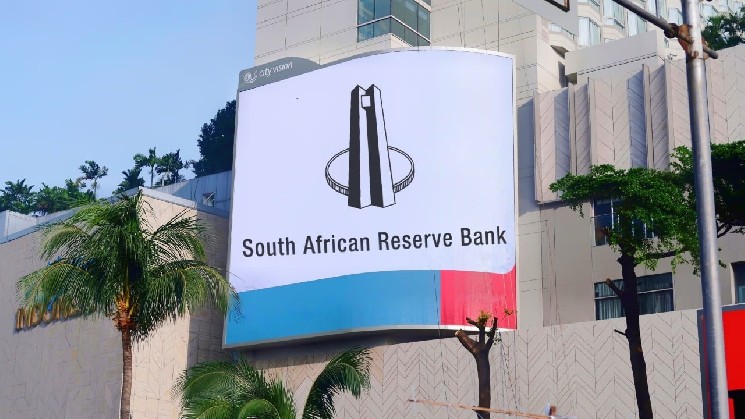
Ehsani of VALR Warns That Cryptocurrency Restrictions Could Lead to Weakened Regulatory Oversight

Farzam Ehsani, co-founder and CEO of VALR, warns that South Africa's proposed regulatory framework for cross-border cryptocurrency transactions could severely harm the domestic digital asset industry and push financial activity into the shadows unless key provisions are substantially revised. Commenting on draft guidance from the National Treasury and the South African Reserve Bank (SARB), Ehsani argues that applying decades-old capital controls to modern technology threatens jobs, local investment, and business innovation. While acknowledging a positive change—that reporting is triggered when funds exit a licensed Crypto Asset Service Provider (CASP), not at purchase—Ehsani states the proposals still disadvantage licensed local operators. He suggests South Africa would benefit more from fully abolishing exchange controls while maintaining proper reporting and oversight, rather than forcing a half-century-old regulatory regime onto the digital economy. The draft rules allow resident individuals to send crypto abroad within existing exchange allowances but restrict legal entities from cross-border crypto transactions. It also deems certain inbound transfers from private, non-custodial wallets as impermissible for local CASPs. Ehsani contends these restrictions create perverse incentives. By blocking legitimate corporate transactions, especially cross-border stablecoin payments that offer faster, cheaper settlement, the rules would undermine the very regulatory oversight authorities seek, likely pushing transactions offshore or underground and reducing transparency. Ehsani also criticizes the treatment of self-custody wallets, warning that labeling transactions from non-custodial sources as inadmissible is impractical and will drive users to foreign, unregulated exchanges instead of local licensed platforms. If South Africa maintains capital controls, he argues they should be applied on a principled, fair, and technology-neutral basis, regulating value movement and risk rather than dictating technology choices. His comments follow a similar challenge from another local exchange, Luno, last month. The draft guidance is open for public comment until September 30. Ehsani remains optimistic the consultation will lead to a more balanced regime but stresses South Africa faces a fundamental choice: either unlock growth and global competitiveness or let its regulatory framework undermine those ambitions.

cryptonews.ru08/09 20:05

Ehsani of VALR Warns That Cryptocurrency Restrictions Could Lead to Weakened Regulatory Oversight

cryptonews.ru08/09 20:05

Governments Are Quietly Building a Global Firewall for Stablecoins

Governments are quietly constructing a global regulatory framework for stablecoins. Regulators in Washington, London, Brussels, and Hong Kong are finalizing rules that grant them powers to block, freeze, and sometimes redirect cross-border stablecoin transfers. While transactions move quickly on the blockchain, the points where users convert to and from fiat currency create opportunities for oversight. The US Treasury, implementing the GENIUS Act, has proposed strict Anti-Money Laundering (AML) and sanctions rules for issuers, demonstrating enforcement with actions against exchanges. The UK has established a two-tier system, with a special "systemic" designation for major issuents granting authorities direct oversight. The EU's MiCA regulation has already impacted the market, leading exchanges to delist some stablecoins like USDT for European users while approving others like USDC. In Asia, Hong Kong has licensed bank-backed issuers, applying a "same activity, same risk, same regulation" principle. South Korea is developing its own framework. A key insight is that regulation focuses on the "on-ramps and off-ramps"—the exchanges and service providers converting between crypto and traditional finance. As stablecoins evolve from crypto trading tools to payment infrastructure, regulators are shifting oversight closer to the transaction points they can control. Collectively, these jurisdictions are building a coordinated, albeit not uniform, global firewall around stablecoin payments.

cryptonews.ru08/08 15:06

Governments Are Quietly Building a Global Firewall for Stablecoins

cryptonews.ru08/08 15:06

Shareholders' Accurate Reduction of 1.4 Billion Shares, Under Heavy Performance Pressure, Meish Technology Makes an Emergency Cross-Border Move into Indium Phosphide

Domestic distributed audio-visual and AI vision solutions provider Meish Technology (001229.SZ), despite its AI concept, has shown signs of fatigue shortly after listing, with consecutive declines in revenue and net profit. Amid this pressure, the company is making an urgent foray into the hot "indium phosphide" semiconductor concept. The company moved swiftly, establishing a wholly-owned subsidiary in July and holding an extraordinary shareholders' meeting in August to authorize management to advance the project. This rapid capital operation is seen as a move to tap into the AI computing power industry chain. However, behind this "cross-border self-rescue" lies deep pressure on fundamental performance, precise high-level减持 by a major shareholder who cashed out approximately 142 million yuan just before the stock price peaked, and the new business remaining at a very preliminary "blueprint" stage with no substantive impact on performance yet. Meish Tech's core business of "distributed audio-video control systems" faces intense competition. While maintaining high gross margins, its revenue growth and profit growth have seriously diverged. Although its AI business revenue surged in 2025, it failed to halt the overall profit decline. Since its 2022 IPO, the company's performance has declined, with 2026 first-quarter results even showing a loss. The half-year 2026 forecast predicts a profit plunge of over 70% year-on-year. In this context, the跨界 into the high-tech barrier, capital-intensive indium phosphide field appears more like a gamble driven by market valuation concerns than a strategy based on deep technical积累.

marsbit08/06 13:05

Shareholders' Accurate Reduction of 1.4 Billion Shares, Under Heavy Performance Pressure, Meish Technology Makes an Emergency Cross-Border Move into Indium Phosphide

marsbit08/06 13:05

活动图片