# Cross-Border Related Articles

HTX News Center provides the latest articles and in-depth analysis on "Cross-Border", covering market trends, project updates, tech developments, and regulatory policies in the crypto industry.

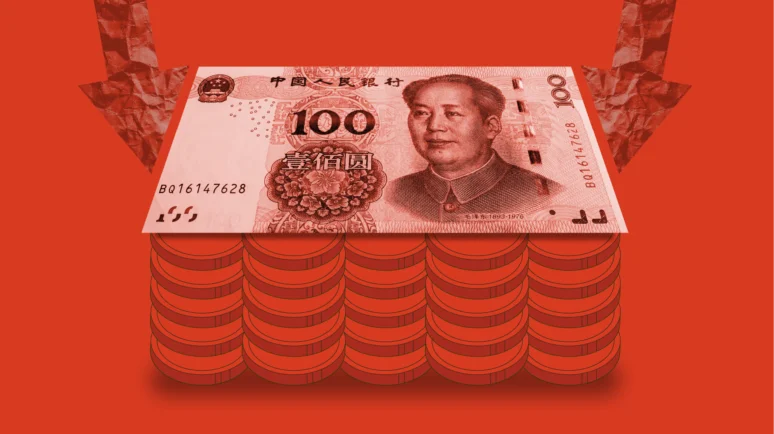
Founder's Account: From Start to Abandonment, Why I'm No Longer Doing Web3 Payments

In this candid reflection, a serial entrepreneur shares their decision to step away from Web3 payment ventures after six months of deep immersion. Initially drawn by the promise of faster, more transparent, and globally efficient settlements—especially for cross-border and remote work scenarios—the founder quickly realized that the industry’s core challenges aren’t product-based but structural. Through on-the-ground research in places like Yiwu, Mexico, and Shuibei, they observed that real-world adoption of Web3 payments remains fragmented, relationship-dependent, and far from the scalable, product-driven opportunity often portrayed. The critical barrier? Dependence on banking relationships, compliance, licensing, risk management, and regulatory navigation—areas where small, agile teams lack the resources and long-term leverage. The author emphasizes that many seemingly profitable payment operations actually profit from risk tolerance, not operational excellence, and that sustainability hinges on resilience to regulatory and financial shocks. While still believing in Web3 payment’s long-term potential—especially as a back-end upgrade for global treasury management—they concluded that the sector demands deep industry assets, patience, and risk capital ill-suited to their team’s strengths. Instead, they plan to focus on the next layer: helping users navigate on-chain asset management and risk-aware investing, turning payment flows into sustainable value. This isn’t a rejection of Web3 payments but a pragmatic shift based on resource alignment and structural reality.

marsbit12/26 02:13

Founder's Account: From Start to Abandonment, Why I'm No Longer Doing Web3 Payments

marsbit12/26 02:13

BitMEX Alpha: Could Western Union Be an Asymmetric Trade Opportunity in the Stablecoin Arena?

BitMEX Alpha explores whether Western Union (WU) represents an asymmetric investment opportunity in the stablecoin space. While stablecoins have reached a $250B market cap and serve as a critical "dollar API" for crypto, the most obvious investment target—Circle ($CRCL)—may not offer the best risk-reward due to high distribution costs and reliance on partners like Coinbase. In contrast, Western Union, with its established global distribution network of 200k+ physical agents and deep penetration in cash-heavy remittance corridors, is positioning itself to leverage stablecoin technology from the distribution side. WU already owns the last-mile channels that Circle must pay to access. By integrating its own dollar stablecoin (USDPT) and digital asset network, WU can maintain fee and FX spread revenue from its existing front-end while adding new income streams from on-chain settlement and float. WU trades at a distressed valuation (4x P/E, 10% dividend yield), pricing in digital disruption fears. However, it offers a deep-value, asymmetric bet on stablecoin adoption—a free option on its digital transformation, backed by strong cash flow. Circle, though a pure-play stablecoin issuer, faces margin compression and high customer acquisition costs. The report concludes that in the race for digital dollar adoption, controlling user access may be more valuable than minting tokens.

marsbit12/17 09:44

BitMEX Alpha: Could Western Union Be an Asymmetric Trade Opportunity in the Stablecoin Arena?

marsbit12/17 09:44

A7A5 Outlines Conditions for Development of Non-Dollar Stablecoin Market

A7A5, the issuer of the largest ruble-backed stablecoin by market capitalization (over $524 million), has outlined the necessary conditions for the development of the non-dollar stablecoin market. According to Oleg Ogienko, Director of International and Regulatory Affairs, expanding this ecosystem requires connecting different legal regimes to enable businesses to operate "without friction." He made these remarks at the Global Blockchain Show in Abu Dhabi, noting a growing interest from Middle Eastern countries in collaborating with Russia and the CIS, where demand for non-dollar payment corridors is increasing. The company is focusing on global expansion, recently participating in key industry events in India and the UAE. A7A5 sees India as a crucial hub for international payments and Web3 ecosystems, and the Middle East as a dynamic center for digital finance innovation connecting Asia, CIS, Africa, and Europe. Ogienko emphasized that true innovation is only possible through partnership with regulators, not opposition. Transparency, auditability, and clear rules are key to building trust. He stated that ecosystems like A7A5 are becoming primary tools for regional economic integration. To improve the accessibility of its ruble stablecoin for users and businesses in Asia, Africa, and South America, the company plans integrations with international platforms and wallets that support stablecoins. In a significant regulatory development, the A7A5 stablecoin was the first in Russia to be recognized by the CFA at the end of September, granting Russian importers and exporters the legal ability to use the tokens for cross-border settlements.

RBK-crypto12/15 12:30

A7A5 Outlines Conditions for Development of Non-Dollar Stablecoin Market

RBK-crypto12/15 12:30

活动图片