# Automation Related Articles

HTX News Center provides the latest articles and in-depth analysis on "Automation", covering market trends, project updates, tech developments, and regulatory policies in the crypto industry.

Rhythm X Zhihu Hong Kong Event Skills Recruitment, Sign Up Now for a Chance to Showcase On-Site

Six months ago, "how to write good prompts" was the hottest topic in group chats. Now, that question is clearly outdated. It has been replaced by Skills. The shift was largely triggered by the emergence of OpenClaw, which brought the concept of AI agents into the mainstream. Unlike a smart search engine that answers questions in isolated interactions, an agent can plan, remember, and complete entire tasks autonomously, creating the novel feeling that it is genuinely working for you. This has led to the rise of Skills—specialized capabilities that equip agents to handle specific domains efficiently. Without Skills, an agent is like a smart but untrained newcomer; with them, it can execute complex, precision-sensitive workflows without constant guidance. Popular Skills currently spreading within communities focus on areas like workflow automation, domain-specific rule injection (e.g., for law, finance, or medicine), personalization, and even financial operations such as identifying arbitrage opportunities on Polymarket or executing quantitative trading strategies. This shifts the门槛 from requiring programming and financial expertise to simply installing a Skill. The underlying change is that people are starting to view agents as long-term collaborators, not just disposable tools. Now, with vibe coding, turning an idea into a functional Skill no longer requires a technical team, code, or infrastructure—it can be done over a weekend. The gap between a good idea and a working product has dramatically narrowed.

marsbit04/03 09:18

Rhythm X Zhihu Hong Kong Event Skills Recruitment, Sign Up Now for a Chance to Showcase On-Site

marsbit04/03 09:18

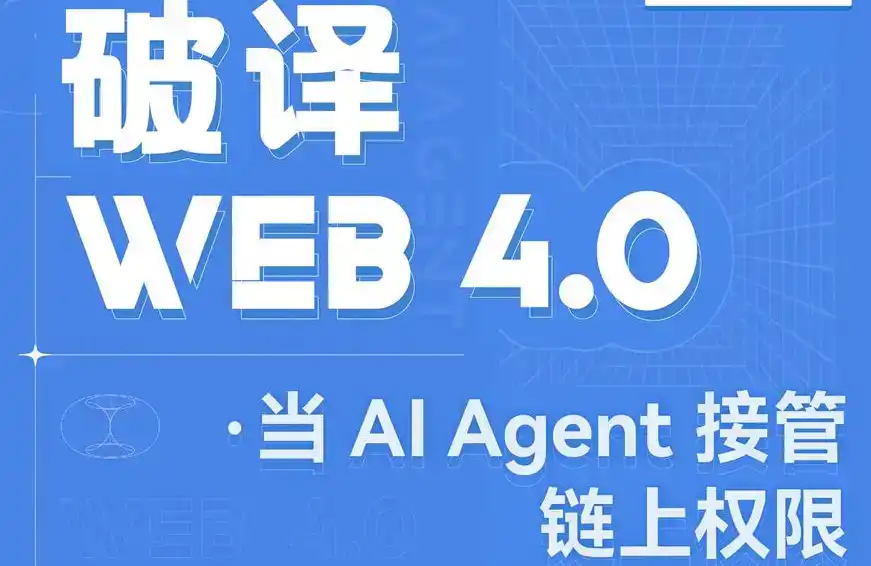
Rhythm X Zhihu Co-host Web4.0 Theme Event: When AI Agent Takes Over On-Chain Permissions

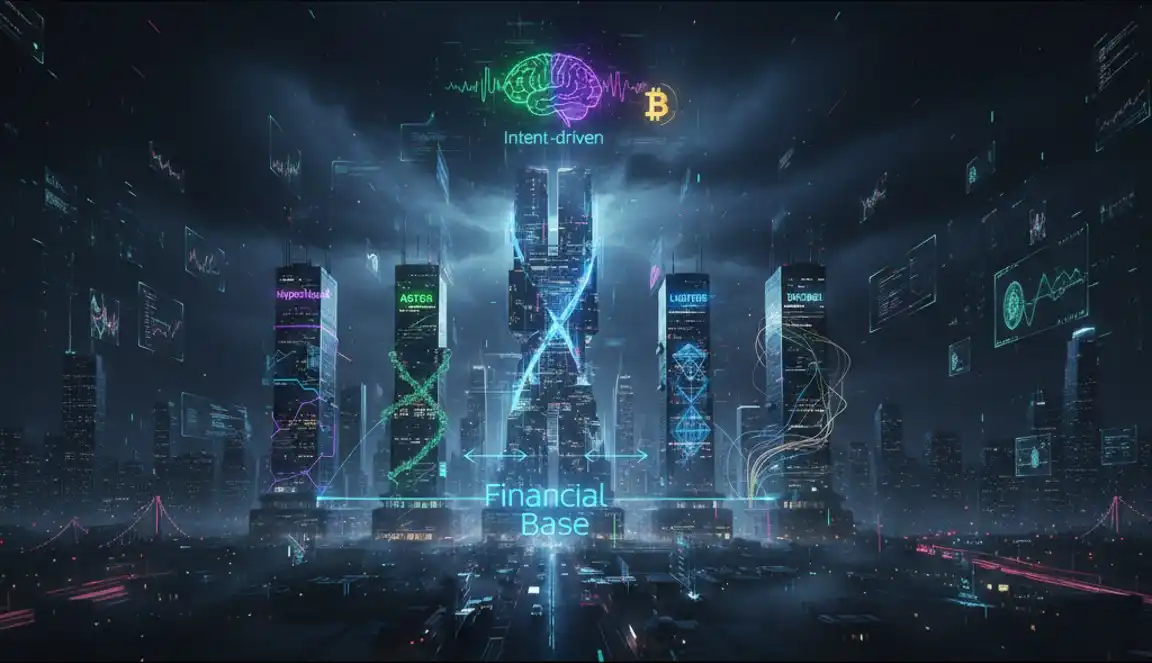
Most discussions about Web 4.0 miss the point. The real question is not whether it is a marketing trend, but rather: who is gaining control over the underlying permissions of the internet? Historically, each iteration of the web has involved a transfer of authority downward: Web 1.0 was read-only; Web 2.0 allowed users to write but platforms owned the data; Web 3.0 enabled true ownership through on-chain assets and private keys. Web 4.0 continues this trend, but the transfer is not to users—it is to AI Agents. The current infrastructure is human-centric, designed around human limitations like attention span and memory. But AI Agents don’t need intuitive UIs, password resets, or sleep. This creates a core tension: an internet built for humans is now being used by entities without human constraints. Two key shifts are underway: the decline of traditional front-end interfaces (replaced by API-driven machine communication) and the replacement of human-centric identity systems (like passwords) with granular, on-chain permissions. A critical enabler is crypto infrastructure. AI can make rapid decisions but lacks independent payment channels and asset sovereignty. Crypto fills this gap. Platforms like Hyperliquid offer 24/7 markets, ideal for non-stop Agent operation. When Agents control wallets and private keys, they can both decide and execute—forming complete economic entities. The real narrative of Crypto × AI isn’t just buzzword synergy—it’s the convergence of complementary infrastructures. The deeper shift is not which products will succeed, but how the rules of economic systems will change when AI becomes a primary on-chain participant, operating at scale and speed beyond human capability.

marsbit04/01 09:10

Rhythm X Zhihu Co-host Web4.0 Theme Event: When AI Agent Takes Over On-Chain Permissions

marsbit04/01 09:10

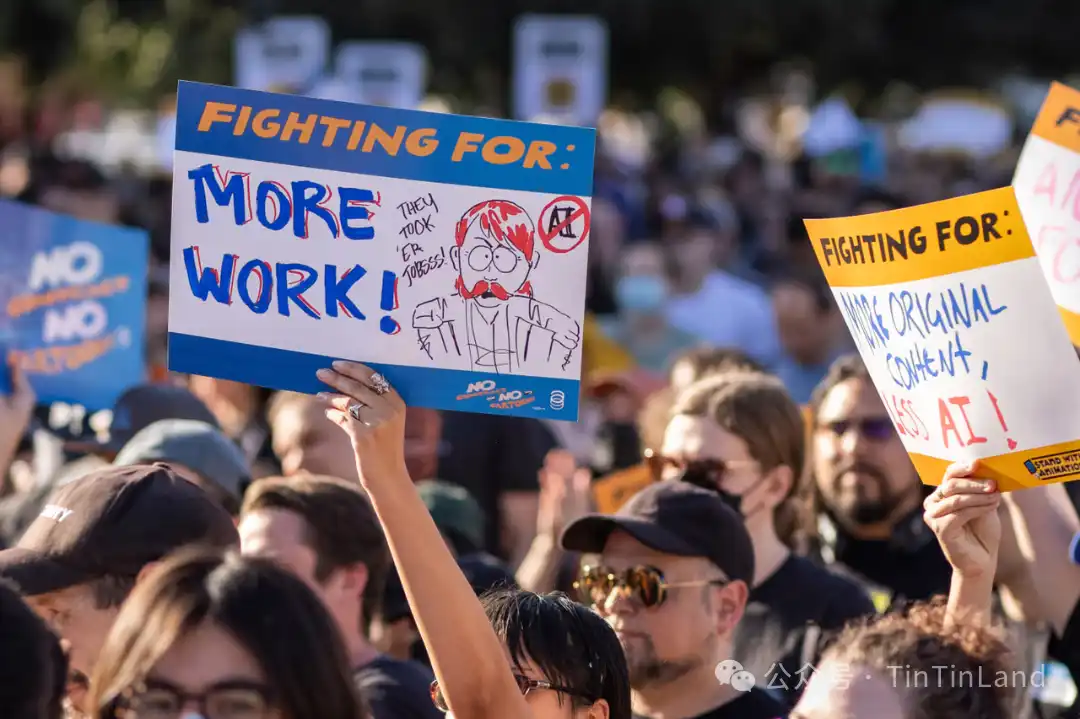
Will Middle Management Be Replaced by AI? What Will the Future Company Structure Look Like

The article explores whether AI will eliminate middle management and reshape future corporate structures. It traces the historical evolution of organizations—from Roman military units to modern corporations—showing how hierarchical systems emerged to manage information flow under the constraint of limited "span of control." Middle management, matrix structures, and bureaucratic systems were all solutions to coordination challenges in information-scarce environments. AI, however, challenges this foundational premise. By enabling real-time modeling, understanding, and distribution of information, AI could replace human-centric coordination mechanisms. Examples like the AI firm "Moon Dark Side" illustrate radical experiments: no departments, titles, or traditional KPIs, with co-founders directly managing large teams and AI agents handling tasks from data processing to code generation. Block (founded by Jack Dorsey) is presented as a case study in building an "intelligent company." This model relies on two core components: a "company world model" (a real-time understanding of internal operations via digital traces) and a "customer world model" (built from real behavioral data, especially financial transactions). An intelligence layer uses these models to dynamically combine capabilities (e.g., payments, lending) to serve customers proactively, without pre-defined product roadmaps. In this structure, traditional roles shift. Middle managers are replaced by a system that handles coordination, while humans focus on individual contributions (ICs), direct responsibility (DRIs), or player-coach roles. The organization becomes flatter, faster, and more adaptive. The article concludes that AI is not just a tool for efficiency but a transformative force that could redefine organizational design, moving companies from human-led hierarchies to system-driven intelligence.

marsbit04/01 08:11

Will Middle Management Be Replaced by AI? What Will the Future Company Structure Look Like

marsbit04/01 08:11

AI Agents Are About to Take Market Share from Visa

Artificial intelligence agents are poised to disrupt Visa's business model by bypassing the traditional credit card interchange fee structure. Unlike humans, AI agents are purely rational: they don't accumulate rewards, seek fraud protection, or desire premium cards. Their sole objective is to complete transactions at the lowest cost, fastest speed, and with minimal fees. This shift threatens the 2-3% interchange fees that underpin Visa’s $500 billion valuation, as these fees essentially tax human irrationality—something agents lack. Recent developments, such as the launch of Tempo (a high-volume stablecoin settlement blockchain), the Machine Payment Protocol (enabling autonomous micro-payments), and Visa’s own command-line payment tool for AI, indicate a rapid move toward agent-driven commerce. While current transaction volumes remain small, infrastructure is being built to support machine-to-machine payments that avoid card networks. Major players like Stripe, Mastercard, and Circle are investing heavily in this space. Visa network’s distribution advantage relies on human behavior—consumer trust and merchant acceptance—a cycle that doesn’t apply to agents. They optimize for efficiency, not brand loyalty. Although widespread consumer adoption is still emerging, the infrastructure for agent-commerce is advancing quickly, starting with micro-payments for AI services. The fundamental challenge is that interchange fees are a tax on human psychology, and agents are purely rational actors.

marsbit03/31 11:14

AI Agents Are About to Take Market Share from Visa

marsbit03/31 11:14

Dialogue with MIT Economist: Don't Panic About 'AI Doomsday Theory', Verification Capability is a Scarce Resource

In a discussion with MIT economist Christian Catalini, the core argument is that the true scarcity in the AI economy is not intelligence but verification—the human capacity to check, judge, and confirm the correctness of AI outputs. Catalini explains that while automation costs are falling exponentially, verification remains constrained by human biological limits, at least for now. Entry-level jobs are most vulnerable, as AI can easily replicate tasks that rely on measurable, existing knowledge. However, even top experts are inadvertently training their own replacements by generating data that AI learns from—a phenomenon termed the "coder’s curse." Three roles will remain critical in the AI-driven economy: - **Directors**: Those who set intentions and steer AI agents toward goals, dealing with "unknown unknowns." - **Meaning Makers**: Individuals who create cultural, social, or narrative value based on human consensus and status games. - **Liability Underwriters**: Top-tier experts (e.g., lawyers, doctors) who assume responsibility for edge cases and final validation. Catalini advises against panic and encourages experimentation with AI tools to automate current roles and discover new opportunities. He emphasizes that uniquely human traits—like judgment in unmeasurable contexts—will retain value, and crypto-based verification infrastructure may play a key role in ensuring authenticity. The transition will be disruptive, but leveraging AI can amplify human potential exponentially.

marsbit03/28 08:06

Dialogue with MIT Economist: Don't Panic About 'AI Doomsday Theory', Verification Capability is a Scarce Resource

marsbit03/28 08:06

活动图片