Stablecoin USDT Tycoon's Shopping Cart Includes a Mattress

marsbitPublished on 2026-03-05Last updated on 2026-03-05

Abstract

Tether, the issuer of the world's largest stablecoin USDT, has invested $50 million in Eight Sleep, a luxury smart mattress company. This move is part of a broader investment strategy driven by CEO Paolo Ardoino's vision of human sovereignty over data and the body. Ardoino, a cryptographer and Bitcoin advocate, believes in building technology for a potential societal collapse, emphasizing individual control over communication, health data, and physical well-being. His investments include Holepunch for decentralized P2P communication, QVAC for encrypted health data storage, and Blackrock Neurotech for brain-computer interfaces. However, this idealistic vision contrasts with USDT's real-world usage. While it provides financial access in unstable economies, it is also used for sanctions evasion, money laundering, and illicit activities. Tether, with $100 billion in annual profits, operates without full transparency or independent audits, requiring users to trust its reserves. Ultimately, Tether's investments reflect Ardoino's personal philosophy: using immense profits to build a decentralized future, albeit with unresolved contradictions between its idealistic goals and the opaque reality of its financial operations.

Author: David, Shenchao TechFlow
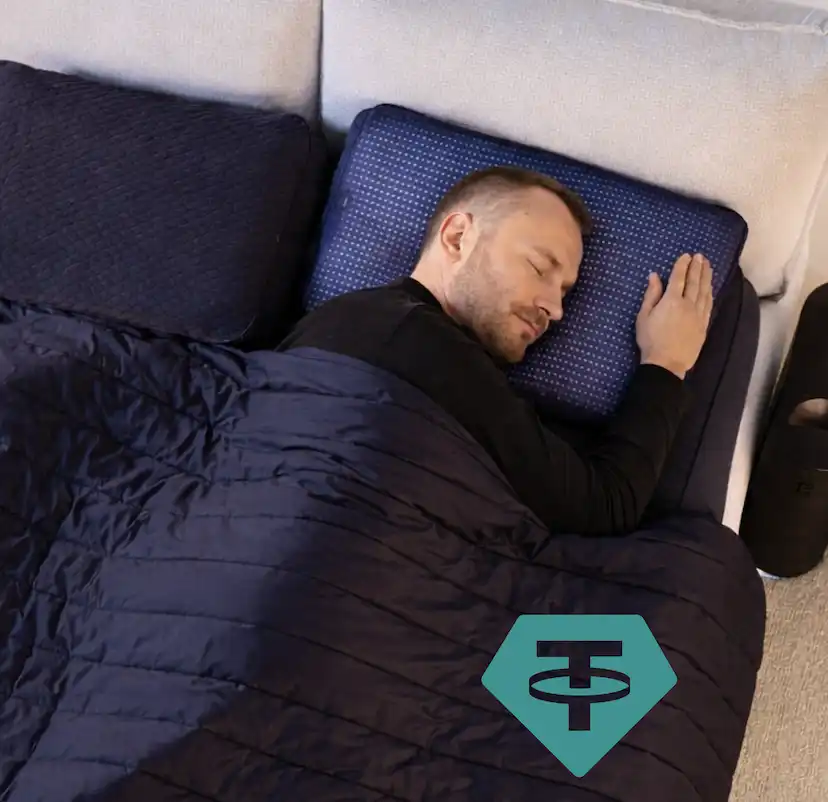
On March 4, stablecoin giant Tether announced an investment.

The invested company is called Eight Sleep, which makes smart mattresses. Tether invested $50 million, valuing the company at $1.5 billion.

The company's mattresses are very high-end, with individual prices ranging from $2,000 to $4,000. They feature built-in water cooling and heating systems, precise temperature control, sleep tracking, automatic adjustment...
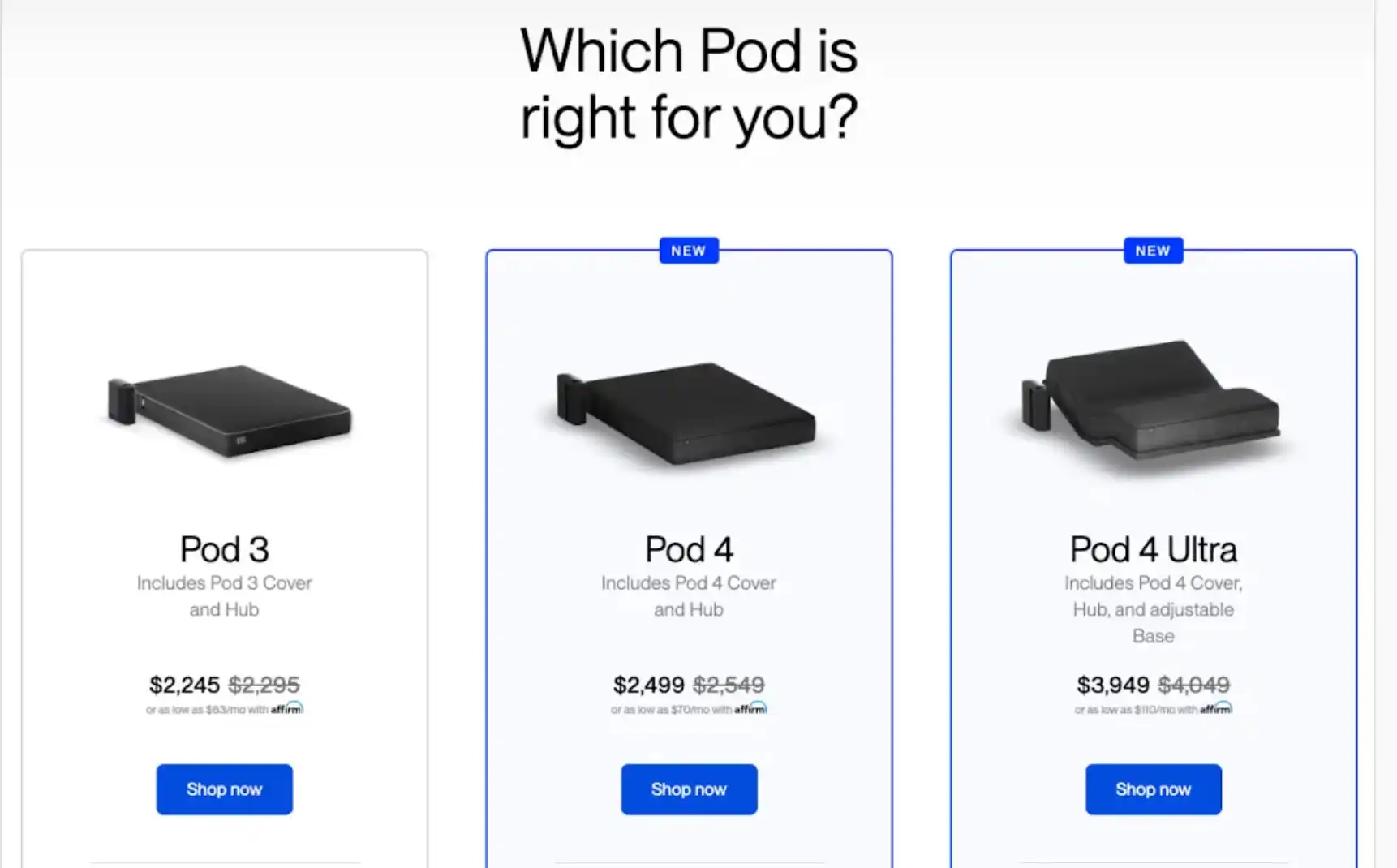
Famous NBA star LeBron James is one of its public users. Its main customer base includes Silicon Valley executives, professional athletes, and a group of biohackers who love experimenting on themselves.

The issuer of the world's largest stablecoin, USDT, reported a net profit of over $10 billion in 2025. It is almost entirely non-transparent, not publicly listed, and does not need to explain its actions to any shareholders.

And then it spends $50 million to invest in a mattress company?

Of course, this isn't the first strange investment. A review of Tether's investment records over the past few years reveals that the mattress might not even be the most puzzling one.

It all starts with the company's CEO.

The CEO's Shopping Cart Is Filled with Human Sovereignty

Paolo Ardoino, born in 1984 in Genoa, started coding at the age of 8.

He studied computer science in university, stayed on as a researcher after graduation, focusing on cryptography for military projects. He read the Bitcoin whitepaper in 2012, joined Bitfinex in 2014, became Tether's CTO in 2017, and was promoted to CEO in 2023.
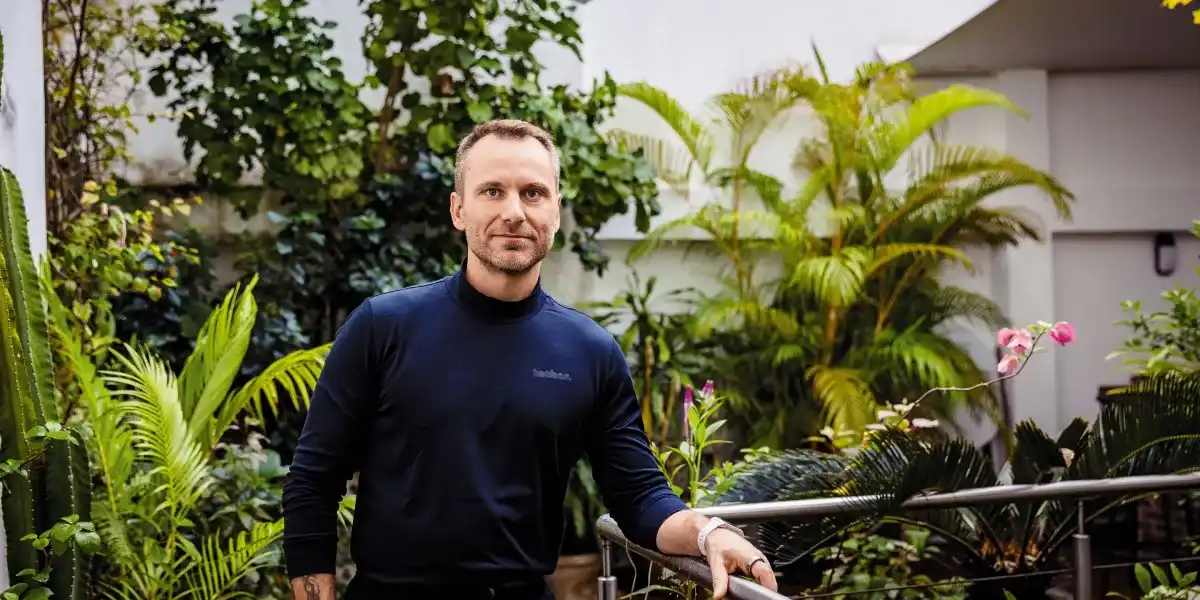
A Fortune magazine journalist once noticed dumbbells and a gym bag next to his desk during an interview.

This is a person who brings his workout gear to work every day. He is the type who manages his body as a system—sleep, training, biometric data, every aspect must be tracked, optimized, and controlled by himself.

He then extended this logic to everything: money, communication, data, the body. He believes that people should have complete sovereignty over everything that belongs to them.

And he believes:

The U.S. government will eventually collapse.

This is not a joke. Paolo has stated publicly that he is doing all this not to make money, but to provide people with a way out when the system fails.

His exact words were:

"I don't think the best solution is to fix the politics of every country. The best solution is to allow people to form communities freely through technology, where a sense of belonging comes from shared values, not geographic location."

It sounds like a line from a sci-fi novel. But Paolo is serious. His keynote speech at BTC Prague 2024 was titled directly:

"Building for the Apocalypse."

Understanding this, Tether's investment in a mattress company makes sense. Because every item in the company's shopping cart corresponds to an extension of the CEO's worldview: bodily data sovereignty.
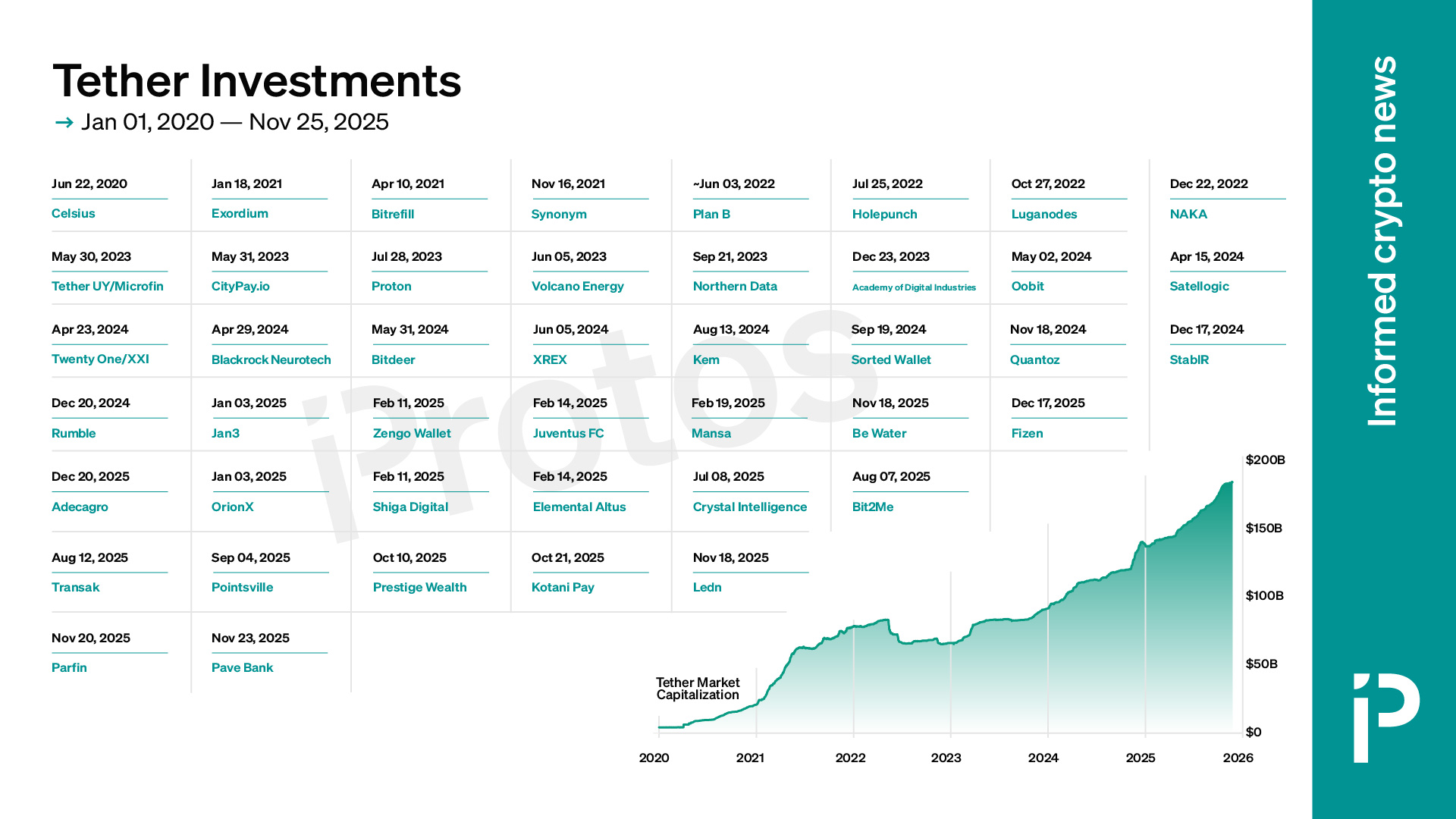
In 2022, he co-created a platform called Holepunch. This platform does something simple: it allows people to make calls, send messages, and transfer files without going through any servers. It's P2P direct connection, signals go directly from your device to the other party's device.

You can think of it as communication sovereignty.

Then there's QVAC. A health platform launched by Tether in late 2025, it encrypts all your biometric data—heart rate, sleep, exercise records—and stores it locally on your own device, without uploading anything to the cloud.

Paolo explained this product: "AI today has been politicized and centralized. We want to create AI that can run locally on your device, keeping everything about you in your own hands."

This is about data sovereignty.

Thus, after acquiring Eight Sleep, this mattress, integrated with QVAC, becomes a node in the infrastructure of bodily data sovereignty. Your sleep data doesn't belong to Apple, Google, or any cloud platform.

It belongs to you.

Additionally, Paolo's $200 million acquisition of a majority stake in brain-computer interface company Blackrock Neurotech might not be because he is optimistic about the market size of brain-computer interfaces, but because he doesn't want the field of brain-computer technology to be controlled by others.

Writing this, I recall another thing he said in an interview: "We've made money that we couldn't spend in hundreds of years. My biggest fear is wasting this once-in-a-century opportunity."

This statement is hard to evaluate. A person can simultaneously believe that civilization will collapse and also believe that he has a responsibility to use money to prevent it, or at least, leave behind a set of infrastructure that can reboot after the collapse.

Of course, the prerequisite is that you are Tether, with $10 billion in annual profit, allowing investments to become an extension of your worldview.

You Must First Trust Tether to Trust No One

There is a premise to Paolo's philosophy of sovereignty that he never mentions proactively.

USDT is the world's most circulated stablecoin. Behind its market capitalization of $183 billion is an equivalent amount of dollar reserves, at least that's what Tether says.

Where these reserves are held, who custodies them, whether each transaction is real—Tether has never undergone a full independent audit.

The company is not publicly listed, does not need to disclose to shareholders, and has operated in a regulatory vacuum for over a decade. How this money is calculated, what the balance sheet looks like—outsiders only see reports released by Tether itself.

Holders of USDT must choose to believe that all of this is real. There is no other option.

This is the subtle part. The CEO is constantly investing in various projects that build human data sovereignty, seemingly going off on a tangent to construct a set of infrastructure for "mastering human data sovereignty";

But this infrastructure itself is built with money from a company that requires your unconditional trust.

Paolo talks about "building for the apocalypse," but if the apocalypse really comes, if the dollar system really collapses, and USDT's reserves are held in U.S. Treasury bonds, what would happen to the corresponding $183 billion backing Tether.

He has not publicly answered this question.

With Enough Money, Investment Becomes an Autobiography

When you have enough money, your investment portfolio becomes an autobiography of your worldview.

Elon Musk bought Twitter because he believes free speech is being stifled by tech platforms; SpaceX exists because he believes Earth's civilization needs a backup. Peter Thiel invested in PayPal because he believes the government's monopoly on currency is wrong; he invested in Palantir because he believes the national security system needs to be rebuilt by Silicon Valley.

Bryan Johnson spends millions of dollars a year experimenting on himself, aiming to reverse his biological age to 18.

The things these people invest in seem diverse, but the internal logic is consistent:

They are using money to build the world they believe should exist. Returns are secondary, sometimes not even considered.

From this perspective, Tether's CEO Paolo is not an outlier. However, one thing sets him apart from the people mentioned above.

The real circulation scenarios of USDT are far more complex than Paolo's speech drafts.

Argentinians use it to fight the devaluation of the peso, Nigerians use it for cross-border remittances, Turks use it to preserve savings when the lira plummets. These are real, valuable uses; Paolo refers to these people when he talks about financial inclusion.

But USDT is also a tool for sanctions evasion, a transit point for cross-border money laundering, a settlement currency for dark web transactions, a收款 address for ransomware... This is also real.

Tether addresses have appeared on the U.S. Treasury Department's sanctions list, UN reports have mentioned the scale of USDT use in Southeast Asian scam compounds. Tether has cooperated in freezing some assets, but more were transferred long before freezing could occur.

The reason this system can achieve a market cap of $183 billion and an annual profit of $10 billion is partly because it is sufficiently "neutral." It doesn't ask where the money comes from or where it goes.

And then these profits flow into brain-computer interfaces, P2P communication, data sovereignty, bodily sovereignty, flowing into a set of idealistic infrastructure "built for the apocalypse."

From the infrastructure of grey circulation to the infrastructure chasing utopia. The same system, the same CEO, the same money.

With enough money, investment indeed becomes an autobiography.

It's just that this autobiography, Paolo hasn't fully finished writing it. There are a few pages he has turned over, difficult to scrutinize deeply.


Related Questions

QWhat is the main reason behind Tether's investment in Eight Sleep, according to the article?

AThe investment aligns with CEO Paolo Ardoino's worldview of human data sovereignty, as the smart mattress will integrate with Tether's QVAC health platform to keep sleep data encrypted and under user control, rather than being stored on centralized cloud platforms.

QWhat is Paolo Ardoino's stated motivation for Tether's various investments, beyond profit?

AHe believes in building infrastructure for a potential societal collapse, aiming to allow people to form communities based on shared values rather than geography, and to ensure sovereignty over money, communication, data, and the human body.

QWhat contradiction does the article highlight regarding Tether's operations and its CEO's philosophy?

AWhile Paolo Ardoino promotes sovereignty and distrust of centralized systems, Tether itself requires users to place unconditional trust in its unaudited reserves and opaque operations, which contradicts the ethos of decentralization and self-sovereignty he advocates for in other investments.

QHow does the article characterize investments made by extremely wealthy individuals or entities like Tether?

AIt states that when money exceeds a certain level, investments become an 'autobiography' of one's worldview, where the primary goal is to build the world they believe should exist, often with financial returns being secondary or not a consideration.

QWhat are some of the real-world use cases of USDT mentioned in the article, both positive and negative?

APositive uses include helping people in countries like Argentina, Nigeria, and Turkey combat currency devaluation, facilitate cross-border remittances, and preserve savings. Negative uses involve sanction evasion, cross-border money laundering, dark web transactions, and as a payment method in scam operations, as noted by the U.S. Treasury and UN reports.

Related Reads

Promised Year of Crypto IPOs? Only One Went Public in Six Months, Down 70%

The much-anticipated wave of crypto IPOs in 2026 has failed to materialize, with market conditions worsening dramatically. While SpaceX prepares for the largest IPO in history, raising $75 billion at a $1.75 trillion valuation, the crypto sector faces a frozen pipeline. The sole crypto IPO success this year, BitGo, serves as a cautionary tale. After launching on the NYSE in January at $18, its stock has plummeted approximately 70%. Other major contenders have stalled or delayed. Kraken, which secretly filed in late 2025, has put its plans on ice, seeing its valuation drop 33% to $13.3 billion. Consensys has postponed its filing until autumn at the earliest, and Bitpanda is poised to miss its self-imposed H1 deadline for a Frankfurt listing. This widespread retreat is driven by a severe liquidity crunch. Bitcoin has fallen below $60,000, with capital being diverted to AI stocks and the massive SpaceX offering. The poor performance of earlier crypto listings like Gemini and the stagnant price of Coinbase further dampen investor appetite. A key underlying pressure is the impending US midterm elections in November, which could alter the currently favorable regulatory landscape. Companies had hoped to go public during this window of policy certainty, but challenging market dynamics have overridden those plans. The transparency that comes with being a public company is now seen as a potential liability rather than a benefit in a down market. The industry's fate now hinges on a few critical watchpoints: whether Kraken restarts its process in H2, if Consensys files in the fall, and if SpaceX's debut can revitalize market liquidity. Otherwise, the promised "crypto IPO year" will likely be pushed beyond the election.

marsbit11m ago

Promised Year of Crypto IPOs? Only One Went Public in Six Months, Down 70%

marsbit11m ago

Behind Musk and Huang Jen-hsun's 'AI Factories', an Unseen Battle for Freshwater Has Begun

Behind the "AI factories" of Elon Musk and Jensen Huang lies a hidden battle for a critical resource: fresh water. As AI models like ChatGPT and Claude process billions of prompts daily, they consume vast amounts of water for cooling. By 2030, global AI infrastructure is projected to use 9.3 trillion liters annually—enough to meet the basic needs of 1.3 billion people. This "water grab" stems from the massive heat generated by high-powered GPUs. Over 70% of data centers use evaporative cooling systems, where water absorbs heat and evaporates into the atmosphere, depleting local groundwater. Training models like GPT-4 can consume over 600 million liters of water. Tech giants like Google and Microsoft report skyrocketing water usage, sparking conflicts with local communities over resources. A flashpoint occurred in Memphis, Tennessee, where Musk's xAI built the Colossus supercomputer. It draws nearly 3.8 million liters of drinking water daily from local aquifers, leading to public outrage and legal action. In response, xAI is building an $80 million water recycling plant to use treated wastewater instead. Facing pressure, companies like Microsoft promote "waterless" closed-loop cooling systems. However, these systems increase electricity consumption by 20-30%, shifting the water burden to power plants, which require immense cooling water themselves—a case of indirect water footprint transfer. For China's AI industry, this crisis offers a strategic warning and opportunity. Instead of replicating the West's resource-intensive model, China can leverage its "East Data, West Computing" policy to locate data centers in cooler, water-rich regions like Guizhou. Furthermore, developing lightweight edge computing for smart homes and embodied AI robots can drastically reduce the need for constant cloud queries, cutting both water and energy consumption at the source. The freshwater war underscores a fundamental question: Will AI be a tool for human advancement or a silicon-based monster competing for our planet's last drops of clean water? The answer is becoming clearer as the water vapor rises.

marsbit57m ago

Behind Musk and Huang Jen-hsun's 'AI Factories', an Unseen Battle for Freshwater Has Begun

marsbit57m ago

AGI is Just One Step Away

The article discusses Anthropic's release of the Fable 5 model, a heavily restricted version of its powerful Mythos model. Initially unveiled in April, Mythos reportedly identified over 10,000 high-risk vulnerabilities for 50 enterprise clients, causing significant concern. Due to its dangerous capabilities in areas like autonomous cyber-attacks and biochemical weapons design guidance (classified as CB-1 level), the unaltered Mythos 5 remains limited to about 200 vetted entities like government agencies. Fable 5, released with a safety classifier, demonstrates extraordinary performance, leading benchmarks in coding (SWE-Bench Pro), software engineering, and research. It exhibits true "long-horizon agency," autonomously planning and executing complex, multi-step tasks like migrating 50 million lines of code in a day, moving beyond simple question-answering. The article positions Fable 5 at OpenAI's Level 3 ("Agent") and progressing toward Level 4 ("Innovator"), suggesting AGI (Artificial General Intelligence) is within reach, potentially 18-24 months away. To mitigate risks, Anthropic implemented a two-layer safety "cage": a silent routing system that redirects dangerous queries to a weaker model, and a mandatory 30-day data retention policy for all Mythos traffic to detect patterns of malicious use. Despite its high cost ($10/$50 per million input/output tokens), the model targets the enterprise market, where its unparalleled productivity and defensive capabilities against AI-powered cyber threats justify the premium. This signals a market maturation where top-tier AI becomes a strategic, high-value tool for businesses, potentially widening the gap with consumer-focused models and accelerating the rise of "one-person companies" while disrupting labor markets.

marsbit1h ago

AGI is Just One Step Away

marsbit1h ago

Trading

Spot
Futures

Hot Articles

Discussions

Welcome to the HTX Community. Here, you can stay informed about the latest platform developments and gain access to professional market insights. Users' opinions on the price of S (S) are presented below.

活动图片