Las autoridades financieras de Corea del Sur están considerando introducir un sistema que permita a los reguladores realizar congelaciones preventivas de cuentas de criptomonedas para detener la manipulación de precios de activos digitales.
La FSC considera un sistema de congelación de cuentas de criptomonedas
El martes, un medio de comunicación local informó que la Comisión de Servicios Financieros (FSC) está discutiendo la introducción de un sistema para evitar que los sospechosos oculten o retiren ganancias no realizadas por manipulación del mercado relacionada con criptoactivos.
En una reunión del 6 de enero, los reguladores revelaron que han estado discutiendo el asunto desde noviembre, explorando la propuesta de medidas de procesamiento contra sospechosos de manipulación de precios de criptoactivos.
Según Newsis, algunos funcionarios consideran que existe la necesidad de "complementar la actual Ley de Protección de Usuarios de Activos Virtuales implementando medidas para la confiscación de ganancias criminales o la preservación de fondos de recuperación por adelantado".
La medida restringiría las salidas de fondos, como retiros, transferencias y pagos desde una cuenta relacionada con criptomonedas sospechosa de obtener ganancias ilícitas mediante tácticas típicas de manipulación del mercado, incluyendo compras anticipadas, operaciones repetidas mediante trading automatizado, compras a precios inflados y toma de ganancias.
Bajo las reglas actuales, las autoridades deben obtener órdenes judiciales para congelar activos vinculados a la manipulación de criptomonedas, lo que no deja medios para actuar rápidamente y prevenir el ocultamiento de activos de antemano. Según se informa, un miembro del comité hizo referencia al sistema de suspensión de pagos por manipulación de precios de acciones, que se introdujo mediante la revisión de la Ley de Mercados de Capitales en abril.
Este sistema vio el primer caso nacional de congelación preventiva de cuentas sospechosas de operaciones injustas el pasado mes de septiembre, cuando el Grupo de Trabajo Conjunto para la Erradicación de la Manipulación de Precios de Acciones impuso estas medidas a 75 cuentas involucradas en un caso de manipulación de precios de acciones de KRW 100 mil millones por un grupo de individuos adinerados.
Algunos funcionarios de la FSC supuestamente enfatizaron que este sistema es necesario para los criptoactivos, argumentando que son más fáciles de ocultar una vez transferidos a carteras personales, y uno señaló que "actualmente, solo se bloquean los depósitos y retiros en exchanges, mientras que los retiros a instituciones financieras siguen siendo posibles. Bloquear esos retiros ayudaría a prevenir rápidamente el ocultamiento".
Otro miembro de la FSC afirmó que "la suspensión de pagos es un paso previo a la preservación de la recuperación; sería bueno si pudiéramos implementarlo de manera proactiva", mientras que otros preguntaron si las disposiciones relacionadas con operaciones injustas en la Ley de Mercados de Capitales pueden replicarse parcialmente en la Segunda Fase de la Ley de Protección de Usuarios de Activos Virtuales.
Segunda Fase del Impulso de Activos Virtuales de Corea del Sur
Se esperaba que la Segunda Fase de la Ley de Protección de Usuarios de Activos Virtuales de Corea del Sur se presentara a finales de 2025. Sin embargo, se ha retrasado hasta principios de 2026 debido a un desacuerdo en curso entre la FSC y el Banco de Corea (BOK).
Como informó Bitcoinist, las autoridades financieras han estado enfrentándose por las normas relacionadas con la emisión y distribución de stablecoins, en desacuerdo sobre el alcance del papel de los bancos en la emisión de tokens vinculados al won.
El banco central ha impulsado que un consorcio de bancos posea al menos el 51% de cualquier emisor de stablecoin que busque aprobación en el país. La FSC ha expresado su preocupación de que dar una participación mayoritaria a los bancos podría reducir la participación de las empresas tecnológicas y limitar la innovación del mercado.
A pesar del retraso, las políticas principales del marco de criptomonedas han sido decididas, según se informa. En particular, el borrador de la FSC incluirá medidas de protección al inversor, como la responsabilidad objetiva de los operadores de criptoactivos y el aislamiento de riesgos de quiebra para los emisores de stablecoins.
Se espera que el proyecto de ley requiera que los operadores de criptoactivos cumplan con obligaciones de divulgación, así como con términos y condiciones. Además, "imponga una responsabilidad estricta por daños a los operadores de activos digitales de acuerdo con la Ley de Transacciones Financieras Electrónicas en casos de hacking o fallos del sistema informático".
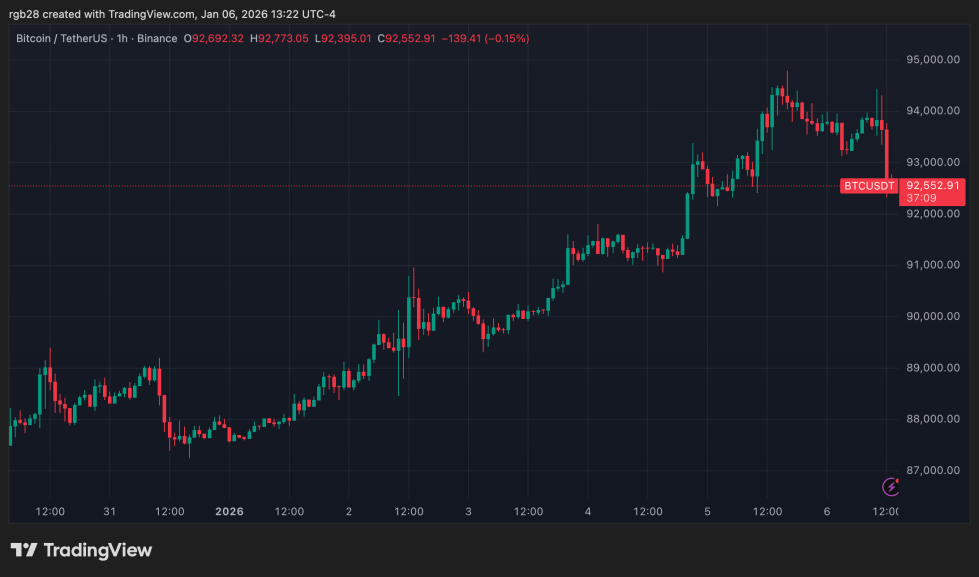
Bitcoin (BTC) cotiza a $92,552 en el gráfico semanal. Fuente: BTCUSDT en TradingView




















