Solana’s 90% slowdown: Is quantum-safe security killing SOL’s speed?

ambcryptoPublished on 2026-04-05Last updated on 2026-04-05

Abstract

Solana's recent quantum security testing with Project Eleven has exposed a critical trade-off: implementing quantum-resistant signatures could slow the network by 90%. This is a significant challenge for Solana, as its core advantage has been its high speed and scalability, processing 31x more transactions than Ethereum with 1,191 TPS. This speed has fueled its growth in DeFi and stablecoin adoption, notably for non-USD currencies. The potential 90% slowdown forces Solana to balance its defining speed with future-proof security, risking its competitive edge if it cannot maintain both performance and protection against quantum computing threats.

Can a blockchain achieve both scalability and speed, or is it forced to prioritize one over the other?

Solana’s latest move has put this question in the spotlight for traders and developers. For years, Solana’s high-speed powered growth in its stablecoin market and transaction volume.

Put simply, its fast throughput allowed the network to handle huge transaction loads while maintaining strong on-chain liquidity.

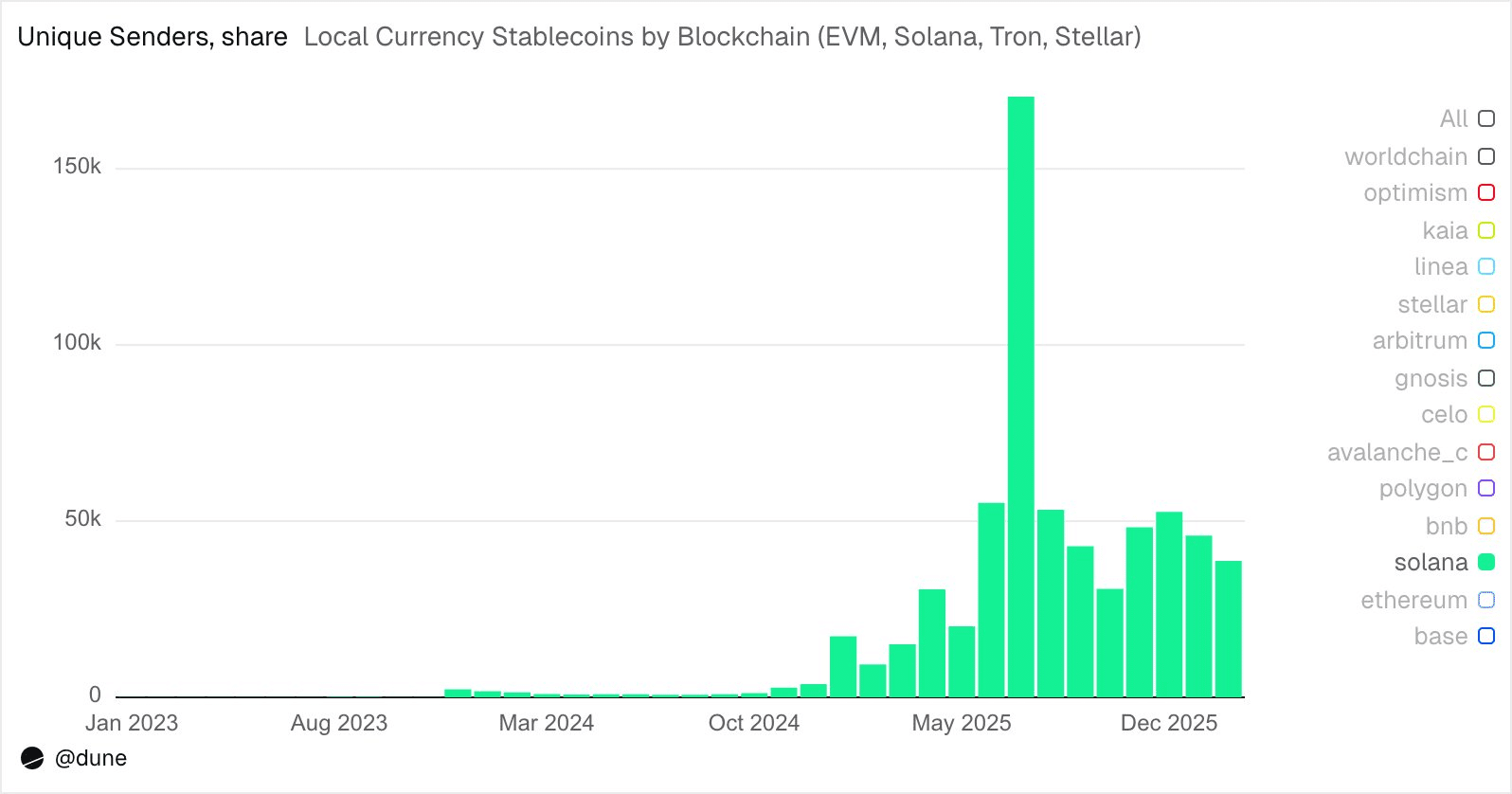
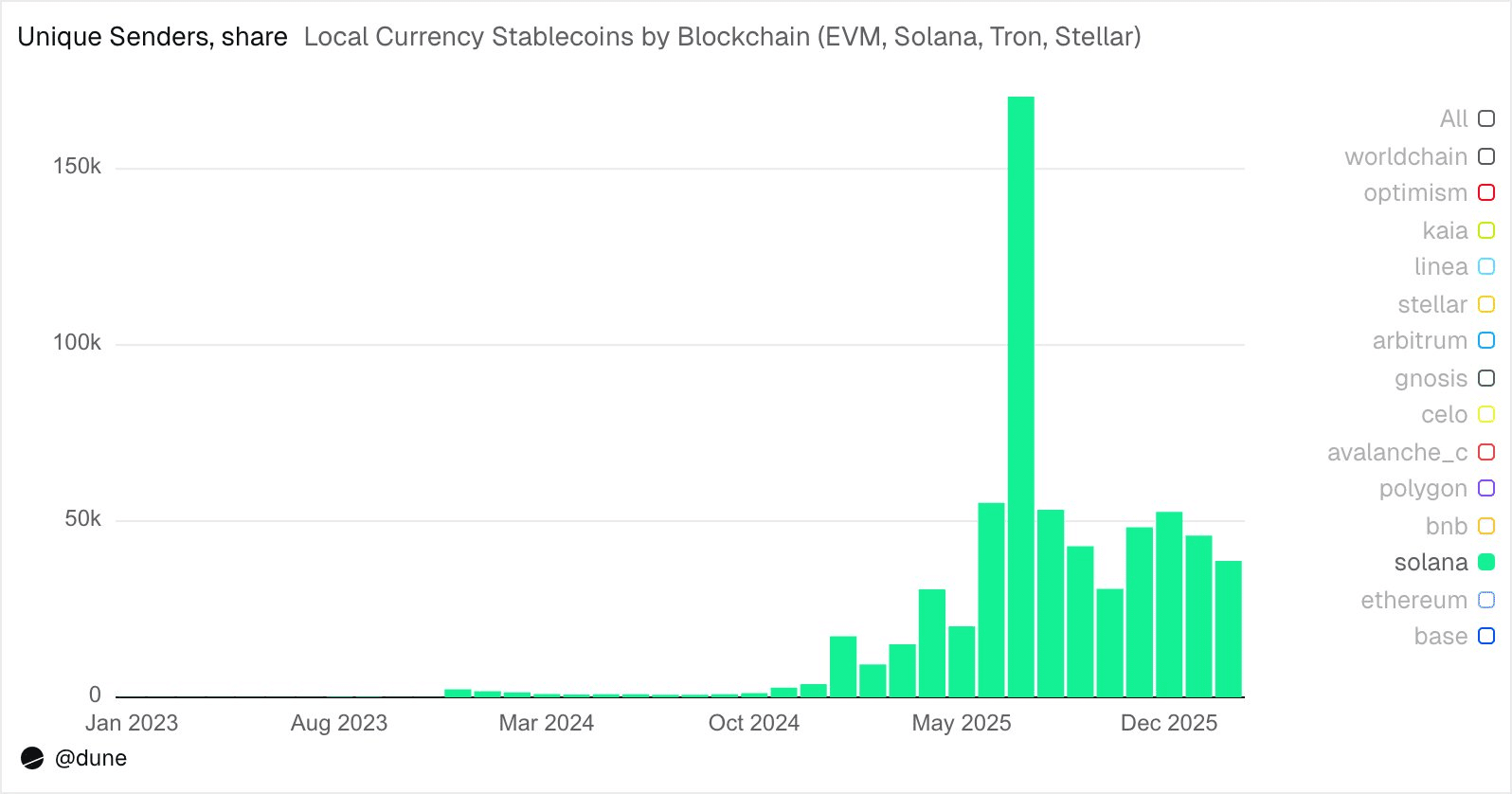
Look at Solana’s de-dollarization push: Dune data, as of press time, showed that Unique Senders of non-USD stablecoins on the network nearly tripled year-on-year, driven by EURC and BRZ adoption.

From a strategic standpoint, the network is clearly diversifying its stablecoin portfolio, laying the groundwork for broader DeFi expansion.
Source: Dune

From a technical perspective, however, this growth highlights Solana’s [SOL] strong underlying network fundamentals. Its high throughput, fast confirmation times, and robust on-chain liquidity have enabled it to support complex financial activity at scale, something that many competing blockchains still struggle with.

However, recent quantum testing revealed a trade-off, raising questions about whether Solana can keep its edge.

For context, Solana is working with Project Eleven to test quantum-safe signatures. Basically, it’s a way to protect the network from potential attacks by future quantum computers.

The catch?

Early tests show some big compromises.

Quantum-safe signatures are up to 40× larger, and the network ran roughly 90% slower. In simple terms, making Solana quantum-resistant could seriously slow down transactions, forcing the network to juggle speed, scalability, and security all at once.

That naturally brings up a tough question: Can Solana stay fast and secure while keeping its edge?

Speed vs security: Solana’s edge over Ethereum faces a critical test

The trade-off is clear: Either lock in security and slow down, or keep speed and take on more risk.

Recent quantum testing exposed this trade-off. To safeguard the network against future quantum attacks, Solana accepted a roughly 90% slowdown in speed.

As AMBCrypto noted, this is particularly challenging for Solana, since speed has long been its defining advantage over other layer-1s, especially Ethereum [ETH].

The impact of that advantage has been enormous.

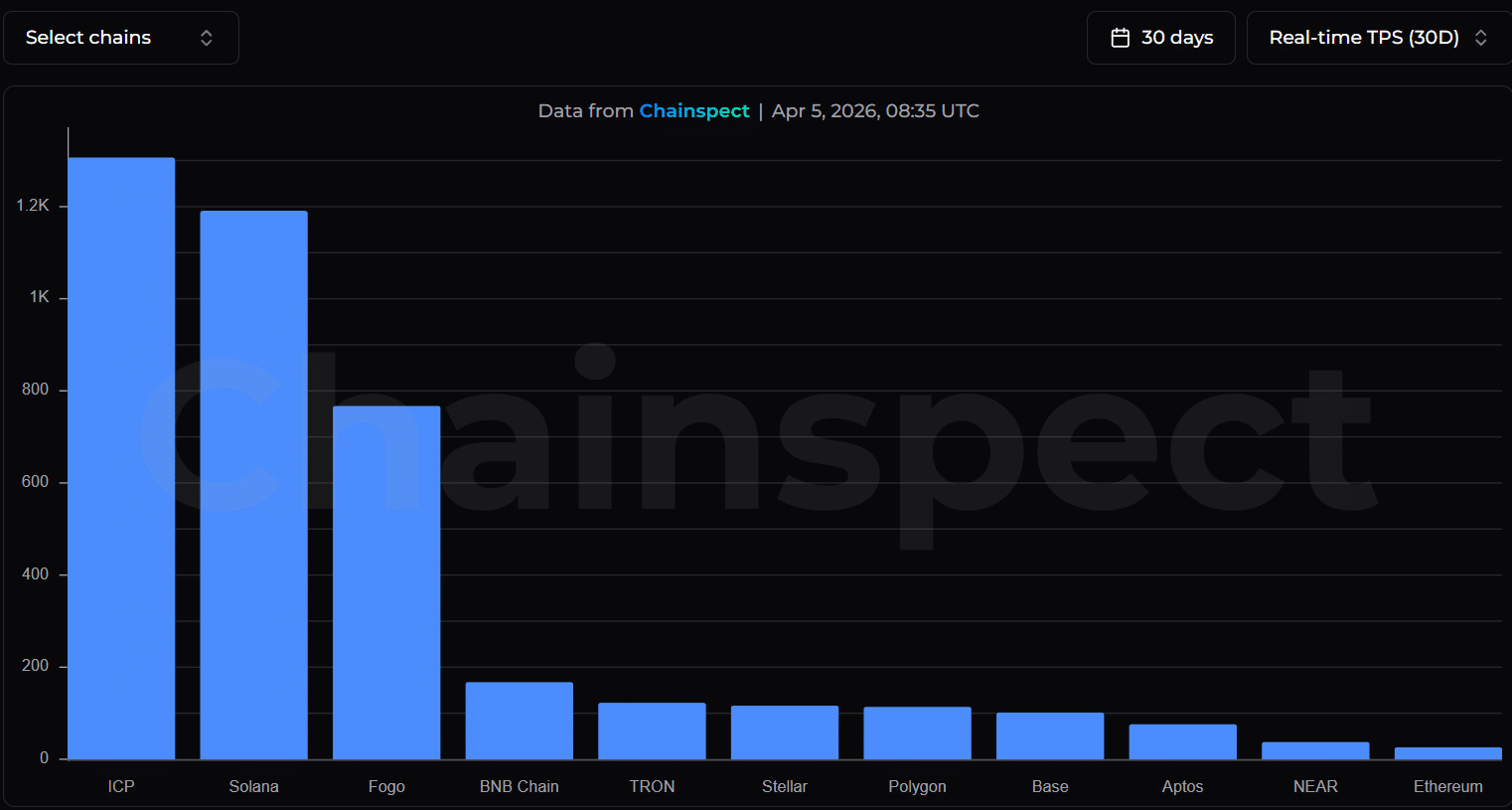
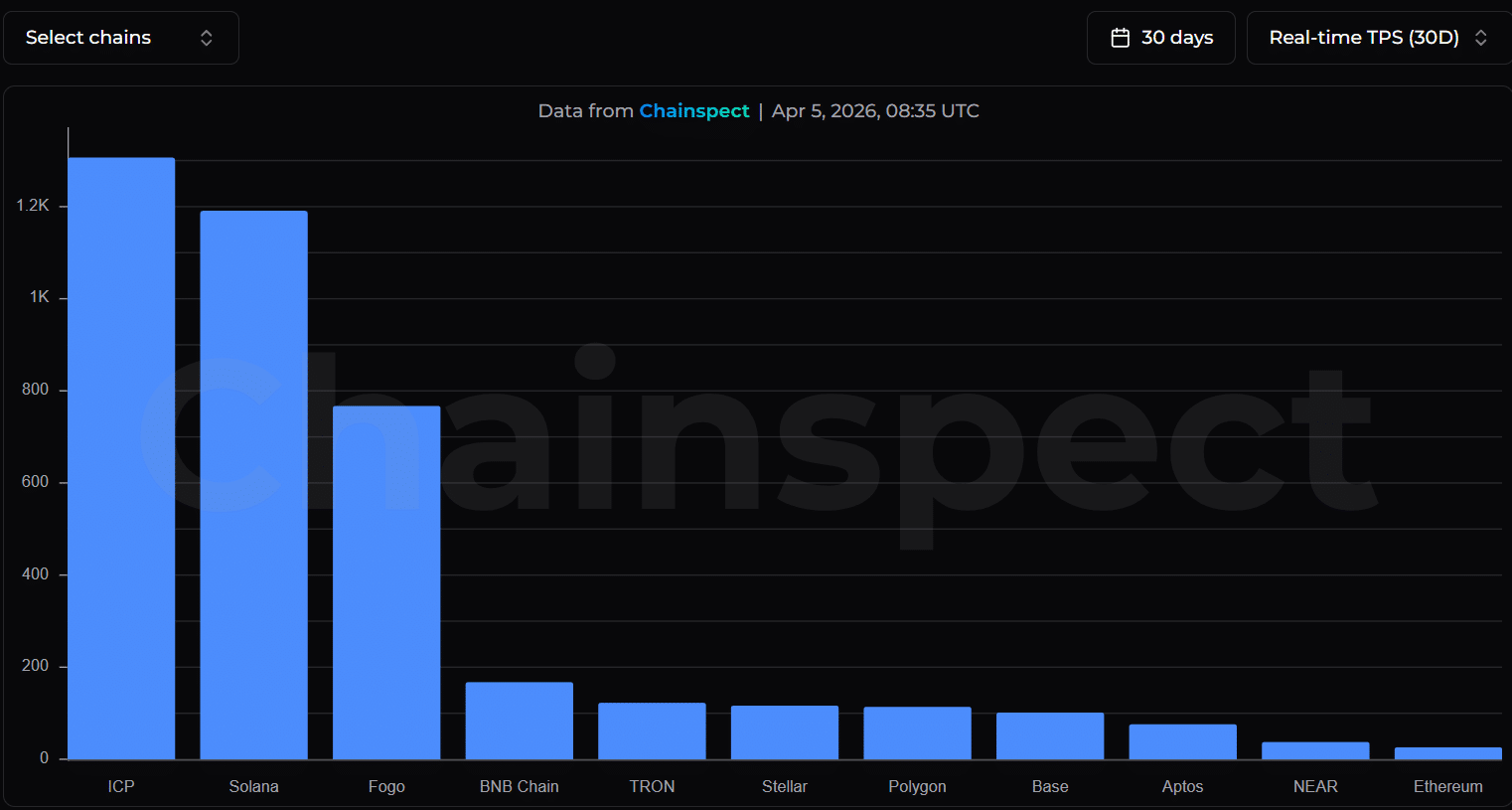
According to Chainspect data, Solana’s high throughput has given it a massive edge over Ethereum across multiple metrics. Look at transaction volume: Solana has processed 31× more transactions than Ethereum, reaching a staggering 106 billion transactions in total.
Source: Chainspect

Notably, this scalability comes straight from Solana’s high speed.

As the chart above shows, Solana ranks second among all blockchains with 1,191 real-time transactions per second (TPS), compared to Ethereum’s 25.99 TPS. This allows Solana to handle massive transaction loads efficiently, giving it a clear edge in DeFi, something slower L1s like Ethereum still struggle with.

According to AMBCrypto, that’s why the recent quantum testing is such a crucial moment.

A 90% slowdown in speed puts Solana’s signature advantage under pressure. Even more, it could slow DeFi growth just as competition from Ethereum is heating up.

This, in turn, forces the network to prove it can stay fast, secure, and ahead of the pack. Otherwise, it risks losing the edge that has long set it apart.


Final Summary

  • High throughput and fast TPS let Solana handle massive transactions, support DeFi growth, and outperform Ethereum across key metrics.
  • Moving toward quantum-safe security slows the network by 90%, forcing Solana to balance speed and security, or risk losing its lead.


Trending Cryptos

Related Questions

QWhat is the main trade-off Solana faces according to the recent quantum testing?

AThe main trade-off is between security and speed. Implementing quantum-safe signatures would make the network roughly 90% slower, forcing Solana to choose between enhanced security against future quantum attacks and maintaining its signature high transaction speed.

QHow does Solana's transaction speed (TPS) compare to Ethereum's, and why is this significant?

ASolana's real-time TPS is 1,191, which is significantly higher than Ethereum's 25.99 TPS. This high speed and scalability have been Solana's defining advantage, allowing it to process 31 times more total transactions and efficiently support complex DeFi activity, which Ethereum struggles with.

QWhat evidence from the article shows Solana is diversifying its stablecoin ecosystem?

ADune data shows that the number of Unique Senders of non-USD stablecoins on Solana, such as EURC and BRZ, nearly tripled year-on-year. This indicates a strategic push to diversify its stablecoin portfolio as part of a broader DeFi expansion.

QWhat is the purpose of Solana's collaboration with Project Eleven?

ASolana is working with Project Eleven to test and implement quantum-safe signatures. The purpose is to protect the network from potential attacks by future quantum computers, thereby future-proofing its security.

QWhat is a key potential consequence for Solana if its network speed is significantly reduced?

AA key potential consequence is that Solana could lose its competitive edge, particularly in DeFi, just as competition from other layer-1s like Ethereum is increasing. A 90% slowdown could hinder its ability to handle massive transaction loads efficiently and support growth.

Related Reads

Pledging ETH Earned a Steady $46 Million, So Why is BitMine Still Deep in the Red?

BitMine reported a significant surge in revenue for Q3 FY2026, driven by its Ethereum staking and validation business which generated $45.7 million. However, the company posted a net loss of $83.6 million, primarily due to a $92.1 million loss from Ethereum derivatives and options trading. This loss, stemming largely from expired contracts and exercised positions, completely offset the gains from staking. To fund its aggressive accumulation of Ethereum, BitMine has heavily relied on equity financing, significantly diluting existing shareholders. In the first nine months of the fiscal year, it issued over 340 million shares to raise approximately $11.87 billion, using most of it to purchase Ethereum. As of May 31, the company held 5.42 million ETH with an average cost of $19.05 billion, resulting in an unrealized loss of roughly $8.2 billion due to market depreciation. While staking provides a stable cash flow that covers core operational costs, the company faces rising expenses from long-term service agreements and high management fees. Additionally, BitMine remains highly dependent on continuous access to capital markets for funding its operations and expansion. The company's long-term viability hinges on its staking income consistently covering these costs and future losses, its ability to secure ongoing equity financing, and a substantial recovery in the price of Ethereum.

marsbit23m ago

Pledging ETH Earned a Steady $46 Million, So Why is BitMine Still Deep in the Red?

marsbit23m ago

Are Meme Coins a Shortcut or a Trap? Robinhood Chain Faces a Crucial Decision

Robinhood Chain, the blockchain initiative by the brokerage platform, is experiencing a strong initial surge in activity. Key metrics include over 300,000 daily active addresses, daily DEX trading volume surpassing $1 billion (ranking second among public blockchains), and a TVL exceeding $3 billion. However, the article expresses significant concern that this growth is overwhelmingly driven by memecoin trading, as observed on the Robinhood Wallet. The author argues this is a dangerous shortcut. While memecoins can rapidly boost user numbers, trading volume, and liquidity, they often result in substantial investor losses, erode trust in the ecosystem, and risk cementing Robinhood's reputation as a speculative, meme-driven platform—a perception Wall Street already holds. The piece contrasts this path with that of Coinbase's Base chain, which has emphasized fostering applications with real utility and sustainable business models. It urges Robinhood Chain to avoid becoming a "memecoin chain" and instead focus its resources on substantial use cases, particularly the tokenization of real-world assets (RWA). The proposed strategic pivot is toward facilitating global access to tokenized stocks, RWA, and other real financial instruments through its chain. This aligns with crypto's original promise of democratizing finance and represents Robinhood's largest growth opportunity: tapping into over 100 million potential new international users beyond its nearing-saturation U.S. market. Success in this direction could drive significant future revenue and redefine the company's legacy beyond the meme-stock narrative. The core message is a plea to Robinhood's leadership: choose sustainable, value-creating finance over the fleeting and damaging allure of memecoins.

Foresight News40m ago

Are Meme Coins a Shortcut or a Trap? Robinhood Chain Faces a Crucial Decision

Foresight News40m ago

The Biggest Bull Market in History: Did It Cause 320,000 South Koreans to Go Bankrupt Overnight?

South Korea's stock market experienced extreme volatility in mid-2026, leading to massive losses for retail investors. The KOSPI index, driven heavily by semiconductor giants Samsung Electronics and SK Hynix, plunged about 25% from its June high, entering a technical bear market. On July 13 alone, SK Hynix shares crashed over 15%, its worst single-day drop in two decades, triggering margin calls for over 1.2 million leveraged散户 accounts. Approximately 320,000 of these were forcibly liquidated. The dramatic sell-off followed a historic bull run where the KOSPI had doubled in six months, with SK Hynix soaring 300%. This fueled a national投机 frenzy, with散户 extracting savings and taking on record leverage to chase AI and semiconductor stocks. However, data revealed that even during the rally, about 73% of散户 lost money in the top 50 most-traded stocks. The market's extreme concentration—Samsung and SK Hynix alone comprised half the KOSPI's市值—made it highly volatile. Five全市场熔断 occurred in just five weeks. The downturn sparked widespread distress, including reports of a suicide attempt and a stabbing linked to investment losses. A sharp rebound occurred on July 15, with the KOSPI soaring over 7%, but the episode highlighted the risks of a highly leveraged, sentiment-driven market. Analysts note a recurring pattern in Korea of rapid, narrative-driven booms and busts—from the Han River Miracle to internet stocks and now AI—driven by a "compressed modernity" and a pervasive "get-rich-quick" mentality among investors across all ages.

marsbit48m ago

The Biggest Bull Market in History: Did It Cause 320,000 South Koreans to Go Bankrupt Overnight?

marsbit48m ago

Trading

Spot

Hot Articles

Discussions

Welcome to the HTX Community. Here, you can stay informed about the latest platform developments and gain access to professional market insights. Users' opinions on the price of SOL (SOL) are presented below.

活动图片














