Russia’s central bank signals shift toward retail crypto access

cointelegraphPublished on 2025-12-23Last updated on 2025-12-23

Abstract

Russia's central bank has proposed allowing both qualified and non-qualified investors to purchase certain cryptocurrencies, though with restrictions. Non-qualified investors would be limited to buying approved liquid cryptocurrencies up to 300,000 rubles ($3,834) per year after passing a knowledge test. Qualified investors gain broader access but are barred from privacy coins. The proposal also permits Russians to acquire crypto on foreign platforms and through foreign accounts, provided they report such transactions to tax authorities. While recognizing crypto as a tradable asset, the bank maintains that it cannot be used for domestic payments, in line with existing 2020 law. The move signals a shift toward regulated retail crypto access, though the central bank still considers cryptocurrencies high-risk.

The Bank of Russia put forward a policy proposal that would allow non-qualified investors to buy certain cryptocurrencies.

According to a Tuesday announcement, the central bank’s proposal would allow both qualified and non-qualified investors to buy most crypto, but with limitations.

Non-qualified investors would be limited to a yet-to-be-defined set of liquid crypto after passing a knowledge test, capped at 300,000 rubles ($3,834) a year. Qualified investors would gain broad market access excluding privacy coins, also subject to a knowledge test.

Russian residents will also be able to acquire crypto on foreign platforms, pay with foreign accounts, and transfer the resulting assets through Russian intermediaries. In such cases, they will be required to notify the tax service of those transactions.

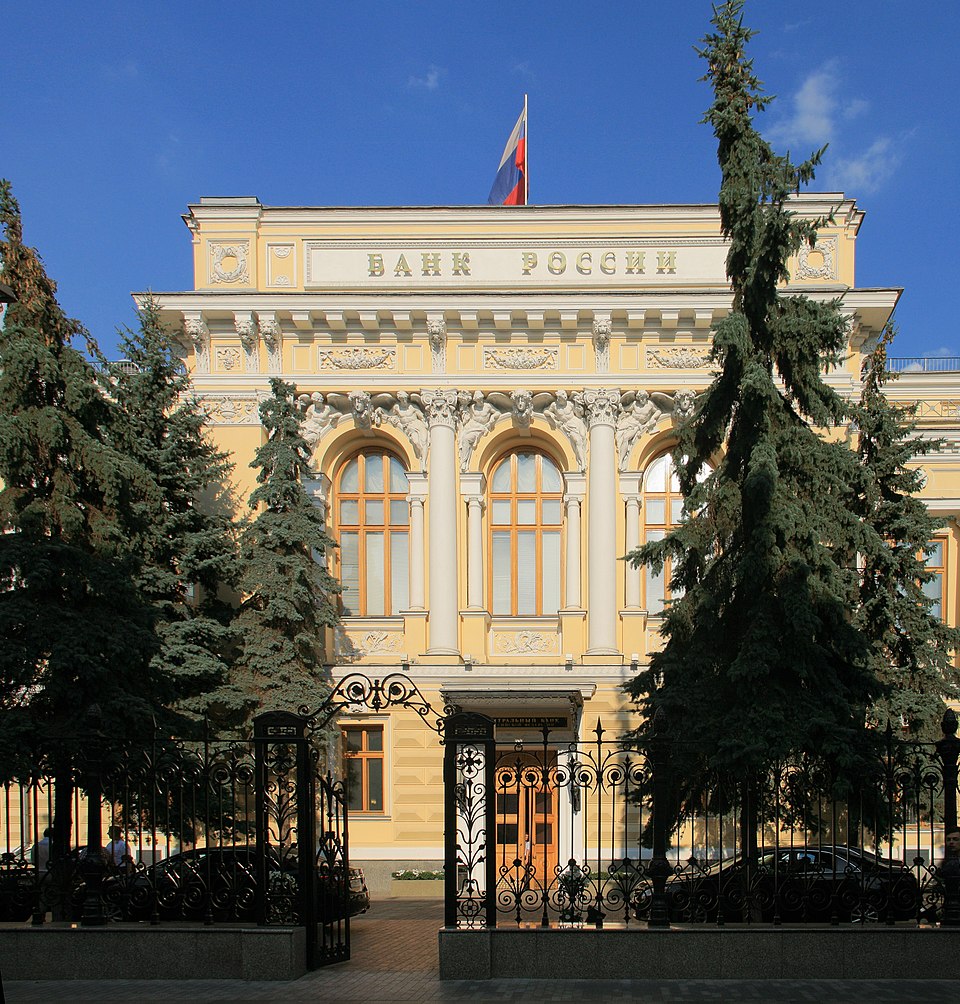
The Bank of Russia, Moscow. Source: Ludvig14, CC BY-SA 4.0

Related: Belarus blocks Bybit, Bitget, OKX as Russia clamps down on crypto gray area

An anticipated change, broader than expected

The report follows a recent statement from the central bank’s first deputy governor, Vladimir Chistyukhin, who recently said that Russia was considering easing crypto rules.

He hinted at the potential removal of the requirement to meet the “super-qualified investor” criteria for buying and selling crypto with actual delivery.

The “super-qualified investor” category was introduced in late April, when Russia’s finance ministry and central bank launched a crypto exchange. This classification is defined by wealth and income thresholds of over 100 million rubles ($1.3 million) or an annual income of at least 50 million rubles.

Related: Here’s why Russia ranks highest in Europe for crypto adoption: Chainalysis

Open to, but not endorsing

The central bank said that it “continues to consider cryptocurrencies a high-risk instrument.”

The announcement also reiterates that — while stablecoins and cryptocurrencies are recognized as monetary assets that can be bought and sold — they cannot be used for domestic payments.

This follows the State Duma — Russia’s legislative body — passing a law in June 2020 that bans the use of cryptocurrencies as a payment method.

Under the proposal, crypto transactions will be available through exchanges, brokers and trustees operating through their existing licenses. Specialized depositories and exchanges that work with cryptocurrencies will be subject to separate requirements.

Related Questions

QWhat new policy did the Bank of Russia propose regarding cryptocurrency access for non-qualified investors?

AThe Bank of Russia proposed allowing non-qualified investors to purchase certain cryptocurrencies after passing a knowledge test, with an annual limit of 300,000 rubles ($3,834).

QWhat are the key differences in crypto access between qualified and non-qualified investors under the proposal?

ANon-qualified investors are limited to a defined set of liquid cryptocurrencies with an annual cap, while qualified investors gain broad market access excluding privacy coins, both subject to knowledge tests.

QHow can Russian residents acquire cryptocurrency from foreign platforms according to the announcement?

ARussian residents can acquire crypto on foreign platforms, pay with foreign accounts, and transfer assets through Russian intermediaries, but must notify the tax service of these transactions.

QWhat is the 'super-qualified investor' category mentioned in the article, and how might it change?

AThe 'super-qualified investor' category requires wealth over 100 million rubles or annual income of 50 million rubles. The central bank is considering removing this requirement for crypto transactions with actual delivery.

QWhat is the Bank of Russia's stance on using cryptocurrencies for domestic payments?

AThe Bank of Russia continues to view cryptocurrencies as high-risk instruments and maintains the ban on their use for domestic payments, as established by a 2020 law.

Related Reads

a16z Crypto Partner: Cash Flow is the Moat

Cash Flow as the Moat: A Playbook for Crypto Founders Historically, the most enduring businesses have been built by positioning themselves within the "flow of funds"—facilitating the creation and transfer of value in a network and extracting a portion of it. Cryptocurrency is the first modern technology natively built for this purpose. For startups, failing to architect products and businesses to leverage these principles means missing a major opportunity. Blockchains are inherently network businesses. Each transaction settles on a shared ledger, and every new participant strengthens the underlying network for all. Well-designed network tokens amplify this by aligning users, developers, and validators around growing the network, with value flowing back to contributors in a transparent feedback loop. This model is not new; companies from railroads and Standard Oil to Google, Meta, and AWS have thrived by inserting themselves into critical flows of value (goods, attention, compute). Financial markets make it even clearer: firms like Visa and major market makers generate immense revenue not by predicting markets but by being in the path of transactions. The combination of fund flow and network effects creates one of the most durable business structures. The high margins in traditional finance (payments, custody, lending, FX) represent prime targets. Crypto founders have the opportunity to build the next version—programmable, instant, global, and natively in the flow of funds. The frontier extends beyond finance to areas like computing/GPUs, AI training data, energy, robotics, and space—markets without entrenched intermediaries, ripe for building new, efficient value rails on programmable infrastructure. Founders should ask: Are you in the flow of funds today? Does your revenue scale 10x with the value of activity on your platform? Where in your target market are profit margins highest relative to value created? The opportunity is clear: embed your startup into the new flows of value and let the network effects accumulate.

marsbit5m ago

a16z Crypto Partner: Cash Flow is the Moat

marsbit5m ago

a16z Crypto Partner: Cash Flow is the Moat

Title: a16z Crypto Partner: Cash Flow Is the Moat Summary: Historically, many of the best businesses were built by positioning themselves within the "flow of funds"—facilitating the creation and transfer of value within a network and taking a cut. The more value flows through, the larger the business grows. Cryptocurrency is the first modern technology natively built for this purpose. If a startup hasn't architected its product and business to benefit from these principles, it's missing a major opportunity. Thanks to stablecoins, capital and value now move at internet speed—globally settled, 24/7, with end-to-end programmability. Blockchains are inherently network businesses. Each transaction settles on a shared ledger, and every new participant strengthens the same underlying network. Network tokens amplify this effect. A well-designed token aligns all participants—users, developers, suppliers, validators, the protocol—around a single goal: growing the network. Participants are paid proportionally to their contributions, creating a transparent feedback loop between value flowing in the system and value accumulating to those building it. This model isn't new; crypto simply makes it more accessible and scalable for startups. The pattern is consistent: find where value flows and position yourself in the middle. Examples range from railroads (earning from freight) and Standard Oil to Google, Meta, and AWS (earning from attention, commerce, and compute flows, respectively). Financial markets make this even clearer. Visa's net income stems from its position in the $15.7 trillion payment flow. Major market makers profit from being in the flow of every order. This combination of fund flow and network effects creates one of the most durable business structures. Jeff Bezos's adage "your margin is my opportunity" applies perfectly here, especially to traditional finance—a massive pool of profit extraction. Crypto founders have the chance to build the next version: programmable, instant, global, and natively in the flow of funds. The frontier extends beyond finance to areas like compute/GPUs, memory chips, AI training data, energy, robotics, space, and rare earth metals—all domains where global value can flow at unprecedented scale on new, programmable infrastructure. Founders should ask: Are you currently in the flow of funds? Does your revenue scale 10x if the value of activity on your product grows 10x? Where in your target market is profit extraction highest relative to value created? The opportunity is there. Seize it, integrate into the new flow, and let the network effects accumulate.

链捕手10m ago

a16z Crypto Partner: Cash Flow is the Moat

链捕手10m ago

RWA First Stock's Major Acquisition: Why Buy a 'Traditional' Mortgage Company?

On June 10th, Figure Technology Solutions (Nasdaq: FIGR), a blockchain-native capital markets firm, announced a $717 million acquisition of Kiavi, a leading non-bank lender for residential real estate investors. The deal involves Figure acquiring Kiavi's technology and operations for approximately $538 million, while forming a joint venture with alternative asset manager Sixth Street to purchase Kiavi's existing loan portfolio. Sixth Street also provided a $3 billion forward purchase commitment. This acquisition marks a strategic shift for Figure, known as the "RWA (Real World Asset) first stock," allowing it to expand significantly into the larger market of first-lien mortgages. Kiavi specializes in non-qualified mortgage (Non-QM) loans, such as short-term fix-and-flip (RTL) and rental property (DSCR) loans—a segment traditionally underserved by major banks. The move is expected to increase Figure's first-lien loan origination to over $7 billion annually, aiming for these to constitute about 40% of its business by 2027. Both companies leverage AI for underwriting: Kiavi uses proprietary models to value renovated properties and automate document processing, dominating the fix-and-flip lending space. Figure plans to integrate these assets onto its blockchain platform, Provenance, using its new 'Adaptor' product to standardize and tokenize the loans for institutional investors on its Democratized Prime marketplace. While the integration poses challenges—including merging different asset types, interest rate sensitivity of Kiavi's loans, and post-IPO execution risks—Figure projects the deal to be accretive to earnings with a cash payback period under four years. The transaction is seen as a major step in scaling blockchain-based capital markets, moving RWA tokenization from concept validation toward large-scale operation.

Foresight News38m ago

RWA First Stock's Major Acquisition: Why Buy a 'Traditional' Mortgage Company?

Foresight News38m ago

Trading

Spot
Futures

Hot Articles

Discussions

Welcome to the HTX Community. Here, you can stay informed about the latest platform developments and gain access to professional market insights. Users' opinions on the price of S (S) are presented below.

活动图片