Retired NYC restaurant owner charged with DUI in Florida golf cart crash that killed his wife

nypostPublished on 2025-12-08Last updated on 2025-12-08

Abstract

A retired New York City restaurant owner has been charged with driving under the influence following a golf cart crash in Florida that resulted in the death of his wife. The incident occurred in a residential community. The man was arrested and faces charges related to the DUI crash. Further details about the circumstances of the accident or the court proceedings were not immediately available in the provided content.

Related Questions

QWhat was the profession of the individual charged in the Florida golf cart crash?

AHe was a retired New York City restaurant owner.

QWhat specific charge is the retired NYC restaurant owner facing?

AHe has been charged with DUI (Driving Under the Influence).

QWhere did the fatal golf cart crash occur?

AThe crash occurred in Florida.

QWho was the victim that died in the golf cart crash?

AThe victim was his wife.

QWhat type of vehicle was involved in the fatal incident?

AThe vehicle involved was a golf cart.

Related Reads

U.S. Stablecoin Regulatory Framework Finalized, Global Crypto Finance Enters New Institutionalized Phase

The United States has enacted its first federal regulatory framework for stablecoins, marking a pivotal moment for the global cryptocurrency industry. This framework transitions stablecoins from a state of fragmented oversight to a unified federal system, establishing clear legal definitions and operational standards for dollar-pegged payment stablecoins. Key provisions mandate that stablecoin issuers must hold high-quality liquid assets—such as cash and short-term U.S. Treasury securities—as reserves. They are also required to comply with strict auditing, transparency, risk management, and consumer protection rules. The regulatory structure adopts a dual approach: larger issuers will be overseen at the federal level, while smaller ones may fall under state jurisdiction. This development is expected to significantly enhance the role of stablecoins like USDC and USDT as critical infrastructure for cross-border payments, settlements, and decentralized finance (DeFi). By providing legal certainty, the framework is likely to encourage greater adoption by traditional financial institutions, payment companies, and fintech firms, integrating stablecoins more deeply into the mainstream financial system. However, the new rules also present challenges. Higher compliance costs and operational requirements may pressure smaller issuers and could lead to industry consolidation. The shift emphasizes regulatory-driven competition over innovation-driven growth. Furthermore, global regulatory disparities remain, as jurisdictions worldwide have differing definitions and standards for stablecoins, potentially creating friction in international flows. Overall, this U.S. regulatory move signals a structural shift from an enforcement-led approach to a rules-based system for digital assets. It is seen as a maturation of the industry, setting the stage for stablecoins to evolve from crypto trading tools into foundational components of the future digital financial ecosystem, including in cross-border trade, retail payments, and financial market settlements.

cointelegraph_中文4m ago

U.S. Stablecoin Regulatory Framework Finalized, Global Crypto Finance Enters New Institutionalized Phase

cointelegraph_中文4m ago

Securities or Commodities? A Decade-Long Tug-of-War Ends as the 'Crypto Market Structure Act' Races to the Senate

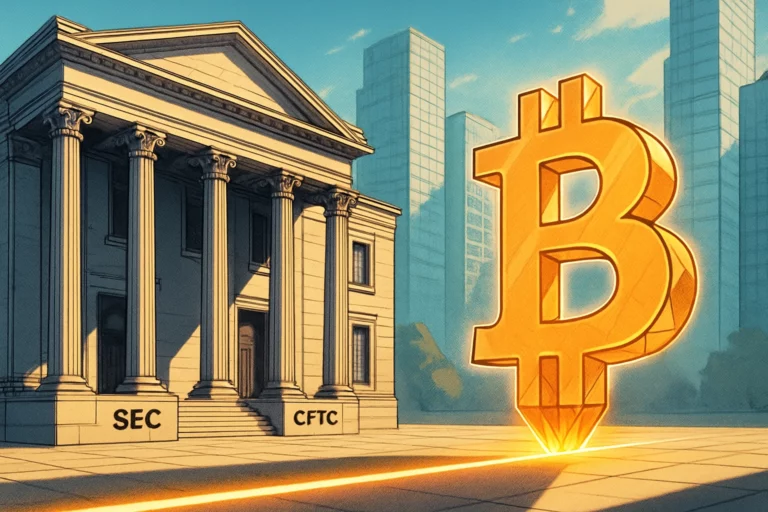
The "Cryptocurrency Market Structure Act" (CLARITY Act) is advancing to the U.S. Senate for final review after passing the House with strong support. The bill aims to resolve the long-standing regulatory debate over whether cryptocurrencies are classified as securities or commodities. It introduces a clear framework: tokens on decentralized blockchains are defined as "digital commodities" under CFTC oversight, while those meeting the Howey test remain securities regulated by the SEC. Key provisions include a "mature blockchain" exemption for highly decentralized networks like Bitcoin and Ethereum, a 360-day temporary registration pathway for trading platforms, and a fundraising exemption of up to $75 million for certain token offerings with enhanced disclosure. The bill also establishes a joint advisory committee to improve coordination between the CFTC and SEC and explicitly exempts non-custodial DeFi actors from broker-dealer regulations. This legislative effort aligns with the Trump administration's pro-crypto stance, including the appointment of industry-friendly leaders at key agencies like the SEC and CFTC, and recent moves to allow regulated spot crypto trading on CFTC-approved exchanges. If enacted, the law would provide regulatory clarity, encourage institutional adoption, and position the U.S. as a leader in the digital asset space.

Odaily星球日报18m ago

Securities or Commodities? A Decade-Long Tug-of-War Ends as the 'Crypto Market Structure Act' Races to the Senate

Odaily星球日报18m ago

Trading

Spot
Futures
活动图片