Pantera Capital: 12 Predictions for the Crypto Market in 2026

marsbitPublished on 2025-12-25Last updated on 2025-12-25

Abstract

Pantera Capital's Jay Yu presents 12 predictions for the 2026 crypto market. Key forecasts include the rise of capital-efficient consumer credit using AI and on/off-chain models, and prediction markets diverging into financial and cultural directions. AI will become a mainstream interface for crypto interactions, while tokenized gold gains traction as a leading RWA. A "quantum panic" may spark discussions around Bitcoin’s vulnerability, though no immediate threat exists. Privacy solutions will see unified developer experiences, and digital asset treasuries (DATs) will consolidate. The line between tokens and equity may blur, with more high-quality firms staying private longer. Hyperliquid is expected to dominate perpetual DEXs, and Prop AMMs will go multichain. Stablecoins will be increasingly adopted by fintech firms for international payments.

Author: Jay Yu

Compiled and Edited by: BitpushNews

Happy holidays and a peaceful Christmas Eve! It's that time of year again for predictions. Below are my 12 predictions for the crypto market in 2026.

1. Capital-Efficient Consumer Credit

Capital-efficient consumer credit will be the next frontier in crypto lending. They will combine complex on-chain/off-chain credit models, modular design and collateral management, and AI learning of user behavior, all packaged in an easily accessible application.

2. The Divergence of Prediction Markets

Prediction markets will evolve in two distinct directions—a "financial" direction and a "cultural" direction. Financially, prediction markets will become more composable with DeFi, offer easier access to leverage, implement liquid staking, and create instruments that are almost like refined "options." Cultural markets will lean more towards capturing the public's imagination, have more regional variation, and serve long-tail enthusiasts.

3. The Rise of x402-Based Agent Commerce

Agent commerce using endpoints like x402 will expand into more service areas. While the core appeal of agent commerce will remain micropayments, x402 will also increasingly be used as a framework for regular payments—mechanically almost similar to Apple Pay. Some websites may see over 50% of their transaction volume and revenue come from x402 payments. At the million-dollar transaction volume level, Solana will surpass Base in x402 usage.

4. AI as the Interface Layer for Crypto Interaction

AI-mediated transaction loops will become mainstream. While fully autonomous LLM-based trading AIs are still experimental, AI assistance (analyzing crypto trends, specific projects, wallet tracking) will gradually permeate the user flows of most consumer-facing crypto applications.

5. The Rise of Tokenized Gold

The trading volume of tokenized gold will grow, making it the leading asset in the Real World Asset (RWA) wave. Tokenized gold can circumvent restrictions imposed on physical gold across various jurisdictions and will become an increasingly attractive store of value against the backdrop of the US dollar's structural issues.

6. BTC's "Quantum Panic"

There will be a "quantum panic" (potentially sparked by some technological breakthrough), prompting institutions holding significant BTC to begin discussing contingency plans for quantum computing. The resistance of BTC and early Satoshi-era coins will come under intense scrutiny. Thankfully, the technology will not yet be advanced enough to pose an actual threat to any value.

7. Unified Privacy Development Experience

With the continued development of frameworks like Ethereum's Kohaku, privacy will gain a unified, user-friendly developer interface. Its development path will be similar to the "Wallet-as-a-Service" platforms of the last cycle—providing an application-level product that abstracts various technical connectors. We may see companies offering "Privacy-as-a-Service" bundles (potentially including a wallet), primarily targeting enterprise workflows.

8. Consolidation of DATs (Digital Asset Treasuries)

Each major category will consolidate into only 2-3 DATs. This may be achieved through the unwinding/release of liquidity, conversion into ETF-style products, or via M&A consolidation among DATs.

9. The Erosion of the Token vs. Equity Boundary

There will be an existential crisis for "governance" crypto tokens that grant no legal control over a company. We will see more high-quality companies choosing to stay "private" for longer. Perhaps we will see tokens convertible to equity, and the regulatory framework around the legal ownership of tokens will solidify.

10. Hyperliquid Maintains Perp DEX Dominance

Perpetual futures DEXs will consolidate, with Hyperliquid maintaining market dominance. HIP-3 markets will become a primary driver of trading volume, and yield-bearing stablecoins will become first-class citizens on HYPE (the Hyperliquid ecosystem) (e.g., via HyENA). USDC's dominance on HYPE will be replaced by USDe and USDH.

11. Prop AMMs (Oracle-Driven AMMs) Go Multi-Chain

Prop AMMs will deploy across multiple chains and capture over half of the trading volume on Solana. They will also be used to price more assets (like RWAs).

12. Stablecoins Become International Payment Flows

More existing fintech companies (e.g., Stripe, Ramp, Brex, Klarna) will use stablecoins to handle their international payment flows. Stablecoin chains like Tempo will become the primary on-ramp for fiat into crypto, first accepting fiat payments before converting them into stablecoins for settlement.

As always, this is for educational purposes only and not financial advice. Please be sure to DYOR!

Related Questions

QWhat is the two main directions that prediction markets are expected to evolve in by 2026, according to Pantera Capital?

APrediction markets will evolve in two distinct directions: a 'financial' direction and a 'cultural' direction. The financial direction will focus on greater composability with DeFi, easier access to leverage, liquid staking, and creating refined 'option'-like instruments. The cultural direction will aim to capture the public's imagination, have more regional variation, and serve long-tail enthusiasts.

QHow will AI be integrated into the crypto user experience by 2026?

AAI will become an interface layer for crypto interactions. While fully autonomous LLM-based trading agents will still be experimental, AI assistance (for analyzing crypto trends, specific projects, and wallet tracking) will become integrated into the user flows of most consumer-facing crypto applications.

QWhich asset is predicted to become the leading asset in the Real World Asset (RWA) wave?

ATokenized gold is predicted to become the leading asset in the Real World Asset (RWA) wave. It can bypass restrictions on physical gold in various jurisdictions and will become an increasingly attractive store of value amid structural issues with the US dollar.

QWhat is the 'quantum panic' prediction concerning Bitcoin?

AThe 'quantum panic' prediction is that a technological breakthrough will cause institutions holding large amounts of Bitcoin to begin discussing contingency plans for quantum computing. The resistance of BTC and early Satoshi-era coins to such threats will come under scrutiny, though the technology will not yet be advanced enough to pose a real threat to any value.

QWhat role are stablecoins predicted to play in international payments by 2026?

AStablecoins are predicted to become a major international payment flow. Existing fintech companies (like Stripe, Ramp, Brex, Klarna) will increasingly use stablecoins to handle their international payment flows. Stablecoin chains like Tempo will become primary on-ramps for fiat into crypto, accepting fiat payments and converting them into stablecoins for settlement.

Related Reads

Bitroot Public Chain Invited to Attend Tencent Cloud Singapore AI Conference, Discussing the Future Alongside Solana

On May 19, Bitroot, an emerging Layer 1 blockchain, participated in the Tencent Cloud AI Summit in Singapore alongside key industry players like Solana Foundation. The event explored the intersection of AI infrastructure, enterprise applications, AI Agents, and Web3. Bitroot's invitation, despite being pre-mainnet, highlights industry interest in its focus on high-performance, AI-native architecture tailored for future AI Agent execution and verifiable on-chain automation. Bitroot CEO Juan Jose emphasized that AI competition is shifting from model performance to data, real-world application scenarios, and trust infrastructure. He argued that for AI Agents to evolve from assistants to autonomous executors managing transactions and assets, they require low-latency, low-cost, and high-throughput blockchain environments. Bitroot aims to address this through its EVM-compatible design, optimistic parallel execution, and a consensus mechanism targeting high scalability. Currently in its Testnet 5.0 phase, Bitroot reports metrics like over 50,000 peak TPS and sub-0.3 second average block time. Its narrative positions it within a growing landscape where next-generation Layer 1s like Monad and Aptos also compete on performance, while Bitroot differentiates by integrating AI computational capabilities natively across its stack. The summit underscored that the fusion of AI and Web3 is moving from concept to infrastructure competition, where networks balancing performance, security, and verifiability will be crucial for enabling scalable AI-driven applications.

marsbit7m ago

Bitroot Public Chain Invited to Attend Tencent Cloud Singapore AI Conference, Discussing the Future Alongside Solana

marsbit7m ago

Hedge Fund Q1 Interpretation: Everyone Is Selling Software, Buying Chips

Hedge Funds and Mutual Funds Aligned in Q1: Dumping Software, Buying Chips A clear consensus emerged among major U.S. hedge funds and mutual funds in Q1: they were simultaneously selling software stocks and pouring capital into the semiconductor sector. This aggressive rotation pushed semiconductor exposure in hedge fund long portfolios to a record high. Hedge funds delivered a 7% return year-to-date, while only 30% of large-cap active mutual funds outperformed their benchmarks. The average short interest for S&P 500 constituents rose to 3% of market cap, the highest since 2011. Within technology, the structural shift was stark. Hedge funds' semiconductor weighting hit an all-time high, while software fell to its lowest since 2019. Excluding Microsoft, mutual funds' relative overexposure to semis vs. software was the largest since 2012. Microsoft was among the most net-sold stocks by both groups. Hedge funds net purchased semiconductor names like LRCX and AMAT. Strategies diverged on leverage and cash. Hedge funds increased their net exposure to near a one-year high after an initial cut. Mutual funds raised their cash allocation, though it remains historically low at 1.4%. Sector alignment was high in Industrials (both overweight) but divergent in Tech: hedge funds increased their Tech net tilt by a record 853 basis points, while mutual funds reduced theirs. Clear splits also appeared in Financials and Consumer Discretionary. Four stocks appeared on both Goldman's hedge fund VIP and mutual fund overweight lists: BA, MA, MRVL, and V. This "shared favorites" basket has returned 10% YTD, outperforming the equal-weight S&P 500. Notably, all "Magnificent Seven" stocks are on the hedge fund VIP list but are uniformly underweighted by mutual funds.

marsbit17m ago

Hedge Fund Q1 Interpretation: Everyone Is Selling Software, Buying Chips

marsbit17m ago

The Evolution Path of Physical Bitcoin

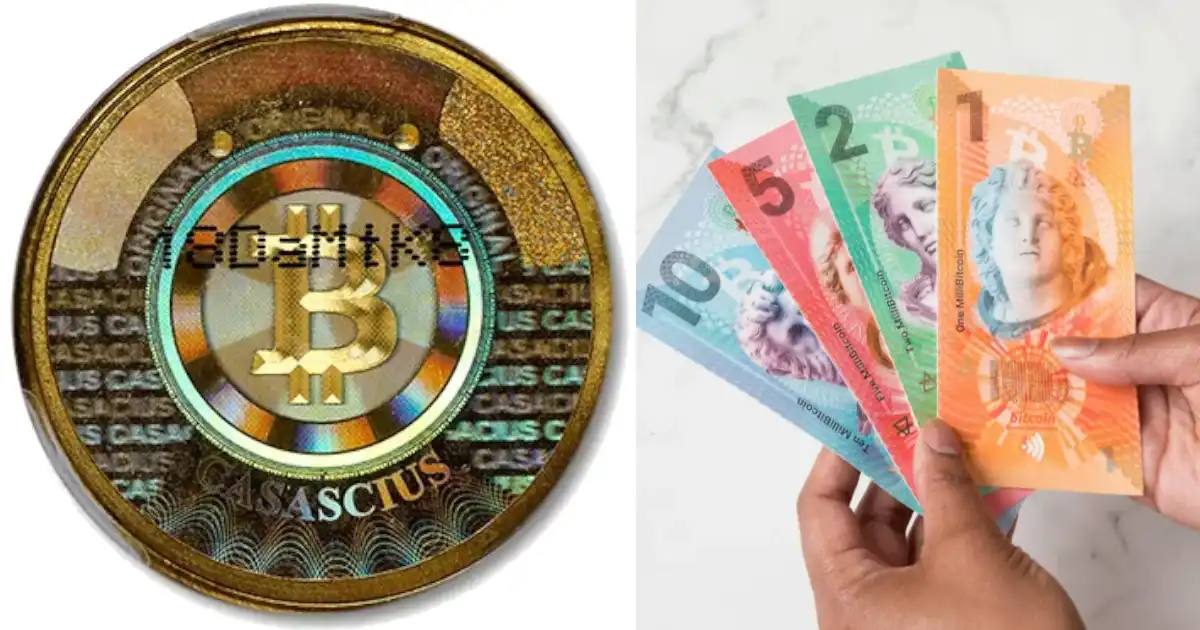
The Evolution of Physical Bitcoin Bitcoin's digital nature is its core strength, enabling self-custody and rapid global transfers. However, its intangibility also hinders mainstream adoption. For over a decade, creators have attempted to materialize Bitcoin while preserving its cash-like properties, yielding notable results. Casascius Coins, launched in 2011, were the first and most iconic physical Bitcoin. Creator Mike Caldwell generated private keys offline, printed them on coins, and sealed them with tamper-evident holograms. This model relied on user trust in the centralized issuer. Production ceased in 2013 due to regulatory pressure from FinCEN. RavenBit Coins emerged in 2014 aiming to decentralize minting by letting users generate and apply their own keys. However, this led to trust issues with numerous untrusted minters and insecure key generation methods. In 2016, Coinkite introduced Opendimes—a breakthrough in bearer asset technology. These USB-shaped devices generate and store keys internally. Funds can be received by checking the public key, but spending requires physically breaking the device to extract the private key. While innovative and open-source, its cost (~$20) and form factor limit its use for small, everyday transactions. Satochip's Satodime, a card-shaped device using similar secure chip technology, followed. It supports NFC interaction and comes in various forms. While potentially cheaper in bulk (~13€), it remains a high-security hardware wallet, not a low-cost cash substitute. A fundamental cost barrier exists. For physical Bitcoin to achieve widespread commercial use, hardware costs must drop below $1 to match the production cost of fiat banknotes. Current secure chips capable of running Bitcoin's cryptographic algorithms (like secp256k1) are too expensive. Chips like NXP's NTAG X DNA (~$3) show cost-reduction potential but lack native Bitcoin curve support. Projects like OfflineCash embed chips in banknote-like paper, but face challenges with durability, the need for custom Bitcoin-enabled chips, and the inherent requirement for users to verify balances online—which conflicts with Bitcoin's trustless ideal. Coinkite's Tapsigner, a ~$20 card with a proprietary Bitcoin NFC chip, is seen as a more practical step forward. It functions as a reloadable hardware wallet for contactless payments, solving the "change" problem and focusing on real-world retail integration, a direction also pursued by companies like Cash App and Square. In summary, the journey to physical Bitcoin has progressed from trusted centralized mints (Casascius) to user-generated keys (RavenBit) and finally to self-contained secure hardware (Opendimes, Satodime, Tapsigner). The core challenge remains developing a sufficiently low-cost, durable, and truly trustless physical bearer asset that can function like cash in daily transactions. Current solutions are either too expensive or introduce new trust assumptions, keeping the ideal of ubiquitous physical Bitcoin just out of reach for now.

marsbit1h ago

The Evolution Path of Physical Bitcoin

marsbit1h ago

Trading

Spot
Futures

Hot Articles

How to Buy ZEST

Welcome to HTX.com! We've made purchasing Zest Protocol (ZEST) simple and convenient. Follow our step-by-step guide to embark on your crypto journey.Step 1: Create Your HTX AccountUse your email or phone number to sign up for a free account on HTX. Experience a hassle-free registration journey and unlock all features.Get My AccountStep 2: Go to Buy Crypto and Choose Your Payment MethodCredit/Debit Card: Use your Visa or Mastercard to buy Zest Protocol (ZEST) instantly.Balance: Use funds from your HTX account balance to trade seamlessly.Third Parties: We've added popular payment methods such as Google Pay and Apple Pay to enhance convenience.P2P: Trade directly with other users on HTX.Over-the-Counter (OTC): We offer tailor-made services and competitive exchange rates for traders.Step 3: Store Your Zest Protocol (ZEST)After purchasing your Zest Protocol (ZEST), store it in your HTX account. Alternatively, you can send it elsewhere via blockchain transfer or use it to trade other cryptocurrencies.Step 4: Trade Zest Protocol (ZEST)Easily trade Zest Protocol (ZEST) on HTX's spot market. Simply access your account, select your trading pair, execute your trades, and monitor in real-time. We offer a user-friendly experience for both beginners and seasoned traders.

396 Total ViewsPublished 2026.05.19Updated 2026.05.19

How to Buy ZEST

HTX Learn: Learn Hot Tokens to Share 1000 USDT​

To enhance your understanding of this week's featured cryptos, we are rolling out various rewarding events. Join them now and bring home generous rewards through learning and trading.

19.0k Total ViewsPublished 2026.05.21Updated 2026.05.21

HTX Learn: Learn Hot Tokens to Share 1000 USDT​

Discussions

Welcome to the HTX Community. Here, you can stay informed about the latest platform developments and gain access to professional market insights. Users' opinions on the price of A (A) are presented below.

活动图片