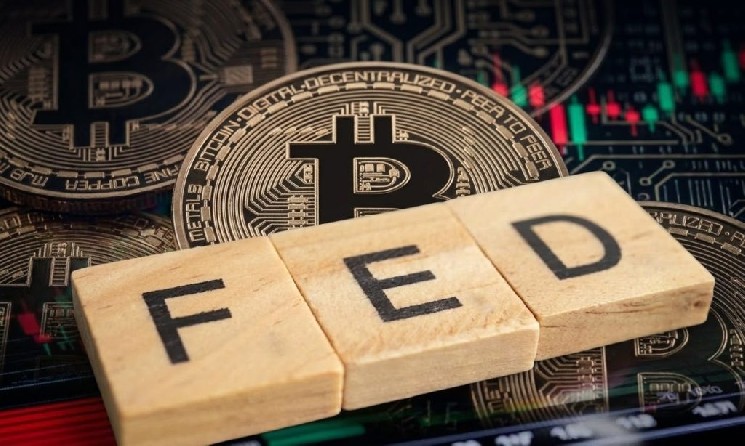
Operation Chokepoint 2.0 Concludes as Fed Withdraws Crypto Restrictions: A Long-Overdue Institutional Shift

marsbitPublished on 2025-12-19Last updated on 2025-12-19

Abstract

The article discusses the end of "Operation Chokepoint 2.0," a coordinated U.S. regulatory effort to restrict banking services for the cryptocurrency industry in 2023. Internal FDIC documents confirmed this de-banking campaign, which increased regulatory friction and limited crypto firms' access to banking services following the collapse of several banks. A key tool was a Federal Reserve policy that classified crypto-related activities—such as stablecoin services, on-chain settlement, and crypto custody—as "high-risk innovation," subjecting them to additional scrutiny. Recently, the Federal Reserve officially revoked this restrictive policy, signaling a shift in regulatory approach. This change is not due to a sudden pro-crypto stance but reflects the growing recognition that isolating the industry is increasingly impractical. Stablecoin adoption has expanded, on-chain dollar settlements have become more frequent, and capital flows have continued outside the traditional banking system, creating potential systemic risks. The case of Custodia Bank, which was denied a master account and access to the dollar clearing system, exemplifies the impact of these policies. Custodia has since sought a rehearing, and its legal challenge is seen as a test of whether regulators are moving from a default rejection to a compliance-based准入 approach. Concurrently, the SEC issued guidance on how broker-dealers should custody crypto assets, detailing requirements for private key management, bl...

"Operation Chokepoint 2.0" was never a conspiracy theory.

Previously disclosed internal documents from the Federal Deposit Insurance Corporation (FDIC) reveal that in 2023, U.S. regulators indeed launched an organized de-banking campaign against the cryptocurrency industry.

That year, following the successive collapses of Silvergate, Signature, and Silicon Valley Bank, regulators used institutional friction to restrict banks from providing services to crypto companies, leading to reduced liquidity and access for the sector. One of the core tools of this campaign was a key policy statement issued by the Federal Reserve that year—classifying banks' involvement in stablecoins, on-chain settlements, crypto custody, and other activities as "high-risk innovative activities" and imposing additional approval barriers.

But just yesterday, this blockade was dismantled by the Fed. Latest reports indicate that the Federal Reserve has formally revoked the restrictive policy issued in 2023. This is not a sudden shift to a "friendly" regulatory stance, but rather an acknowledgment that the past isolation strategy could no longer cope with the rapidly evolving on-chain capital flows and industry realities.

Early Signs of Risk

Over the past year, one fact has become increasingly clear:

· Stablecoin scale continues to expand

· On-chain dollar transactions are becoming more frequent

· Capital flows have not returned to the banking system

The most critical dollar settlement activities are instead occurring in regions with weaker regulatory reach. This has turned the isolation strategy originally intended to "prevent risks" into a source of systemic vulnerability.

It is against this backdrop that the Federal Reserve recently formally revoked its restrictive policy statement from 2023, reintegrating banks' involvement in crypto-related businesses into the conventional prudential regulatory framework.

Custodia's Counterattack

The direct consequence of the isolation policy and Operation Chokepoint was that some crypto banks were unable to access the dollar settlement system. Custodia Bank is the most typical case. This bank, focused on crypto custody, applied for a Federal Reserve master account for three years but never received approval, remaining excluded from the dollar clearing system.

Recently, Custodia submitted a petition for an en banc rehearing to the Tenth Circuit Court of Appeals, requesting a reconsideration of the previous ruling that denied its master account application. Although a ruling has not yet been issued, the lawsuit itself has become a crucial window for observing the shift in U.S. regulatory logic: the market can use Custodia's case to understand whether regulation is gradually moving from "presumptively no" to "compliant access."

How Regulation Manages

Almost simultaneously, the SEC released a "Statement on Broker-Dealer Custody of Crypto Asset Securities." The document shows that regulators are no longer纠结 on whether to allow it, but are systematically stipulating:

· How private keys should be managed

· How to assess blockchain technology risks

· How to respond to extreme scenarios like 51% attacks, hard forks, etc.

Crypto-related businesses are no longer treated as "exceptional items" but as常规 risks within the financial system that can be regulated.

Institutional Shift

Viewing recent developments together reveals a clear trend:

· The Fed revokes special restrictions targeting crypto

· The SEC provides an operational framework for custody

· The OCC expands recognition of stablecoins and custody institutions

· The regulatory focus shifts from blocking to structured management

The regulatory focus has shifted from blocking to structured management. Crypto is no longer isolated as a whole but broken down into manageable modules: settlement, custody, clearing, risk control.

Re-Entry

In 2023, U.S. regulators chose to "keep crypto out."

In 2025, they realized: long-term absence is itself the greatest risk.

This is not a victory for any one side, but an acknowledgment of reality—when on-chain dollars have become part of global capital flows, the only choice for regulators is not to ignore it, but to re-enter it.

Real change will not be reflected in short-term market movements, but in: who is allowed to participate in the next stage of the dollar settlement and custody system.

And this is the core significance of this policy adjustment.

*This content is for reference only and does not constitute investment advice. The market carries risks, and investment requires caution.

Related Questions

QWhat was the core tool of Operation Chokepoint 2.0 as implemented by the Federal Reserve in 2023?

AThe core tool was a key policy statement from the Federal Reserve that classified bank involvement in activities like stablecoins, on-chain settlement, and crypto custody as 'high-risk innovation activities' and imposed additional approval requirements.

QWhy did the Federal Reserve recently revoke its 2023 restrictive policy on crypto-related banking activities?

AThe Fed revoked the policy because the isolation strategy became counterproductive, creating systemic risks as dollar settlement activity increasingly moved to less-regulated on-chain environments instead of returning to the banking system.

QWhat is the significance of the Custodia Bank case in the context of US regulatory changes?

AThe Custodia Bank case, where a crypto-focused bank was denied a master account, serves as an important test to see if US regulation is shifting from a default stance of prohibition ('default no') to a framework of compliant access.

QHow does the SEC's new statement on broker-dealer custody of crypto asset securities represent a shift in approach?

AThe SEC's statement represents a shift by no longer debating whether to allow the activity, but instead providing a systematic regulatory framework for how to manage private keys, assess blockchain risks, and handle extreme scenarios like 51% attacks.

QWhat is the overall trend in US regulatory approach to crypto based on recent actions by the Fed, SEC, and OCC?

AThe overall trend is a shift from blocking and isolating the crypto industry to structured management, where crypto activities are broken down into modular, regulatable components like settlement, clearing, and custody, and brought under conventional prudential oversight frameworks.

Related Reads

Anthropic's IPO Launch: Commercial Miracle or Valuation Bubble?

Anthropic has confidentially filed for an IPO, led by Morgan Stanley and Goldman Sachs, potentially going public by October. Following its latest $650 billion funding round, its pre-IPO valuation stands at $965 billion, with projections reaching up to $2 trillion at listing, which would make it the highest-valued private company ever. The article, written by Fu Sheng, addresses skepticism that this represents an AI bubble akin to the 2000 dot-com crash. It argues the current situation differs fundamentally. Unlike the internet bubble era, which relied on speculative narratives with little revenue, Anthropic's valuation is backed by unprecedented, measurable financial performance. Key data points include: * **Revenue Growth:** ARR skyrocketed from $10 billion in early 2025 to $470 billion by May 2026, targeting $100 billion by year-end—a growth curve unmatched in business history. * **Profitability:** It achieved operating profitability in Q2 2026 with an estimated $5.6 billion profit. * **Efficiency:** With ~3,000 employees and ~$470 billion ARR, its revenue per employee exceeds $10 million. Products like Claude Code, launched less than a year ago, already generate $25 billion in annualized revenue. * **Enterprise Adoption:** It boasts a strong enterprise client base, with 8 of the Fortune 10 and over 1,000 large firms spending over $1 million annually on Claude. The valuation is framed using a traditional SaaS model (e.g., a 10x Price-to-Sales multiple on $100 billion revenue). The author contends the core question for analysts has shifted from "How big could this be?" to "How much is it earning and will earn next quarter?" The discussion extends beyond Anthropic to a broader paradigm shift: the transition from a "carbon-based" to a "silicon-based" economy. Companies are increasingly prioritizing investment in compute and AI capabilities over human resources, as these directly scale productivity and competitive advantage. Anthropic's IPO is thus positioned not just as a corporate milestone, but as a price anchor for this new economic era.

链捕手2h ago

Anthropic's IPO Launch: Commercial Miracle or Valuation Bubble?

链捕手2h ago

Near Returns to the AI Stage: Transformation into a Public Chain Due to 'Payroll Difficulties,' Agent and Privacy Emerge as New Growth Narratives

NEAR Returns to AI Origins: From Payroll Struggles to Blockchain, Now Focusing on AI Agents and Privacy NEAR Protocol's journey began not with grand blockchain ambitions, but from a practical hurdle: its AI startup founders, including Transformer paper co-author Illia Polosukhin, couldn't efficiently pay international developers in 2017. This led them to pivot and build a high-performance, scalable blockchain. After years navigating various crypto narratives like sharding and cross-chain interoperability, NEAR is now leveraging its AI roots to re-enter the AI arena. A key driver is its "NEAR Intents" layer, which abstracts complex cross-chain transactions. Users simply state their goal (e.g., swap BTC for ETH), and a solver network finds the optimal route. This system has processed over $20B in cross-chain volume, generating significant fee revenue. A major growth area is private transactions via "Confidential Intents/Swaps," which hide trade details until settlement to protect against MEV and front-running. Remarkably, private swaps recently accounted for over 40% of NEAR's transaction volume, highlighting strong demand but also potential regulatory scrutiny. With its AI-founder pedigree, NEAR is positioning itself at the intersection of blockchain, AI agents, and privacy, aiming to become infrastructure for the emerging agent economy while navigating the challenges of its rapid adoption.

marsbit4h ago

Near Returns to the AI Stage: Transformation into a Public Chain Due to 'Payroll Difficulties,' Agent and Privacy Emerge as New Growth Narratives

marsbit4h ago

Trading

Spot
Futures

Hot Articles

How to Buy SFP

Welcome to HTX.com! We've made purchasing SafePal (SFP) simple and convenient. Follow our step-by-step guide to embark on your crypto journey.Step 1: Create Your HTX AccountUse your email or phone number to sign up for a free account on HTX. Experience a hassle-free registration journey and unlock all features.Get My AccountStep 2: Go to Buy Crypto and Choose Your Payment MethodCredit/Debit Card: Use your Visa or Mastercard to buy SafePal (SFP) instantly.Balance: Use funds from your HTX account balance to trade seamlessly.Third Parties: We've added popular payment methods such as Google Pay and Apple Pay to enhance convenience.P2P: Trade directly with other users on HTX.Over-the-Counter (OTC): We offer tailor-made services and competitive exchange rates for traders.Step 3: Store Your SafePal (SFP)After purchasing your SafePal (SFP), store it in your HTX account. Alternatively, you can send it elsewhere via blockchain transfer or use it to trade other cryptocurrencies.Step 4: Trade SafePal (SFP)Easily trade SafePal (SFP) on HTX's spot market. Simply access your account, select your trading pair, execute your trades, and monitor in real-time. We offer a user-friendly experience for both beginners and seasoned traders.

657 Total ViewsPublished 2026.05.22Updated 2026.06.02

How to Buy SFP

How to Buy CTR

Welcome to HTX.com! We've made purchasing Citrea (CTR) simple and convenient. Follow our step-by-step guide to embark on your crypto journey.Step 1: Create Your HTX AccountUse your email or phone number to sign up for a free account on HTX. Experience a hassle-free registration journey and unlock all features.Get My AccountStep 2: Go to Buy Crypto and Choose Your Payment MethodCredit/Debit Card: Use your Visa or Mastercard to buy Citrea (CTR) instantly.Balance: Use funds from your HTX account balance to trade seamlessly.Third Parties: We've added popular payment methods such as Google Pay and Apple Pay to enhance convenience.P2P: Trade directly with other users on HTX.Over-the-Counter (OTC): We offer tailor-made services and competitive exchange rates for traders.Step 3: Store Your Citrea (CTR)After purchasing your Citrea (CTR), store it in your HTX account. Alternatively, you can send it elsewhere via blockchain transfer or use it to trade other cryptocurrencies.Step 4: Trade Citrea (CTR)Easily trade Citrea (CTR) on HTX's spot market. Simply access your account, select your trading pair, execute your trades, and monitor in real-time. We offer a user-friendly experience for both beginners and seasoned traders.

523 Total ViewsPublished 2026.05.25Updated 2026.06.02

How to Buy CTR

What is USOIL

USOILUSDT Perpetual Contract is the trading symbol for West Texas Intermediate (WTI) Crude Oil priced in US dollars, representing 1 barrel of crude oil.

522 Total ViewsPublished 2026.05.25Updated 2026.05.25

What is USOIL

Discussions

Welcome to the HTX Community. Here, you can stay informed about the latest platform developments and gain access to professional market insights. Users' opinions on the price of A (A) are presented below.

活动图片