Author: ollieblocmates, blocmates
Compiled by: Deep Tide TechFlow
Deep Tide Guide: The popular consensus is that crypto has been reduced to four winning categories: perpetual contracts, memecoin launchpads, stablecoin issuers, and trading apps. As technological optimists, blocmates is touring major networks to find viable use cases that still have vitality beyond speculation's dominance. This stop is Base: a network with over $5 billion in TVL, handling approximately 12 million transactions daily, and settling about 90% of x402 transactions, is nurturing a batch of products that haven't yet entered the spotlight—the MetaDEX Hydrex which aggregates liquidity, the fantasy competition app SwapRoyale that gamifies trading, the permissionless AI gateway BlockRun, the real-money chess PixieChess where pieces are collectible NFTs, and Tokensto which turns idle AI tokens into cash. The author believes the surface area of interesting on-chain activities is still wider than the current consensus admits.
The popular consensus is that crypto has been reduced to four winning categories—perpetual contracts, memecoin launchpads, stablecoin issuers, and trading apps.
From a revenue perspective, there's some truth to this statement.
However, as technological optimists, we believe crypto has more viable use cases beyond the dominance of speculation.
To prove our point, we are touring major networks to see what interesting things are brewing within their ecosystems.
Today's stop is Base—the native network of the Base App.
Despite being in controversy where there's a gap between the network's stated direction and its actions, a look at the charts reveals a healthy network with a TVL of over $5 billion.
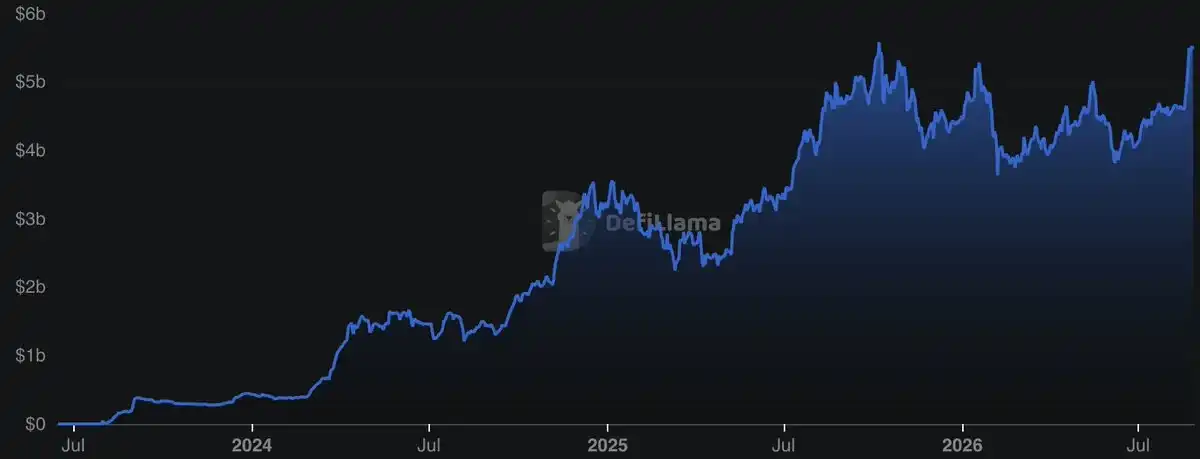
Chart: Source: DeFiLlama
It's worth noting that this metric is significantly skewed. Morpho alone accounts for over 80% of the network's locked value, totaling over $3 billion.
As of mid-August 2026, the network processes approximately 12 million transactions daily (ranking among the highest in tracked chains for transaction volume), with about 283,000 daily active addresses.
Base also settles about 90% of x402 transactions (the emerging standard for micropayments between agents) and leads in on-chain spot trading volume for major L1 assets like BTC, ETH, and SOL.
Over the past year, its share of global DEX trading volume increased from 8.8% to 12.1% (a 38% growth), with total trading volume up 38% year-over-year.
Furthermore, some refreshing products have emerged on the network, some not yet in the spotlight. We've listed a few worth watching.
Hydrex
Starting with Hydrex. This is a Base-native MetaDEX/automated market maker that aggregates native pools with external liquidity sources within the Base ecosystem, routing trades through Uniswap, Morpho, etc., to provide the best prices.
Hydrex runs a modified ve(3,3)-style incentive engine, with weekly community governance directing HYDX emissions and protocol revenue to the most productive liquidity and trading volume.
Holders of locked token accounts can capture 100% of the fees generated by Hydrex LPs through weekly distributions, plus partner incentives, creating a tight flywheel that rewards long-term commitment.
Hydrex has some very cool features, like token swaps and liquidity provision with a single signature, automated liquidity managers, and backing HYDX emissions with real reserve contributions.
SwapRoyale
Yes, we do agree perpetual contracts are one of crypto's "four horsemen," but have you tried the DraftKings version?
SwapRoyale adds something particularly appealing to the concept of trading; it's truly one of the most interesting projects being built on Base right now.
Chart: Source: SwapRoyale
SwapRoyale is a fantasy trading competition app, currently in public beta on iOS. Users pay a fixed entry fee to receive a $100,000 virtual portfolio and participate in real-time trading competitions.
At a time when consumer apps are finally starting to win markets (fomo being the most recent obvious proof), SwapRoyale is one of the purest expressions of this thesis: take something people already love (trading), wrap it in a gamified, skill-oriented format, and make the UX smooth.
Here's how it works:
- Users sign up with an email
- A wallet is automatically created
- Fund via Coinbase, Venmo, PayPal, Apple Pay, debit card, or any crypto wallet
- Zero platform fees for deposits and withdrawals
- Users can view and join competitions: available assets, prize pool, payout structure, duration, max number of trades, and minimum participants
There are three competition formats:
- Guaranteed Prize Pool (GPP)—high volatility, large prizes
- Double/Triple Up—low volatility, stable play
- Free contests to practice the format risk-free
SwapRoyale currently has over 300 daily players, has distributed over $100,000 in prizes, and has over 1,500 paying players.
More integrations are being added to enhance the player experience, covering rewards, engagement, and ease of use.
These integrations will bring a full 76-badge system (with interactive 3D collectibles, revamped streak mechanics, and richer sharing), weekly Megapot draws (free entry tickets, real-time prize pool tracking, prizes backed by real tickets), and partner rewards redeemable through Trove, Moonshot, and Beezie.
It also adds Blink for instant deposits, a more polished first-launch experience, and a major UX overhaul across the app: new navigation system, unified leaderboard, smoother gestures, haptic feedback, sound effects, animations, and redesigned sharing flows.
This product is already showing strong product-market fit and is definitely worth watching as it progresses.
BlockRun
The on-chain agent economy is being built on Base, and this is far from just a slogan.
We've witnessed some of the most innovative things in on-chain AI launching first on Base, with x402 being a significant innovation among them.
BlockRun adds to these exciting projects, serving as a routing and payment layer for the agent economy.
BlockRun is a permissionless AI gateway that enables autonomous systems to discover, pay for, and execute services without API keys, subscriptions, or credit cards.
Through BlockRun, agents can fund a non-custodial wallet with USDC on Base, call any endpoint, and have payments directly embedded into HTTP requests by the x402 protocol, completing settlement in a single round trip.
With BlockRun, users enjoy true metered intelligence, paying only for what they actually use.
Payments settle instantly in USDC, agents run at internet speed, unburdened by the friction of traditional API billing.
PixieChess
We also found a magical, real-money chess game built on Base where each piece is a collectible NFT with unique abilities that rewrite the classic rules.
It's called PixieChess. Players assemble their board from their collections, then either climb the ladder or burn pieces to enter high-stakes tournaments and duels.
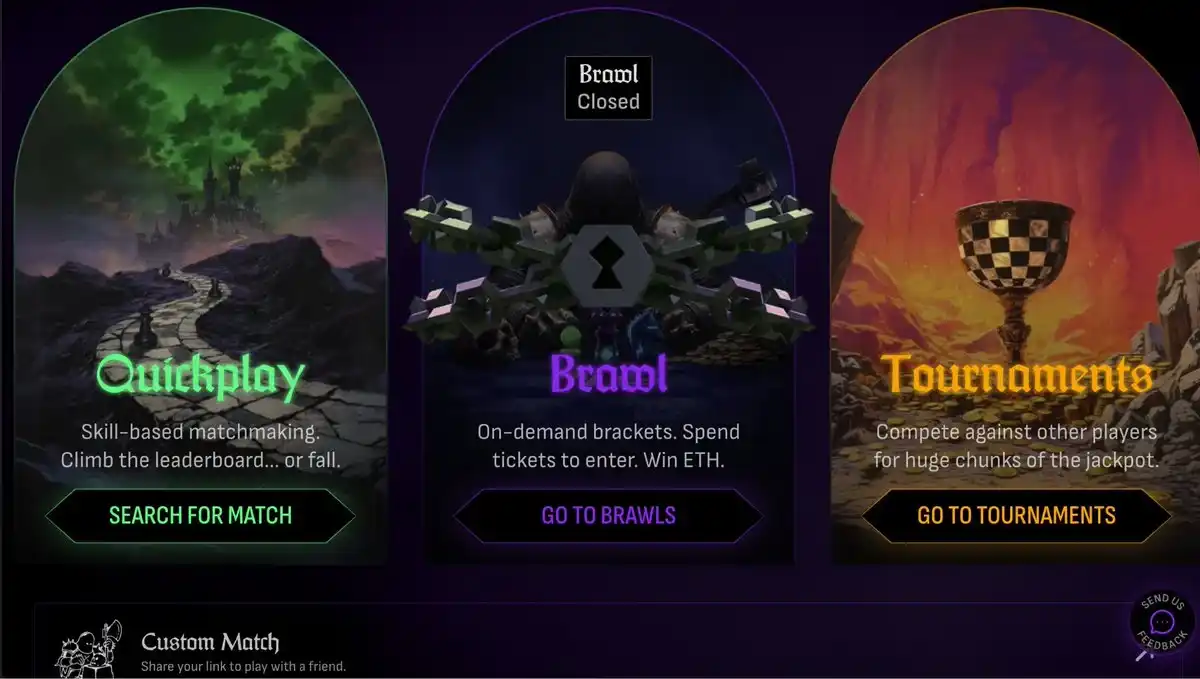
PixieChess is built so all value stays within the system. Each sale funds the treasury, which in turn funds prizes, allowing winners to take home real ETH.
PixieChess is based on classic chess: White moves first, players take turns, moving one piece per turn. Castling, en passant, and pawn promotion follow standard rules (unless overridden by a piece's special ability).
The goal is to checkmate the opponent's king. However, stalemate, agreed draw, the 50-move rule (no captures or pawn moves), threefold repetition, or insufficient material result in a draw.
Each player has a chess clock that only runs on their turn. Timeout usually means losing (unless the opponent has insufficient material to checkmate, then it's a draw).
I'm not much of a chess player, but this is genuinely very cool and has the potential to break out of the Crypto Twitter echo chamber.
Tokensto
Almost everyone familiar with AI has experienced this "sobering moment": spending subscription money on an AI product they thought was really great, only to be left with a pile of unused tokens.
Or maybe it's not just disappointment—it could be accumulating a large amount of tokens, only to stumble upon a competitor's viral launch video, and that competitor happens to be 10x better than the one they subscribed to.
Tokensto solves this problem: it lets users turn idle AI tokens into cash. This is a fairly straightforward product built on the Base network.
Users paste a provider key (OpenRouter, Venice, or any OpenAI-compatible URL), and it gets listed; if the price is competitive enough, it gets bought, with proceeds sent directly to the user's wallet.
Its tech is powered by Surplus (an open inference marketplace), Usdctofiat automatically prices each listing at the top of the order book, and users can cash out directly to off-chain banking apps via Peer (a permissionless on/off-ramp protocol).
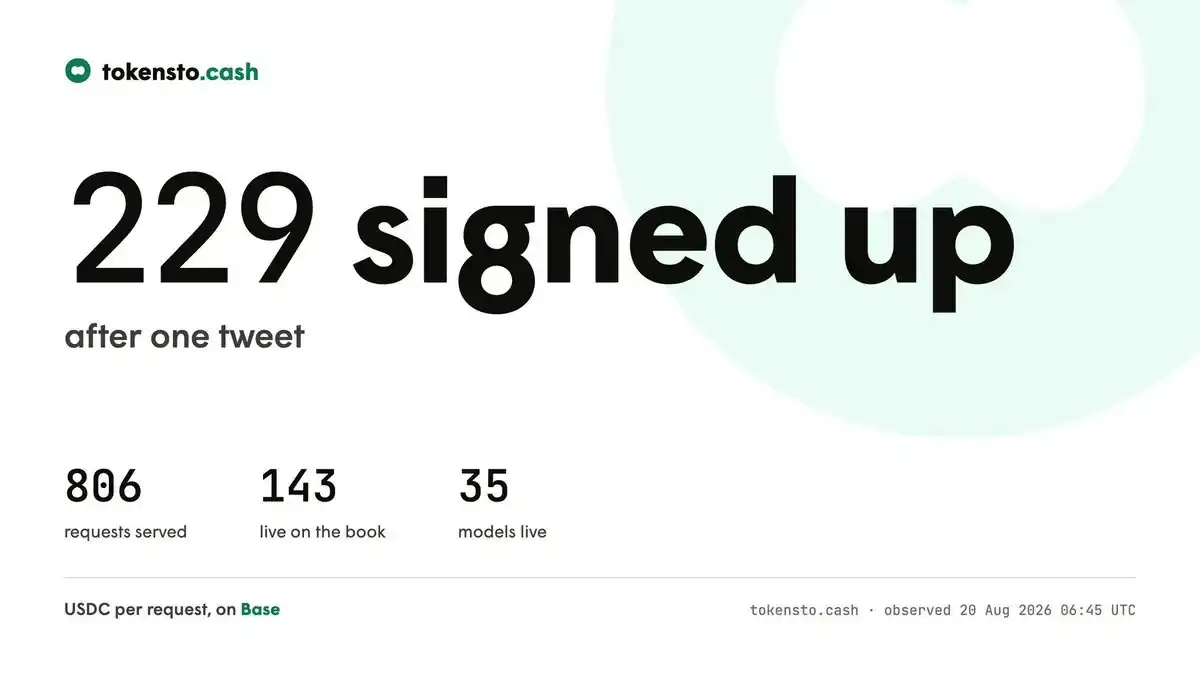
The data shows users are buying into it; its breakout is only a matter of time.
Reflections
Our tour of Base revealed a MetaDEX designed for tighter incentive alignment, a skill-based fantasy trading app that turns market intuition into competition, an agent payment layer that eliminates the friction of traditional API billing, a magical chess game that rewrites rules with collectible pieces while keeping value flowing within the system, and a platform that can sell idle AI tokens for cash.
Not all of these experiments will become category-defining successes, but they show that builders on Base are still willing to explore consumer experiences, the agent economy, and novel gaming mechanics, rather than simply chasing the next speculative flywheel.
This means the surface area of interesting on-chain activities is still wider than the current consensus admits.
As trading volume quietly flows in and the "going crypto" slogan grows louder, we believe more projects will surface. We can only hope that this time is different, with more than just a handful of apps truly breaking out of the CT echo chamber.