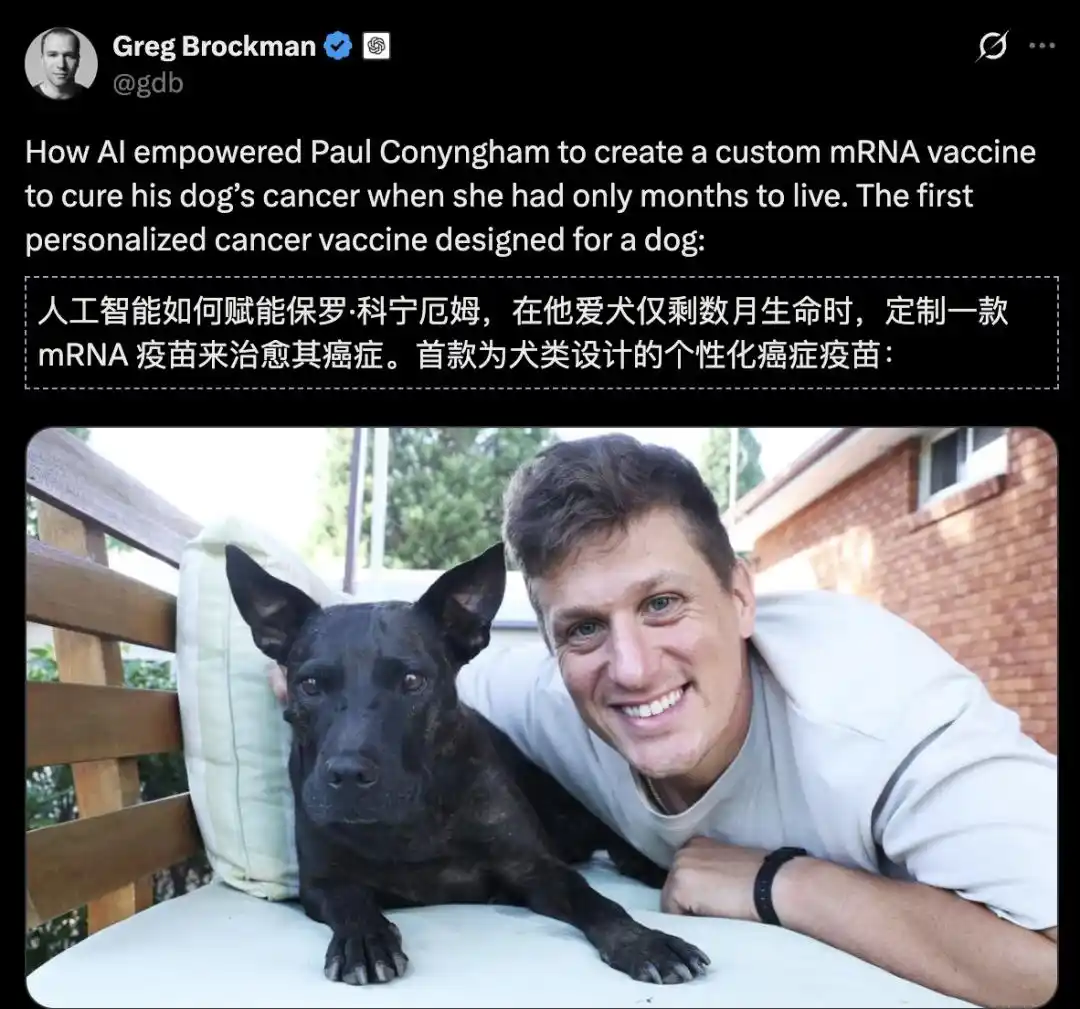
Remember the viral story of the "real-life Drug God" from a few months ago?
An Australian AI expert with no professional background, in order to save his terminally ill dog from cancer, taught himself genomics. Relying on ChatGPT and AlphaFold, he single-handedly created the world's first custom-made mRNA cancer vaccine.
After one injection, the tennis ball-sized tumor on the dog's leg miraculously shrank by 75%, successfully extending its life.
However, the latest outcome of the story unexpectedly broke hearts.
Today, Paul Conyngham announced heartbreaking news: his beloved dog Rosie has returned to the dog star.
This wasn't because the AI vaccine was ineffective, but because the vaccine production speed couldn't outrun Death.
Unable to manufacture the next dose of personalized mRNA cancer vaccine quickly enough, Rosie ultimately passed away.
But the story hasn't reached its conclusion.
Just now, Paul announced: the formal establishment of the startup Gamgee, which has already completed a $4 million seed round led by Founders Fund with participation from Y Combinator (YC).
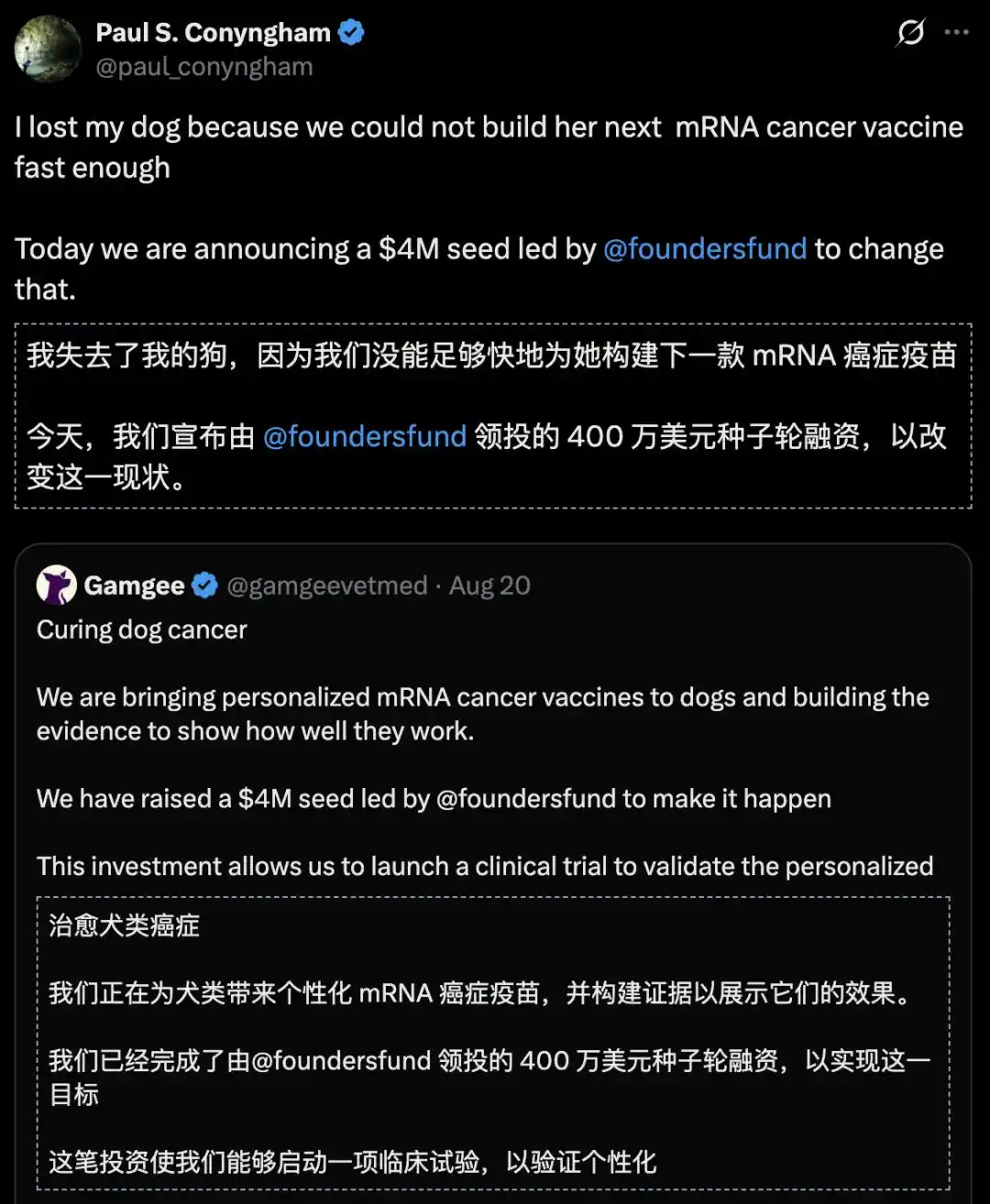
Although his own dog is gone, this "father" aims to create a clinically validated and scalable dog cancer vaccine for dogs worldwide.
A Worldwide Sensation: A "Medical Miracle"
In 2024, 8-year-old bull terrier Rosie was diagnosed with "mast cell cancer." The vet said: only a few months left.
Surgery, chemotherapy, immunotherapy... all methods failed. Paul, with 17 years of machine learning experience, decided: I'm going to save her my own way!
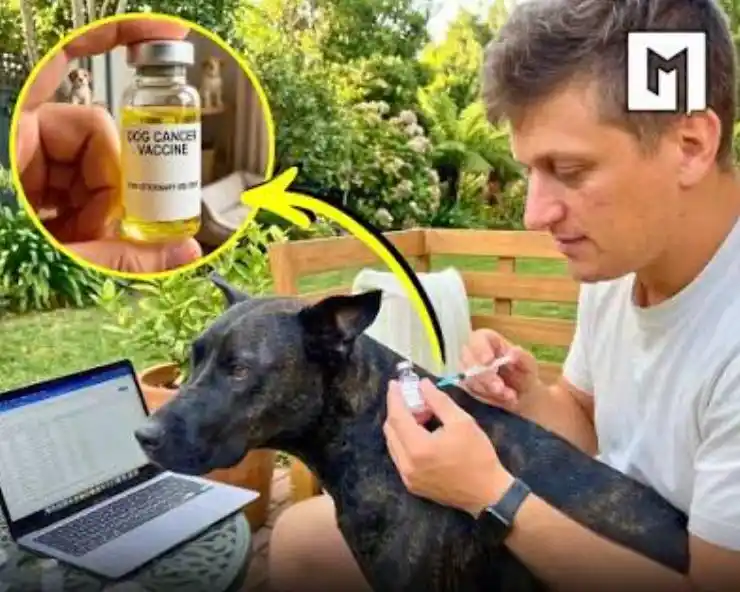
Spending just $3,000 on DNA sequencing of the tumor and healthy blood, Paul fed the massive genetic data into his own program. He consulted ChatGPT on biological principles, used AlphaFold for 3D modeling of mutated proteins, and finally pinpointed the specific attack targets tailored to Rosie's tumor.

AlphaFold's 3D modeling for Rosie's cancer
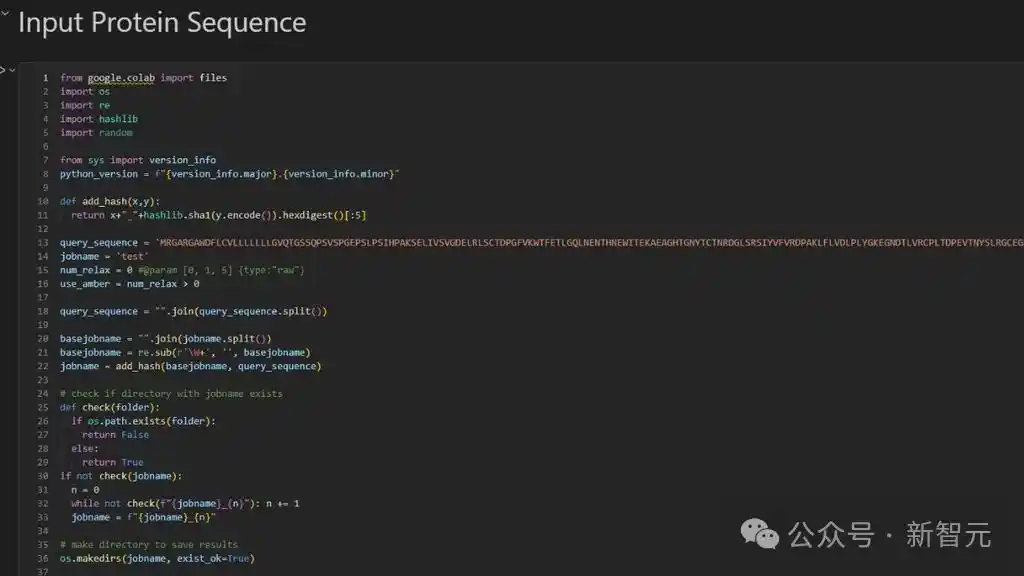
Part of the code for creating the mRNA therapy
With this AI-generated "vaccine formula" in hand, he ran around tirelessly, finally convincing scientists at the University of New South Wales and the University of Queensland to synthesize one dose of the vaccine.
In December 2025, after the first injection, a miracle occurred.
The massive tumor on Rosie's leg shrunk by 50%-75%.
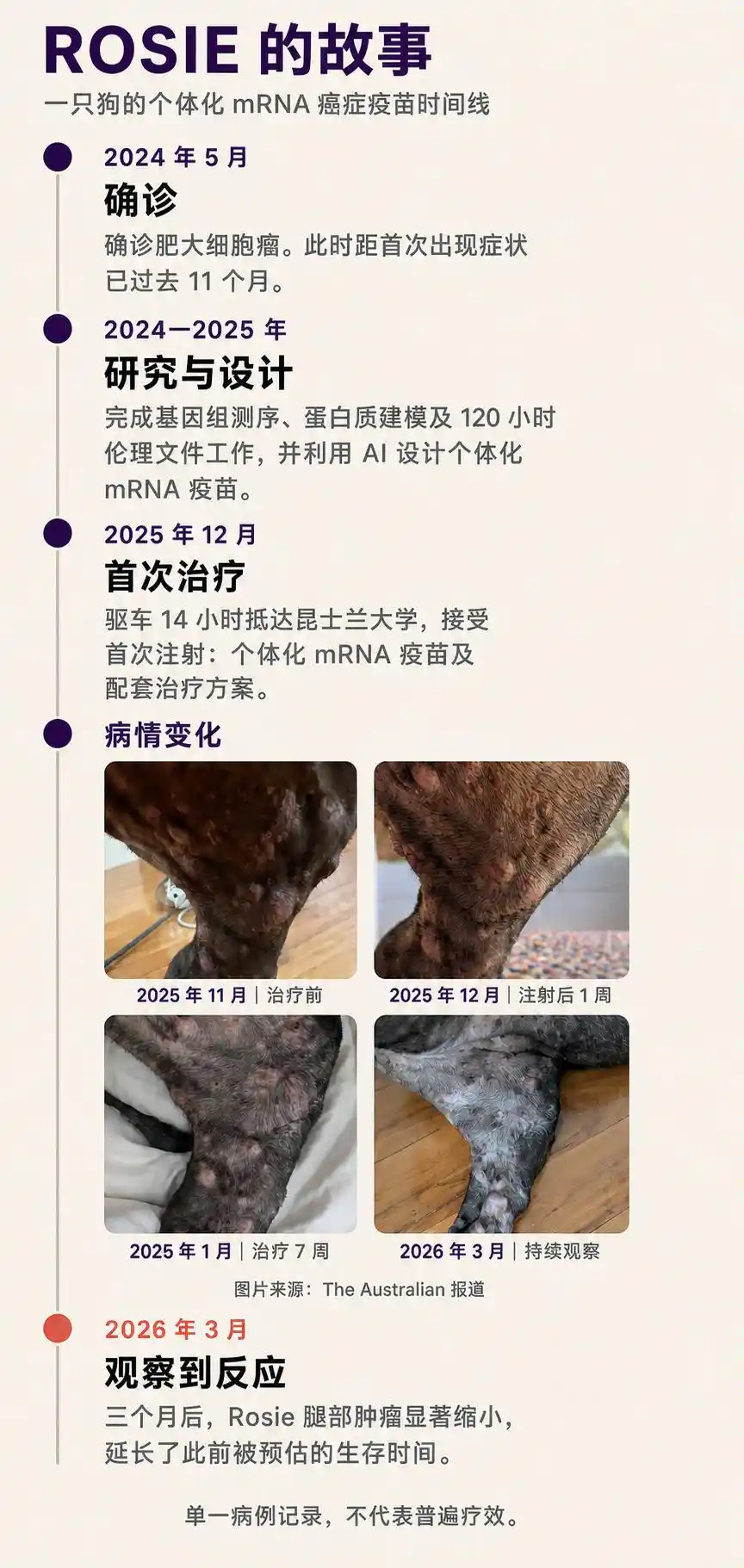
Microscopic analysis showed that large numbers of immune cells (macrophages and T cells) were vigorously attacking the cancer cells. Rosie regained her vitality; she could even jump fences again and chase rabbits.
The world was ecstatic: the era of personalized vaccines was at hand!

However, reality was far crueler than the movies.
The cancer cells were too cunning; they mutated and developed drug resistance—Rosie's cancer relapsed.
At this point, she urgently needed a second-generation mRNA vaccine customized based on the latest mutations.
Yet, the speed of traditional labs, the cumbersome manual production process, and the lengthy approval mechanisms couldn't get the vaccine to Rosie in time.
"I lost my dog because we couldn't make the next mRNA cancer vaccine fast enough," Paul wrote with anguish.
As an ordinary person, even with AI knowledge, trying to quickly customize an mRNA vaccine within a month or two within the existing medical-industrial system remained an almost impossible task.
"I shouldn't be the only person who can do this. Having a machine learning background and months of working through the night shouldn't be the barrier to accessing life-saving drugs."
Rosie is gone, but the legacy she left behind is just beginning to take root and sprout.
The "Father" Founds Gamgee for His Beloved Dog,
Making Exorbitant Vaccines Accessible
To prevent the tragedy from repeating, Paul founded Gamgee, a name derived from "The Lord of the Rings."
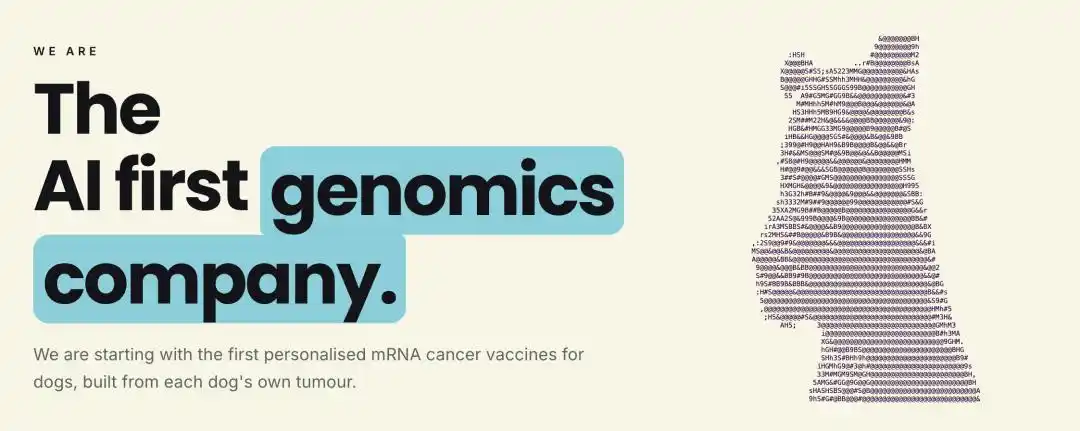
Gamgee's vision is: to cure canine cancer and bring personalized mRNA cancer vaccines to dogs all over the world.
Currently, they have launched their first prototype for personalized cancer treatment customized for dogs.
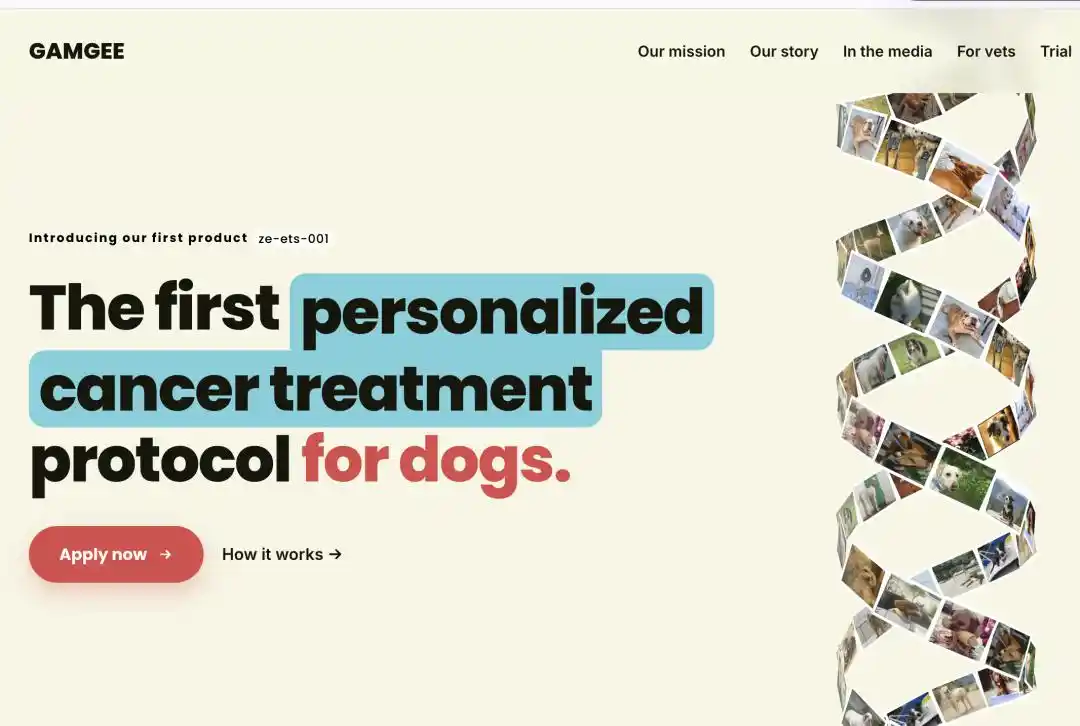
Founders Fund, founded by Peter Thiel, didn't hesitate to lead the $4 million seed round. Top global incubator Y Combinator (YC), Loyal CEO Celine Halioua, Dropbox co-founder Arash Ferdowsi, and a host of other big names have also joined the investment.
Why would top-tier Silicon Valley VCs invest in a project "to save dogs"?
Because what Gamgee aims to do is solve the fatal problem that led to Rosie's death: speed and cost.
It took Paul a whole year and $20,000 to navigate the entire process.
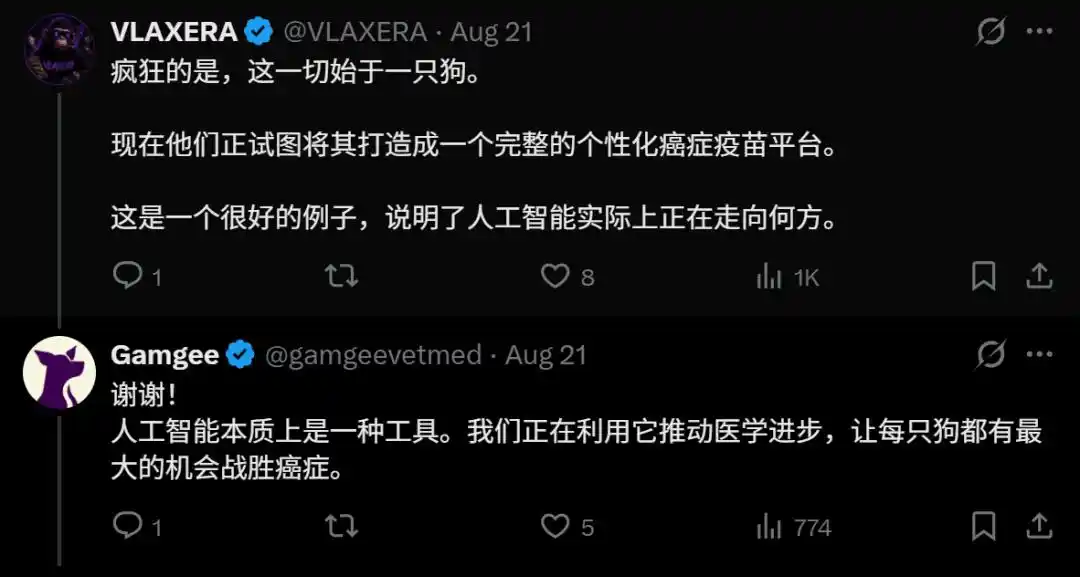
Now, Gamgee is turning this process into an industrialized SaaS assembly line.
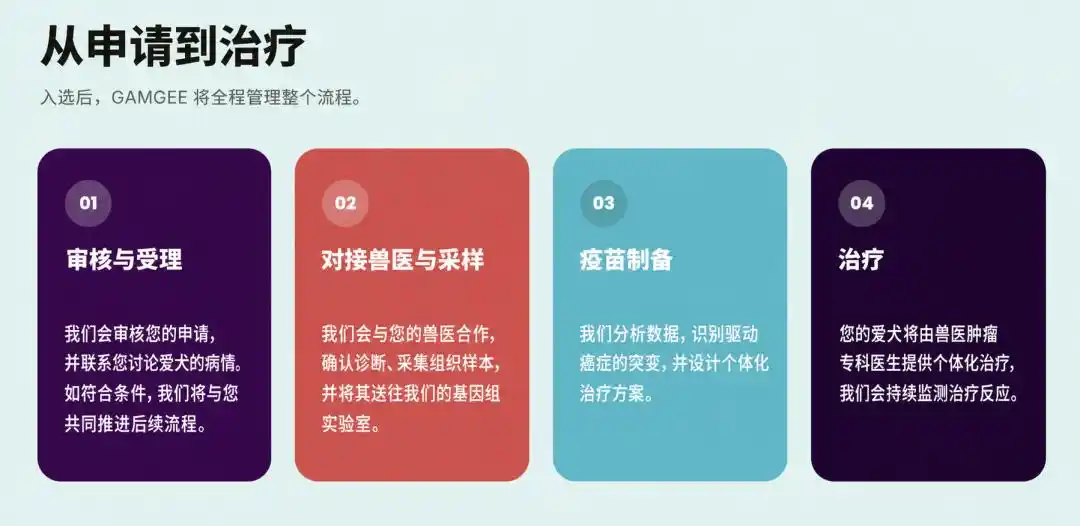
They have built an "end-to-end" closed-loop platform. Ordinary dog owners no longer need to run around like Paul did. All you need to do is follow these steps.
1. Input the Tumor: Gamgee will send you a collection kit. Your veterinarian extracts samples of the dog's tumor and healthy tissue and sends them back.
2. AI Deciphers at Lightning Speed: The samples go directly for DNA and RNA sequencing, and Gamgee's software system takes over everything. AI algorithms sift through the massive data to accurately identify and rank the actionable cancer cell mutation targets worth attacking, preserving evidence for every decision.
3. Output the Vaccine: The system automatically outputs the mRNA vaccine design ready for manufacturing. Gamgee coordinates production, cold-chain logistics, until the veterinarian administers the personalized vaccine to the dog.
Gamgee has set an audacious KPI: aiming to compress vaccine design time to within 48 hours and reduce the end-to-end cost of a full treatment course to $2,000!
"Genome sequencing, protein modeling, mRNA synthesis—the tools are all there. What I built for Rosie wasn't new science; it was new access," Paul stated.
This is nothing short of a revolutionary upheaval in the industry.

Saving 6 Million Cancer-Stricken Dogs Worldwide
In terms of commercial prospects, Gamgee demonstrates a strong Silicon Valley-style "data flywheel" mindset.
First, why dogs?
This is an enormous and heartbreaking market with urgent needs.
In the United States alone, approximately 6 million dogs are diagnosed with cancer each year.
Cancer is the leading cause of death in adult dogs. The vast majority of dog owners have no choice but to spend thousands of dollars on painful chemotherapy, radiation, or surgery.
More importantly, from a biological and AI algorithm training perspective, dogs are the perfect subjects for validating personalized cancer vaccines.
They have pure genetic pools.
Many modern pet dog breeds were developed over the past few centuries from small founder populations, resulting in relatively closed gene pools. This genetic concentration leads many breeds (like Golden Retrievers, Labradors) to be highly susceptible to specific cancers.
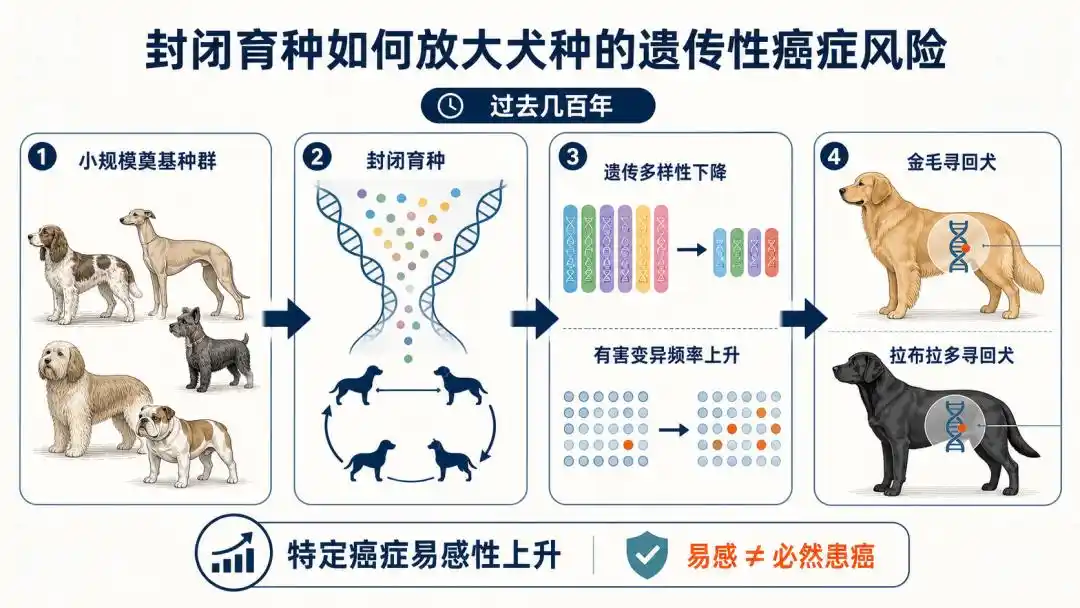
This makes it easier for AI to find patterns in mutations.
Additionally, pet dog cancers occur naturally, unlike those artificially induced in lab mice. Their immune systems are intact, and their disease progression timelines are well-suited for rapid clinical validation.
And the snowball effect of data is Gamgee's core moat.
Currently, datasets on animal genomes and immune responses are still extremely scarce. Every dog Gamgee treats yields a precious set of "sequencing + immune response + clinical outcome" data.
Once this data flywheel starts turning, it will become unstoppable.
Acquire data -> Optimize AI target selection models -> Produce next-generation, more potent vaccines -> Generate better treatment data -> Attract more dogs for treatment.
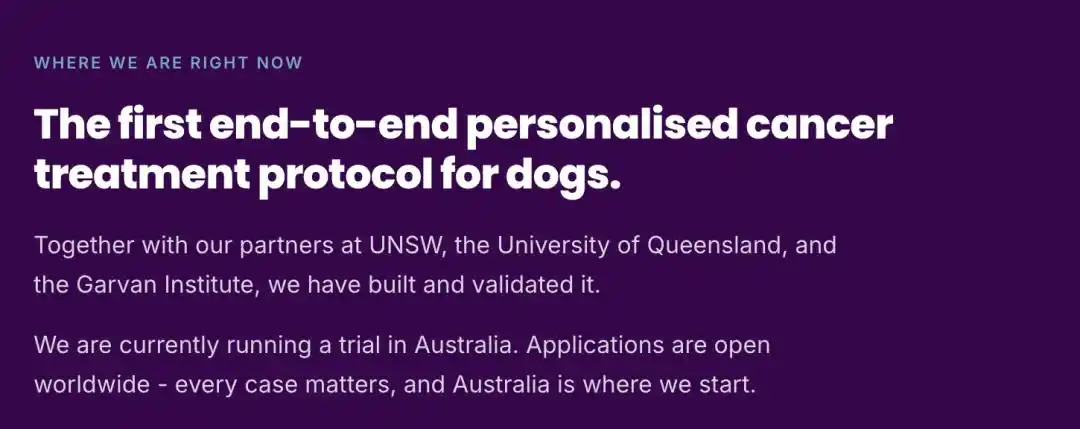
Currently, the $4 million seed funding has officially launched clinical trials. The first clinical trials are underway in Australia, in collaboration with top institutions like the University of New South Wales and the University of Queensland.
This trial will recruit 30 dogs with cancer. Eligible dogs will participate in the trial for free and receive the personalized vaccine.
Simultaneously, Gamgee is now accepting case registrations globally, with a waitlist already exceeding 300 dogs.
The Ultimate Vision: Starting with Rosie, Healing All of Humanity
But Gamgee's ambition extends far beyond canines.
For top-tier investors, what they see is not just the pet healthcare market, but the dawn of "N-of-1" medicine (i.e., extreme personalized medicine for a single patient).
Gamgee's ultimate goal is to establish a better treatment model based on "N-of-1," transcending species barriers, all the way to humans.
Imagine: if Gamgee can, through thousands of dogs, industrialize the process of "tumor sequencing -> AI design -> mRNA vaccine synthesis within 48 hours," soon, this technology will benefit humans.
As David Thomas, Director of the Centre for Molecular Oncology at UNSW, said: "If we can do this in dogs, why wouldn't we roll it out to all humans with cancer?"
Today, over 1,600 cancer therapeutics and vaccines are in development globally. The wave of mRNA and precision medicine has swept across the world.
And just a few days ago, Moderna and Merck jointly announced—
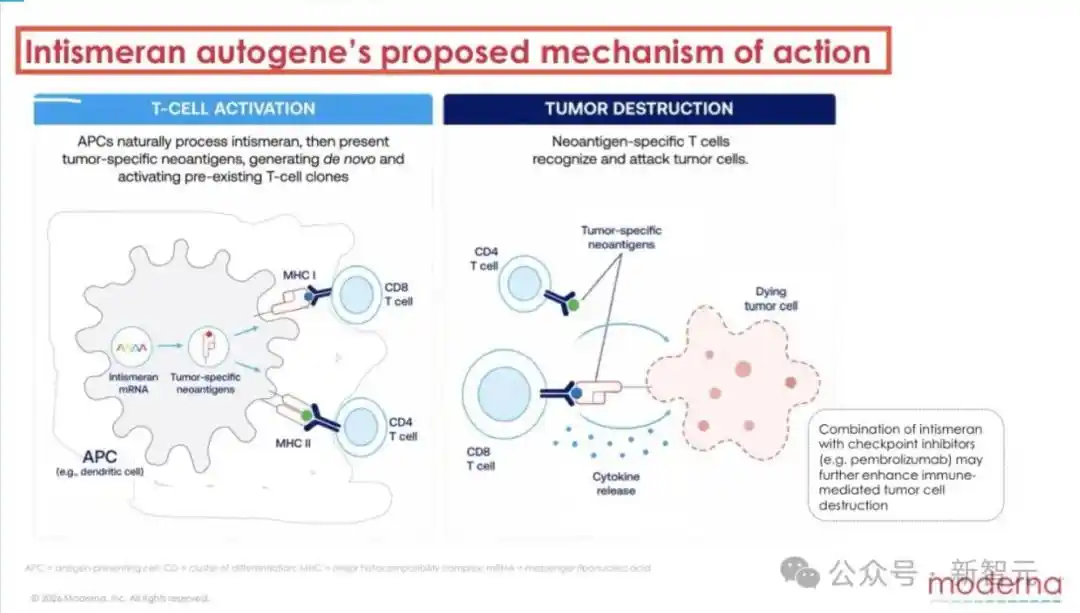
The world's first mRNA cancer therapy deeply involved with AI in its design, "privately customized" based on a patient's own cancer cell gene mutations, achieved historic success in a global Phase III clinical trial for high-risk melanoma!
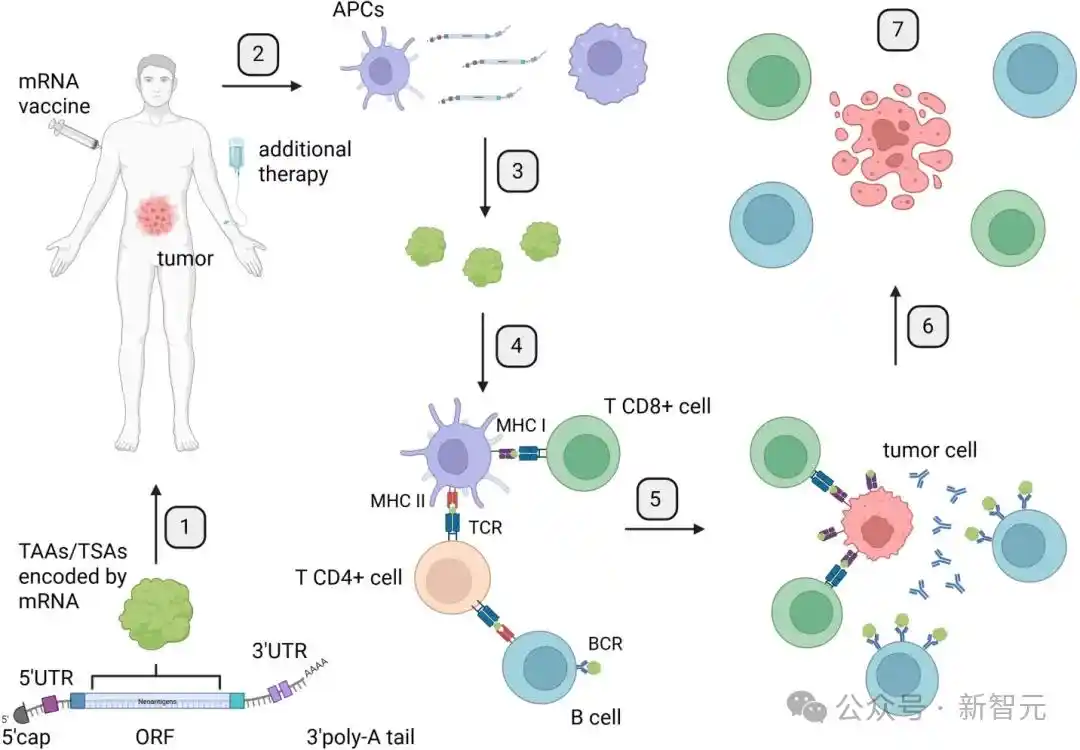
This process is essentially the "human premium version" of Paul's effort to save Rosie!
Similarly, tumor tissue is excised for genetic sequencing; similarly, AI models take the stage, running simulations within hours to precisely identify the most lethal "34 unique targets" from thousands of mutations.
The latter therapy has already significantly prolonged recurrence-free survival and markedly reduced the risk of tumors metastasizing to distant sites like the lungs, brain, and liver.
Moderna's clinical victory proves that the path of "tumor sequencing -> AI neoantigen selection -> custom mRNA -> immune activation" is entirely viable for human cancer.
Clearly, we are on the eve of AI curing cancer.
The Legacy of Love
Rosie ultimately didn't get to receive the second vaccine dose.
But her story has given hope to 6 million dogs diagnosed with cancer each year.
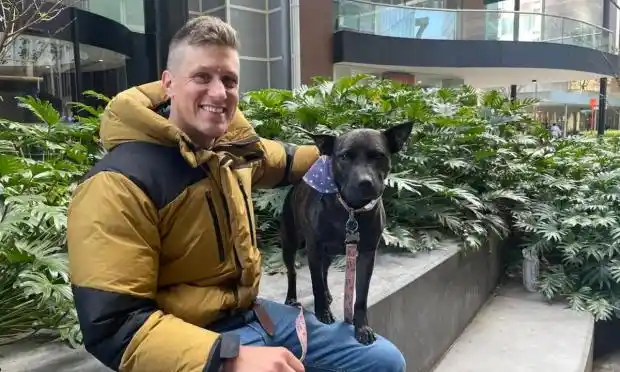
In the tweet announcing Gamgee's funding, Paul ended with five words: "I love you, Rosie."
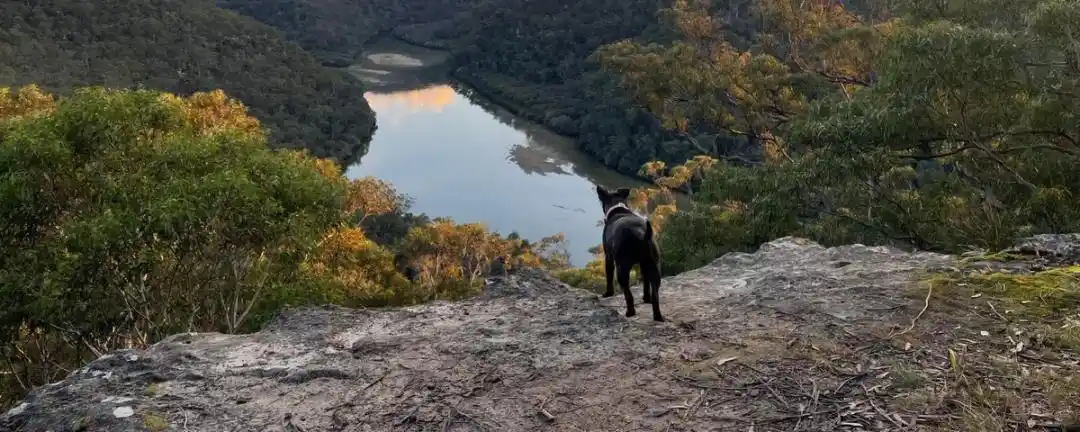
"We built Gamgee so that no other dog ever has to wait for that hope again."
Although Rosie has closed her eyes forever, the legacy she left may illuminate the path for millions of dogs, and even help humanity conquer cancer.
References:https://www.gamgee.io/https://x.com/paul_conyngham/status/2090502003449590254
https://x.com/paul_conyngham/status/2036940410363535823
This article is from the WeChat public account "New Zhiyuan," author: ASI Apocalypse, Editor: Aeneas