Written By: Billy Bambrough,Forbes
Compiled By: AididiaoJP,Foresight News
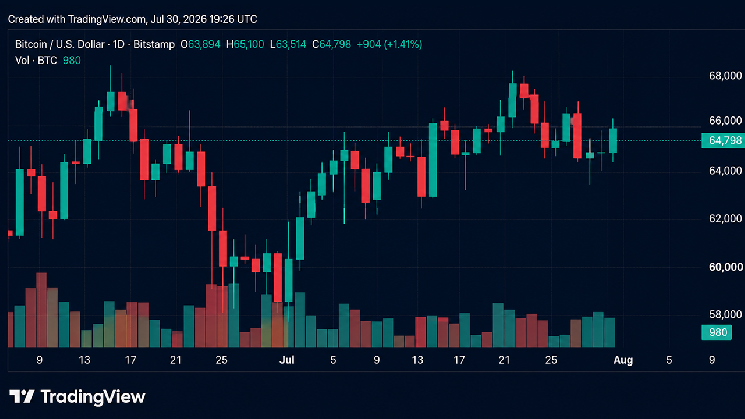
This year, the Bitcoin and cryptocurrency markets have mostly been moving sideways. Traders are on edge, constantly wary of potential sharp shocks that could strike at any moment.
In February, Bitcoin's price briefly fell below $65,000 per coin, after which it entered a downward channel and has struggled to break free. Even a recent sudden statement from Goldman Sachs' CEO expressing support for Bitcoin's "ultimate catalyst" failed to quickly lift market sentiment.
Currently, Bitcoin is accelerating towards a major turning point potentially worth $27.9 trillion. Right at this critical juncture, SpaceX and Tesla's leader, billionaire Elon Musk, has offered a game-changing prediction: within a mere decade, money will "no longer matter." This statement could have profound implications for Bitcoin's price.
"By 2036, money will be irrelevant," Musk said in an interview with Zanny Minton Beddoes, Editor-in-Chief of The Economist. In the wide-ranging interview, he explicitly predicted that the world will transition to a state of "incredible abundance" in the next ten years.
"What do you need money for?" Musk asked rhetorically. The tech mogul, who became the world's first trillionaire on June 12th after SpaceX's listing and still has a net worth of around $700 billion, pointed out that robots will proliferate, and people's needs will be effortlessly met. At that point, all money would essentially become worthless.
"You need money to buy goods and services, right? Food, housing, transportation, entertainment – all require money," Musk explained. "But if robots and AI provide goods and services far beyond what any human can consume, what's the point of money?"
This prophecy is not without basis. Musk has repeatedly emphasized that "energy is the real currency," sparking intense speculation among Bitcoin supporters that he might be quietly endorsing the cryptocurrency. In fact, his two core companies hold significant Bitcoin reserves: SpaceX holds 18,712 BTC, and Tesla holds 11,509 BTC.
"Energy is the real currency," Musk once responded on platform X to an account named beffjezos. The user had posted: "If you understand money as a proxy for anticipated free energy, then AI is basically an infinite money printer."
At Bitcoin's current price of approximately $65,000, the combined holdings of SpaceX and Tesla are worth nearly $2 billion.
In October last year, Musk elaborated his stance further in an X post: "Bitcoin is based on energy. You can issue fake fiat money, every government in history has done it, but energy cannot be counterfeited." He also agreed that the "global arms race" towards AI is a major reason behind the simultaneous price increases of gold, silver, and Bitcoin in recent years.
However, Bitcoin's price has seen a noticeable pullback since then. Despite this, some still believe the bottom is in and a rebound could begin at any time.
Bitcoin's security mechanism relies on a network of miners—who use powerful computing power to verify transactions in exchange for newly issued Bitcoin. The entire network consumes electricity equivalent to the usage of small countries annually, and this energy demand continues to rise as prices increase and more miners join. This point resonates perfectly with Musk's logic of "energy as currency."
Musk's enthusiasm for cryptocurrency support has cooled compared to the peak of the COVID-19 pandemic, but he hasn't completely withdrawn. He continues to express support for Bitcoin and has mentioned his "favorite" cryptocurrency, Dogecoin, on multiple occasions.
After stepping away from matters related to the White House, Musk stated more bluntly that his "America Party" would favor Bitcoin over the US dollar. In his view, the dollar, along with other government-issued, debt-based fiat currencies, is "hopeless."
As Bitcoin's price remains in a low range and market sentiment is cautious, Musk's prophecy about money becoming "irrelevant" by 2036 is like a stone thrown into calm water, creating ripples. Regardless of whether this vision ultimately materializes, it has once again thrust Bitcoin into the spotlight—in a future era of abundance potentially dominated by robots and AI, what truly anchors value may no longer be traditional fiat currency, but digital assets deeply tied to energy.