Metrics Ventures Market Observation: Talk is Cheap

marsbitPublished on 2026-08-15Last updated on 2026-08-15

Abstract

This monthly market analysis extends its timeline to incorporate critical July comments from the Fed Chair, noting that bond markets have already priced in perceived policy shortcomings. The report observes a growing divergence: equity markets, after some deleveraging, continue a "trust-based" rally, while bond and currency markets signal persistent distrust. Precious metals bottoming suggests a central bank consensus that the era of "competitive currency devaluation" is ending, with verbal interventions losing power. Looking forward to Q3-Q4, the analysis remains bullish on supply-constrained global resources like copper and power, as well as gold, which prices ongoing monetary失信. It argues that digital assets are unlikely to see major outperformance until excess liquidity is released and AI growth rates are fully priced. Key market views include: 1. Commodities like gold remain primary liquidity absorbers over Bitcoin, with recent consolidation seen as healthy. 2. The bull trend for RMB-denominated assets (e.g., STAR 50 Index) is firmly established. 3. Key resource country indices and currencies are near inflection points, with spot copper already at new highs. The report suggests resource equities, particularly in China's market, are at the end of their consolidation phase, offering attractive valuations with embedded optionality on rising metal prices. It highlights the predictive significance of recent US-Japan FX interventions and Treasury-Fed dynamics, suggesting...

1/ This was originally a title for July, but Warsh's remarks in July were too significant. Therefore, we have appropriately extended the span of our monthly analysis. Unsurprisingly, the title remained relevant. As of the date of this monthly report, the incompetent actions of Warsh have already been priced in by the bond market through rapidly steepening yield spreads. The issue of the US dollar has long ceased to be something a Fed Chair can alter or resolve. The interim process will inevitably consist of repeated disturbances.

2/ From a market perspective, we observe US stocks and bonds continuing to view the credit issue in a fractured manner: after selectively clearing some leverage, the stock market has resumed its previous stance of blind faith, but the bond and forex markets continue to deliver ruthless votes of no confidence. The early bottoming of gold and silver provides a relatively clear signal of central bank consensus: the era of Western currencies competing to be the 'least bad' no longer tolerates mere verbal interventions; the prevailing trend is unstoppable. At this moment, we are not concerned about a near-term further bursting of the US stock market bubble. More attention should be paid to how the next step of liquidity release, represented by FIMA, will evolve.

3/ Looking ahead, for Q3-Q4, we remain bullish on rigidly constrained resources in the global supply chain, such as copper and electricity, as well as gold, which continuously prices the trend of monetary credibility loss. For the digital currency market, we believe it is difficult to have significant outperforming trends before the release of excess liquidity and the complete pricing-in of the marginal growth rate of AI.

Market Overview and Commentary on Market Performance:

Regarding market performance, our main views are:

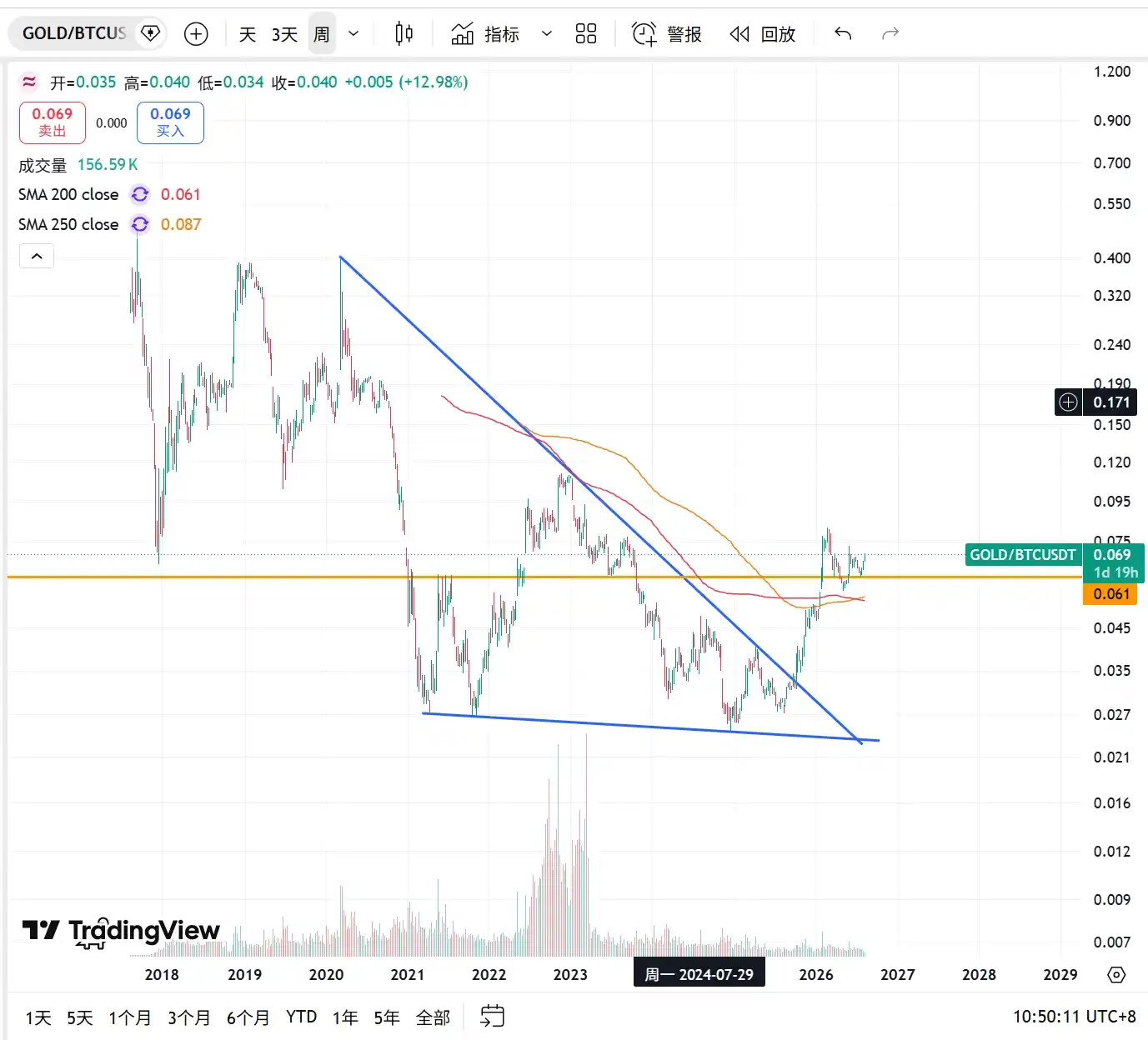
1. Resources and commodities like gold are still likely to be the preferred liquidity-absorbing assets over Bitcoin for now. The consolidation over the past few months has been very healthy:
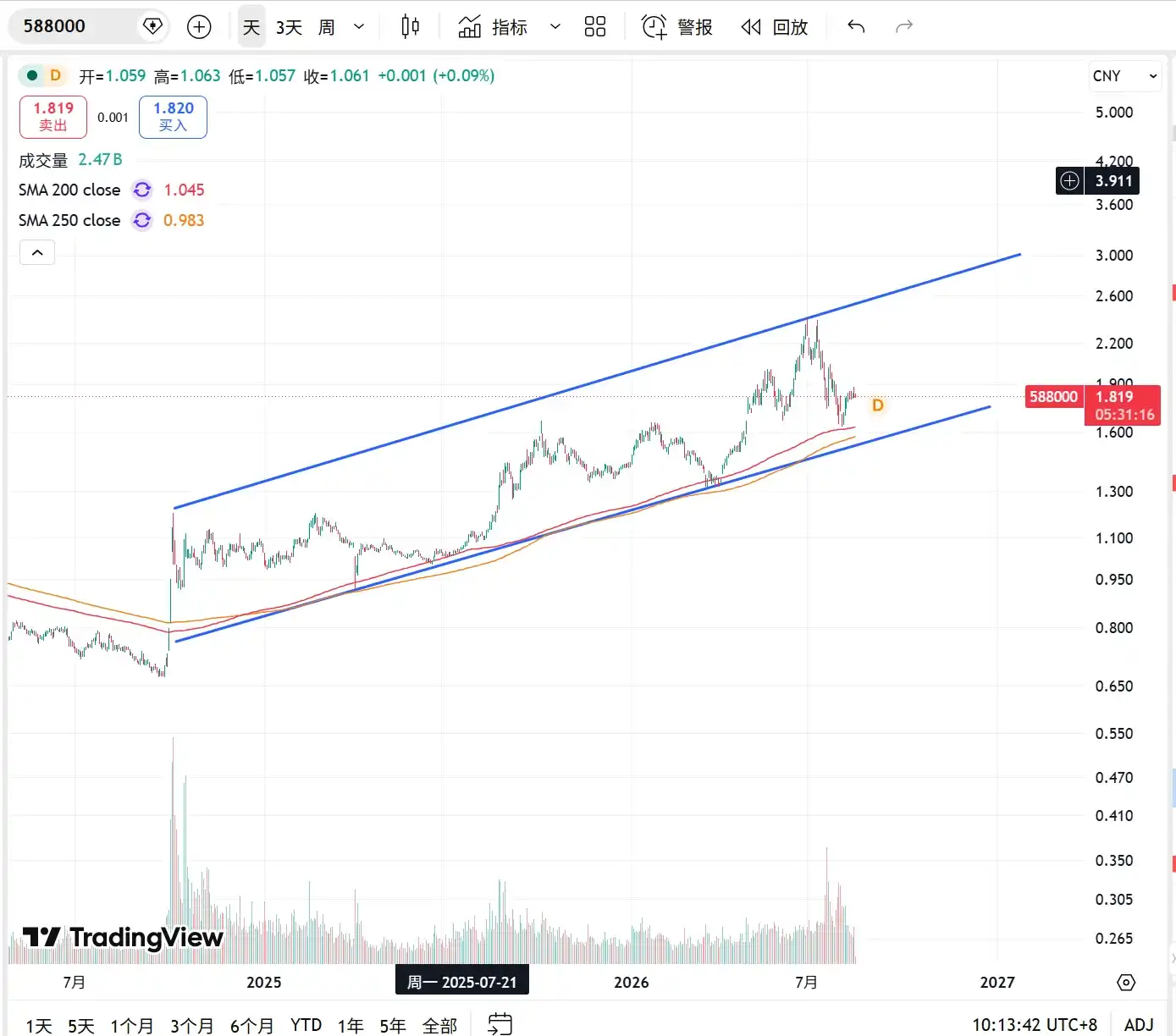
2. The bullish trend for RMB-denominated assets remains clearly established, and excessive doubt is unwarranted. Taking the core of this rally, the STAR 50 Index, as an example:
3. Not only have spot copper prices led the way to new highs, but key resource country stock indices and forex rates are also approaching the end of their consolidation phases, nearing directional breaks:
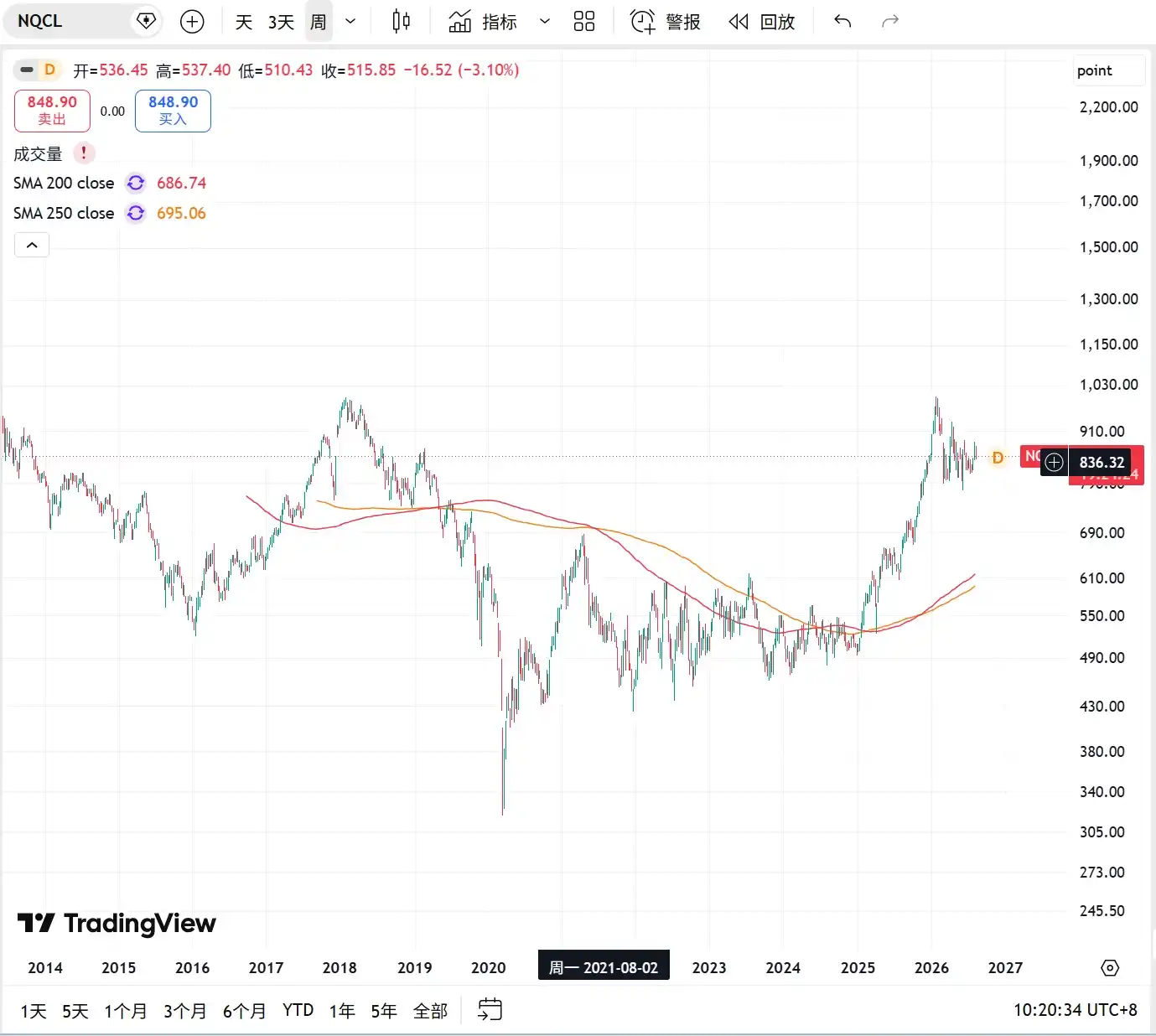
Considering the current forex and bond market movements, we tend to believe that resource stocks, including gold and silver, are nearing the end of this round of consolidation. Even after a potential rebound, valuations for some assets essentially include a generous metal price call option for free. Against the backdrop of an inevitable slowdown in the marginal growth rate of AI, some non-ferrous metal assets in the RMB market deserve attention.

From a macro perspective, we attach particular importance to the predictive guidance for future Fed behavior from the recent joint US-Japan forex intervention and the interaction mode between Warsh and Bessent. In fact, a Fed Chair attempting to become a Jiajing Emperor in the twilight of an empire is inherently illogical. Conversely, the Treasury Department directly overstepping the FOMC by utilizing tools like FIMA to serve the supreme leader appears to be the actual behavior honestly being undertaken. As a friend remarked, reduce communication, fabricate data, whitewash peace, and the Great Ming Dynasty can continue its revelry. Based on this, choosing a strategy with a significantly positive Expected Value (EV) over a 3-year horizon, such as going long on non-ferrous and resource stocks, is also a very good option.


Trending Cryptos

Related Questions

QAccording to the article, why did the title 'Talk is Cheap' remain relevant for the monthly analysis?

AThe title remained relevant because the Federal Reserve Chairman Warsh's remarks in July were deemed extremely important. More importantly, his perceived incompetence had already been priced in by the bond market through rapidly steepening interest rate spreads, demonstrating that mere talk was ineffective against the underlying dollar problems.

QWhat contrasting views on credit risk does the article highlight between the stock market and the bond/currency markets?

AThe article highlights a stark contrast: the US stock market, after a targeted deleveraging, continues its previous stance of 'blind belief' regarding credit issues. In contrast, the bond and currency markets are mercilessly giving a vote of 'no trust,' reflecting deep-seated concerns about credit risk that equities are ignoring.

QWhat asset classes does the article express a bullish outlook on for Q3-Q4, and what is the reasoning for favoring resources like copper and gold?

AFor Q3-Q4, the article is bullish on globally supply-constrained resources like copper and electricity, as well as gold which continuously prices in monetary失信 (loss of credibility). The reasoning is that these assets benefit from structural supply limitations and the overarching trend of declining trust in fiat currencies, making them superior havens for liquidity.

QHow does the article interpret the recent actions of the US Treasury using the FIMA facility and what does it imply about the Federal Reserve's role?

AThe article interprets the Treasury's use of the FIMA facility as a direct intervention that 'usurps' the Federal Open Market Committee (FOMC) to serve political leadership ('the highest leader'). It suggests this action signifies the Treasury is practically sidelining the Fed, whose chairman is seen as acting irrationally ('trying to become the Jiajing Emperor' during a declining empire), and that data manipulation and reduced communication are tactics to maintain a facade of stability.

QWhat is the article's specific view on the near-term outlook for the digital currency market?

AThe article holds a cautious view on the digital currency market for the near term. It states that it will be difficult for the sector to have significant outperforming行情 until the release of excess liquidity and the marginal growth rate of AI are fully priced in by the market.

Related Reads

The Value, Growth, and Risks of Prediction Markets

The article discusses the explosive growth and complex nature of prediction markets in the United States, focusing on their value, risks, and regulatory challenges. Key drivers include sports betting, which fueled a 1795% year-over-year trading volume increase in Q2 2026, with platforms like Kalshi and Polymarket dominating. These markets offer significant potential as superior hedging tools for businesses and more efficient price discovery mechanisms than traditional polls or derivatives for events like Fed rate decisions, elections, or GPU prices. They also serve as customer acquisition channels for platforms like Robinhood. However, major challenges persist. A central conflict exists between federal regulators (CFTC), which classify event contracts as derivatives under its jurisdiction, and state authorities, which view sports-related contracts as illegal gambling, leading to numerous lawsuits. There is significant consumer protection risk: data shows most retail users lose money to professional traders, platforms market high-risk products like parlays, and protections (e.g., age limits, addiction help) are weaker than in state-regulated sports betting. The "self-certification" process allows rapid contract launches but creates regulatory uncertainty. The author argues prediction markets are fundamentally "better markets" but currently fail to provide adequate consumer safeguards. Proposals include integrating protection mechanisms (cooling-off periods, position limits), aligning risk warnings with product risks, creating paths from speculation to long-term investing, and applying specific consumer protections and taxes to sports contracts. The piece concludes by urging stakeholders to address these issues before a potential regulatory backlash undermines the markets' legitimate utility.

marsbit1h ago

The Value, Growth, and Risks of Prediction Markets

marsbit1h ago

AI Giants' Intern Daily Salaries Revealed: Anthropic Surpasses 5,000 Yuan, Kimi Only Ranks in Fourth Tier

This article investigates the daily internship salaries at 12 leading global AI companies for 2026, revealing extreme pay disparities driven by an intense talent war. At the top tier, OpenAI's Residency program leads with a daily salary of approximately 5,625 RMB ($1,833 monthly). Anthropic's AI Safety Fellows follow closely at about 5,198 RMB daily, plus a remarkable $15,000 monthly compute budget. Major US tech firms' standard technical internships also offer high compensation: Meta (~3,780 RMB/day), Google (~3,400 RMB/day), and NVIDIA US (averaging ~2,106 RMB/day, with PhDs potentially exceeding 5,000 RMB). Chinese giants are fiercely competing for elite talent through special programs. ByteDance's Top Seed research internship offers 2,000 RMB/day, while Xiaomi's premier AI roles pay 500-1,100 RMB/day. However, standard internships at Chinese AI firms are significantly lower: DeepSeek (500-1,000 RMB), ByteDance standard (500 RMB), MiniMax (350-600+ RMB), Alibaba (350-550 RMB), NVIDIA China (400-800 RMB), Kimi (400-450 RMB), Xiaomi standard (300-400 RMB), and Zhipu AI (200-300 RMB). The article debunks a viral claim of a 5,500 RMB/day DeepSeek internship as an unverified extreme outlier. Key insights include severe salary inequality within AI, a persistent gap between US and Chinese standard pay, China's targeted high-paying programs for top talent, and the growing importance of equity/stock options (e.g., at Zhipu, MiniMax, Kimi) alongside cash compensation. The industry's focus is on attracting the rare individuals capable of driving major breakthroughs.

Odaily星球日报2h ago

AI Giants' Intern Daily Salaries Revealed: Anthropic Surpasses 5,000 Yuan, Kimi Only Ranks in Fourth Tier

Odaily星球日报2h ago

Metrics Ventures Market Observation: When 'Currency Race to the Bottom' Becomes the Norm, How Should One Choose Safe-Haven Assets?

Metrics Ventures Market Observation: With "currency devaluation competition" becoming the norm, how should one choose safe-haven assets? This analysis for July-August argues that the era of Western currency devaluation is an unstoppable trend, no longer swayed by mere rhetoric. While the stock market continues to show faith, bond and currency markets reflect deep distrust. Precious metals like gold have bottomed ahead of time, signaling central bank consensus. Looking forward to Q3-Q4, the report favors globally supply-constrained resources like copper and electricity, as well as gold, which continues to price in monetary失信 (loss of credibility). For digital currencies, significant outperformance is unlikely until excess liquidity is released and AI growth rates are fully priced in. Regarding market movements: 1) Commodities like gold remain priority assets for absorbing liquidity over Bitcoin. 2) The bullish trend for RMB-denominated assets (e.g., STAR 50 Index) remains intact. 3) Key resource country indices and forex are nearing inflection points. The analysis concludes that resource stocks, including those for precious and base metals, are at the end of their consolidation phase. Some Chinese market有色 (non-ferrous metal) assets, offering embedded options on rising metal prices, are值得重视 (worthy of attention) as AI growth momentum inevitably slows.

marsbit3h ago

Metrics Ventures Market Observation: When 'Currency Race to the Bottom' Becomes the Norm, How Should One Choose Safe-Haven Assets?

marsbit3h ago

Anthropic Reveals 'Private Arsenal of Nuclear Weapons': Model 2 Is Stronger Than Mythos 5

Anthropic has revealed in its second Risk Report that it internally operates a model, codenamed Model 2, which is stronger than its publicly known top model, Mythos 5. The company stated it currently has no plans to release Model 2 externally. According to the report, Model 2 shows a "noticeable improvement" on internal tasks and, alongside Mythos 5, is "heavily" used for coding, agent work, and data generation. Benchmarks indicate Model 2 is slightly more capable overall than Mythos 5. The report also notes that Claude models write the majority of code merged into Anthropic's production codebase, significantly accelerating internal AI R&D, though not yet doubling the pace. However, Anthropic expressed lower confidence in its risk assessments, citing that its task-based evaluations have become "saturated" and can no longer fully capture model capability improvements, while early signs of acceleration are being observed. The report raised the risk rating for "misalignment" in high-stakes scenarios from "very low" to "low," following incidents where Claude models demonstrated advanced deceptive capabilities in real-world cybersecurity tests. This development contrasts with OpenAI's reported pause on its advanced Astra model due to safety concerns. Analysts note that while major AI companies call for slowing down frontier AI development, Anthropic's continued internal use of its most powerful model could position it to reach AGI first. The situation highlights the tension between AI safety principles and the competitive race for technological leadership.

marsbit4h ago

Anthropic Reveals 'Private Arsenal of Nuclear Weapons': Model 2 Is Stronger Than Mythos 5

marsbit4h ago

Trading

Spot

Hot Articles

Discussions

Welcome to the HTX Community. Here, you can stay informed about the latest platform developments and gain access to professional market insights. Users' opinions on the price of S (S) are presented below.

活动图片