MARA’s pivot to AI is net positive for Bitcoin, experts believe – Here’s why

ambcryptoPublished on 2026-03-29Last updated on 2026-03-29

Abstract

Public Bitcoin miners like Marathon Digital (MARA) are increasingly shifting resources toward AI, a move analysts see as beneficial for the remaining Bitcoin mining ecosystem. While this pivot reduces the overall network hashrate, it leads to a decrease in mining difficulty. This, in turn, improves profit margins for the solo and medium-sized miners who continue operating. MARA recently sold over $1 billion in BTC to reduce debt and fund its new AI data center venture, a trend followed by other major miners. The current cycle shows the lowest network difficulty growth as a result. Analysts suggest this creates a more balanced ecosystem with less hash rate controlled by large public companies. Furthermore, a potential energy price increase, triggered by an extended closure of the Strait of Hormuz, could disadvantage oil-dependent miners and further benefit smaller operations with stable power agreements. Although miner distress eased in early March, supporting BTC's price recovery, a drop below $65,000 could trigger another wave of miner sell-offs and put downward pressure on the price.

Public Bitcoin miners who have either partially or wholly ditched the sector and pivoted to AI could be an incredible boost to those remaining behind. While this lowers the hashrate and perceived network security, the shift is not that bad for Bitcoin, according to analysts.

This week, MARA offloaded 15,133 BTC, worth over $1 billion, reducing its outstanding debt by 30%. The firm recently partnered with Starwood to develop AI data centers.

Other public miners, such as Bitdeer, dumped their entire BTC, and Riot also offloaded part of their holdings to fund AI data ventures. For analyst Billy Boone, the AI bet is currently paying better than BTC mining.

But the exits also allow solo miners and those who remain to get higher margins. Boone clarified,

When they (large miners) redirect capital and infrastructure toward AI, that hashrate comes offline. Unless equivalent hashrate fills the gap, difficulty drops. Lower difficulty = higher margins for every miner who stays.

Is the West Asia crisis a catalyst for Bitcoin miners?

For the uninitiated, hashrate refers to the computing power needed to mine BTC by solving mathematical problems.

On the other hand, network difficulty is a self-adjusting parameter that is adjusted every two weeks to determine how easy or challenging it is to mine BTC. Both help enhance Bitcoin network security.

Interestingly, the current market cycle has seen the lowest network difficulty growth at only 75% as key players shift to AI.
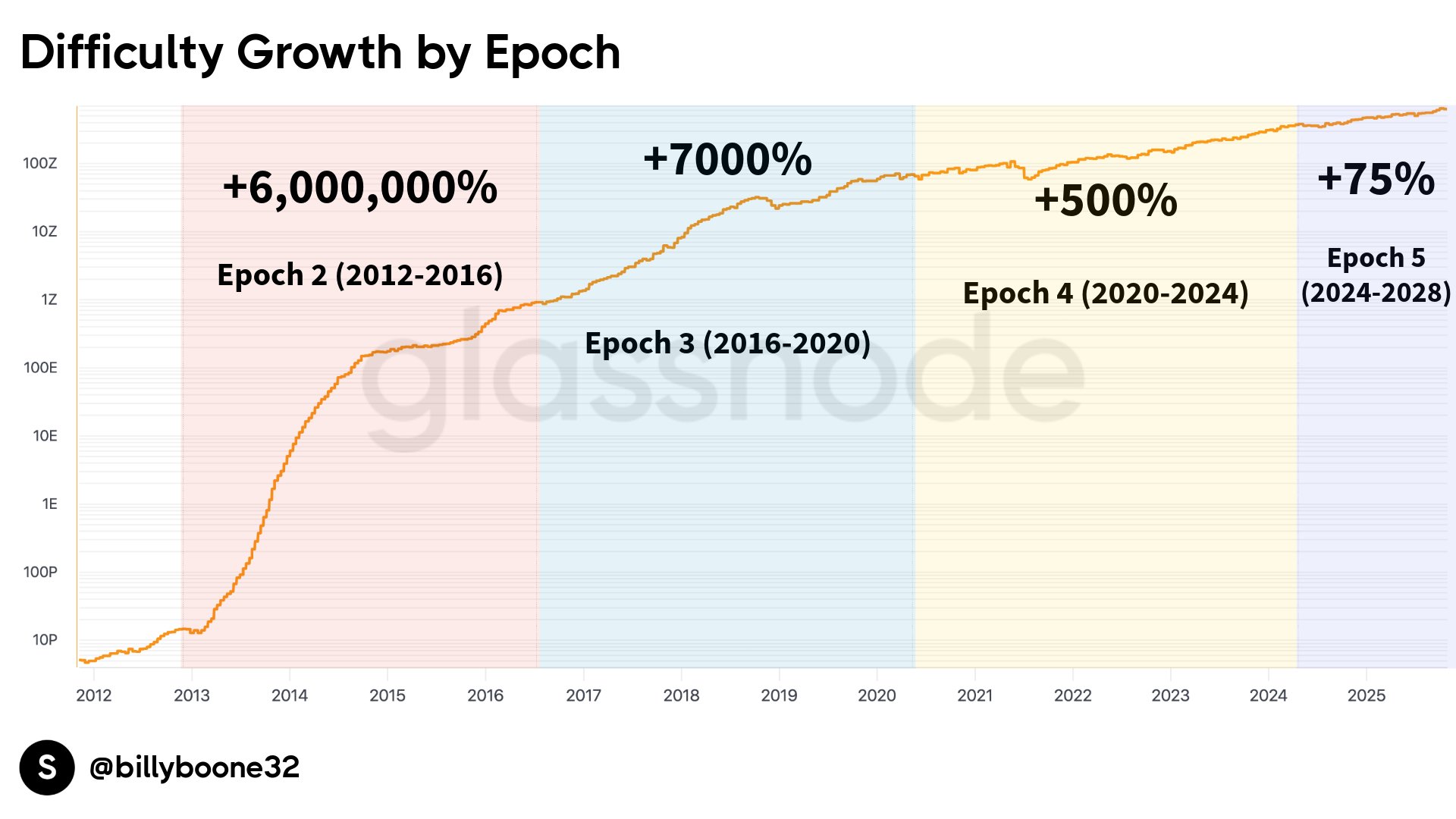
Source: X/Billy Boone

In other words, it is relatively easier to find new blocks (BTC) for solo and medium miners. But another opportunity may present itself if the West Asia crisis extends into April, added Boone.

If the Strait of Hormuz stays closed into April, energy prices climb. Oil-dependent miners get hit hardest. This might be the best setup small/medium miners with stable PPA’s have seen since the 2021 China mining ban.

Barefoot Mining CEO Bob Burnett echoed Boone’s analysis of the segment and added,

Public miners pushed out smaller miners. The ecosystem will be much better balanced with much less hash rate in their control.

Status of Bitcoin miner distress

That said, the miner distress seen from late November eased earlier this month, as shown by Hash Ribbon (shaded areas). Consequently, this reduced miner sell-off and boosted the March BTC price recovery.
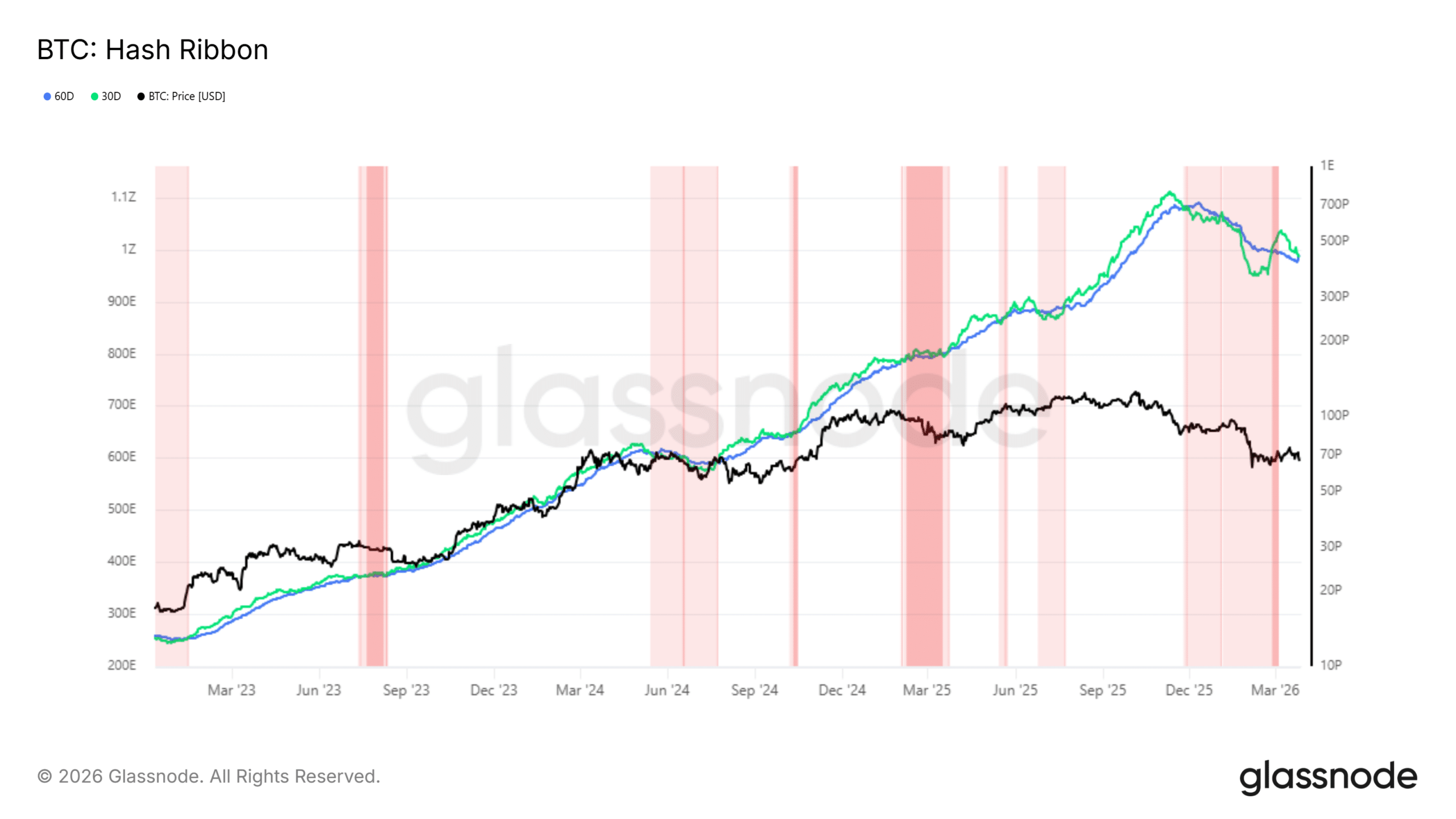
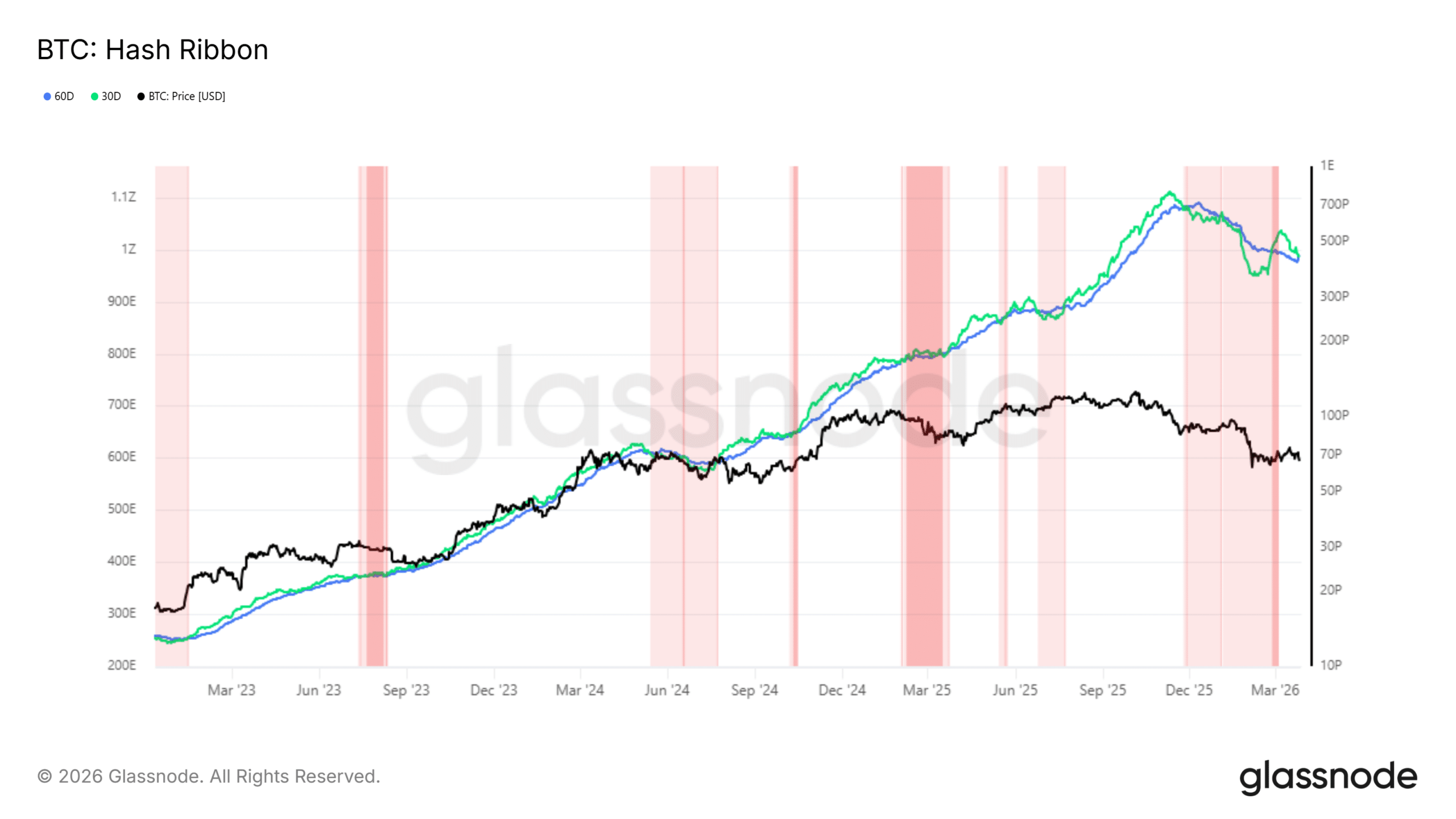
Source: Glassnode

However, if BTC drops below $65K, there is likely to be another distress that could subdue BTC if miners begin offloading again.


Final Summary

  • Analysts viewed the trend of public Bitcoin miners, such as MARA, partially or wholly pivoting to AI as bringing “better balance” for solo and medium miners.
  • Miner distress eased in early March, but any further price drop could prompt miners to offload their BTC.


Related Questions

QWhy do experts believe MARA's pivot to AI is a net positive for Bitcoin?

AExperts believe it's a net positive because when large miners redirect capital and infrastructure to AI, hashrate decreases, leading to lower network difficulty. This results in higher profit margins for the remaining solo and medium-sized miners, creating a better-balanced ecosystem.

QWhat recent financial move did Marathon Digital (MARA) make regarding its Bitcoin holdings?

AMarathon Digital (MARA) offloaded 15,133 BTC, worth over $1 billion, which reduced its outstanding debt by 30%.

QAccording to analyst Billy Boone, what is the direct consequence of large miners moving hashrate offline to pursue AI ventures?

AThe direct consequence is that the Bitcoin network's mining difficulty drops. This lower difficulty equates to higher profit margins for every miner who continues to mine Bitcoin.

QWhat potential external event could further benefit small and medium-sized Bitcoin miners, according to the analysis?

AIf the crisis in West Asia extends into April, keeping the Strait of Hormuz closed, energy prices would climb. This would negatively impact oil-dependent miners but could create an excellent opportunity for small and medium miners with stable power purchase agreements (PPAs).

QWhat is the current status of Bitcoin miner distress, and what could trigger its return?

AThe miner distress that was seen from late November eased in early March, reducing miner sell-offs and aiding the BTC price recovery. However, if the price of BTC drops below $65,000, it could trigger another period of distress as miners might be forced to offload their holdings again.

Related Reads

Cook's Curtain Call and Ternus Takes the Helm: The Disruption and Reboot of Apple's 4 Trillion Dollar Empire

Tim Cook has officially announced he will step down as CEO of Apple in September, transitioning to executive chairman after a 15-year tenure during which he grew the company’s market value from around $350 billion to nearly $4 trillion. He will be succeeded by John Ternus, a 50-year-old hardware engineering veteran who has been groomed for the role through increasing public visibility and internal responsibility. Ternus’s appointment signals a strategic shift toward hardware and engineering leadership, with Johny Srouji—head of Apple Silicon—taking on an expanded role as Chief Hardware Officer. This consolidation aims to strengthen Apple’s core technological capabilities. However, Cook’s departure highlights a significant unresolved issue: Apple’s delayed and fragmented approach to artificial intelligence. Despite early efforts, such as hiring John Giannandrea from Google in 2018, Apple’s AI initiatives—particularly around Siri—have struggled with internal restructuring and reliance on external partnerships, including with Google. The transition comes at a critical moment as Apple faces paradigm shifts with the rise of artificial general intelligence (ASI). The company’s closed ecosystem of hardware, software, and services—once a major advantage—now presents challenges in adapting to an AI-centric world where intelligence may matter more than the device itself. Ternus must quickly articulate a clear AI strategy, possibly starting at WWDC, to reassure markets and redefine Apple’s role in a new technological era. His task is not only to maintain Apple’s operational excellence but also to reinvigorate its capacity to innovate and lead in the age of AI.

marsbit2h ago

Cook's Curtain Call and Ternus Takes the Helm: The Disruption and Reboot of Apple's 4 Trillion Dollar Empire

marsbit2h ago

Trading

Spot
Futures

Hot Articles

Discussions

Welcome to the HTX Community. Here, you can stay informed about the latest platform developments and gain access to professional market insights. Users' opinions on the price of S (S) are presented below.

活动图片