Macro Distortion, Liquidity Restructuring, and the Repricing of Real Returns

marsbitPublished on 2025-12-23Last updated on 2025-12-23

Abstract

In an increasingly unreliable macroeconomic environment, this article examines the distortion of data, the resurgence of geopolitical risks, and the reevaluation of genuine yield sources. Key points include: - The unadjusted U.S. CPI for November came in at 2.7%, below expectations, but New York Fed President John Williams signaled caution, citing "technical factors" and the need for further validation. This reflects a broader loss of trust in macroeconomic data reliability. - Geopolitical tensions, including U.S. pressure on Venezuela and potential Israeli strikes on Iran, are reintroducing inflation risks. These conflicts could disrupt oil supply chains and reignite global inflationary pressures. - In this context, the focus shifts from anticipating further rate cuts to identifying durable income sources: short-duration U.S. Treasuries, credit assets with clear cash flows, and structured trade or consumer finance assets. - R2 is positioned not as a predictive tool but as an adaptive system that offers transparent, verifiable yields from real-world assets—immune to policy shifts, liquidity illusions, and unexplained returns. The conclusion emphasizes building resilient income structures that remain valid across multiple macro scenarios, prioritizing clarity, sustainability, and risk-aware returns over speculative positioning.

In an "Unreliable World," How Do We Understand the Role of Safe Assets and R2?

I. When Macro Data Begins to Distort, the Real Market Problems Are Just Beginning

In November, the U.S. unadjusted CPI year-on-year recorded 2.7%, significantly lower than the previous value of 3.0% and the market expectation of 3.1%.

On the surface narrative, this is an ideal data point indicating "significant inflation decline, room for rate cuts opens up."

But the problem is: this is not a data point that can be unconditionally trusted.

On December 19th, the statement by John Williams, President of the New York Fed and permanent FOMC voting member, in fact gave a clear hint: the November CPI year-on-year of 2.7% was influenced by "technical factors," the current policy rate of 3.5%–3.75% is in a favorable position, there is no need to rush for further rate cuts, and we need to wait for December data to verify the true inflation trend.

This is a very typical and very important signal: not denying the data itself, but denying its guiding significance for the policy path.

Against the backdrop of the U.S. government shutdown in October, using data from earlier months to "estimate" the missing interval and assuming zero growth itself carries strong technical assumptions. This type of processing method may smooth the inflation path in the short term, but it is difficult to convince:

  • Officials within the Fed who still insist on independent judgment
  • Even more difficult to convince market participants who truly understand the inflation structure

What does this mean?

When macro data is technically "adjusted," policy becomes more cautious instead. Before there is sufficiently credible verification, maintaining the interest rate unchanged is often the higher probability choice.

Macro has not become simpler; it has just become less reliable.

II. Geopolitical Risk Becomes an "Inflation Variable" Again, Not Just Noise

If data distortion affects the credibility of policy judgment, then geopolitical conflict affects the structure of inflation itself.

Recently, the United States has continued to increase its blockade efforts against Venezuela, having seized a third oil tanker carrying Venezuelan crude oil, even though the tanker was flying the flag of a Panamanian state-owned enterprise. This action has substantially reduced Venezuela's outbound ships and has begun to affect its fiscal situation.

The U.S. intention is not complicated: to besiege the Maduro regime through sustained fiscal pressure.

But at the same time, the market is reassessing another, more dangerous risk line: multiple sources of information indicate that Israel is evaluating the possibility of another strike against Iran, citing that Iran's monthly missile production may have reached 3,000.

In the last round of the Iran-Israel conflict, Iran, through large-scale missile counterattacks, substantially breached Israel's air defense system, ultimately forcing the U.S. to directly intervene and use B-2 bombers to strike Iranian nuclear facilities before the conflict temporarily subsided.

If Israel chooses a surprise attack without declaration of war this time, Iran is highly likely to respond with high-intensity missile strikes. Even if its inventory is lower than last time, it is enough to cause real damage to Israel, thereby forcing the U.S. to intervene deeply again.

This will bring a series of chain reactions:

  • The Middle East remains the core region of the petrodollar system
  • Tensions in the Strait of Hormuz, the Red Sea, and the Suez Canal will rise significantly
  • Even under the macro narrative of "supply surplus," crude oil prices may still rebound sharply
  • Imported inflation re-enters the global price system, affecting the U.S. inflation path

In such an environment, the intensity of the U.S. blockade against Venezuela may instead be forced to adjust, and the geopolitical landscape enters a new state of uncertainty.

The macro world is shifting from algorithm-driven optimistic expectations back to risk-driven real structures.

III. In Such an Environment, What Truly "Constitutes" Return?

When data credibility declines, geopolitical risks return, and monetary policy paths are highly uncertain, the core concerns of the market have already changed.

It is no longer: "Can we get one more rate cut?"

But rather:

  • Which returns are independent of policy direction
  • Which cash flows are independent of secondary market liquidity
  • Which assets remain valid even in a high-interest-rate + high-uncertainty environment

The answer is not new; it has long existed in the real world:

  • Short-duration U.S. Treasury bonds
  • Credit assets with clear cash flow paths
  • Trade and consumer finance assets with clear structures and definite maturities

What is truly scarce is not these assets themselves, but how to bring them on-chain in a transparent, verifiable, and executable manner.

IV. The Role of R2: Not to Predict the World, But to Adapt to It

What R2 does is provide a more certain return structure in a phase of policy fluctuations, geopolitical instability, and data distortion:

  • Not reliant on whether rate cuts occur
  • Not creating illusions of secondary market liquidity
  • Not promising returns with unexplainable sources

R2 focuses on returns that already exist in the real world:

  • Treasury and credit assets with definite maturities
  • Traceable, clearable cash flows
  • Return structures that are inherently valid in a high-interest-rate environment

When CPI is technically distorted, when inflation is again affected by geopolitical variables, and when monetary policy has to act cautiously, the importance of real returns is magnified, not diminished.

In Conclusion: From "Getting It Right Once" to "Being Valid Long-Term"

The macro world is undergoing a critical turning point:

  • Data is no longer naturally credible
  • Risks are no longer distant
  • Policy is no longer unidirectional

In such an environment, what is truly important is no longer "betting on the right direction once," but constructing a return structure that remains valid under most macro scenarios.

The goal of R2 is not to predict how the world will change, but to ensure: no matter how the world changes, users understand what their capital is doing, where the returns come from, and how risks are constrained. This is the truly scarce capability for the next phase.


Related Questions

QWhy is the November US CPI data considered unreliable by some officials and market participants?

AThe November US CPI data is considered unreliable because it was influenced by 'technical factors', including the use of earlier months' data to estimate missing period during the government shutdown and assuming zero growth for that interval, which creates strong technical assumptions that undermine its credibility for policy guidance.

QHow are geopolitical risks, particularly involving Venezuela and Iran, impacting inflation and global markets?

AGeopolitical risks, such as the US blockade on Venezuela reducing its oil exports and potential Israeli strikes on Iran, could lead to heightened tensions in the Middle East, disrupt oil supply chains, cause crude price volatility, and reintroduce input-driven inflation into the global economy, affecting inflation trajectories.

QWhat types of assets are considered 'real yield' or reliable in a high-rate, high-uncertainty macro environment?

AIn a high-rate, high-uncertainty environment, reliable assets include short-duration US Treasuries, credit assets with clear cash flow paths, and structured trade or consumer finance assets with transparent terms, as they provide yields that are not dependent on policy directions or secondary market liquidity.

QWhat role does R2 play in the current macroeconomic context according to the article?

AR2 provides a certain yield structure that adapts to the macro environment by focusing on real-world assets like Treasuries and credit with traceable cash flows, without relying on rate cuts, secondary market liquidity, or unexplained returns, ensuring clarity and sustainability amid data distortion and geopolitical risks.

QWhat shift in investment strategy does the article suggest is necessary given the changing macro conditions?

AThe article suggests a shift from trying to 'bet correctly once' on policy directions to building a yield structure that remains valid across most macro scenarios, emphasizing transparency, source of returns, and risk constraints, rather than predicting unpredictable changes.

Related Reads

Bitroot Public Chain Invited to Attend Tencent Cloud Singapore AI Conference, Discussing the Future Alongside Solana

On May 19, Bitroot, an emerging Layer 1 blockchain, participated in the Tencent Cloud AI Summit in Singapore alongside key industry players like Solana Foundation. The event explored the intersection of AI infrastructure, enterprise applications, AI Agents, and Web3. Bitroot's invitation, despite being pre-mainnet, highlights industry interest in its focus on high-performance, AI-native architecture tailored for future AI Agent execution and verifiable on-chain automation. Bitroot CEO Juan Jose emphasized that AI competition is shifting from model performance to data, real-world application scenarios, and trust infrastructure. He argued that for AI Agents to evolve from assistants to autonomous executors managing transactions and assets, they require low-latency, low-cost, and high-throughput blockchain environments. Bitroot aims to address this through its EVM-compatible design, optimistic parallel execution, and a consensus mechanism targeting high scalability. Currently in its Testnet 5.0 phase, Bitroot reports metrics like over 50,000 peak TPS and sub-0.3 second average block time. Its narrative positions it within a growing landscape where next-generation Layer 1s like Monad and Aptos also compete on performance, while Bitroot differentiates by integrating AI computational capabilities natively across its stack. The summit underscored that the fusion of AI and Web3 is moving from concept to infrastructure competition, where networks balancing performance, security, and verifiability will be crucial for enabling scalable AI-driven applications.

marsbit7m ago

Bitroot Public Chain Invited to Attend Tencent Cloud Singapore AI Conference, Discussing the Future Alongside Solana

marsbit7m ago

Hedge Fund Q1 Interpretation: Everyone Is Selling Software, Buying Chips

Hedge Funds and Mutual Funds Aligned in Q1: Dumping Software, Buying Chips A clear consensus emerged among major U.S. hedge funds and mutual funds in Q1: they were simultaneously selling software stocks and pouring capital into the semiconductor sector. This aggressive rotation pushed semiconductor exposure in hedge fund long portfolios to a record high. Hedge funds delivered a 7% return year-to-date, while only 30% of large-cap active mutual funds outperformed their benchmarks. The average short interest for S&P 500 constituents rose to 3% of market cap, the highest since 2011. Within technology, the structural shift was stark. Hedge funds' semiconductor weighting hit an all-time high, while software fell to its lowest since 2019. Excluding Microsoft, mutual funds' relative overexposure to semis vs. software was the largest since 2012. Microsoft was among the most net-sold stocks by both groups. Hedge funds net purchased semiconductor names like LRCX and AMAT. Strategies diverged on leverage and cash. Hedge funds increased their net exposure to near a one-year high after an initial cut. Mutual funds raised their cash allocation, though it remains historically low at 1.4%. Sector alignment was high in Industrials (both overweight) but divergent in Tech: hedge funds increased their Tech net tilt by a record 853 basis points, while mutual funds reduced theirs. Clear splits also appeared in Financials and Consumer Discretionary. Four stocks appeared on both Goldman's hedge fund VIP and mutual fund overweight lists: BA, MA, MRVL, and V. This "shared favorites" basket has returned 10% YTD, outperforming the equal-weight S&P 500. Notably, all "Magnificent Seven" stocks are on the hedge fund VIP list but are uniformly underweighted by mutual funds.

marsbit17m ago

Hedge Fund Q1 Interpretation: Everyone Is Selling Software, Buying Chips

marsbit17m ago

The Evolution Path of Physical Bitcoin

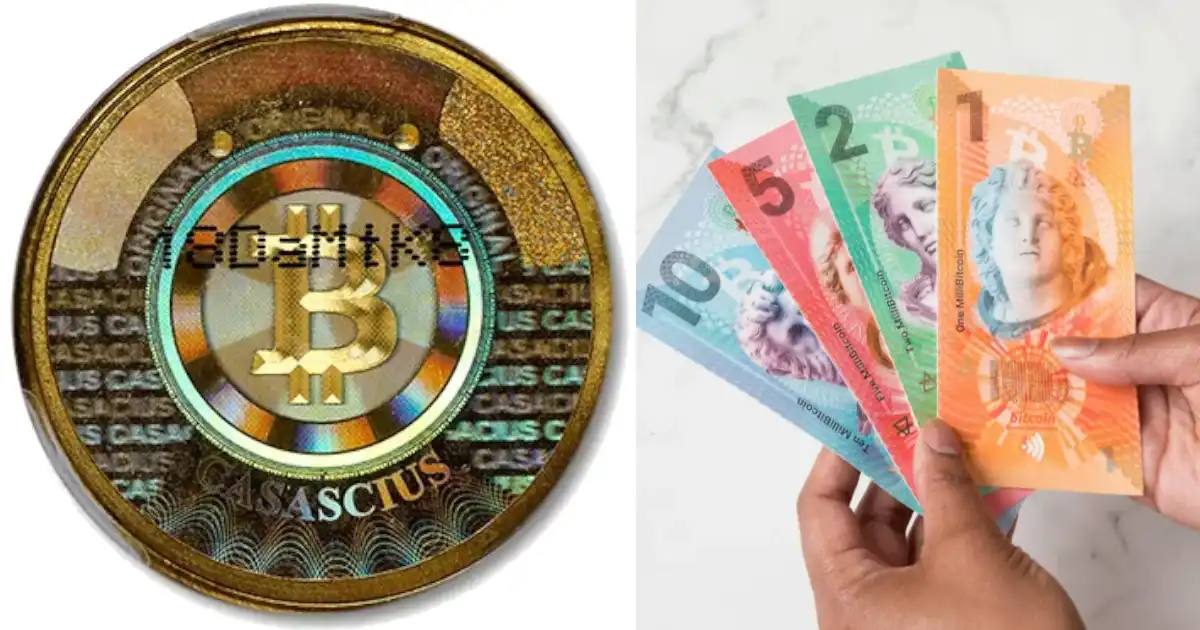
The Evolution of Physical Bitcoin Bitcoin's digital nature is its core strength, enabling self-custody and rapid global transfers. However, its intangibility also hinders mainstream adoption. For over a decade, creators have attempted to materialize Bitcoin while preserving its cash-like properties, yielding notable results. Casascius Coins, launched in 2011, were the first and most iconic physical Bitcoin. Creator Mike Caldwell generated private keys offline, printed them on coins, and sealed them with tamper-evident holograms. This model relied on user trust in the centralized issuer. Production ceased in 2013 due to regulatory pressure from FinCEN. RavenBit Coins emerged in 2014 aiming to decentralize minting by letting users generate and apply their own keys. However, this led to trust issues with numerous untrusted minters and insecure key generation methods. In 2016, Coinkite introduced Opendimes—a breakthrough in bearer asset technology. These USB-shaped devices generate and store keys internally. Funds can be received by checking the public key, but spending requires physically breaking the device to extract the private key. While innovative and open-source, its cost (~$20) and form factor limit its use for small, everyday transactions. Satochip's Satodime, a card-shaped device using similar secure chip technology, followed. It supports NFC interaction and comes in various forms. While potentially cheaper in bulk (~13€), it remains a high-security hardware wallet, not a low-cost cash substitute. A fundamental cost barrier exists. For physical Bitcoin to achieve widespread commercial use, hardware costs must drop below $1 to match the production cost of fiat banknotes. Current secure chips capable of running Bitcoin's cryptographic algorithms (like secp256k1) are too expensive. Chips like NXP's NTAG X DNA (~$3) show cost-reduction potential but lack native Bitcoin curve support. Projects like OfflineCash embed chips in banknote-like paper, but face challenges with durability, the need for custom Bitcoin-enabled chips, and the inherent requirement for users to verify balances online—which conflicts with Bitcoin's trustless ideal. Coinkite's Tapsigner, a ~$20 card with a proprietary Bitcoin NFC chip, is seen as a more practical step forward. It functions as a reloadable hardware wallet for contactless payments, solving the "change" problem and focusing on real-world retail integration, a direction also pursued by companies like Cash App and Square. In summary, the journey to physical Bitcoin has progressed from trusted centralized mints (Casascius) to user-generated keys (RavenBit) and finally to self-contained secure hardware (Opendimes, Satodime, Tapsigner). The core challenge remains developing a sufficiently low-cost, durable, and truly trustless physical bearer asset that can function like cash in daily transactions. Current solutions are either too expensive or introduce new trust assumptions, keeping the ideal of ubiquitous physical Bitcoin just out of reach for now.

marsbit1h ago

The Evolution Path of Physical Bitcoin

marsbit1h ago

Trading

Spot
Futures

Hot Articles

How to Buy SAFE

Welcome to HTX.com! We've made purchasing Safe (SAFE) simple and convenient. Follow our step-by-step guide to embark on your crypto journey.Step 1: Create Your HTX AccountUse your email or phone number to sign up for a free account on HTX. Experience a hassle-free registration journey and unlock all features.Get My AccountStep 2: Go to Buy Crypto and Choose Your Payment MethodCredit/Debit Card: Use your Visa or Mastercard to buy Safe (SAFE) instantly.Balance: Use funds from your HTX account balance to trade seamlessly.Third Parties: We've added popular payment methods such as Google Pay and Apple Pay to enhance convenience.P2P: Trade directly with other users on HTX.Over-the-Counter (OTC): We offer tailor-made services and competitive exchange rates for traders.Step 3: Store Your Safe (SAFE)After purchasing your Safe (SAFE), store it in your HTX account. Alternatively, you can send it elsewhere via blockchain transfer or use it to trade other cryptocurrencies.Step 4: Trade Safe (SAFE)Easily trade Safe (SAFE) on HTX's spot market. Simply access your account, select your trading pair, execute your trades, and monitor in real-time. We offer a user-friendly experience for both beginners and seasoned traders.

1.9k Total ViewsPublished 2024.04.23Updated 2025.03.21

How to Buy SAFE

Discussions

Welcome to the HTX Community. Here, you can stay informed about the latest platform developments and gain access to professional market insights. Users' opinions on the price of SAFE (SAFE) are presented below.

活动图片