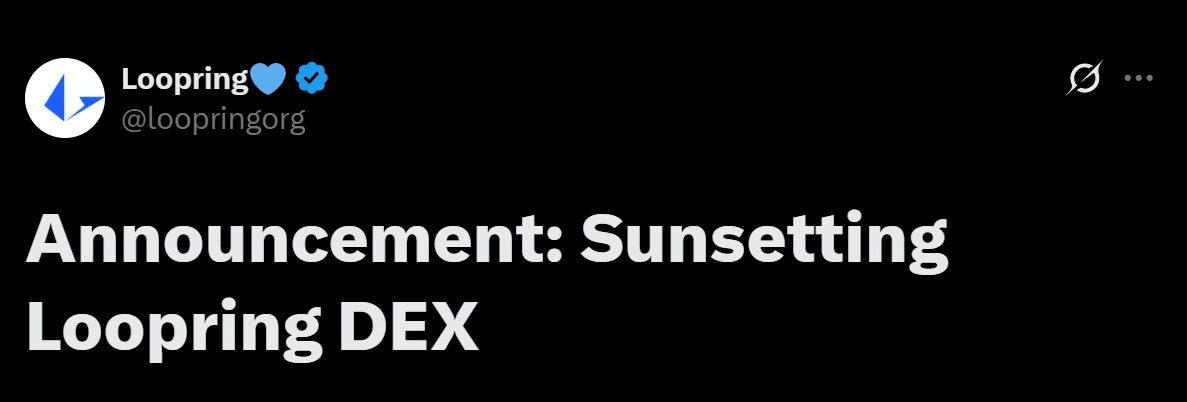
Loopring, протокол масштабирования второго уровня (Layer-2) для Ethereum [ETH], объявил о закрытии своей децентрализованной биржи, что ознаменует конец одного из самых ранних пионеров второго уровня в экосистеме Ethereum.
Основным фактором упадка Loopring стало снижение вовлеченности пользователей на протяжении нескольких лет. Однако, похоже, это снижение было во многом связано с растущей популярностью технологий zkEVM, которые обеспечивают полную поддержку виртуальной машины Ethereum (EVM).
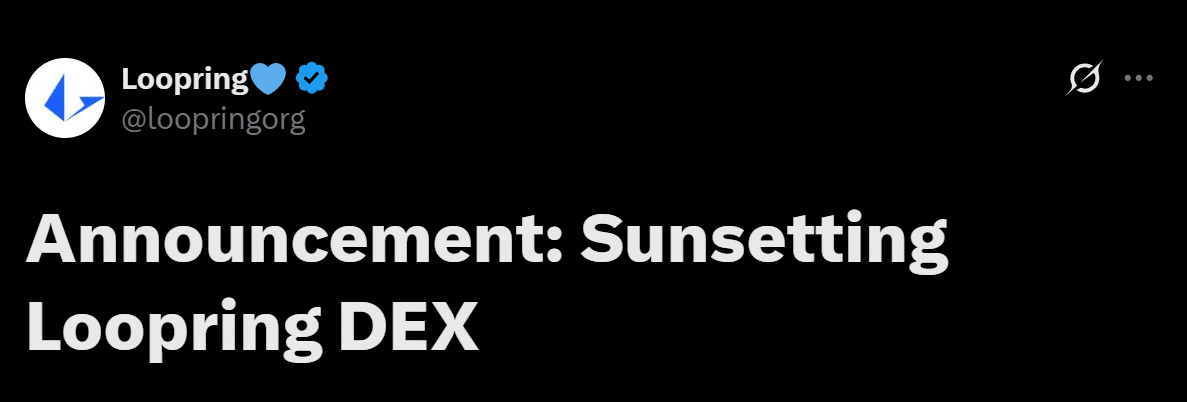
В отличие от специализированного дизайна zkRollup от Loopring (LRC), zkEVM позволяют существующим приложениям на Solidity развертываться без значительной переработки, что ускоряет рост экосистемы. Этот переход постепенно снижал количество ежедневно активных адресов, объемы транзакций, активность на DEX и комиссии протокола до закрытия 28 июня.
Таким образом, кажется, что инновационные технологии могут сделать платформу лидером с точки зрения масштабируемости. Но если такая платформа не предлагает широкую композируемость (взаимодействие с другими протоколами), то в конечном итоге она не сможет удержать эту позицию.
И все же, если только Loopring не разовьет свою технологию zk-Rollup в решения уровня Layer-3 или модульные решения, закрытие Loopring знаменует собой начало следующего шага Ethereum в области масштабируемости.
Может ли технология Loopring пережить свою DEX?
Закрытие Loopring заставляет задуматься, насколько Ethereum потерял одного из своих первых пионеров второго уровня вместе с инновациями в этой сфере. Снижение всех ключевых показателей, таких как TVL (общая заблокированная стоимость), объем транзакций, количество ежедневных пользователей и ликвидность, сделало независимую DEX Loopring менее актуальной.
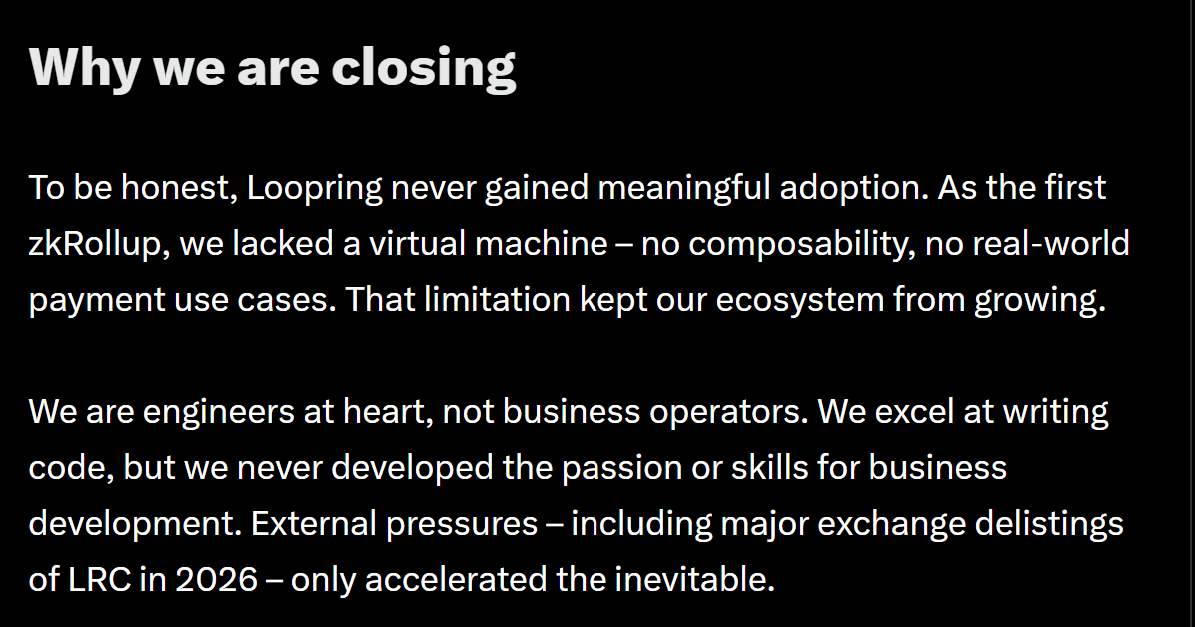
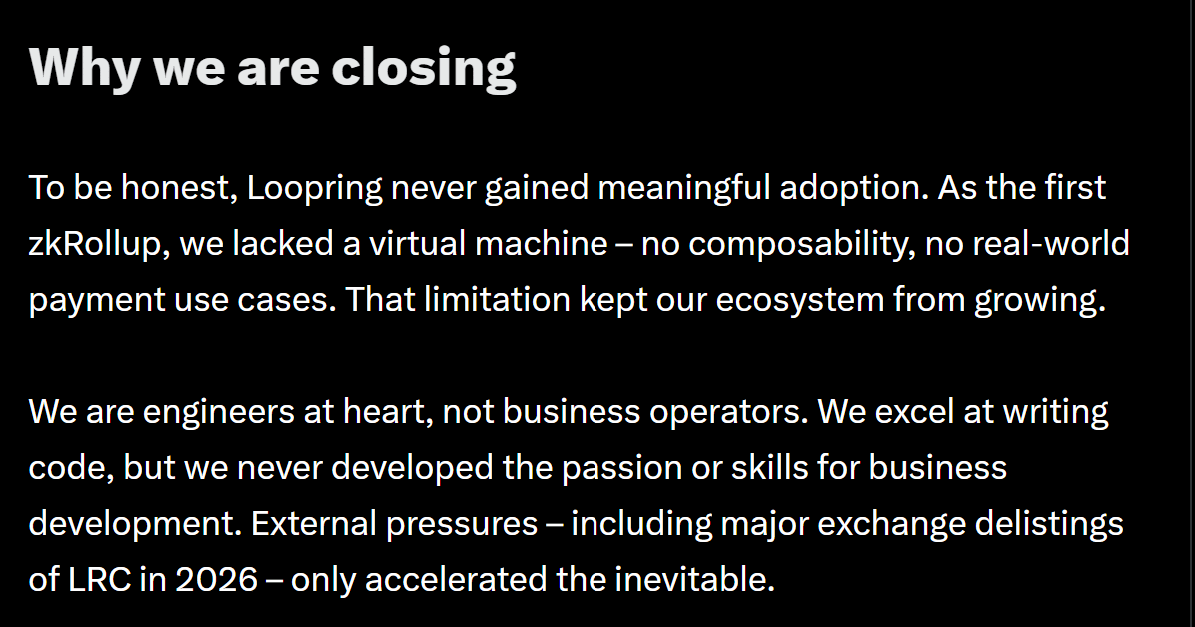
Протокол Layer-2 прямо указал, что причиной этой тенденции к снижению стали низкое внедрение, плохая композируемость, неудачные бизнес-решения и делистинг токена LRC с бирж в 2026 году. Эти тенденции указывают на вероятность того, что исходный протокол не сможет развернуть ситуацию вспять.
Однако технология сети говорит о другом. Текущая архитектура zkrollup от Loopring продолжает предоставлять известный безопасный и высокопроизводительный дизайн.
Пока эти функции могут использоваться другими протоколами в инфраструктуре Layer-3 или модульной инфраструктуре, вклад Loopring в историю Ethereum может продолжиться. В противном случае это может означать конец одной из первых специфических инноваций второго уровня Ethereum.
Итоговое резюме
- Закрытие Loopring отражает годы слабого внедрения, падения активности и давления со стороны конкурентов на базе zkEVM.
- Теперь судьба Loopring зависит от того, сможет ли его технология zkRollup выжить через инфраструктуру Layer-3 или модульную инфраструктуру.