J.P. Morgan taps Solana for Galaxy’s tokenized corporate bond issuance

cointelegraphPublished on 2025-12-11Last updated on 2025-12-11

Abstract

J.P. Morgan has arranged a $50 million tokenized commercial paper issuance for Galaxy Digital on the Solana blockchain, marking one of the earliest U.S. debt deals executed on a public blockchain. The tokenized bond was sold to Franklin Templeton and Coinbase, with settlements conducted in USDC. The move highlights growing institutional adoption of blockchain for improving efficiency and reducing costs in traditional finance. Separately, Hong Kong and mainland China are advancing asset tokenization, with Hua Xia Bank recently issuing $600 million in digital yuan bonds. The tokenized real-world asset market is projected to reach $300 billion by 2030.

Financial services company J.P. Morgan announced on Thursday that it arranged a $50 million onchain US commercial paper issuance for Galaxy Digital Holdings on the Solana blockchain, one of the earliest debt deals executed on a public network in the United States.

The offering, a tokenized short-term corporate bond, was tokenized by J.P. Morgan. According to the company, it created the corresponding blockchain token for the bond and handled the settlement of the primary issuance.

The tokenized securities were sold to asset manager Franklin Templeton and crypto exchange Coinbase, while issuance and redemption will be paid in Circle’s USDC (USDC) dollar-pegged stablecoin, according to the press release.

“We’re putting into practice the model we’ve long believed in: open, programmable infrastructure that supports institutional-grade financial products,” Jason Urban, the global head of trading at Galaxy, said.
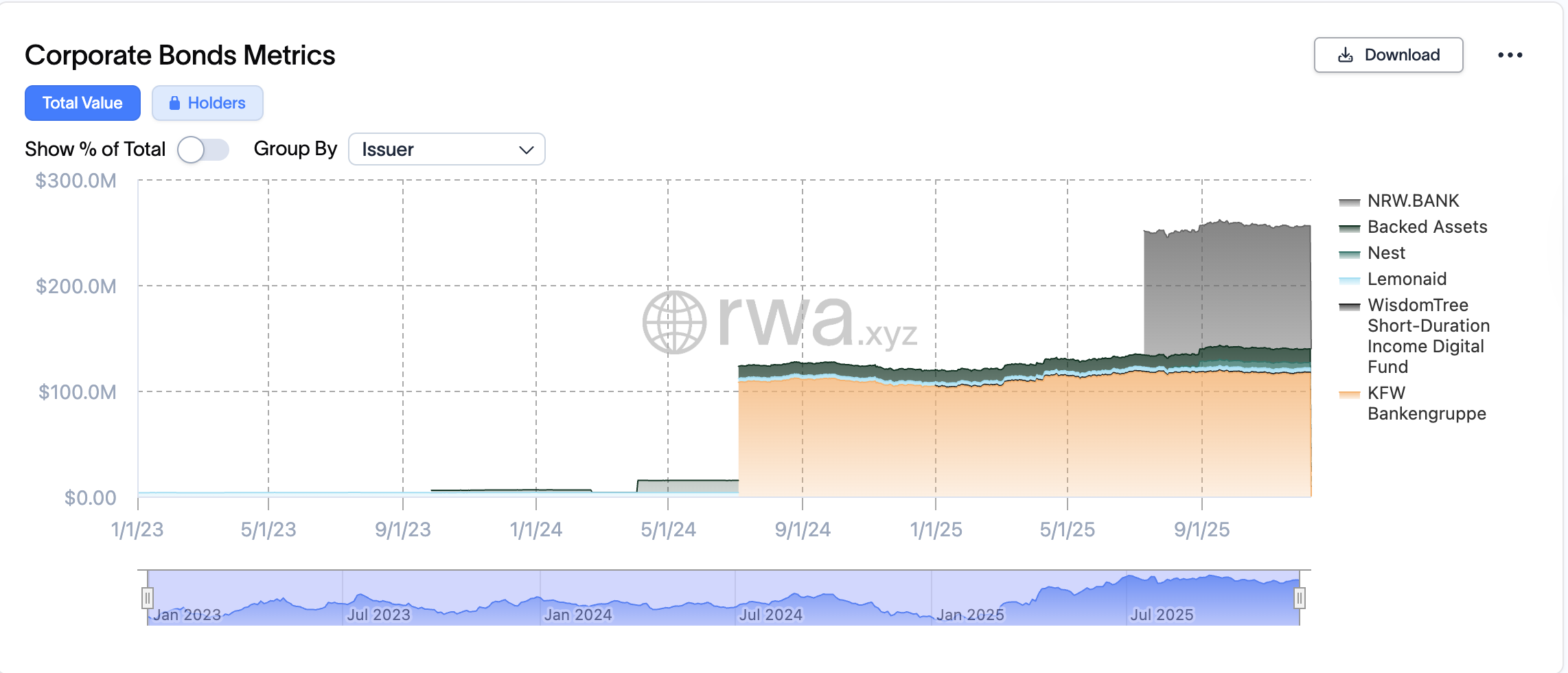
The tokenized commercial bond market is still in its infancy, but continues to grow. Source: RWA.XYZ


Tokenizing commercial, sovereign and municipal bonds can lower costs and settlement times by removing financial intermediaries from the issuance and clearing process. Analysts forecast that the sector could grow to a $300 billion market capitalization by 2030.

Related: State Street, Galaxy and Ondo join tokenized cash race with 24/7 sweep fund

Mainland China, Hong Kong tokenize bonds

Hong Kong’s Monetary Authority (HKMA) has prioritized the tokenization of financial assets, announcing a five-year plan to bring bonds and physical assets onchain by 2030.

Bringing real-world assets onchain makes cross-border settlement more efficient and positions Hong Kong for the integration of artificial intelligence into the financial system, according to the HKMA.
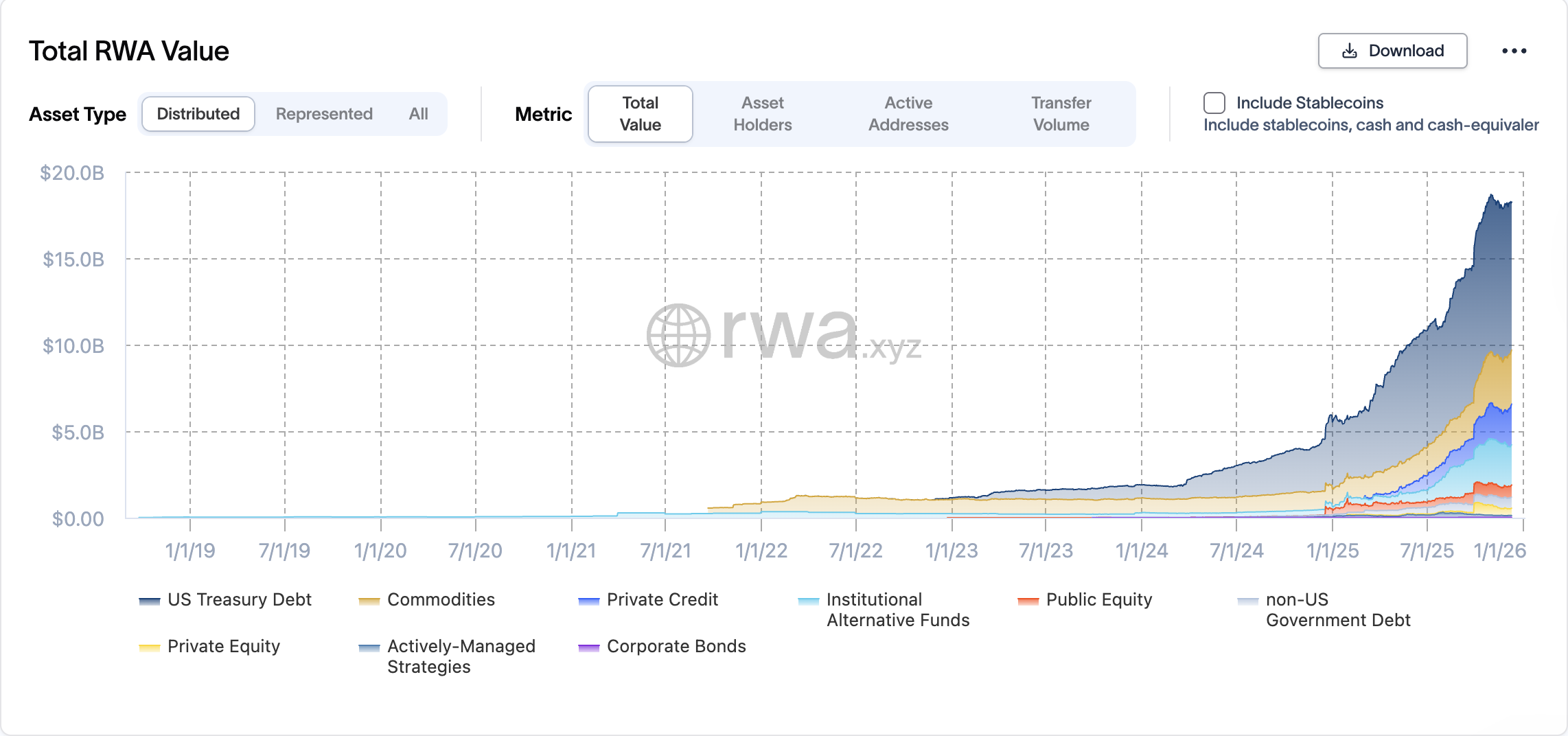
The total real-world tokenized asset (RWA) market capitalization is over $18.4 billion at the time of this writing. Source: RWA.XYZ

In November, Hua Xia Bank, a publicly traded financial services company with ties to China’s central government, issued 4.5 billion in tokenized yuan bonds, equivalent to $600 million.

The bond tranche was issued by Hua Xia Financial Leasing, featured a 1.84% yield, and is settled exclusively in the digital yuan.

The digital yuan, also known as the digital renminbi, is a central bank digital currency (CBDC) issued by China’s government, which began developing it in 2014.

Magazine: 11 critical moments in Ethereum’s history that made it the No.2 blockchain

Related Reads

A 'Clarity Act': Why Has It Caused Such an Uproar in the Crypto World?

A historical perspective reveals that money has rarely been neutral—it inherently carries an expectation of return. From ancient Mesopotamia to modern banking, the principle that holding or lending money should yield compensation has persisted. Against this backdrop, stablecoins emerged, promising faster settlement, lower costs, and 24/7 availability within a borderless digital economy. However, the proposed U.S. CLARITY Act, combined with the already-passed GENIUS Act, seeks to prohibit stablecoin issuers from paying interest or rewards to holders, permitting only limited “activity-based rewards.” This has sparked intense opposition from both the crypto industry and banking sectors. Critics argue that the bill effectively reduces stablecoins to mere payment conduits rather than capital-optimizing assets, contradicting the historical function of money. Key concerns include unfair competition, as traditional banks can offer interest and rewards while stablecoin issuers are restricted. The bill also introduces ambiguities around decentralized finance (DeFi) and tokenized assets, potentially stifling innovation and pushing capital overseas. Prominent industry figures, including Coinbase CEO Brian Armstrong, have withdrawn support, stating they would prefer no legislation over a harmful one. The bill currently lacks sufficient congressional support, particularly from Democrats, and faces skepticism for reinforcing existing banking structures rather than fostering healthy competition. Ultimately, the debate highlights the challenge of regulating a form of money inherently designed for efficiency and competition, urging lawmakers to create rules that integrate rather than isolate digital assets.

比推39m ago

A 'Clarity Act': Why Has It Caused Such an Uproar in the Crypto World?

比推39m ago

Trading

Spot
Futures

Hot Articles

Discussions

Welcome to the HTX Community. Here, you can stay informed about the latest platform developments and gain access to professional market insights. Users' opinions on the price of S (S) are presented below.

活动图片