March 31, Bangalore.
32-year-old software engineer Banuchandra Reddy hanged himself in his apartment.
Not long after, his wife Bibi Shaziya Siraj, who worked at IBM, jumped from the 17th floor.
A highly educated couple bid farewell to the world in the most tragic way.
The police investigation revealed that Reddy had previously worked in the US with an annual salary of about 8 million rupees, equivalent to nearly 570,000 RMB. In India, an annual salary exceeding 1 million rupees already firmly places one in the high-income group.
He was once the envy of everyone, a winner in life.
Until AI cost him his job.
Due to AI-driven role adjustments, Reddy lost his job in the US. For nearly a year afterwards, he frantically sent out resumes and attended interviews in Bangalore, but never managed to secure another stable, high-paying position.
The winner with an 8 million rupee annual salary was reduced to zero in less than a year.
This is not an isolated case.
This AI storm is no longer only sweeping away junior coders on the lower floors of office buildings—even mid-to-high-level management positions holding coffee cups with salaries in the millions of rupees are being uprooted in this tsunami.
India's IT outsourcing ship, which has been sailing for thirty years, is springing leaks.
01
India's Most Profitable Business, Overturned by AI
Many don't know that India's most lucrative deal isn't phones or cars—it's writing code for Americans.
The entire IT outsourcing industry is worth a staggering $280 billion, steadily accounting for 7% of India's GDP and supporting nearly a quarter of the nation's export earnings.
Companies like TCS, Infosys, and Wipro rapidly rose, essentially becoming the "world's back office."
According to the 2025 report by India's National Association of Software and Service Companies (NASSCOM), the scale of India's outsourcing industry has soared to an astounding $280 billion, directly employing 5.67 million IT engineers.
The essence of this business is four words: selling manpower.
An American programmer earns $150,000 a year; an Indian engineer costs only $15,000 to $20,000. If a client needs 100 people, the Indian company sends 100 people. The profit comes from this price difference.
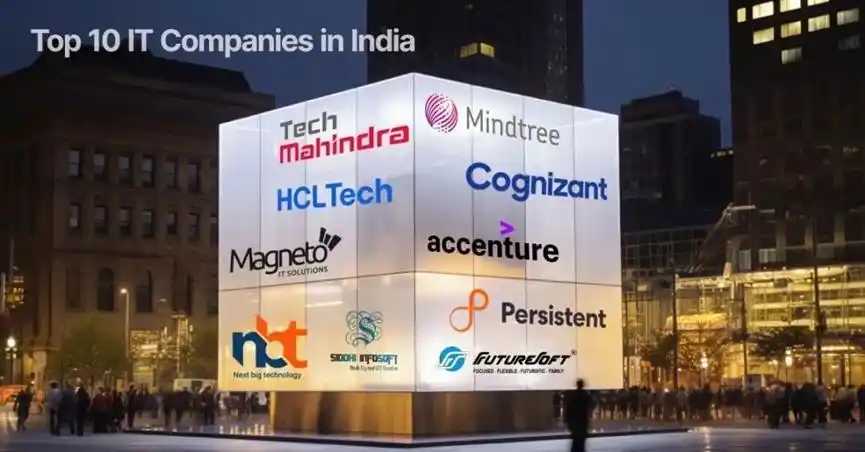
Image Source: Internet
Then AI arrived and flipped the table entirely.
Previously, a project required dozens of junior programmers sitting there doing testing and fixing bugs; now, a skilled worker equipped with AI tools can handle it in minutes.
McKinsey's report is even harsher: by 2030, about 30% of work hours in India could be automated.
The advantage of low labor costs has also evaporated overnight.
No matter how cheap Indian engineers are, they still require salaries, social security, and office rent.
The marginal cost of AI is basically the electricity bill—a monthly subscription fee of a few dozen dollars can do a week's work of a junior engineer.
An AI that never tires, sleeps, or takes leave handles standardized coding tasks faster than humans, at a cost only a fraction of a human's.
How do you fight this battle?
But this isn't even the most critical part.
Bangalore, the former "Silicon Valley of Asia," is tasting the bitter fruit first.
Mukund Jha, CEO of the application development platform Emergent Labs, already allows all employees to use AI for coding. He puts it bluntly: "Software development used to be expensive and slow, which is why foreign companies outsourced to India. But now it's different—anyone can develop."
In his view, 2 to 3 million Indian IT workers are facing "enormous risk."
Layoffs have already begun to materialize.
US real estate tech company OpenDoor slashed its entire 250-person team in India, turning back to the US to build a smaller, AI-native team. The reason is simple: why outsource to India for work AI can do?
This April, Oracle laid off 12,000 people in India, shifting its investment to AI.
India's largest IT services firm, Tata Consultancy Services (TCS), unveiled its largest-ever layoff plan in 2025: cutting 12,000 positions by March 2026. In the first nine months of the 2025-2026 fiscal year alone, TCS saw a net reduction of 25,816 employees, with total headcount dropping from a peak of 614,000 to below 580,000.
The last time TCS experienced such a large-scale net reduction was during the 2008 global financial crisis.
The impact is also reflected in financial reports.
Industry leader TCS saw its USD-denominated revenue for FY26 drop to $30 billion, a year-on-year decline of 0.5% at constant currency, marking its first annual revenue decline in years; Wipro's full-year revenue was only $10.5 billion, essentially stagnant with a 1.6% decline at constant currency.
Even the most resilient Infosys, while surpassing the $20 billion revenue mark for the first time, achieved only 3.1% growth at constant currency—far below its 13.7% compound annual growth rate over the past decade.
The cost ultimately falls on the youth.
The "2026 State of Work in India" report shows that in 2026, the unemployment rate for young Indian college graduates under 25 soared to 40%.
02
Built on Manpower, Burdened by Manpower
When AI arrived, why was India hit the hardest?
To understand this, we need to go back thirty years.
In 1991, the Indian economy was on the verge of bankruptcy, with foreign exchange reserves barely enough for two weeks.
At that very moment, the global "Y2K" crisis erupted—computer systems of Western companies faced the risk of time confusion, urgently requiring massive manpower to check and modify lines of tedious code line by line. This was a "digital manual labor" job with extremely low technical barriers but immense human consumption.
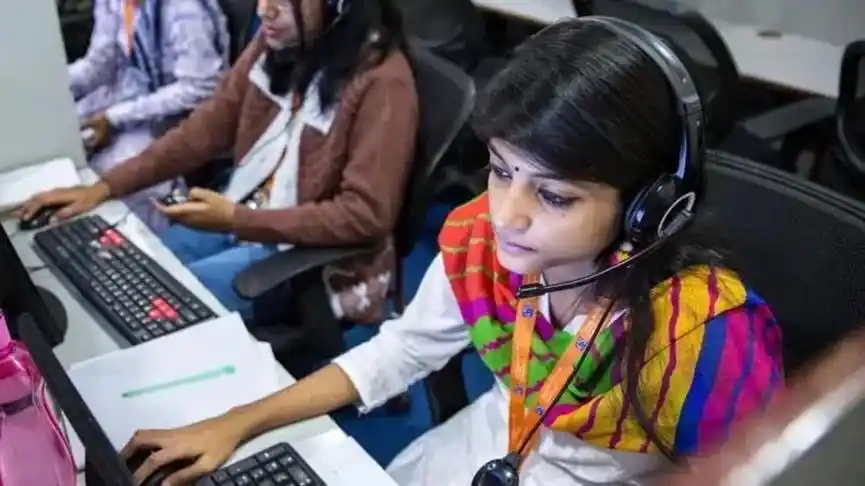
Image Source: Internet
Indians, with their good English, low wages, and ability to work late nights, keenly caught this business opportunity.
Lured by US dollars and the dream of financial freedom, countless young Indians aspired to "work for Americans."
In their eyes, the ideal life was nothing more than "buying a house in Hyderabad, acquiring land in Andhra Pradesh, and earning money in the US."
But under this model, India's tech elites all went to work for others.
By the 1990s, with the rise of the computer wave, India found it even harder to escape the "black hole" of talent drain.
The CEOs of Google, Microsoft, and Adobe are all of Indian origin; Silicon Valley executives are full of Indians.
But these brightest minds have not left behind a single competitive technology product company in India.
India's IT industry grew bigger, but it was always handling the peripheral tasks of others.
In the AI era, even those peripheral tasks are disappearing.
As of the first half of 2026, there are only three recognized AI unicorns in all of India.
Sarvam AI, the only one truly working on foundational models.
It just completed a Series B funding round in June at a $1.5 billion valuation, which sounds impressive—but what about its revenue for FY26 (April 1, 2025, to March 31, 2026)? A pitiful $5.4 million.
Krutrim is even more dramatic. It once boasted about benchmarking against OpenAI, gaining much attention. But in less than two years, its AI assistant was taken offline, chip development halted, the team was slashed, and it pivoted to selling AI cloud services.
Even then, 90% of its revenue came from within its parent company—essentially moving money from the left hand to the right, playing a self-deceiving game.
The third, Neysa Networks, rents out computing power.
It doesn't even have an AI product; it's just a "shovel seller."
The combined valuation of these three unicorns is less than $4 billion.
In the context of the global AI race worth trillions, this scale isn't even on the starting line.
Thirty years ago, cheap labor propelled India's software industry to new heights; thirty years later, this dependence on the "cheap labor arbitrage" path ultimately became a barrier locking in industrial upgrading.
Of course, India is also trying to save itself.
IT giants are busy transforming—from "selling manpower" to "selling solutions," squeezing into higher value-added directions like AI consulting and enterprise digital upgrades.
The Chairman of TCS even optimistically declared: "If we have 500,000 employees, then the day is not far when we will have 500,000 AI agents."
The Indian government also has its own AI strategy, focusing on talent cultivation and building data centers.
But the real question is: Is there enough time?
Can the speed of industrial transformation keep up with the speed of job disappearance? The employment pressure from 15 million new entrants to the labor force each year is rigid, and society's margin for error in maintaining stability is not large.
Behind this lies an even bigger question: In the AI era, what is the rise path for late-developing countries?
Can the old script of "demographic dividend → industrialization → industrial upgrading" still play out? The trouble India faces today may be a common test paper that many developing countries will have to face tomorrow.
References:
"Learning Code in Debt, Unemployed Upon Graduation: The First Batch of Indian Middle Class Whose Rice Bowls Were Smashed by AI Are Collectively Breaking Down" Vista看天下
"AI Impacts Asia's Outsourcing Industry: Millions of Jobs in India and the Philippines Face Transition Pains" The Paper
"The First Country to be Shorted by AI Has Emerged" PEdaily.cn
This article is from the WeChat public account "Phoenix Network Finance," author: Storm Eye