Here’s why XRP’s RWA market is now 4x larger than its entire ETF sector

ambcryptoPublished on 2026-07-07Last updated on 2026-07-07

Abstract

Institutional interest in Ripple and XRP is increasingly focusing on XRPL's infrastructure for real-world asset (RWA) tokenization, rather than speculative accumulation. The key driver is a $4 billion tokenized RWA market on XRPL, which is approximately four times larger than the $1 billion XRP ETF market. This shift highlights growing institutional conviction in the network's utility for financial applications, exemplified by transactions like a recent treasury redemption settled by JPMorgan, Ondo Finance, and Mastercard in seconds. While XRP ETFs have seen consistent inflows, the much larger scale of RWA activity suggests the ecosystem's momentum is increasingly rooted in practical adoption and network use, setting the stage for potential Q3 growth.

Institutional positioning around Ripple appears to be taking a different path.

The key takeaway is that this isn’t the usual whale accumulation or strategic buyback designed to create scarcity and fuel a sudden parabolic move.

Instead, the focus seems to be shifting toward growing conviction in XRPL’s infrastructure, with tokenization momentum increasingly becoming the main theme.

As the chart below shows, around $4 billion in tokenized RWAs are now live on XRPL, spanning more than 500 products. More importantly, there are already early examples of institutional usage.

Earlier this year, a treasury redemption involving JPMorgan Chase, Ondo Finance, and Mastercard was settled on XRPL in roughly four seconds, according to the companies involved.
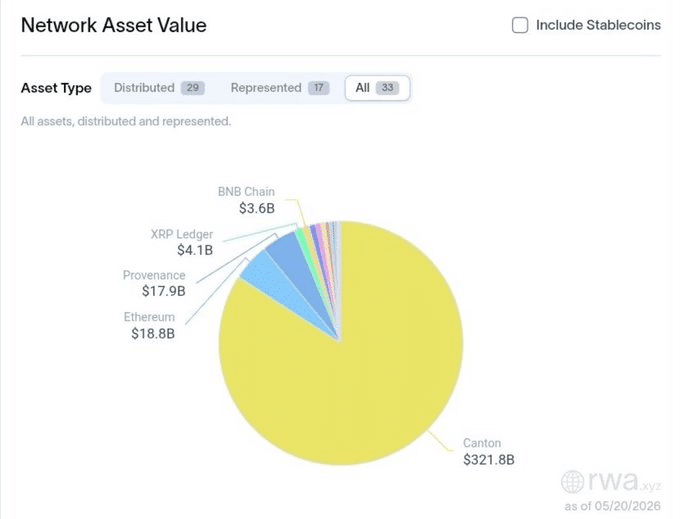
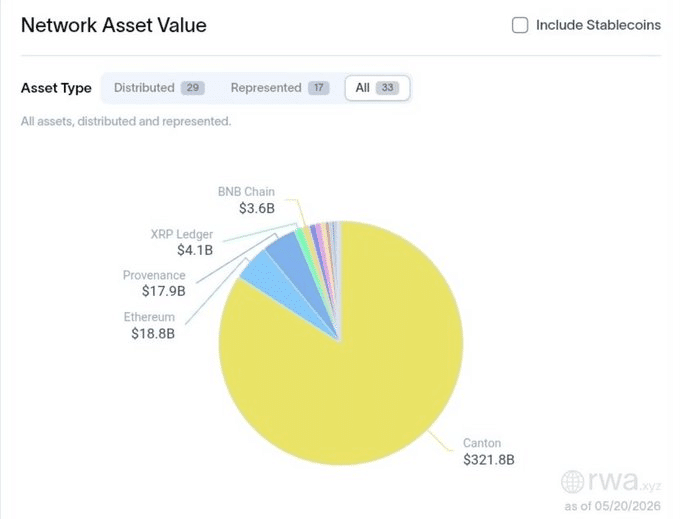
Source: RWA.xyz

Unlike scarcity-driven rallies, this momentum points to a different type of market dynamic.

From a psychological perspective, rising tokenization activity on XRPL shifts the focus away from pure speculation and toward network utility. The narrative is gradually shifting from investors accumulating Ripple [XRP] as an asset to institutions using XRPL as infrastructure for real-world financial applications.

This becomes even clearer when comparing Ripple’s tokenization growth with ETF momentum, showing how institutional capital is positioning around the ecosystem. This is especially notable with XRP already up more than 8% in June.

In this context, this divergence could be setting the stage for XRP’s Q3 momentum.

Tokenization emerges as XRPL’s key institutional growth driver

While tokenization is growing across the market, what makes Ripple’s RWA momentum different?

Notably, $4 billion in total tokenized real-world assets [RWAs] sat on XRPL at press time. Roughly 4x the size of its entire ETF market.

To put this into perspective, XRP’s ETF market is around $1 billion. This means tokenization activity on XRPL is already four times larger than ETF exposure. This shows where the ecosystem’s growth is starting to concentrate, with more focus shifting toward real-world asset adoption.

Notably, this becomes even more interesting when paired with Ripple’s ETF momentum. Spot XRP ETFs have seen consistent demand, recording net inflows for eight straight weeks. They brought in around $23 million during the final full week of June, pushing cumulative inflows to roughly $1.47 billion.
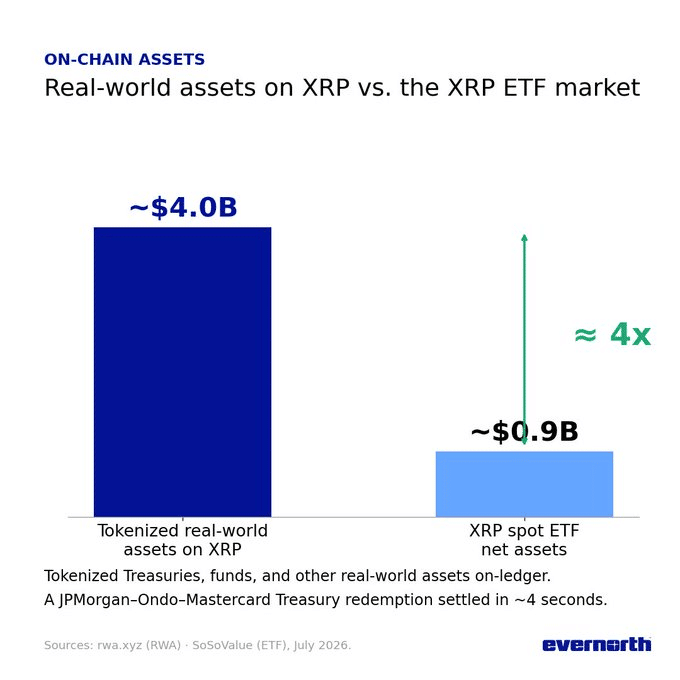
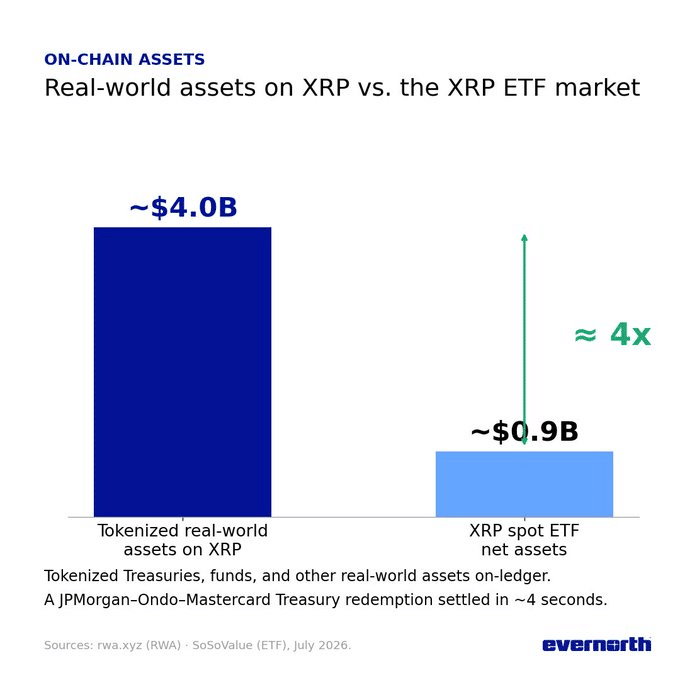
Source: SoSoValue

In this context, a 4x larger RWA market puts XRPL’s tokenization growth into perspective.

Technically speaking, if ETF inflows represent around $1.47 billion, a 4x RWA market would imply roughly $5.9 billion in tokenized asset activity. This highlights the growing scale of capital shifting toward RWA adoption, not just traditional XRP exposure.

This is especially notable as XRP ETF flows have outperformed both BTC and ETH flows during the same period. This adds to Ripple’s Q3 momentum, suggesting that the current cycle is being driven less by speculation and more by growing institutional conviction in the XRPL network.



Final Summary


Trending Cryptos

Related Questions

QAccording to the article, what is the approximate total value of tokenized real-world assets (RWAs) currently live on the XRPL, and how does this compare to the size of XRP's ETF market?

AAccording to the article, approximately $4 billion in tokenized real-world assets (RWAs) are live on the XRPL. This is about four times larger than XRP's ETF market, which is valued at around $1 billion.

QWhat specific example does the article give to illustrate early institutional usage and the efficiency of the XRPL for real-world financial applications?

AThe article gives the example of a treasury redemption involving JPMorgan Chase, Ondo Finance, and Mastercard that was settled on the XRPL in approximately four seconds earlier this year.

QWhat key shift in the market narrative around Ripple and XRP does the article suggest is occurring, based on the rising tokenization activity?

AThe article suggests the narrative is shifting away from investors speculatively accumulating XRP as an asset, and toward institutions using the XRPL as infrastructure for real-world financial applications, focusing on network utility.

QHow does the performance of XRP ETF inflows compare to those of Bitcoin (BTC) and Ethereum (ETH) ETFs over the period mentioned in the article?

AThe article states that XRP ETF inflows have outperformed both Bitcoin (BTC) and Ethereum (ETH) ETF flows during the same period.

QWhat does the article imply is the primary driver behind XRP's current market cycle momentum, as opposed to previous cycles?

AThe article implies that the current cycle is being driven less by scarcity and pure speculation, and more by growing institutional conviction in the utility and infrastructure of the XRPL network, particularly for real-world asset tokenization.

Related Reads

Illegal Mining in Russia: Why Home Farms Are Easy to Detect

Illegal cryptocurrency mining in Russia is becoming increasingly risky, especially in regions where such activity is banned. Energy supply companies detect atypical, sustained electricity consumption in residential areas, triggering checks. They monitor anomalous usage, report data to tax authorities, and forward information to prosecutors. Home mining farms give themselves away through a characteristic load pattern: an apartment consumes electricity evenly and almost around-the-clock, making such deviations obvious in statistics. Mining remains legal only where not prohibited and when electricity is consumed under a proper contract, metered, and paid for. Income from mining is subject to taxation. To operate legally, registration or notification is required as per regulations. Current consequences for illegal mining involve applying existing rules: penalties for illegal grid connections, unmetered consumption, causing damage to energy companies, and tax evasion. Equipment may be confiscated. While specific administrative and criminal liability for mining itself is still being finalized, offenders face fines, damage claims, and potential criminal charges. Key illegal schemes include mining in prohibited regions, using illegal grid connections or unmetered power, and not paying taxes on mining income. The main damages involve losses for energy companies, grid overload, and unpaid taxes. As of now, bans on crypto mining are in effect in Moscow, the Moscow region, parts of the Kursk region, and several other territories (including parts of the North Caucasus, certain Ukrainian territories under Russian control, and areas in Southern Siberia and the Far East) until at least March 15, 2031, primarily to mitigate electricity deficit risks. The primary reason home mining is easily detectable is its non-typical power consumption pattern: equipment runs almost constantly, creating a stable load that significantly differs from normal household usage, making concealment difficult.

cryptonews.ru16m ago

Illegal Mining in Russia: Why Home Farms Are Easy to Detect

cryptonews.ru16m ago

Robinhood CEO Interview: Meme Coin Boom Was Unexpected, My Investment Portfolio Is Quite Diverse

Interview with Robinhood CEO Vlad Tenev on The Iced Coffee Hour podcast. Tenev discussed Robinhood Chain, calling it the future of finance. He highlighted its recent launch, rapid growth in TVL, and support for tokenized stocks tradable globally. He noted the unexpected popularity of meme coins on the chain and unique product combinations created by developers. Tenev addressed concerns about AI and stock market bubbles, stating his young user base often views market dips as opportunities. He acknowledged the complexity of balancing investments in chips and energy sectors. He identified optimizing the unified user experience across Robinhood's expanding product lines as the company's biggest current challenge. Responding to criticism, Tenev explained Robinhood's focus on three areas: improving core infrastructure, adding standard financial products it currently lacks, and pioneering innovations like prediction markets and AI-agent trading. He emphasized user personalization, allowing features like prediction markets to be hidden. On personal investment, Tenev stated his portfolio is diversified and he enjoys cryptocurrency trading. He expressed long-term optimism about Bitcoin's unique first-mover status and brand strength, while avoiding specific price predictions. In his personal life, Tenev focuses on teaching his children math, maintaining his health through sauna and cold therapy routines, and building better sleep habits by journaling and reading physical books before bed.

Odaily星球日报22m ago

Robinhood CEO Interview: Meme Coin Boom Was Unexpected, My Investment Portfolio Is Quite Diverse

Odaily星球日报22m ago

Trading

Spot

Hot Articles

Discussions

Welcome to the HTX Community. Here, you can stay informed about the latest platform developments and gain access to professional market insights. Users' opinions on the price of S (S) are presented below.

活动图片