Harvard University May Have Lost $150 Million in Cryptocurrency Trading! Has Liquidated Ethereum and Significantly Reduced Bitcoin ETF Holdings

链捕手Published on 2026-05-18Last updated on 2026-05-18

Abstract

Harvard University's endowment fund, Harvard Management Company (HMC), significantly reduced its cryptocurrency holdings in Q1 2026, reportedly incurring substantial losses. According to its latest 13F filing, HMC completely sold off its position in the BlackRock Ethereum ETF (ETHA) and cut its BlackRock Bitcoin ETF (IBIT) holdings by 43%, leaving a position worth approximately $117 million. This marks a sharp decline from a peak public crypto allocation of $443 million just two quarters prior. Analysis suggests these trades resulted in estimated losses exceeding $150 million, with Bitcoin positions sold at an average loss of around 28% and Ethereum positions at roughly 35%. The moves have sparked debate on whether HMC engaged in counterproductive "buy high, sell low" behavior. The article contextualizes HMC's crypto journey, beginning with its initial disclosed investment in IBIT and gold ETF GLD in Q2 2025 as an "inflation hedge." Aggressive buying in Q3 2025 made IBIT its largest single public holding at 20% of the portfolio, coinciding with Bitcoin nearing all-time highs. Subsequent trimming began in Q4 2025, with an initial foray into ETHA. Explanations for the recent drastic cuts extend beyond market timing. Harvard faces significant financial pressure, including an annual operating deficit and a major increase in endowment tax rates. With illiquid assets like private equity dominating the portfolio, the highly liquid crypto ETFs became the most practical source for ...

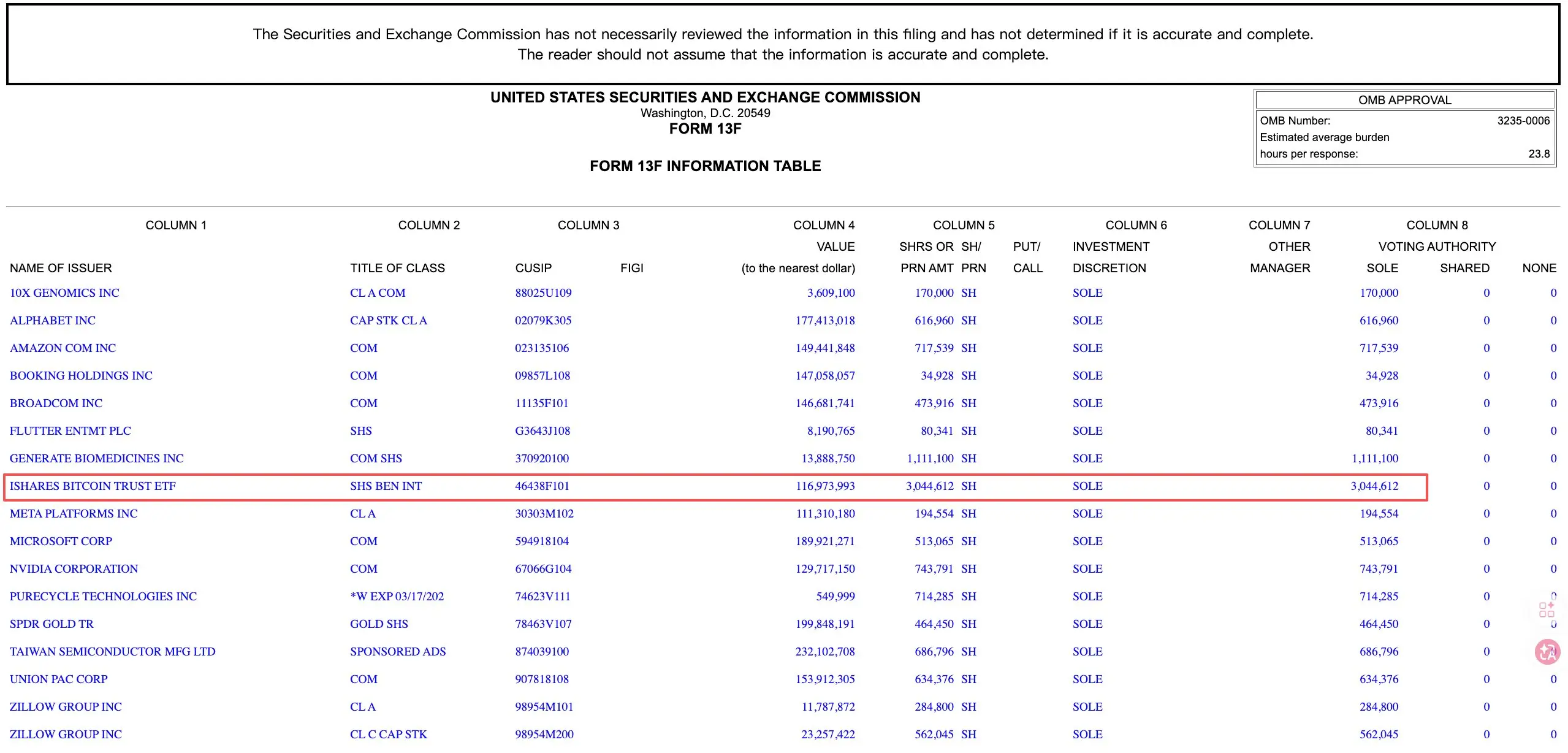
Last weekend, Harvard Management Company (hereinafter referred to as HMC) submitted its latest 13F holdings report to the U.S. Securities and Exchange Commission, its holdings of BlackRock's spot Bitcoin ETF (IBIT) shrank by another 43% compared to the previous quarter, while the Ethereum ETF (ETHA) purchased during the same period was completely liquidated.

In just two quarters, Harvard's publicly disclosed cryptocurrency holdings fell from a peak of $443 million to approximately $117 million. As one of the top institutions managing the world's largest university endowment fund, this move has sparked market questions: even top talent can't escape buying high and selling low?

In fact, Harvard's connection with cryptocurrency goes far beyond this. As early as 2018, several Ivy League endowment funds developed a strong interest in blockchain technology through venture capital funds focused on cryptocurrency. According to reports, universities including Harvard, Yale, Brown, and Michigan quietly began buying Bitcoin through exchanges like Coinbase around 2019.

Among them,HMC first publicly disclosed its holdings in Q2 2025. According to the 13F filing submitted in August that year, HMC held approximately 1.9 million shares of IBIT, valued at about $117 million, and simultaneously opened a position in the gold ETF (GLD), with holdings of about $102 million.

Bitwise Chief Investment Officer Matt Hougan interpreted this set of moves as a "depreciation hedging trade," simultaneously betting on Bitcoin and gold to hedge against the risk of global monetary oversupply. IBIT thus became Harvard's fifth-largest publicly disclosed holding, exceeding its holdings of stock in Google parent company Alphabet.

Entering the third quarter, HMC substantially increased its position. As of September 30, 2025, IBIT holdings expanded to approximately 6.81 million shares, with a market value of about $443 million, a quarter-over-quarter increase of over 257%. IBIT surpassed Microsoft, Amazon, and Nvidia to become the largest single holding in HMC's publicly disclosed portfolio, accounting for about 20% of its public US stock portfolio.

At that time, faced with persistently low return expectations for traditional assets, several university endowment funds were quietly adjusting their investment strategies.

Columbia Investment Management Company CEO Kim Lew stated that expected returns and Alpha generation from traditional asset classes would be compressed, forcing institutions to move further out on the risk curve. W.K. Kellogg Foundation's Carlos Rangel bluntly said that if an 8% return couldn't be achieved, the traditional foundation model would be difficult to sustain.

Simultaneously, even Harvard's own economics professors could no longer sit still. In August 2025, former IMF chief economist and Harvard economics professor Kenneth Rogoff publicly reflected on his prediction error from 2018—he had predicted that Bitcoin was more likely to fall to $100 than to rise to $100,000 within a decade, yet the Bitcoin price had already exceeded $113,000, growing over 10-fold from that time.

Rogoff admitted he had been "overly optimistic about the U.S. establishing reasonable cryptocurrency regulation" and underestimated the demand support for Bitcoin in the global underground economy. The public mea culpa from this leading academic figure provided, to some extent, additional emotional endorsement for this wave of institutional buying. And Bitcoin subsequently approached its historical peak of $126,000 in October 2025.

In Q4 2025, the market peaked and began to decline, prompting HMC to adjust its portfolio. IBIT holdings were reduced by approximately 21%, down to about 5.35 million shares, with a market value of about $266 million. At the same time, BlackRock's spot Ethereum ETF (ETHA) appeared for the first time in the report, with holdings of about 3.87 million shares, valued at about $86.8 million.

According to Bloomberg ETF analyst James Seyffart, hedge funds were net sellers of Ethereum ETFs this quarter due to the collapse of basis trade returns, making them the largest net sellers. Harvard precisely entered the market against the trend during this window, becoming the largest new buyer of Ethereum ETFs this quarter.

The latest Q1 2026 holdings disclosure shows that ETHA, which was just established less than a quarter ago, has been completely liquidated. Meanwhile, HMC once again significantly reduced its IBIT holdings, cutting them by about 43%, leaving approximately 3.04 million shares with a market value of about $117 million. IBIT has also fallen out of Harvard's top five holdings, surpassed in order by TSMC, Alphabet, Microsoft, and the SPDR Gold Trust.

According to estimates by well-known crypto KOL Chen Jian, HMC's average purchase price for IBIT was around $110,000, with an average selling price of about $80,000, resulting in a loss of approximately 28%, with paper losses on the Bitcoin portion exceeding $100 million. Regarding Ethereum, the average purchase price for ETHA was about $4,000, and it was liquidated at about $2,600, estimated to result in a single-quarter loss of over $30 million (-35%). Combined, this round of crypto operations allegedly resulted in losses exceeding $150 million.
Is this chasing highs and selling lows, or a routine rebalancing by an institution?

One view holds that HMC completed its largest scale-up of buying when Bitcoin was near its historical high, then sold more as the price fell, tracing a classic high-buy-low-sell curve. The Ethereum position was even entirely liquidated less than a quarter after purchase, almost perfectly capturing the entire decline. This is typical chasing highs and selling lows behavior.

Another perspective points out that by the end of Q3, IBIT already accounted for 20% of HMC's public portfolio, indicating an obviously excessive concentration. Subsequent reductions were a necessary action from a risk control perspective. Moreover, HMC still maintains an IBIT base position of about $117 million to this day, not having completely exited.

However, this round of reduction must also consider the current real-world pressure Harvard is under.

In October of last year, Harvard's financial report for fiscal year 2025 showed that, due to the Trump administration halting nearly all federal research grants in the spring, Harvard incurred an annual operating loss of $113 million on total revenue of $6.7 billion, marking the first budget deficit since the pandemic.This deficit accounted for 1.7% of total revenue, with the operating gap contrasting sharply with the $45 million surplus in 2024.
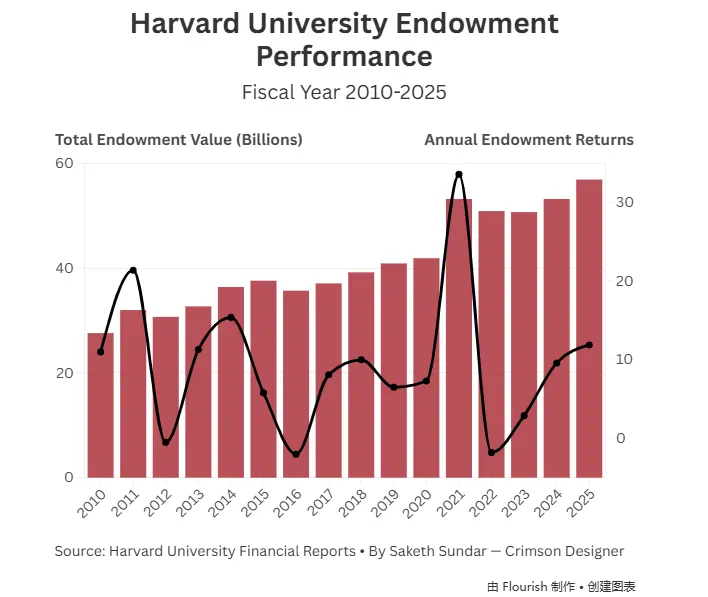
The endowment fund contributes about 37% of Harvard's operating income, providing approximately $2.5 billion in support during fiscal year 2025, but 80% of these funds are restricted by donor purpose and cannot be freely allocated.

Simultaneously, the Republican tax bill officially signed into law in July 2025 significantly increased the maximum tax rate on endowment funds from 1.4% to 8%, a change Harvard estimates will impose an additional annual tax burden of about $300 million.

Under this pressure, the asset structure itself determines where it's easiest to make cuts.

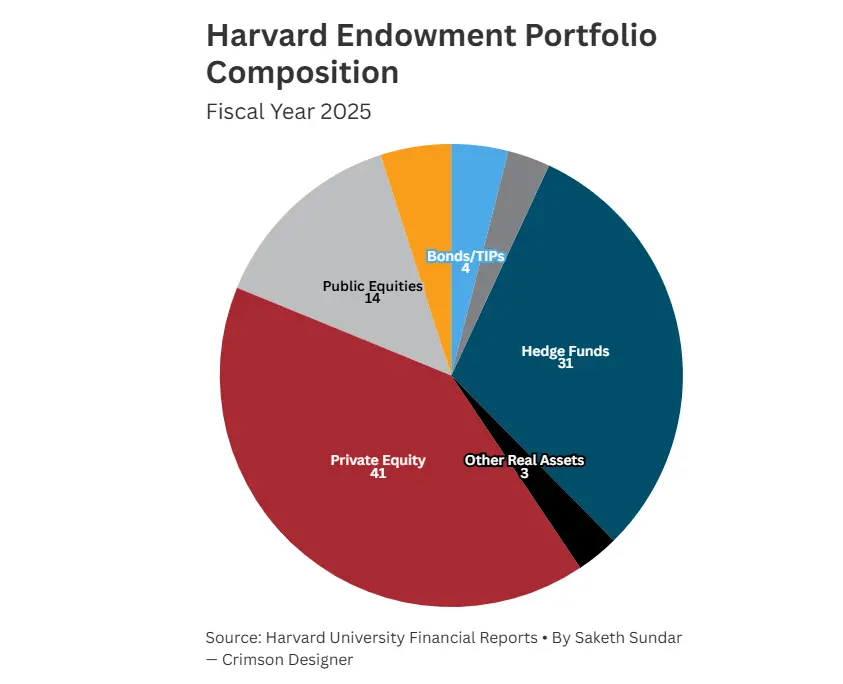
Harvard's endowment fund consists of approximately 41% private equity and 31% hedge funds. These assets have long lock-up periods and extremely high costs for discounted sales. IBIT and ETHA, as intraday tradable public market ETFs, have the strongest liquidity and the lowest liquidation costs, naturally making them the priority for adjustment.
Furthermore, HMC's current CEO N.P. Narvekar has indicated plans to retire around 2027 and is currently discussing succession arrangements with the board. In an environment of fiscal pressure, political uncertainty, and leadership transition occurring simultaneously, holding large, highly volatile crypto positions becomes an additional reputational risk.

In contrast to Harvard's retreat are the starkly different choices of other institutions. Among them, Abu Dhabi sovereign fund Mubadala continued to increase its IBIT holdings by about 16% in Q1 2026, raising its position to approximately $566 million, marking its fifth consecutive quarter of increasing its Bitcoin ETF stake.

Also as university endowment funds, Dartmouth maintained its IBIT holdings unchanged, swapped its Ethereum ETF for a staking version, and added about $3.67 million in the Bitwise Solana Staking ETF, becoming one of the first US university endowment funds to extend crypto allocations beyond Bitcoin and Ethereum.

Brown University maintained its 212,500 IBIT shares unchanged, while Emory University exited its small IBIT position, instead increasing its holdings in the Grayscale Bitcoin Mini Trust.

Overall, Harvard's operations in this round are the result of the combined effects of fiscal pressure, liquidity needs, and risk budget triggers, making it difficult to simply attribute them to chasing highs and selling lows.

When the world's top university endowment fund enters the crypto market, it does so not with a crypto-native belief approach, but with Wall Street risk-ledger logic. Crypto ETF products have indeed provided an institutional gateway, but when risk contracts, they also bring institution-style selling pressure.


Related Questions

QWhat recent investment actions did Harvard University's endowment fund take regarding Bitcoin and Ethereum ETFs?

AIn its latest 13F filing, Harvard Management Company (HMC) reduced its holdings in BlackRock's Bitcoin spot ETF (IBIT) by 43% and completely sold off its entire position in the Ethereum ETF (ETHA).

QWhat is the estimated financial impact of Harvard's cryptocurrency ETF trading as mentioned in the article?

AAccording to the article, it is estimated that HMC's trading in Bitcoin and Ethereum ETFs resulted in combined losses exceeding $150 million, including over $100 million on Bitcoin and over $30 million on Ethereum.

QWhat are some of the external pressures cited as reasons for Harvard's divestment from crypto assets?

AHarvard faced multiple pressures including a $113 million operating deficit for the 2025 fiscal year, a significant increase in the endowment tax rate from 1.4% to 8% which adds an estimated $300 million in annual tax costs, and the upcoming retirement of the HMC CEO in 2027, creating a period of leadership transition and reputational risk management.

QHow did the trading behavior of other major institutions differ from Harvard's in Q1 2026?

AIn contrast to Harvard's sell-off, Abu Dhabi's sovereign fund Mubadala increased its IBIT holdings by approximately 16%, marking its fifth consecutive quarter of adding to its Bitcoin ETF position. Dartmouth College maintained its IBIT holdings and shifted its Ethereum ETF to a staking version.

QWhat was the strategic rationale suggested in the article for Harvard's initial large-scale investment in Bitcoin ETF (IBIT) in Q3 2025?

AThe article suggests the investment was part of a 'debasement hedge trade,' where HMC simultaneously bet on Bitcoin and gold (via GLD) to hedge against risks from global currency expansion. At its peak, the IBIT position constituted about 20% of HMC's disclosed portfolio, making it the largest single holding.

Related Reads

"JUST 6th Anniversary x GasFree Super Carnival Month" Grandly Arrives: Enjoy "0" Gas Transfer Freedom & Share the 10,000 USDT Bonus Pool

The "JUST 6th Anniversary x GasFree Super Carnival Month" event has launched, celebrating the JUST ecosystem's six-year milestone within the TRON network. Running from May 18th to June 7th, the event features a 10,000 USDT prize pool and is designed to promote the GasFree smart wallet. GasFree, a key product of the JustLend DAO protocol, allows users to pay transaction fees directly with the token being transferred (e.g., USDT), eliminating the need to hold the network's native token (TRX) for gas. This innovation aims to simplify on-chain transactions and lower the entry barrier for new users. The carnival offers five main activities: 1. **GasFree Activation Challenge:** New users can earn random rewards (5.2-522 USDT) for activating GasFree and completing their first transfer. 2. **Transfer Rebate:** 200 users daily are randomly selected to receive a 100% rebate on their activation and transaction fees. 3. **Bitcoin Pizza Day Special:** A dedicated event with custom rewards to celebrate crypto culture. 4. **JUST 6th Anniversary Lucky Draw:** Special anniversary reward packages for lucky participants. 5. **Knowledge Quiz:** A trivia contest where users can win prizes by answering questions about JUST and GasFree. To participate, users need a compatible wallet like TronLink (recommended), Klever, Guarda, or NOW Wallet. They must then find the GasFree feature, fund it with USDT, and complete at least one USDT transfer to qualify for the rewards. The article highlights GasFree's significant adoption, reporting over 872 billion USD in cumulative transaction volume and more than 612 million USD in saved user fees since its launch. The event underscores JUST's commitment to enhancing the DeFi user experience by making on-chain interactions more accessible and cost-effective.

链捕手3h ago

"JUST 6th Anniversary x GasFree Super Carnival Month" Grandly Arrives: Enjoy "0" Gas Transfer Freedom & Share the 10,000 USDT Bonus Pool

链捕手3h ago

Trading

Spot
Futures

Hot Articles

What is $BITCOIN

DIGITAL GOLD ($BITCOIN): A Comprehensive Analysis Introduction to DIGITAL GOLD ($BITCOIN) DIGITAL GOLD ($BITCOIN) is a blockchain-based project operating on the Solana network, which aims to combine the characteristics of traditional precious metals with the innovation of decentralized technologies. While it shares a name with Bitcoin, often referred to as “digital gold” due to its perception as a store of value, DIGITAL GOLD is a separate token designed to create a unique ecosystem within the Web3 landscape. Its goal is to position itself as a viable alternative digital asset, although specifics regarding its applications and functionalities are still developing. What is DIGITAL GOLD ($BITCOIN)? DIGITAL GOLD ($BITCOIN) is a cryptocurrency token explicitly designed for use on the Solana blockchain. In contrast to Bitcoin, which provides a widely recognized value storage role, this token appears to focus on broader applications and characteristics. Notable aspects include: Blockchain Infrastructure: The token is built on the Solana blockchain, known for its capacity to handle high-speed and low-cost transactions. Supply Dynamics: DIGITAL GOLD has a maximum supply capped at 100 quadrillion tokens (100P $BITCOIN), although details regarding its circulating supply are currently undisclosed. Utility: While precise functionalities are not explicitly outlined, there are indications that the token could be utilized for various applications, potentially involving decentralized applications (dApps) or asset tokenization strategies. Who is the Creator of DIGITAL GOLD ($BITCOIN)? At present, the identity of the creators and development team behind DIGITAL GOLD ($BITCOIN) remains unknown. This situation is typical among many innovative projects within the blockchain space, particularly those aligning with decentralized finance and meme coin phenomena. While such anonymity may foster a community-driven culture, it intensifies concerns about governance and accountability. Who are the Investors of DIGITAL GOLD ($BITCOIN)? The available information indicates that DIGITAL GOLD ($BITCOIN) does not have any known institutional backers or prominent venture capital investments. The project seems to operate on a peer-to-peer model focused on community support and adoption rather than traditional funding routes. Its activity and liquidity are primarily situated on decentralized exchanges (DEXs), such as PumpSwap, rather than established centralized trading platforms, further highlighting its grassroots approach. How DIGITAL GOLD ($BITCOIN) Works The operational mechanics of DIGITAL GOLD ($BITCOIN) can be elaborated on based on its blockchain design and network attributes: Consensus Mechanism: By leveraging Solana’s unique proof-of-history (PoH) combined with a proof-of-stake (PoS) model, the project ensures efficient transaction validation contributing to the network's high performance. Tokenomics: While specific deflationary mechanisms have not been extensively detailed, the vast maximum token supply implies that it may cater to microtransactions or niche use cases that are still to be defined. Interoperability: There exists the potential for integration with Solana’s broader ecosystem, including various decentralized finance (DeFi) platforms. However, the details regarding specific integrations remain unspecified. Timeline of Key Events Here is a timeline that highlights significant milestones concerning DIGITAL GOLD ($BITCOIN): 2023: The initial deployment of the token occurs on the Solana blockchain, marked by its contract address. 2024: DIGITAL GOLD gains visibility as it becomes available for trading on decentralized exchanges like PumpSwap, allowing users to trade it against SOL. 2025: The project witnesses sporadic trading activity and potential interest in community-led engagements, although no noteworthy partnerships or technical advancements have been documented as of yet. Critical Analysis Strengths Scalability: The underlying Solana infrastructure supports high transaction volumes, which could enhance the utility of $BITCOIN in various transaction scenarios. Accessibility: The potential low trading price per token could attract retail investors, facilitating wider participation due to fractional ownership opportunities. Risks Lack of Transparency: The absence of publicly known backers, developers, or an audit process may yield skepticism regarding the project's sustainability and trustworthiness. Market Volatility: The trading activity is heavily reliant on speculative behavior, which can result in significant price volatility and uncertainty for investors. Conclusion DIGITAL GOLD ($BITCOIN) emerges as an intriguing yet ambiguous project within the rapidly evolving Solana ecosystem. While it attempts to leverage the “digital gold” narrative, its departure from Bitcoin's established role as a store of value underscores the need for a clearer differentiation of its intended utility and governance structure. Future acceptance and adoption will likely depend on addressing the current opacity and defining its operational and economic strategies more explicitly. Note: This report encompasses synthesised information available as of October 2023, and developments may have transpired beyond the research period.

363 Total ViewsPublished 2025.05.13Updated 2025.05.13

What is $BITCOIN

Discussions

Welcome to the HTX Community. Here, you can stay informed about the latest platform developments and gain access to professional market insights. Users' opinions on the price of BTC (BTC) are presented below.

活动图片