What?!
GPT-5.6 Sol is actually a hidden "vision master".
Recently, the third-party visual evaluation organization Roboflow ran the GPT-5.6 "whole family" through its own VLM benchmark.

The tests were all the most practical tasks: finding things, counting things, recognizing text, and extracting information.
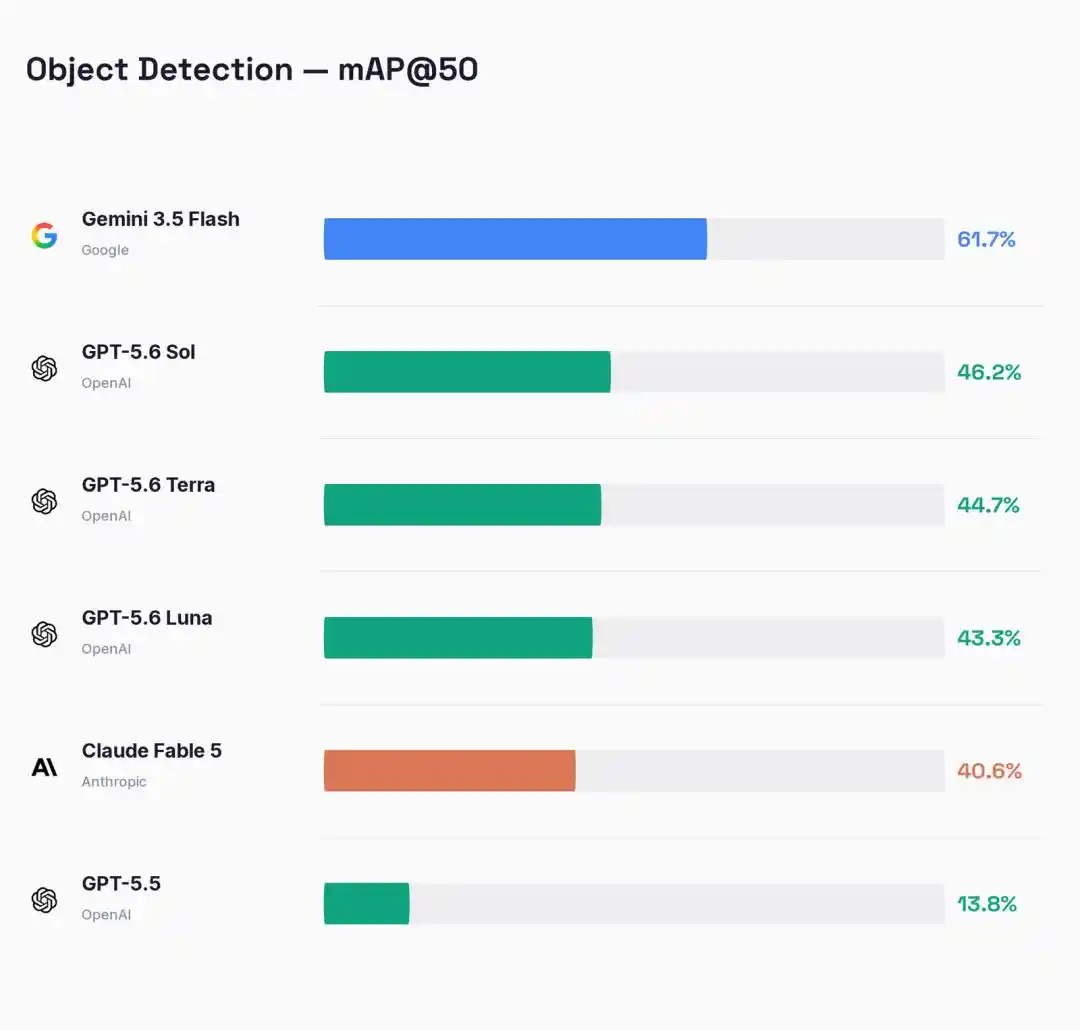
In just the object detection task, the previous generation GPT-5.5 only scored 13.8 points. This score basically equals handing in a blank paper in the visual model circle.
This time Sol jumped to 46.2, more than three times that.
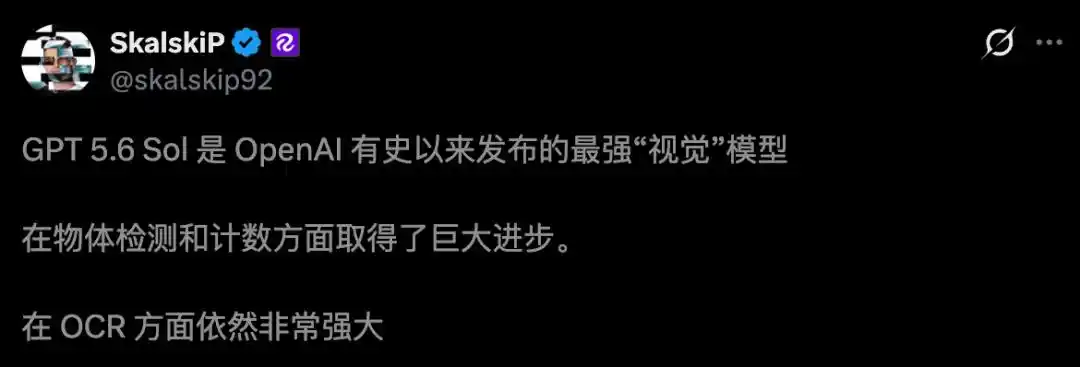
SkalskiP, head of the Roboflow project, stated directly, "GPT-5.6 Sol is OpenAI's strongest visual model ever"!
GPT-5.6 "Super Size", OpenAI's Strongest Visual AI
Object detection has always been a disaster area for the GPT series. The task is simple: have the model draw a box around each object in the picture.
The previous generation GPT-5.5's performance was basically equal to "knowing there's something in the picture, but where to put the box is all guesswork".
GPT-5.6 Sol's score directly soared to 46.2, more than three times.
Even more interestingly, Terra and Luna are close behind, with 44.7 and 43.3 respectively.
It's worth mentioning that Luna is the cheapest tier in this generation, and its detection score still grinds the previous generation's flagship into the dust.
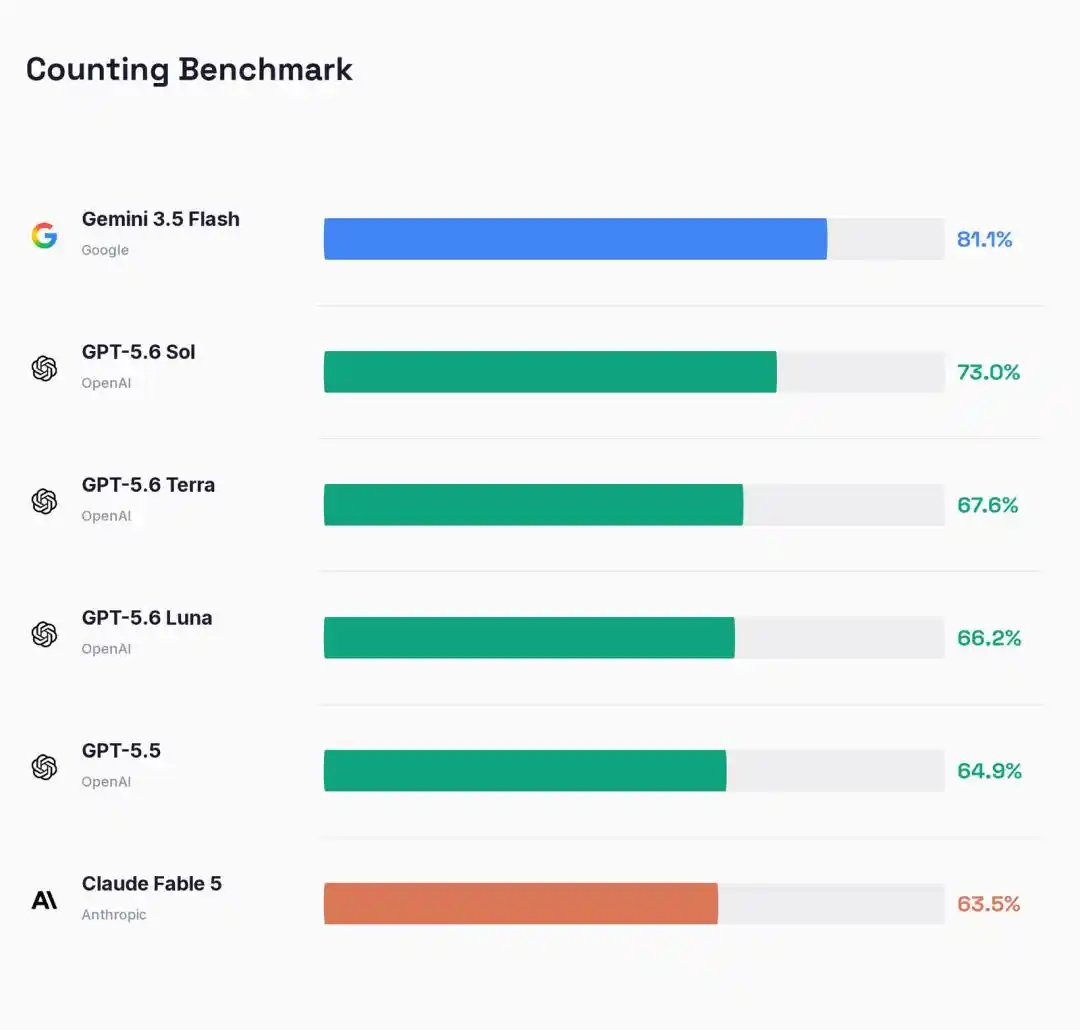
In counting tasks, the scores also improved.
Sol's accuracy rose from GPT-5.5's 64.9% to 73%, with Terra and Luna at 67.6% and 66.2% respectively.
So, what specifically is GPT-5.6 strong at?
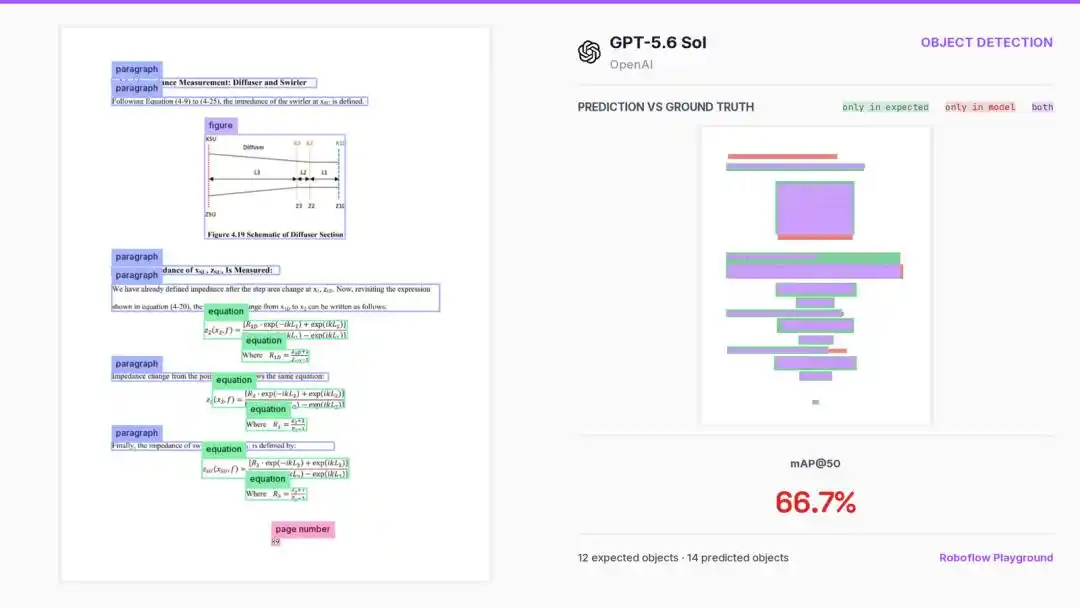
Document layout recognition is the most eye-catching; titles, body text, tables, illustrations, signatures—Sol can neatly outline them all.
This is no small matter for people handling contracts, invoices, and reports: the first step in almost all document processing pipelines is first figuring out "which part to look at", and then recognizing the text.
Even in dense scenes, GPT-5.6 held its ground.
Pictures with dozens of identical objects crowded together, like pills or eggs, are a traditional pitfall for VLMs.
This is because large models generate bounding boxes by outputting coordinates one by one; the more objects, the longer the output, and the higher the probability of missing, repeating, or getting coordinates wrong.
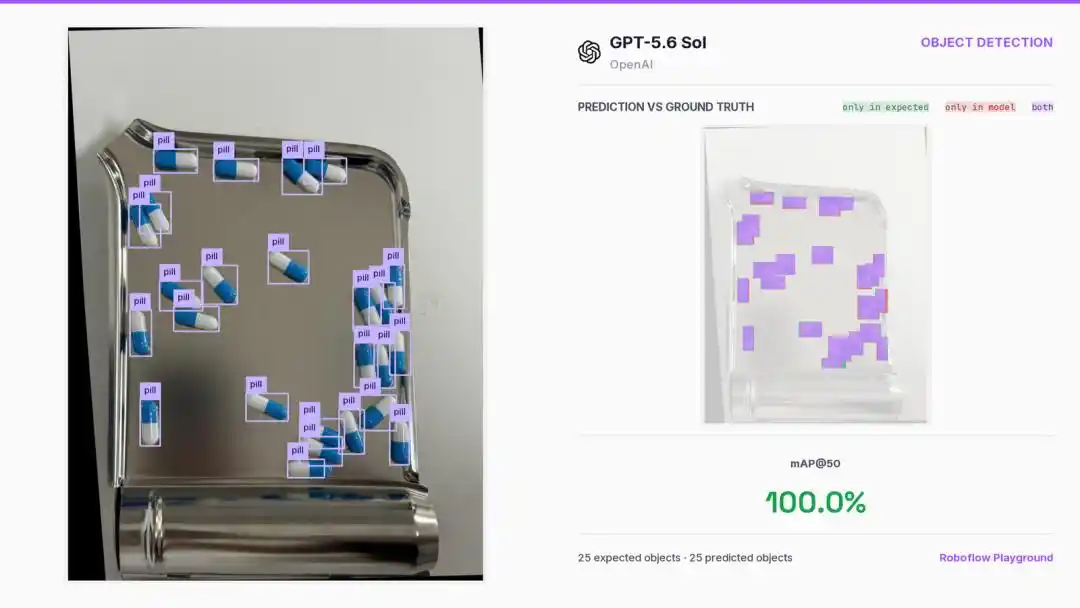
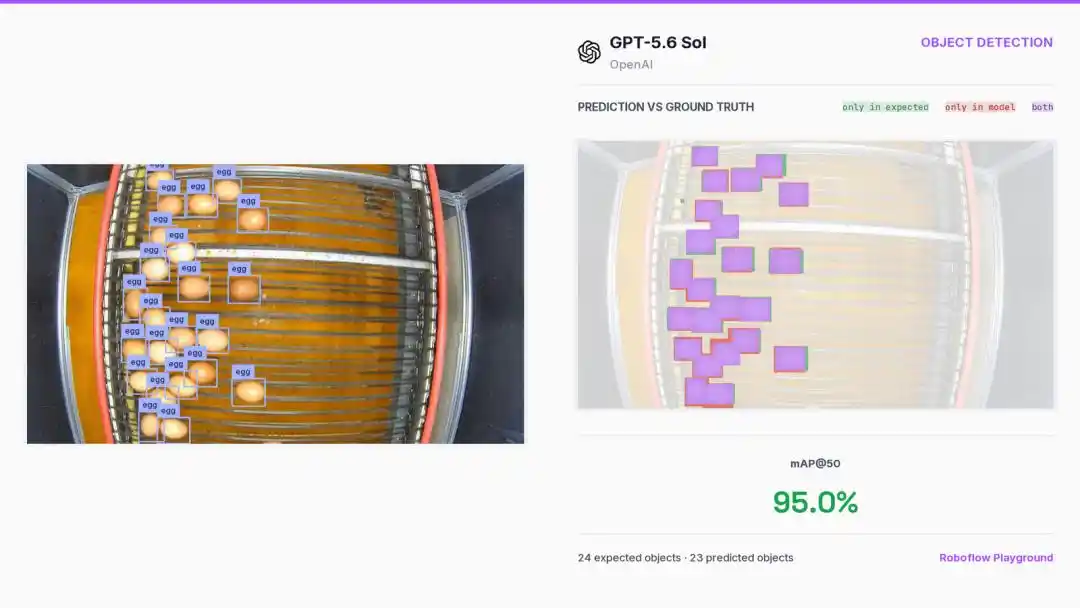
There was an even trickier one: a target sheet, asking it only to count bullet holes falling within a specified ring zone.
Sol did it correctly right away. It not only knew what to count but also understood the boundaries of the rule.
It must be said, the progress in this area is solid.
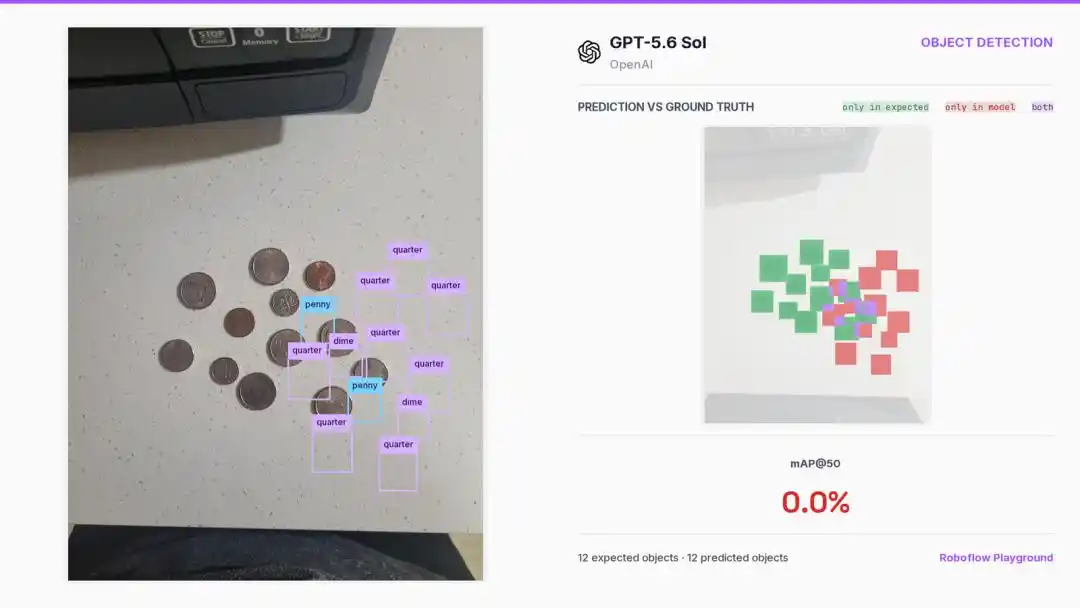
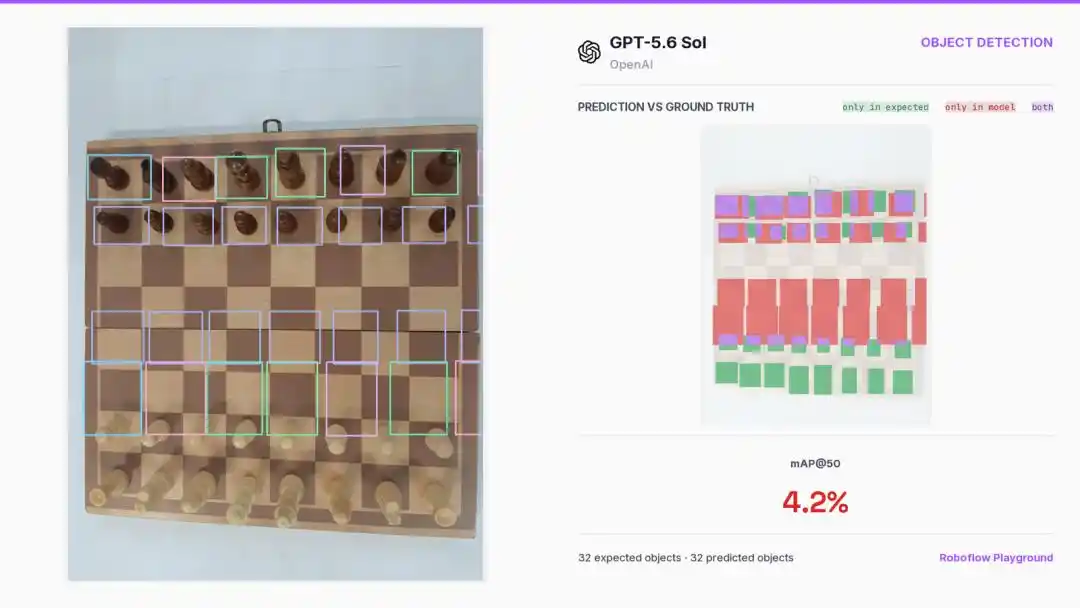
Omni-capable? Not a chance.
The most counter-intuitive part is here: Sol's text recognition ability has regressed.
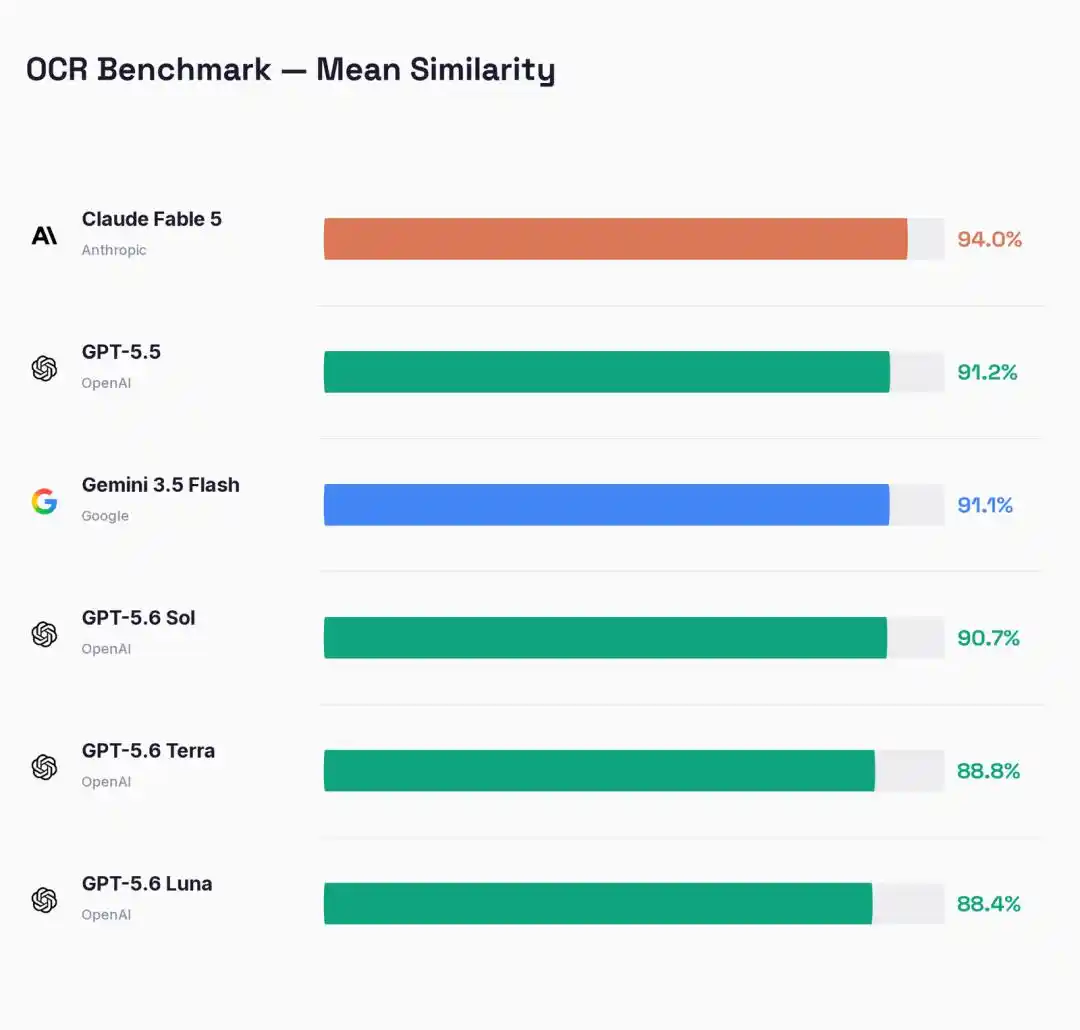
For full-paragraph OCR transcription, Sol scored 90.7%, slightly lower than GPT-5.5's 91.2%, not a big difference.
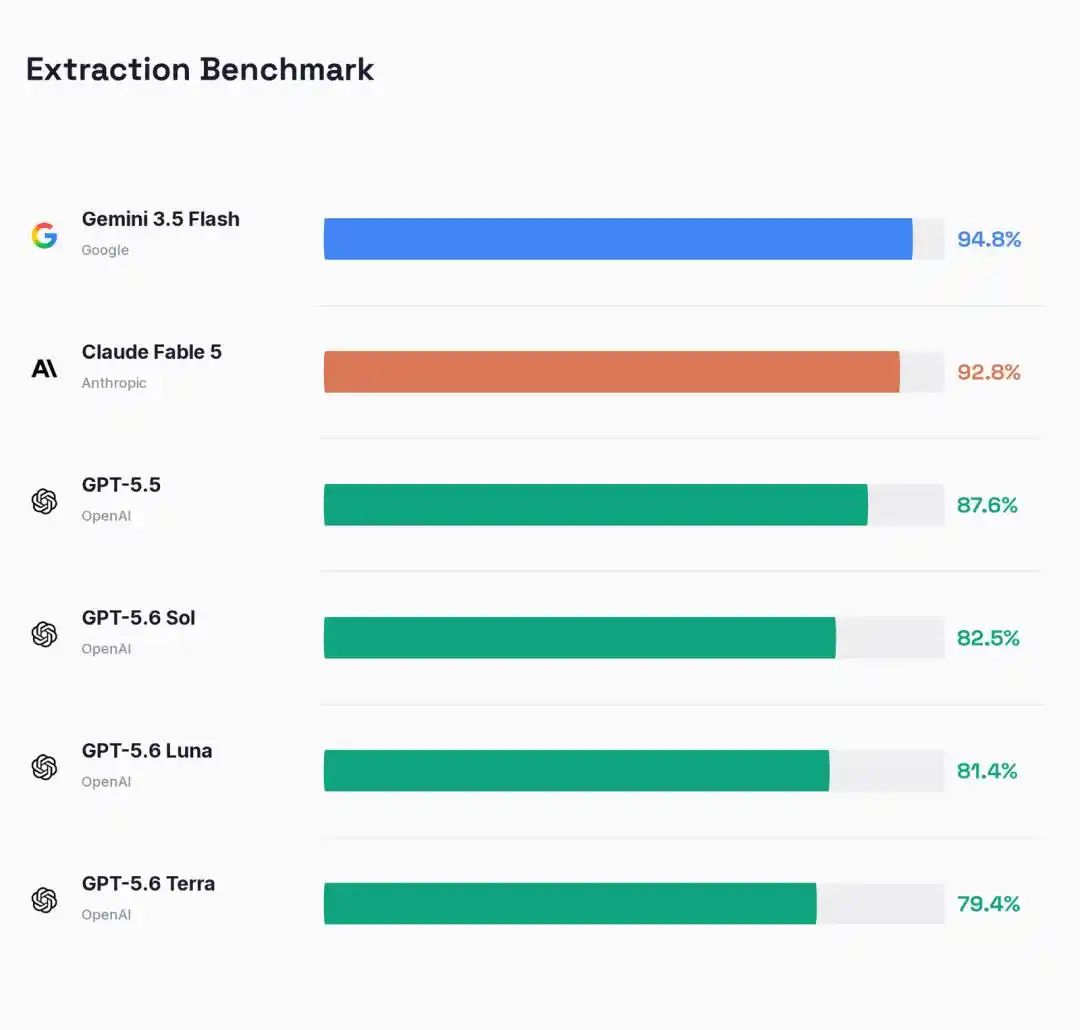
But in the "targeted extraction" task, where it doesn't need the full text, just that one piece of information, like pulling out the date on an invoice, Sol only managed 82.5%, while GPT-5.5 got 87.6%, a drop of 5 percentage points.
It's not that it can't read text. It can transcribe entire paragraphs of handwritten notes and accurately pick out dates. It can read the size numbers printed on the curved surface of a dirty tire.
Also, it can output the live score from a hockey game broadcast in the format you specify.
The failure was with the expiration date line on a medicine blister pack: the text was small, vertical, low-contrast, and had glare.
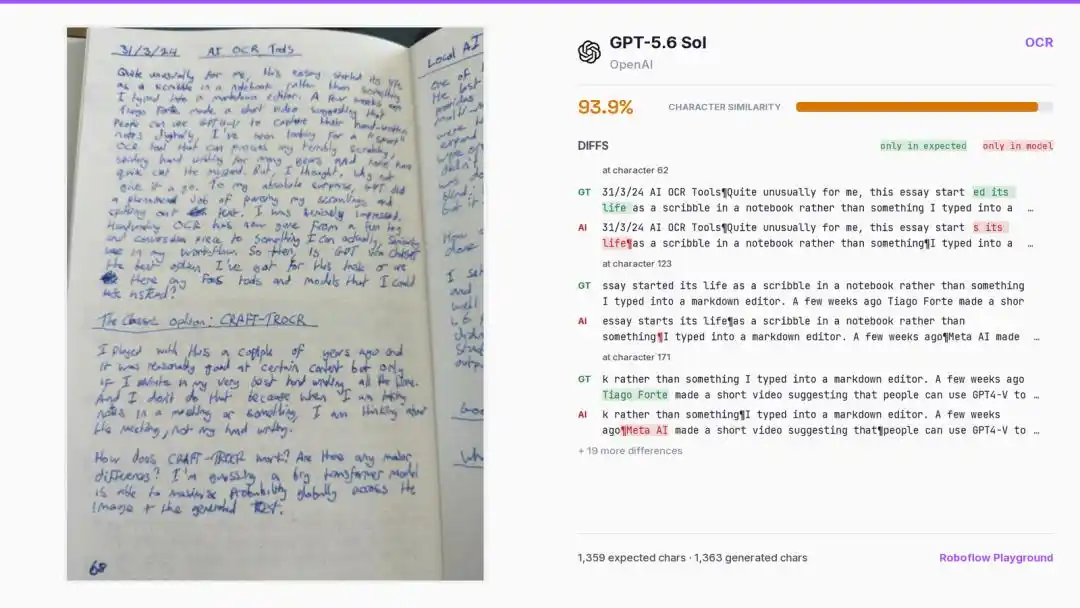
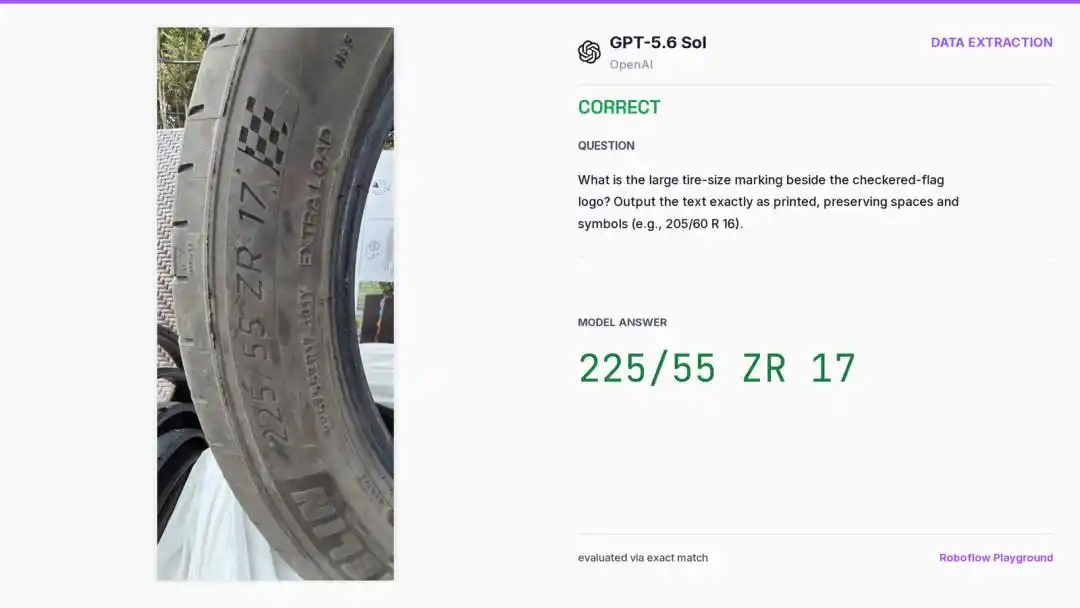
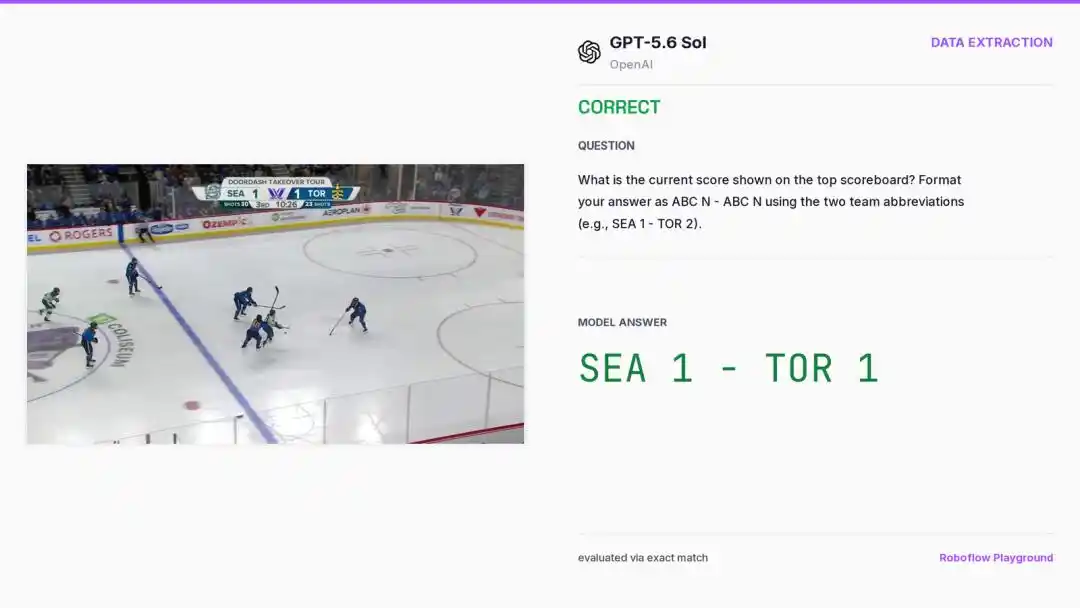
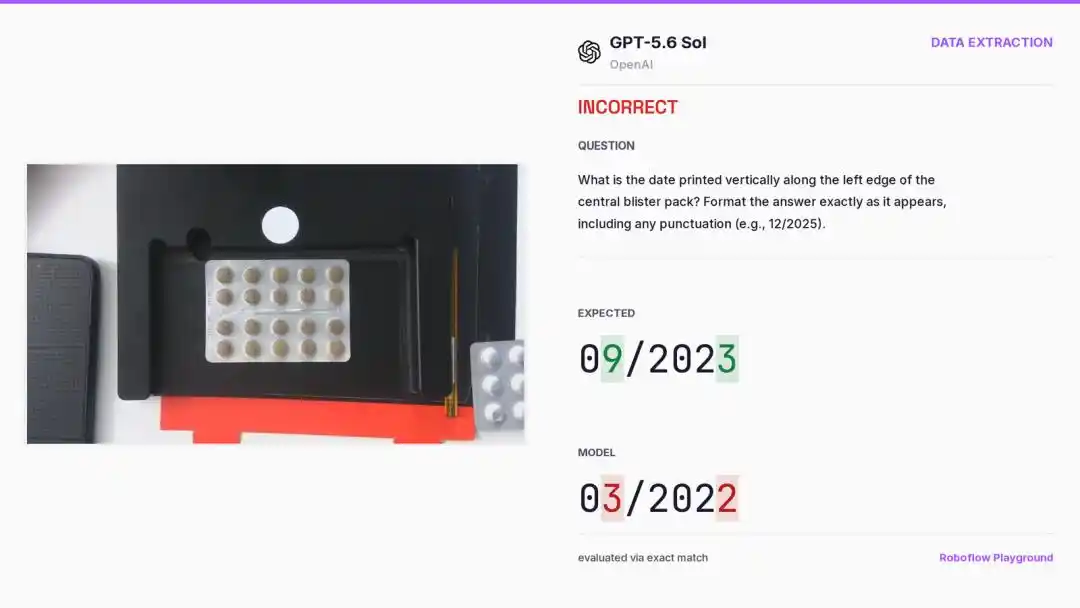
A model that can understand a live game broadcast, yet can't read when the medicine in your hand expires.
OpenAI admits it, the box drifts when images get too large
On some images, the detection boxes returned by Sol drift to completely unrelated places in the picture.
They have almost zero overlap with the real objects, and these boxes are often arranged with abnormal neatness: in a straight line, or a uniformly distributed set.
Roboflow sent these examples to OpenAI. Their reply was straightforward: Sol becomes unstable when the image size reaches around 2000x2000 pixels or larger, and the lower the inference tier, the more unstable.
There are two solutions. One is to increase the inference tier; it becomes stable, but token usage, latency, and the bill all increase accordingly.
The second is the most basic and effective one: shrink the image or crop it a bit before sending it to the API.
Now, looking at the whole bill, the cost and speed from Roboflow's practical tests:
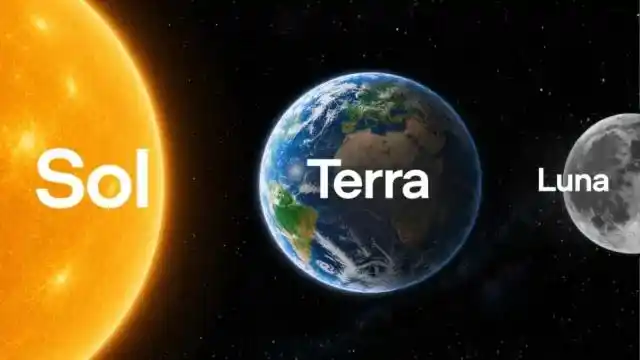
Sol: ~2.5 cents/image, ~10 seconds; Terra: ~1 cent/image, ~6 seconds; Luna: less than 0.5 cents/image, ~5 seconds.
Meanwhile, Gemini 3.5 Flash is 0.8 cents per image, two-thirds cheaper than Sol, and it still leads in detection and counting on this benchmark.
For high-frequency, large-volume detection and counting tasks, Gemini Flash remains the "value-for-money king".
So, what's truly surprising about GPT-5.6 Sol this time is that its visual capability is moving from "understanding an image" to "actually doing visual work".
Finding targets, drawing boxes, counting, understanding spatial relationships, disassembling document layouts.
These tasks, which used to be more like the territory of specialized vision models, are now being nibbled away at by large models.
The second half of the visual large model competition has shifted from "can it understand" to "how accurately can it work".
GPT-5.6 has shown its muscle, but the war for cost-effectiveness has just begun.
This article is from the WeChat public account "New Zhiyuan", author: ASI Revelation