Financial Times: Why the world should be worried about stablecoins

marsbitPublished on 2025-12-12Last updated on 2025-12-12

Abstract

The article from the Financial Times argues that the global push for dollar-denominated stablecoins, particularly from the US, is a cause for serious concern. While stablecoins are promoted as a solution to high US payment costs and inefficient cross-border transfers, their adoption primarily benefits issuers, criminals, and the US Treasury by helping finance its deficits. However, stablecoins lack the stability, transparency, and regulatory oversight of traditional money. They fail key tests of singleness (uniform value), resilience, and integrity (resisting illicit activity), as highlighted by institutions like the BIS. The author suggests that instead of embracing these risky private currencies, other countries—especially in Europe—should develop their own well-regulated digital payment systems. The piece concludes that the current US approach to stablecoins is predatory and could have disastrous consequences, warranting global resistance.

Article translation: Block unicorn

A few months ago, my son's father-in-law, who lives in New York State, sent a large sum of money to his family in the UK. However, the money did not arrive on time. To make matters worse, there was no way to track where the money had gone. His bank contacted the intermediary bank involved, but was told that the recipient bank in the UK—one of the largest banks in the country—refused to respond to any inquiries. I asked my colleagues what might have happened, and they said it could be related to money laundering. Meanwhile, my father-in-law was extremely anxious. Two months later, the money suddenly appeared in his account. He had no idea what had occurred during that period.

This situation is completely different from my past experiences with transferring money between the UK and the EU. On the other side of the Atlantic, transfers have always been reliable and fast. This may be one reason why Americans are open to accepting "stablecoins" as an alternative to the banking system. Daniel Davies pointed out two other reasons: first, the relatively high cost of credit card payments in the US (about five times higher than in Europe!), and second, the exorbitant fees for cross-border transfers. Both reflect the US's failure to effectively regulate powerful oligopolies.
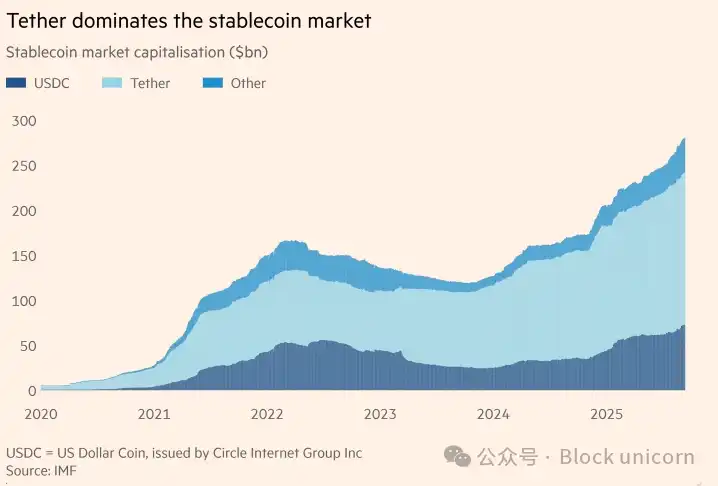
Gillian Tett of the Financial Times proposed another motive for the Trump administration's welcoming attitude toward stablecoins in an article last month. US Treasury Secretary Scott Bessent faces a dilemma: the US needs the world to hold massive amounts of US Treasury bonds at low interest rates. She noted that one solution is to promote the widespread use of dollar-denominated stablecoins, focusing not domestically but globally. As Tett pointed out, this benefits the US government.

However, these are not justifications for welcoming dollar stablecoins. As Hélène Rey of the London Business School stated, "For the rest of the world, including Europe, the widespread adoption of dollar stablecoins for payments is equivalent to the privatization of seigniorage by global players." This would be yet another predatory move by a superpower. A more reasonable alternative would be for the US to transition to lower-cost payment systems and reduce profligate government spending. But neither of these is likely to happen.
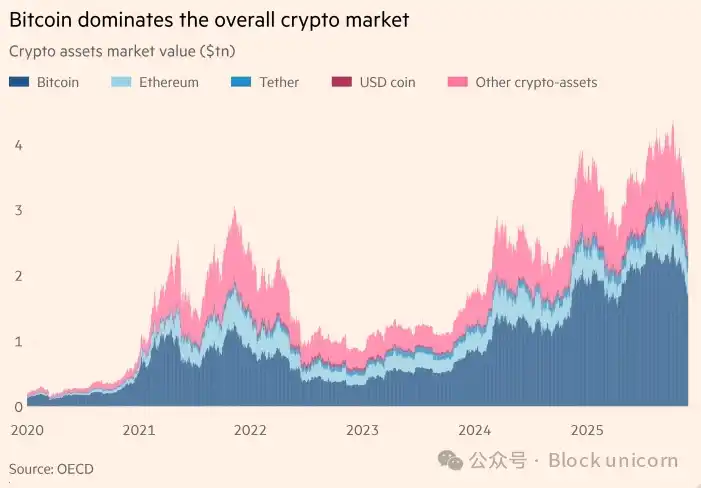
In summary, stablecoins—touted as digital alternatives to fiat currencies, especially the US dollar—seem to have a bright future. As Tett noted, "Institutions like Standard Chartered predict that the stablecoin industry will grow from $280 billion to $2 trillion by 2028."

The future of stablecoins may indeed be bright. But should anyone other than issuers, various criminals, and the US Treasury welcome them? The answer is no.

It is true that stablecoins are much more stable than currencies like Bitcoin. However, compared to cash dollars or bank deposits, their so-called "stability" may well be a "scam."

The International Monetary Fund (IMF), the Organisation for Economic Co-operation and Development (OECD), and the Bank for International Settlements (BIS) have all expressed serious concerns. Interestingly, the BIS welcomes the concept of "tokenization": they believe that "by integrating tokenized central bank reserves, commercial bank funds, and financial assets onto the same platform, a unified ledger can fully leverage the advantages of tokenization."

However, the BIS is also concerned that stablecoins may fail the "three key tests: singleness, resilience, and integrity." What does this mean? Singleness means that all forms of a particular currency must be interchangeable at equal value at all times. This is the foundation of trust in money. Resilience refers to the ability to facilitate payments of all sizes smoothly. Integrity means the ability to curb financial crimes and other illegal activities. Central banks and other regulators play a central role in all of this.

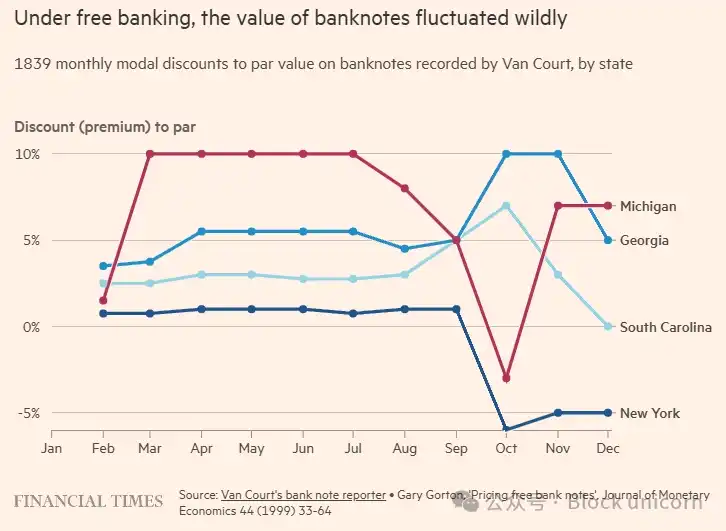
Current stablecoins fall far short of these requirements: they are opaque, easily exploited by criminals, and their value is uncertain. Last month, S&P Global Ratings downgraded Tether's USDT (the most important dollar stablecoin) to "weak." This is not trustworthy money. Private money often performs poorly in crises, and stablecoins are likely to be no exception.

Assuming the US intends to promote lightly regulated stablecoins, partly to consolidate the dollar's dominance and finance its huge fiscal deficits, what should other countries do? The answer is to do their utmost to protect themselves. This is especially true for European countries. After all, the US's new national security strategy has made its open hostility toward democratic Europe clear.
Therefore, European countries need to consider how to introduce stablecoins in their own currencies that are more transparent, better regulated, and safer than those the US may currently推出. The Bank of England's approach seems wise: just last month, it proposed "a proposed regulatory regime for systemic sterling stablecoins," noting that "the use of regulated stablecoins could lead to faster, cheaper retail and wholesale payments, and enhance their functionality, both domestically and cross-border." This seems like the best starting point for now.

The Americans currently in power seem very keen on the big tech mantra of "move fast and break things." When it comes to money, this could have disastrous consequences. Admittedly, there are reasons to use new technology to create faster, more reliable, and safer monetary and payment systems. The US certainly needs such systems. However, a system that makes false promises of stability, encourages irresponsible fiscal policies, and opens the door to crime and corruption is not what the world needs. We should resist it.


Trending Cryptos

Related Questions

QWhy should the world be concerned about stablecoins according to the article?

AThe article argues that stablecoins pose significant risks because they are opaque, vulnerable to criminal exploitation, and their value is uncertain. They fail key tests of monetary trust: uniformity (interchangeability at par value), resilience (smooth payments at any scale), and integrity (curbing financial crime). Furthermore, poorly regulated stablecoins could be used as a predatory tool by the US to finance its fiscal deficits and consolidate dollar dominance, which would be detrimental to other countries, especially Europe.

QWhat are the three key tests that stablecoins fail, as mentioned by the Bank for International Settlements (BIS)?

AAccording to the BIS, stablecoins fail the three key tests of: 1. Uniformity: The requirement that all forms of a given currency must be interchangeable at par value at all times, which is fundamental to trust in money. 2. Resilience: The ability to make payments smoothly at any scale. 3. Integrity: The ability to curb financial crime and other illicit activities.

QWhat reasons does the article give for why Americans might be more receptive to stablecoins as an alternative to the banking system?

AThe article suggests Americans might be more receptive to stablecoins due to three main reasons: 1. The unreliability and slowness of certain cross-border bank transfers (like the cited example of a transfer from New York to the UK). 2. The high cost of credit card payments in the US, which is about five times higher than in Europe. 3. Extremely high cross-border remittance fees. These issues are presented as failures of US regulation against powerful oligopolies.

QWhat is the potential US government motive for welcoming stablecoins, as suggested by Gillian Tett?

AGillian Tett suggested that a motive for the US government to welcome dollar-denominated stablecoins is to address the need for the world to hold vast amounts of US Treasury debt at low interest rates. Promoting the widespread global use of dollar stablecoins, rather than just domestic use, could be a solution that benefits the US Treasury by helping to finance its deficits.

QWhat approach does the article suggest is a wiser alternative for countries like those in Europe regarding stablecoins?

AThe article suggests that a wiser alternative for countries like those in Europe is to protect themselves by developing their own well-regulated, transparent, and safer stablecoins denominated in their own currencies. It points to the Bank of England's approach as a sensible starting point, which proposed a 'regulatory regime for systemic sterling stablecoins' aimed at delivering faster, cheaper, and more functional domestic and cross-border payments through the use of regulated stablecoins.

Related Reads

The Biggest Political Economy Question in the AI Era: As Robots Become More Capable, How Do Humans Share the Value?

In the AI era, the most pressing political economy question is: as machines become increasingly capable, how can humanity share in the value they create? An article originally critiquing China's tech focus has sparked a deeper debate on this global challenge. Historically, industrial progress improved efficiency but still relied on human labor for wealth creation and distribution. AI is fundamentally different—it is now replacing cognitive and knowledge work. As AI and robots take over more tasks, economic growth may continue while direct human participation in value creation shrinks, creating a core tension between productivity gains and widespread income generation. The issue is not unique to China. While leading tech companies amass enormous wealth, labor's share of income is declining globally. The core problem is a broken link: technological innovation and corporate profits are not translating into sufficient consumer income and demand. Three potential paths forward are outlined: a traditional capitalist model where profits primarily go to capital owners; a state-capitalist approach with public investment in AI; and more innovative models like digital sovereign wealth funds, universal shareholding, or AI-era basic income schemes to directly distribute AI-generated value. The future competitive advantage may lie not just in technological supremacy, but in which society can build a new, inclusive distribution system for the intelligent economy. The ultimate challenge is ensuring that as AI creates value, humans have a means to obtain income and share in the resulting widespread social benefits.

marsbit4m ago

The Biggest Political Economy Question in the AI Era: As Robots Become More Capable, How Do Humans Share the Value?

marsbit4m ago

Generating Profits for Seven Consecutive Quarters, Emerging Markets Carry Trade Outperforms Everything

For the seventh consecutive quarter, dollar-funded emerging market carry trades have delivered positive returns, marking the longest winning streak since 2008. According to Bloomberg's index, this strategy has gained approximately 22% since late 2024, outperforming U.S. Treasuries, emerging market sovereign, and corporate dollar debt. The core of the trade involves borrowing low-interest currencies like the U.S. dollar, euro, or yen to invest in high-yielding emerging market assets, such as Turkish lira bonds offering over 40% returns. Returns were amplified by favorable currency moves, with the dollar weakening against most emerging market currencies and other traditional funding currencies. For instance, the trade gained 48% on the Colombian peso in the past year. A key test came in August 2024 with a historic joint U.S.-Japan currency intervention, which caused only a modest 1% dip in the carry trade risk premium as investors shifted funding from the yen to the euro and Swiss franc. Looking ahead, the primary risk is the timing of Federal Reserve policy changes. While persistent inflation allows the Fed to hold rates, a rapid rise in long-term U.S. yields could threaten the trade. Another concern is crowding, as massive inflows increase vulnerability to a sudden reversal. High interest rates in regions like Latin America and Eastern Europe, supported by external factors like Middle East tensions and energy prices, continue to sustain the opportunity. Major investors remain engaged, favoring currencies like the Mexican peso, South African rand, and Turkish lira.

marsbit19m ago

Generating Profits for Seven Consecutive Quarters, Emerging Markets Carry Trade Outperforms Everything

marsbit19m ago

Unpacking the Truth Behind On-chain Assets: Leverage, Liquidity, and Risk

The article analyzes the concept of "real-world asset" (RWA) tokenization, arguing that while tokenizing assets on-chain is a useful step, it is far from transformative on its own. The author compares it to placing a barcode on a shipping container—it enables identification but does not build the necessary market infrastructure. The core argument is that true value emerges not from tokenization, but from integrating these tokens into DeFi systems where they can be valued, financed, hedged, traded, and liquidated under stress. Key challenges identified include: 1. **Multiple Time Clocks**: A fundamental tension exists between blockchain's 24/7 settlement and the slower, business-hour-dependent processes of traditional markets, custody, and redemption. This "duration mismatch" can create dangerous liquidity gaps during crises. 2. **Liquidity Misconceptions**: True liquidity is not measured by Total Value Locked (TVL) or trading pairs, but by the ability to exit a position within a required timeframe at an acceptable price. It requires analyzing multiple exit paths and stress-testing scenarios. 3. **Leverage and Risk**: Leverage unlocks economic utility (e.g., using tokenized assets as collateral) but also introduces fragility. Risk models must account for more than asset volatility, incorporating factors like legal enforceability, oracle freshness, and market structure. Paradoxically, a "safer" asset like tokenized Treasury bonds could require a higher collateral discount than ETH due to slower, less-proven liquidation mechanisms. 4. **A Risk Graph**: RWA risk should be modeled as a network of interconnected dependencies (e.g., issuers, custodians, oracles, stablecoin pools), not a single score. Failures can propagate through this graph, turning operational issues into systemic liquidity crises. The article states that tokenized government bonds are merely an entry point, while more complex frontiers like computing power and energy assets present greater challenges and opportunities. It also examines the interplay and risks between tokenized stocks and perpetual futures contracts. The conclusion is that the future lies not in "tokenizing everything," but in building robust market layers where tokenized rights become resilient financial primitives within a programmable capital system. The token is just the barcode; the market is the machine.

marsbit44m ago

Unpacking the Truth Behind On-chain Assets: Leverage, Liquidity, and Risk

marsbit44m ago

Trading

Spot

Hot Articles

Discussions

Welcome to the HTX Community. Here, you can stay informed about the latest platform developments and gain access to professional market insights. Users' opinions on the price of S (S) are presented below.

活动图片