ETH Staking Data Reversal: Exits Drop to Zero VS Entries Surge by 1.3 Million—When to Buy the Dip?

Odaily星球日报Published on 2026-01-07Last updated on 2026-01-07

Abstract

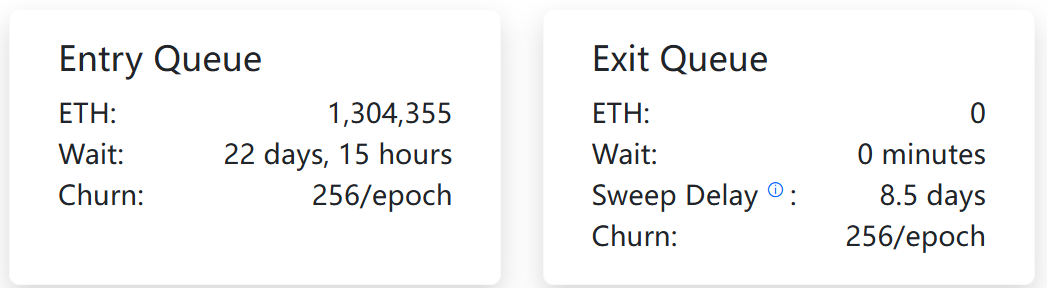
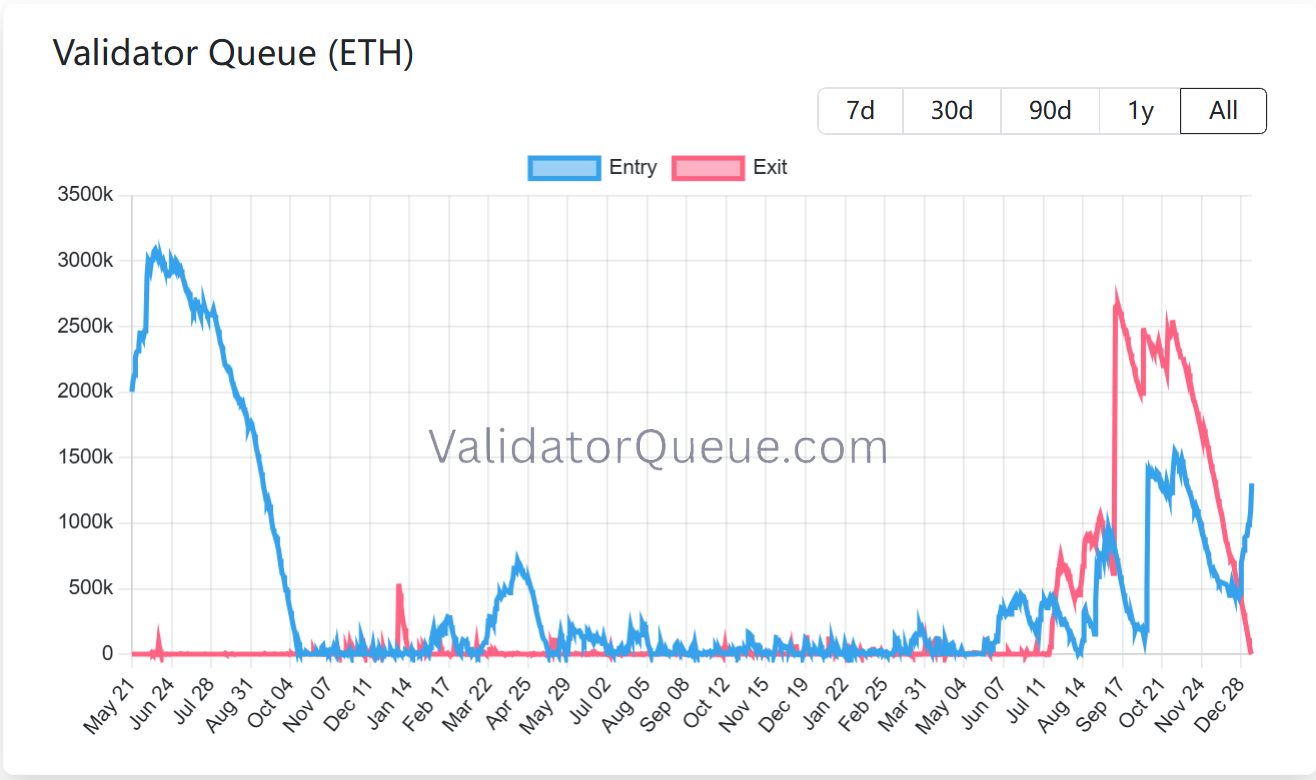
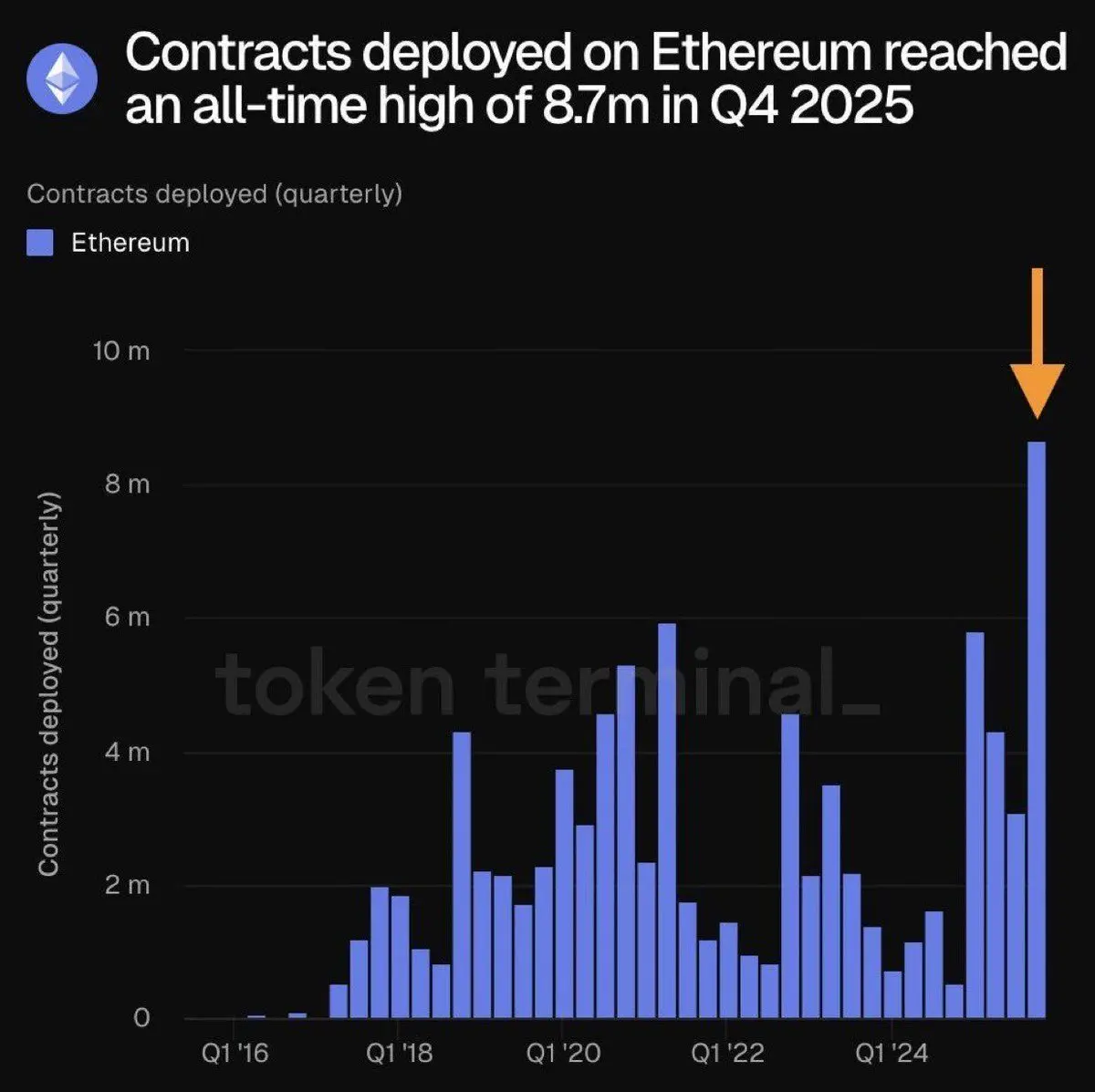
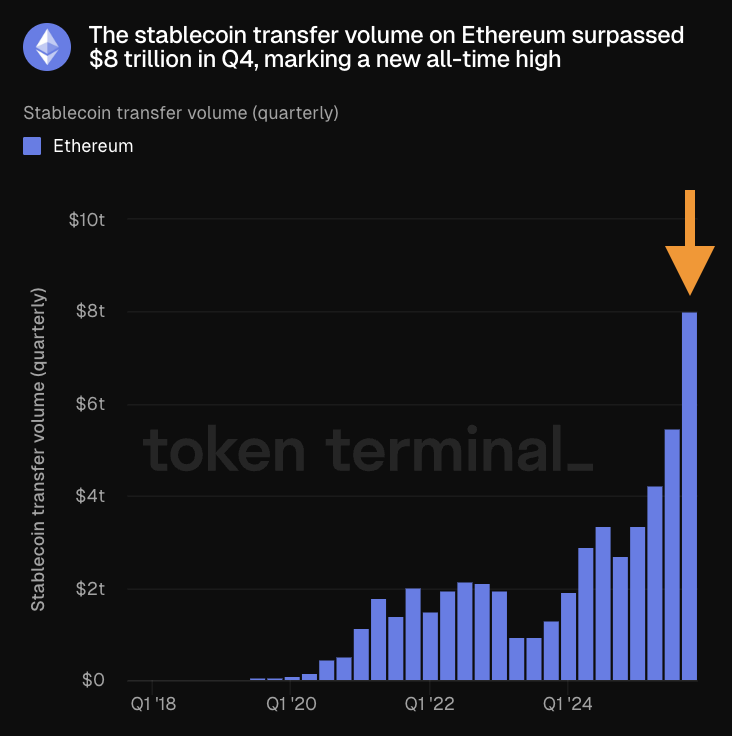
Ethereum's staking dynamics have recently undergone a notable shift. As of January 7, the exit queue for ETH staking has been fully cleared, indicating that the prolonged period of withdrawal pressure has been absorbed. Concurrently, the entry queue has surged significantly, with approximately 1.3044 million ETH now waiting to be staked—a stark contrast to the situation in mid-September when over 2.66 million ETH were queued to exit amid higher prices. This reversal, while reflecting improved market structure, is largely driven by institutional reallocation rather than broad retail momentum. Notably, BitMine, a major digital asset treasury, staked around 771,000 ETH in recent weeks, accounting for a substantial portion of the new entries. This suggests the trend is influenced more by long-term yield strategies than immediate bullish sentiment. Beyond staking, Ethereum's fundamentals show signs of broader improvement: Q4 2024 saw a record 8.7 million smart contracts deployed, stablecoin transfer volume exceeded $8 trillion, and gas fees hit all-time lows. Exchange reserves of ETH remain near multi-year lows, reducing immediate sell-side pressure. Additionally, the significant disparity between Ethereum’s TVL dominance (59%) and its market cap share (~14%) may indicate undervaluation relative to its economic activity. In summary, while the staking shift alone may not signal a price turnaround, it aligns with other strengthening on-chain metrics, suggesting Ethereum is underg...

Original | Odaily Planet Daily (@OdailyChina)

Author | Ding Dang (@XiaMiPP)

On January 7, the exit queue for Ethereum's Proof-of-Stake (PoS) mechanism officially cleared. At least from on-chain data, the sustained exit pressure over the past months has finally been fully digested, with no new large-scale redemption requests currently observed.

At the same time, the size of the staking entry queue has significantly increased, now reaching approximately 1.3044 million ETH, with a waiting time of about 22 days and 15 hours. This situation is a complete reversal compared to mid-September last year.

At that time, ETH's price was at a阶段性高点 of around $4,700, and market sentiment was high, but the staking side showed a different attitude: 2.66 million ETH chose to exit staking, with exit queue wait times一度 exceeding 40 days. In the following three and a half months, ETH's price fell by about 34%, dropping from $4,700 to $3,100.

Now, after a deep price correction, the exit queue has finally been fully digested.

Staking Queue as a "Sentiment Indicator," But Not a Price Signal?

Typically, changes in the validator queue are seen as an important barometer for gauging market sentiment. The logic behind this is that Ethereum's PoS, to ensure consensus stability, does not allow nodes to enter or exit arbitrarily. Instead, it uses a flow control mechanism to regulate the pace of staking and exit behaviors.

Therefore, when ETH's price is at a high stage, exit demand tends to accumulate. Some stakers may choose to cash out profits, but the potential selling pressure is not released instantly; instead, it is "stretched out" on-chain through the exit queue. When exit demand gradually dries up and is fully digested, it may indicate that a structural selling pressure is coming to an end.

From this perspective, the clearing of the current exit queue, coupled with the simultaneous rise in the entry queue, does constitute a noteworthy change. However, I believe that while this change appears to form a positive resonance on the surface, its impact on market prices—note, "impact"—is not equivalent to the "high exits, low entries" phase in September. This is because ETH entering the staking queue does not equate to "new funds actively buying ETH at the moment." A significant portion of the筹码 entering staking likely completed accumulation at an earlier stage and is only choosing to reallocate at the current time. Therefore, the rise in the staking queue reflects more a change in preference for long-term returns, network security, and the stability of staking rewards, rather than a significant strengthening of immediate price demand. This also means that the current improvement in queue structure is more about expectation repair than an equally strong boost to short-term prices.

Nevertheless, the significant growth in the current staking entry queue is still worth attention. The main driving force behind this comes from BitMine, the largest DAT treasury company for Ethereum. CryptoQuant data shows that BitMine has staked approximately 771,000 ETH in the past two weeks, accounting for 18.6% of its holdings of about 4.14 million ETH.

This means that this shift in staking trends is driven by a single large institution's asset allocation behavior, rather than a synchronized回暖 in overall market risk appetite. Therefore, it cannot be simply interpreted as a "return of全面看多 sentiment." However, in an emerging market like crypto, where liquidity distribution is uneven, the actions of large institutions are often more likely to, and can more easily, provide a certain degree of emotional support and expectation repair in the short term.

Whether this trend can continue or spread to a broader range of participants remains to be seen over time. But from on-chain fundamental data, several core metrics of Ethereum are simultaneously showing signs of marginal improvement.

From "Staking Changes" to "Coordinated Fundamental Improvement"

First, in terms of developers, Ethereum's development activity is hitting all-time highs. Data shows that in Q4 2025, Ethereum deployed approximately 8.7 million smart contracts, setting a new historical record for a single quarter. This change is closer to sustained product and infrastructure development rather than short-term speculative behavior. More contract deployments mean more DApps, RWA, stablecoins, and infrastructure are being launched, continuously strengthening Ethereum's role as a core execution and settlement layer.

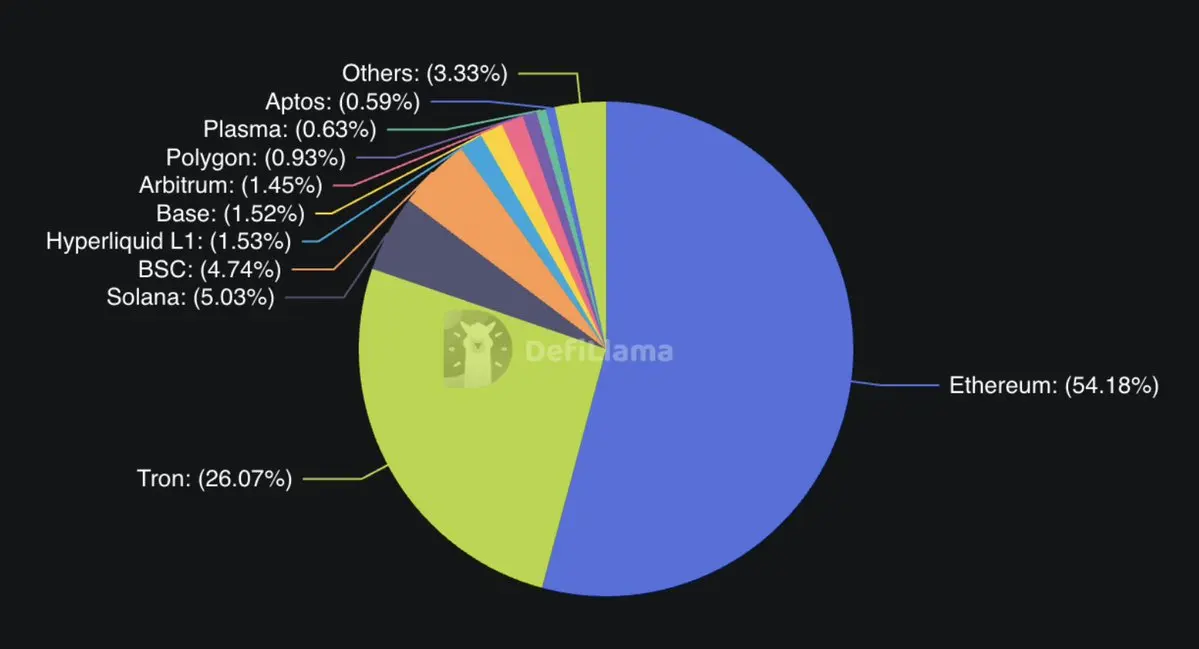
In the stablecoin sector, the on-chain transfer volume of stablecoins on Ethereum in Q4 exceeded $8 trillion, also setting a new historical record. In terms of issuance structure, Ethereum's advantage in the stablecoin ecosystem remains significant. Data shows that the share of stablecoin issuance on Ethereum is as high as 54.18%, far exceeding other mainstream blockchain networks like TRON (26.07%), Solana (5.03%), and BSC (4.74%).

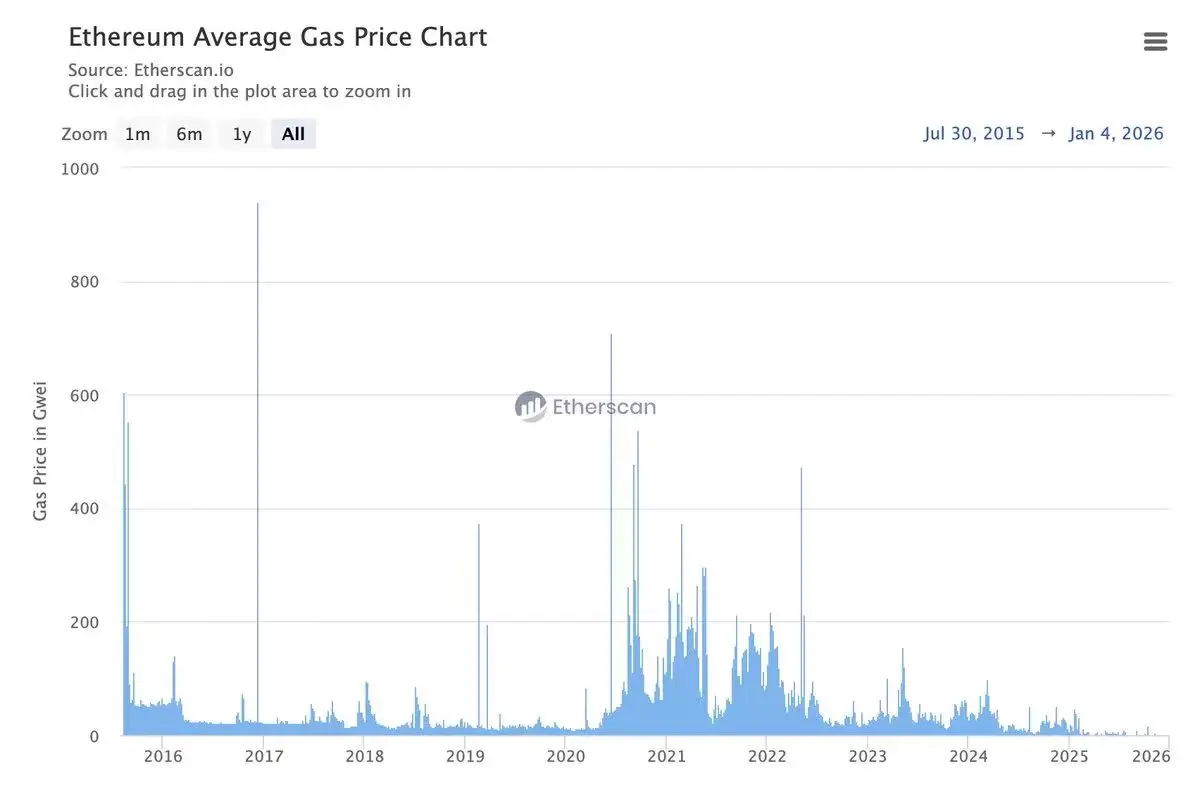
At the same time, Ethereum Gas fees have hit the lowest records since the mainnet launch and are continuously breaking records. In some periods, Gas fees were even below 0.03 Gwei. Considering that Ethereum will continue to推进 block扩容 this year, this trend has room to continue in the medium term. Lower transaction costs directly reduce the barrier to on-chain activity and provide a practical foundation for the continued expansion of the application layer.

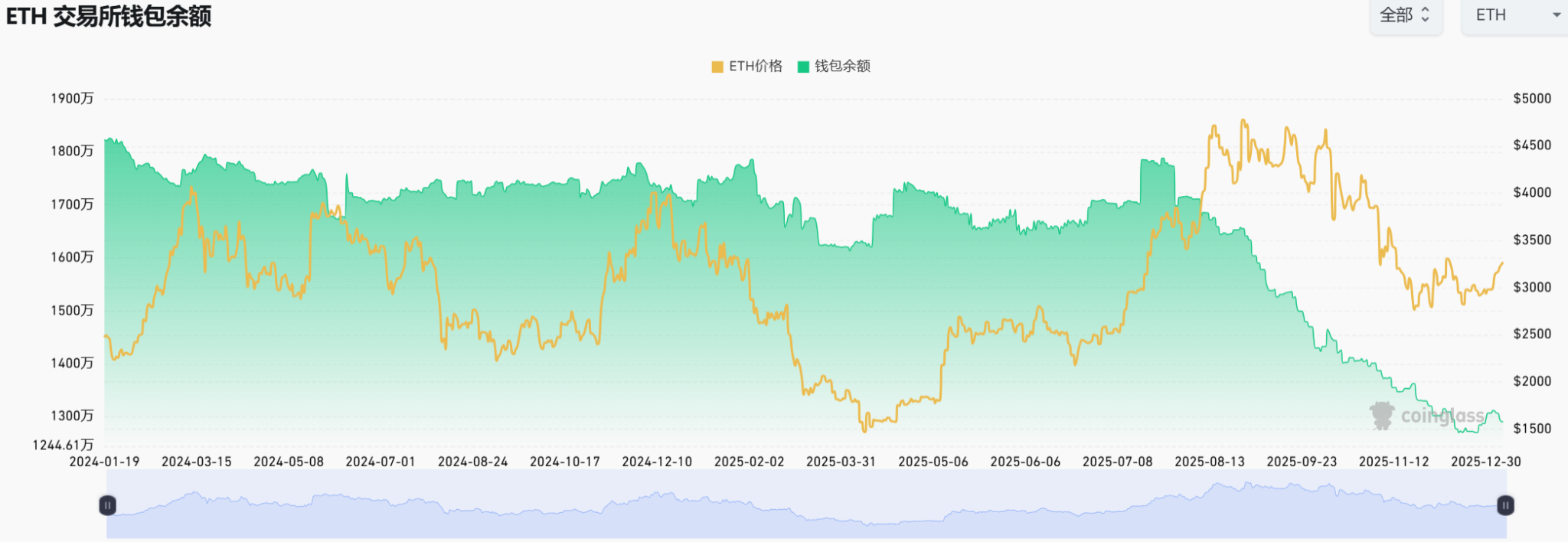
Looking at the exchange balance metric, Ethereum's potential selling pressure is also at a low level. In mid-December, Ethereum's exchange supply dropped to 12.7 million, the lowest level since 2016. Especially since August 2025, this metric has shown a significant decline of over 25%. Although exchange balances have slightly increased recently, the increment is only about 200,000 ETH, and the overall level remains in a historically low range, indicating weak selling意愿 among traders.

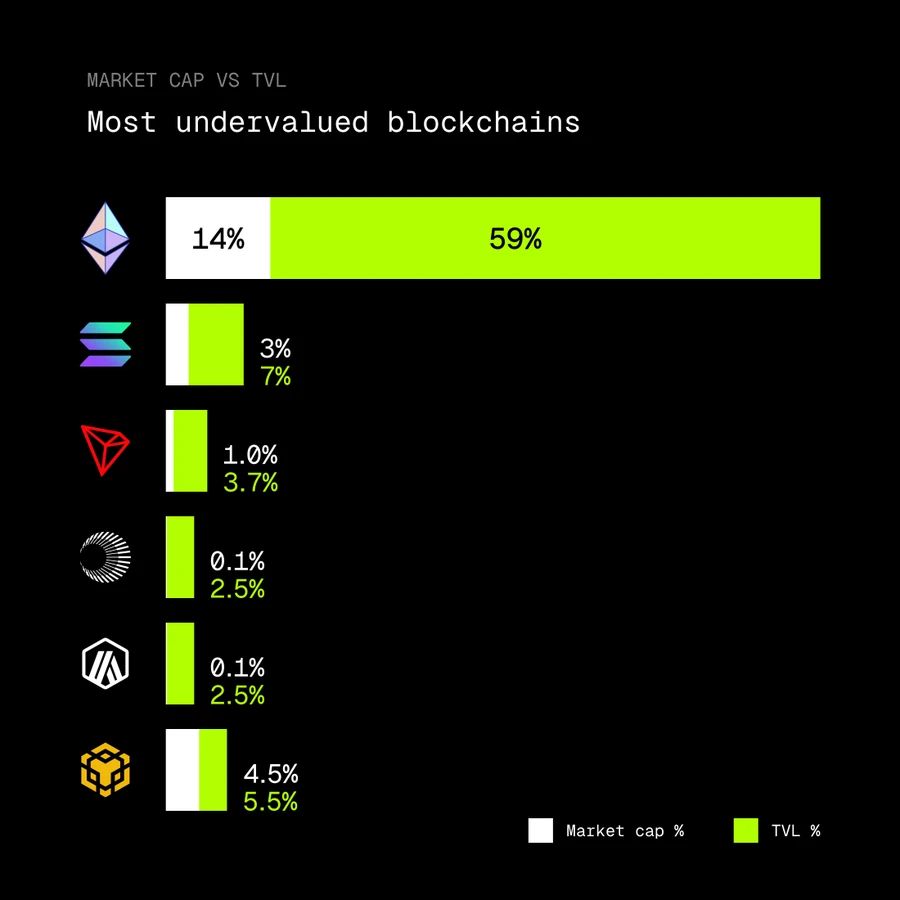
Additionally, crypto KOL rip.eth recently posted on X platform, pointing out that judging from the gap between Total Value Locked (TVL) and market capitalization, Ethereum might be the most undervalued blockchain network currently. Data shows that Ethereum carries 59% of the crypto market's TVL, but its token ETH's market share is only about 14%. In comparison, Solana's token market cap / TVL ratio is 3% / 7%, Tron's is 1% / 3.7%, and BNB Chain's is 4.5% / 5.5%. This, to some extent, reflects that there is still a significant misalignment between ETH's valuation and the scale of economic activity it supports.

Conclusion

Overall, changes in the staking queue may not be the "single variable" determining price trends. But when it improves simultaneously with metrics like developer activity, stablecoin usage volume, transaction costs, and exchange balances, it no longer presents an isolated signal but a more comprehensive fundamental picture.

For Ethereum, this might not be a sentiment-driven rapid reversal, but rather a process where the system is gradually restoring structural stability after undergoing a deep adjustment.

Related Questions

QWhat significant change occurred in Ethereum's staking queues on January 7th, and what does it indicate?

AOn January 7th, the exit queue for Ethereum staking was fully cleared, indicating that the prolonged period of exit pressure has been completely digested. Simultaneously, the entry queue saw a significant increase, with approximately 1.3044 million ETH waiting to enter staking, a reversal from the high exit and low entry trend observed in mid-September.

QHow does the change in staking queues relate to market sentiment, and is it a direct price signal?

AChanges in validator queues are seen as an important indicator of market sentiment. The clearing of the exit queue and the rise in the entry queue suggest a reduction in structural selling pressure and a shift in preference towards long-term yields and network security. However, it is not a direct price signal, as the increase in staking entries often represents earlier accumulated ETH being reallocated rather than new capital immediately buying ETH.

QWhat major institution drove the recent surge in Ethereum staking, and what was the scale of their activity?

AThe recent surge in Ethereum staking was primarily driven by BitMine, the largest DeFi Asset Token (DAT) treasury company. CryptoQuant data shows that BitMine staked approximately 771,000 ETH over the past two weeks, accounting for about 18.6% of its total holdings of 4.14 million ETH.

QWhat are some key Ethereum on-chain metrics showing marginal improvement alongside the staking changes?

AKey on-chain metrics showing improvement include: a record high in smart contract deployments with 8.7 million deployed in Q4 2025, Ethereum stablecoin transfer volume exceeding $8 trillion in Q4, record-low Gas fees (sometimes below 0.03 Gwei), and exchange balances hitting their lowest level since 2016, indicating reduced selling pressure.

QAccording to the article, how does Ethereum's valuation compare to its economic activity, and what does this suggest?

AAccording to analysis by rip.eth, Ethereum carries 59% of the total value locked (TVL) in the crypto market, but its token ETH only accounts for about 14% of the market capitalization. This significant disparity suggests that ETH may be undervalued relative to the scale of economic activity it supports, especially when compared to other chains like Solana, Tron, and BNB Chain.

Related Reads

The Macroeconomic Underpinnings of Africa's Payment Market Landscape

The African payments market, characterized by the world's highest mobile money penetration and fastest-growing cryptocurrency adoption, is not a coincidence but a macroeconomic necessity driven by deep structural factors. Two key drivers create this landscape: (1) Africa's heavy reliance on commodity exports, trade, and remittances, generating massive cross-border settlement and remittance demand; and (2) chronically underdeveloped financial infrastructure, exacerbated by international bank de-risking, foreign exchange mismanagement, and persistent inflation. This vacuum has allowed mobile money and crypto to thrive. Mobile money platforms replace banks for domestic payments, while cryptocurrencies serve as a store of value against local currency depreciation and a low-cost medium for cross-border exchange. A crucial division lies along the Sahara Desert. North Africa is integrated into the oil-anchored MENA framework, while Sub-Saharan Africa (SSA), plagued by dollar shortages and fragmented currencies, has become a natural, massive market for mobile money and crypto. Nigeria, Kenya, and South Africa are global leaders in adoption. The SSA economy is deeply dollarized due to currency instability, yet suffers from a severe "dollar shortage" caused by trade deficits and limited export capacity. This creates parallel forex markets and high remittance costs. Cryptocurrencies, particularly stablecoins, fill this gap by providing access to dollar liquidity, cheaper cross-border transfers, and an inflation-resistant store of value, primarily driven by retail users for small-value transactions. While regional initiatives like PAPSS aim to reduce dollar dependence, the fundamental constraints of commodity reliance, trade imbalances, and shallow financial markets persist. Therefore, mobile money and cryptocurrencies are not niche trends but essential financial infrastructure filling a structural void, and they are likely to remain central to Africa's economic landscape for the foreseeable future.

链捕手6m ago

The Macroeconomic Underpinnings of Africa's Payment Market Landscape

链捕手6m ago

Is the Sharp Decline Over? Let the Data Speak

**Has the Sharp Decline Ended? Let Data Speak** Bitcoin's recent significant drop has placed short sellers in a precarious position. Three concurrent pressures—sustained outflows from ETFs, miners offloading coins to exchanges, and short-term holders capitulating—pushed the price near $63k. The asset fell 13% this week and 21% this month, roughly halving from its all-time high. A critical data point is the extremely crowded short positioning, with a short-to-long ratio reaching 8:1, representing nearly $100 billion in short interest overhead. This creates conditions for a potential short squeeze if selling pressure merely pauses, similar to the event in November 2022 which triggered a 24% rally. The selling pressures are real: spot Bitcoin ETFs have seen a record $5.4 billion outflow over 20 days. Short-term holders moved 53k loss-held BTC to exchanges in a day, and miners sent 24k BTC to Binance, a six-month high. Capital is also rotating towards AI and tech stocks like SpaceX, with $400 billion invested in AI infrastructure recently. However, on-chain data shows accumulation by long-term holders, who added 200k BTC in a month, and institutions/miners have absorbed 1.24 million BTC since 2023. This indicates strong buying beneath the surface. Key levels to watch are the $67k-$70k zone (2021 high & 2024 breakout point). A swift recovery above it suggests a leverage washout; failure could test $60k-$55k. The direction also hinges on ETF flow reversal. Currently, the S&P 500 hits new highs driven by AI, while Bitcoin and DeFi (TVL down from $173b to $73.9b) lag. The most probable path is a grinding basing process between $60k-$58k with continued ETF outflows. A less likely but explosive scenario involves a sudden flow reversal, a surge above $70k triggering a short squeeze, and a rally back above $76k. The immediate trigger depends on when the relentless selling pauses. A final cautionary note questions Bitcoin's correlation: if the high-flying U.S. stock market corrects, will Bitcoin once again miss the rally but not the decline?

foresightnews_api21m ago

Is the Sharp Decline Over? Let the Data Speak

foresightnews_api21m ago

Single-Day Plunge of 30%, Arthur Hayes Suddenly Liquidates: Why Did ZEC Get Exploded by Security Issues?

On June 5th, Zcash founder Zooko Wilcox disclosed a critical soundness vulnerability in the project's latest Orchard privacy pool. This flaw, found in the elliptic curve multiplication constraints, could allow an attacker to create unlimited counterfeit ZEC within the shielded pool, with transactions appearing valid. The vulnerability was discovered in late May by security researcher Taylor Hornby, who utilized Anthropic's new Opus 4.8 AI model for a targeted audit. The Zcash ecosystem had already performed an emergency network upgrade to patch the issue. However, the detailed disclosure triggered severe market panic, causing ZEC's price to plummet over 30% in a single day. Notably, prominent investor Arthur Hayes announced he had sold his entire ZEC position following the news. The incident starkly challenges the "technological trust" narrative central to privacy coins. Despite years of top-tier cryptographic audits, the bug persisted until uncovered with advanced AI-assisted research. This highlights the growing gap between theoretical perfection and practical implementation in privacy technology. The event serves as a industry-wide warning: in an AI-driven security landscape, the assumption that "undiscovered equals safe" is obsolete. It underscores the urgent need for continuous, proactive security practices combining AI audits, formal verification, and rapid response mechanisms.

foresightnews_api1h ago

Single-Day Plunge of 30%, Arthur Hayes Suddenly Liquidates: Why Did ZEC Get Exploded by Security Issues?

foresightnews_api1h ago

Breaking the Curse of DeFi Cascading Liquidations, Vitalik Proposes a New Solution

**Vitalik Buterin Proposes New DeFi Design to Eliminate Forced Liquidations** Ethereum co-founder Vitalik Buterin has published a proposal for a new decentralized finance (DeFi) architecture aimed at removing the automatic liquidation mechanisms prevalent in current lending protocols. The core idea involves creating synthetic assets using options as building blocks, fundamentally avoiding the抵押借贷结构 that triggers forced sell-offs. The proposal responds to a recurring flaw in DeFi: during sharp market downturns, mass自动清算 of under-collateralized positions can exacerbate price declines, creating systemic selling pressure and market instability, as evidenced by recent crypto market volatility. Buterin's model would split an asset like 1 ETH into two option-like derivatives, P and N, pegged to a price index with a set strike price and expiration. At expiry, an oracle determines the settlement price to allocate the underlying ETH between P and N holders. This design eliminates the "cliff" of instant liquidation. Instead, a position's value would gradually drift from its target peg if not actively rebalanced by the user, transferring the rebalancing decision from the protocol to the user or automated tools. A key advantage is the reduced reliance on high-frequency, real-time oracle price feeds, which are vulnerable to manipulation and errors in current systems. The delayed settlement in the options model allows for more robust, fault-tolerant oracle designs. However, significant challenges remain for practical adoption. High transaction costs (slippage) from frequent rebalancing on automated market makers (AMMs) could erode user funds. The model may not be suitable for stablecoins requiring a strict 1:1 dollar peg, as it inherently allows for value drift. Success would depend on developing new liquidity provisioning models and deep markets for these synthetic assets. The proposal represents a fundamental rethinking of DeFi risk management, challenging the industry to explore alternatives to被动集中平仓 rather than merely optimizing existing liquidation processes. It remains a theoretical framework awaiting implementation and testing by development teams.

foresightnews_api1h ago

Breaking the Curse of DeFi Cascading Liquidations, Vitalik Proposes a New Solution

foresightnews_api1h ago

Trading

Spot
Futures

Hot Articles

Discussions

Welcome to the HTX Community. Here, you can stay informed about the latest platform developments and gain access to professional market insights. Users' opinions on the price of ETH (ETH) are presented below.

活动图片