Cryptopolitan Report: Nearly Half of Our Readers Believe Quantum Technology Could Surpass Bitcoin by 2035

cryptonews.ruPublished on 2026-08-08Last updated on 2026-08-08

Abstract

Nearly half of readers surveyed believe quantum computing could break Bitcoin by 2035. The threat lies specifically in its signature scheme (ECDSA/Schnorr), vulnerable to Shor's algorithm, which could derive private keys from public ones. Estimates suggest this could require 10,000+ qubits, a target now seen as plausible this century. Approximately 6.5-6.9 million BTC (25-33% of supply) are exposed because their public keys are already on-chain. Modern unused addresses remain safe until a transaction is broadcast. Bitcoin's response includes proposals like BIP-360 (Pay-to-Merkle-Root) to hide public keys and a multi-year transition plan. Notably, post-quantum signatures are deferred. A key development occurred when an AI model (Claude Mythos) broke the post-quantum signature scheme HAWK in days—a flaw two years of human review missed—without using a quantum computer. This highlights a new risk: AI cryptanalysis may outpace traditional verification, potentially disrupting upgrade timelines faster than quantum hardware advances.

We asked our newsletter readers whether quantum computing could break Bitcoin by 2035. Last week, on July 28, an AI model, not yet publicly released, discovered a vulnerability in a post-quantum signature scheme that two years of manual review had not uncovered. No quantum computer was used here. This report examines what Bitcoin is, the real threat to $BTC, and why last week's events add a whole new dimension to the quantum computing timeline.

Where Our Readers Stand

If we add those who answered 'yes, it will probably happen' to the 'by 2030' group, it turns out that 47% of readers see the potential for a quantum breach of Bitcoin within the next nine years. To date, the largest elliptic curve key cracked on actual quantum hardware is 15 bits, which happened this past April thanks to a researcher vying for the Q-Day prize as part of Project Eleven. For comparison, Bitcoin keys are 256 bits, and progressing bit by bit over nine years would require incredible engineering innovation. About one-third of this audience currently sees this as a real possibility.

What Is Actually at Risk for $BTC?

Before we delve into the survey results in detail, it's important to clarify that Bitcoin does not encrypt anything. No secret message is encrypted, and every transaction on the network has always been public since its inception. Bitcoin only performs signing and hashing. Two different tasks, two different mathematical operations, two completely different quantum timelines.

The part responsible for signing is vulnerable. When you spend Bitcoin, your wallet generates a signature confirming your ownership of the coins, and this is done using elliptic curve cryptography called secp256k1. Over the years, Bitcoin has used two signing methods: ECDSA from the start and Schnorr since 2021. The security of both is based on one assumption: it is impossible to derive the private key from the public key.

This is where Shor's algorithm comes into play, targeting this assumption. Given a sufficiently large quantum computer, it could work backwards from a public key to the private key that generated it. In March of this year, Google researchers published estimates that this requires less than 1,200 logical qubits and less than 500,000 physical qubits. A later paper from Caltech and Oratomic reduced this number to 10,000 qubits using a neutral-atom-based architecture. No one has built anything like this yet. But these figures were previously in the millions, and it is the direction of travel that is the reason Bitcoin has stopped viewing this as a 2040s problem.

Hashing is in much better shape. Bitcoin uses SHA-256 for mining, address generation, and linking blocks. The best quantum attack against it is Grover's algorithm, which only provides a quadratic speedup. In practice, this reduces the security of a 256-bit code to something like 128-bit, which remains out of reach for any machine anyone has ever designed on paper. Mining is not the weak link here, nor is the blockchain structure.

Therefore, the precise wording of the question is narrower than 'quantum technology breaks Bitcoin.' At risk are coins whose public keys are already publicly available on the blockchain. This happens when funds at an address have been spent before, or when funds are stored in older address formats that reveal the key by default. The current estimate is between 6.5 and 6.9 million $BTC, which is roughly a quarter to a third of the total supply, and this figure includes about 1.7 million coins on early addresses widely believed to have belonged to Satoshi.

Coins stored on modern addresses and never used for a transaction do not reveal their public key at all. In the case of such coins, a quantum attacker would only have the window of a few minutes while a transaction is in the mempool awaiting confirmation to gain access to the key. Nevertheless, this is a problem worth solving. And it is much smaller than the stated figure suggests.

Bitcoin's Response to the Quantum Problem

On February 11, 2026, BIP-360 was included in the official Bitcoin BIPs, becoming the network's first formal quantum resistance proposal to reach that level. It introduces a new output type called Pay-to-Merkle-Root, or P2MR, authored by Hunter Biest, Ethan Heilman, and Isabelle Foksen Duke.

P2MR is essentially Taproot, but without spending via the key path. Taproot commits transactions to both an internal public key and a Merkle root of scripts, meaning the key can always be derived from what is on the blockchain. P2MR commits transactions only to the Merkle root. The public key is not revealed until you actually spend the funds, and even then, only the specific leaf key you used is revealed. This closes the long-term exposure vulnerability.

A companion proposal, BIP-361, was submitted on April 14, outlining a three-phase plan to completely deprecate ECDSA and spend via Schnorr. It is this one that is controversial, as the third phase effectively freezes coins that will never be migrated.

Here is what to watch. By Heilman's own estimate, it will take seven years from consensus formation to full quantum resistance, and he calls this an optimistic forecast. Two and a half years for review and testing. Six months for activation. Then another five years before roughly 90% of wallets, custodians, Lightning nodes, and treasury software are actually updated. Notably, BIP-360 does not include post-quantum signatures at all. They were removed in July 2025 and deferred to a future proposal. The scheme Bitcoin will likely eventually adopt is ML-DSA or SLH-DSA—algorithms NIST has already finalized.

And this brings us to last week's events.

A Post-Quantum Scheme Failed, and No Quantum Computer Was Involved

On July 28, Anthropic's Frontier Red Team published the results of research using their Claude Mythos Preview model, which is not publicly available. Operating in a semi-autonomous agentic environment, it discovered a previously unknown attack on HAWK, one of the nine finalists in NIST's additional post-quantum signature competition and the only lattice-based scheme that advanced to the third round in May.

The attack exploited a symmetry in HAWK's lattice structure that had not been applied before. For the HAWK-256 parameter set, the estimated number of operations to recover a key was reduced from about 2^64 to about 2^38. Simply put, that's the difference between statements like 'no adversary in the world will do this' and 'a well-funded team very well might attempt it.'

Now for the details that make this unsettling. HAWK had already undergone two rounds of human peer review over two years. The model found the vulnerability in about 60 hours, costing around $100,000 in API fees. The researcher leading the project had a theoretical computer science background and was not a lattice cryptography specialist.

Sophie Schmieg, a post-quantum cryptographer at Google, summarized it in five words: 'Essentially, with this paper, HAWK is dead.' The next day, the HAWK team withdrew the scheme from NIST consideration, noting that obvious fixes like doubling parameters or moving to higher-rank modules would render it uncompetitive against alternatives.

Quantum computers were not involved at any stage. The problem was with post-quantum cryptography, broken over a long weekend by a classic AI model.

What the Survey Really Showed

Each option in our survey asked the same core question: when will the hardware arrive? Readers' opinions on this were roughly evenly split, and the 47% forecast within nine years is quite reasonable given how qubit count estimates have shifted this year.

However, the HAWK research results suggest that hardware development timelines may not be the limiting factor. The 33% who voted for the 'not that soon' or 'only after 2050' options were betting on quantum engineering, and they may very well be right. That bet does not protect them from a classic AI attack on the replacement algorithm.

The 20% who answered 'I have no idea' deserve some credit here. In an audience that follows this closely, one in five declining to guess is not apathy. It is rather an accurate assessment of how many unknown factors are stacking up one after another: hardware progress, algorithm selection, consensus timelines, and now AI-driven cryptanalysis that is evolving faster than the verification process created to detect it.

end-content

Trending Cryptos

Related Questions

QAccording to the Cryptopolitan poll, what percentage of readers believe quantum computing could crack Bitcoin by 2035?

AAccording to the poll, 47% of readers believe quantum computing has the potential to crack Bitcoin within the next nine years (by 2035), when combining the 'yes, probably will happen' and 'before 2030' groups.

QWhat specific part of Bitcoin's cryptographic system is vulnerable to a quantum attack, and what algorithm targets it?

AThe part of Bitcoin responsible for signing transactions is vulnerable. The ECDSA and Schnorr signature schemes, which are based on elliptic-curve cryptography (secp256k1), rely on the assumption that deriving a private key from a public key is impossible. Shor's algorithm targets this assumption and could, with a sufficiently powerful quantum computer, reverse-engineer the private key from the public key.

QHow does the Bitcoin improvement proposal BIP-360 (Pay-to-Merkle-Root, or P2MR) aim to improve quantum resistance?

ABIP-360 introduces Pay-to-Merkle-Root (P2MR), a new output type. Unlike Taproot, which commits to both an internal public key and a Merkle root of scripts, P2MR commits transactions only to the Merkle root. The public key is not revealed until funds are actually spent, and even then, only the specific key used is exposed. This closes the vulnerability of long-term key exposure for unused addresses.

QWhat significant event happened on July 28th regarding post-quantum cryptography, according to the article?

AOn July 28th, Anthropic's Frontier Red Team reported that their AI model, Claude Mythos Preview, discovered a previously unknown vulnerability in the HAWK signature scheme—a finalist in NIST's additional post-quantum signature competition. The AI found an attack that drastically reduced the security of HAWK-256, leading the HAWK team to withdraw the scheme. Notably, no quantum computer was involved; the attack was performed by a classic AI model.

QWhat does the article suggest might be a new, complicating factor in the timeline for achieving quantum-resistant cryptography for Bitcoin?

AThe article suggests that AI-driven cryptanalysis has emerged as a new complicating factor. The incident with the HAWK scheme showed that a classic AI model could discover vulnerabilities in a post-quantum algorithm much faster (within ~60 hours) than years of human review. This implies that the limiting factor for securing Bitcoin may no longer be just the timeline for building quantum hardware, but also the pace at which AI can analyze and potentially break proposed replacement algorithms.

Related Reads

Governments Are Quietly Building a Global Firewall for Stablecoins

Governments are quietly constructing a global regulatory framework for stablecoins. Regulators in Washington, London, Brussels, and Hong Kong are finalizing rules that grant them powers to block, freeze, and sometimes redirect cross-border stablecoin transfers. While transactions move quickly on the blockchain, the points where users convert to and from fiat currency create opportunities for oversight. The US Treasury, implementing the GENIUS Act, has proposed strict Anti-Money Laundering (AML) and sanctions rules for issuers, demonstrating enforcement with actions against exchanges. The UK has established a two-tier system, with a special "systemic" designation for major issuents granting authorities direct oversight. The EU's MiCA regulation has already impacted the market, leading exchanges to delist some stablecoins like USDT for European users while approving others like USDC. In Asia, Hong Kong has licensed bank-backed issuers, applying a "same activity, same risk, same regulation" principle. South Korea is developing its own framework. A key insight is that regulation focuses on the "on-ramps and off-ramps"—the exchanges and service providers converting between crypto and traditional finance. As stablecoins evolve from crypto trading tools to payment infrastructure, regulators are shifting oversight closer to the transaction points they can control. Collectively, these jurisdictions are building a coordinated, albeit not uniform, global firewall around stablecoin payments.

cryptonews.ru1m ago

Governments Are Quietly Building a Global Firewall for Stablecoins

cryptonews.ru1m ago

Number of Bitcoin Wallets Reaches Highest Since 2026 Amid Growing Fallout from Coldcard Hack

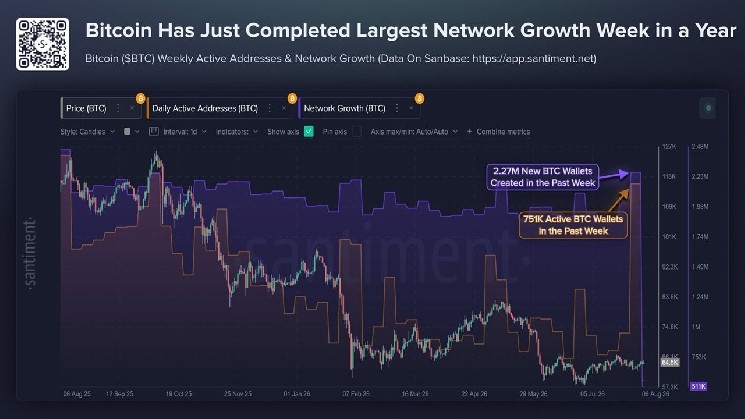
The number of Bitcoin wallets has reached its highest level since 2026, driven by growing concerns over the Coldcard hardware wallet exploit. Data from Santiment shows a surge in network activity, with 751,000 active wallets and 2.27 million new wallets created recently. Daily active addresses peaked at approximately 978,000 on July 31st. Notably, this increase was not accompanied by a corresponding rise in exchange inflows, which remained slightly below July's average. This divergence suggests a defensive market posture, likely due to users migrating funds from potentially compromised wallets. The vulnerability stemmed from a firmware flaw in certain Coldcard models (Mk3, Mk4, Mk5, and Q), where seed phrase generation relied on a software-based random number generator instead of the dedicated hardware entropy chip. This drastically reduced cryptographic security, leaving some devices with as little as 40 bits of real randomness. Reported losses have exceeded $116 million, with thefts continuing in waves. The data indicates that security-conscious owners of affected devices are likely creating new wallets on secure hardware and transferring their coins, explaining the spike in new and active addresses without increased trading activity. Coinkite has since released a firmware patch and a report detailing the issue. Experts emphasize this is not a Bitcoin protocol flaw but a supply-chain issue specific to one manufacturer's implementation. The incident highlights how a narrow, fixable firmware bug can significantly impact key blockchain metrics and market sentiment, amplified by coinciding discussions about unrelated Bitcoin fork proposals.

cryptonews.ru1m ago

Number of Bitcoin Wallets Reaches Highest Since 2026 Amid Growing Fallout from Coldcard Hack

cryptonews.ru1m ago

How Does Circle Incentivize USDC Distribution Channels? From the Hyperliquid Collaboration and On-Chain 9:1 Attribution

How Circle Incentivizes USDC Distribution Channels: Insights from Hyperliquid Partnership and 9:1 On-Chain Allocation Circle employs economic incentives to drive USDC growth, product development, and distribution. The company has signed distribution partnership agreements with over 150 firms, offering tailored incentives for key channels that substantially expand USDC usage. For major partnerships, Circle can co-design arrangements with Coinbase. Their revenue-sharing model for off-platform USDC allocates 50% of the net "Ecosystem Economic Interest" to each after approved third-party incentives. The Hyperliquid partnership illustrates this framework, involving Coinbase, Circle, and Hyperliquid. At quarter-end, approximately 90% of Hyperliquid's USDC reserves were allocated to Coinbase's platform and 10% to Circle's platform, observable on-chain via specific addresses maintaining this ~9:1 balance. However, this allocation ratio represents fund attribution for accounting purposes and does not disclose the precise final revenue split among the three parties, which remains confidential. In summary, Circle's channel incentive program is a long-standing strategy to expand USDC's distribution scale collaboratively with partners, with significant cases like Hyperliquid demonstrating the operational model despite undisclosed exact profit-sharing terms.

marsbit11m ago

How Does Circle Incentivize USDC Distribution Channels? From the Hyperliquid Collaboration and On-Chain 9:1 Attribution

marsbit11m ago

Trading

Spot

Hot Articles

What is $BITCOIN

DIGITAL GOLD ($BITCOIN): A Comprehensive Analysis Introduction to DIGITAL GOLD ($BITCOIN) DIGITAL GOLD ($BITCOIN) is a blockchain-based project operating on the Solana network, which aims to combine the characteristics of traditional precious metals with the innovation of decentralized technologies. While it shares a name with Bitcoin, often referred to as “digital gold” due to its perception as a store of value, DIGITAL GOLD is a separate token designed to create a unique ecosystem within the Web3 landscape. Its goal is to position itself as a viable alternative digital asset, although specifics regarding its applications and functionalities are still developing. What is DIGITAL GOLD ($BITCOIN)? DIGITAL GOLD ($BITCOIN) is a cryptocurrency token explicitly designed for use on the Solana blockchain. In contrast to Bitcoin, which provides a widely recognized value storage role, this token appears to focus on broader applications and characteristics. Notable aspects include: Blockchain Infrastructure: The token is built on the Solana blockchain, known for its capacity to handle high-speed and low-cost transactions. Supply Dynamics: DIGITAL GOLD has a maximum supply capped at 100 quadrillion tokens (100P $BITCOIN), although details regarding its circulating supply are currently undisclosed. Utility: While precise functionalities are not explicitly outlined, there are indications that the token could be utilized for various applications, potentially involving decentralized applications (dApps) or asset tokenization strategies. Who is the Creator of DIGITAL GOLD ($BITCOIN)? At present, the identity of the creators and development team behind DIGITAL GOLD ($BITCOIN) remains unknown. This situation is typical among many innovative projects within the blockchain space, particularly those aligning with decentralized finance and meme coin phenomena. While such anonymity may foster a community-driven culture, it intensifies concerns about governance and accountability. Who are the Investors of DIGITAL GOLD ($BITCOIN)? The available information indicates that DIGITAL GOLD ($BITCOIN) does not have any known institutional backers or prominent venture capital investments. The project seems to operate on a peer-to-peer model focused on community support and adoption rather than traditional funding routes. Its activity and liquidity are primarily situated on decentralized exchanges (DEXs), such as PumpSwap, rather than established centralized trading platforms, further highlighting its grassroots approach. How DIGITAL GOLD ($BITCOIN) Works The operational mechanics of DIGITAL GOLD ($BITCOIN) can be elaborated on based on its blockchain design and network attributes: Consensus Mechanism: By leveraging Solana’s unique proof-of-history (PoH) combined with a proof-of-stake (PoS) model, the project ensures efficient transaction validation contributing to the network's high performance. Tokenomics: While specific deflationary mechanisms have not been extensively detailed, the vast maximum token supply implies that it may cater to microtransactions or niche use cases that are still to be defined. Interoperability: There exists the potential for integration with Solana’s broader ecosystem, including various decentralized finance (DeFi) platforms. However, the details regarding specific integrations remain unspecified. Timeline of Key Events Here is a timeline that highlights significant milestones concerning DIGITAL GOLD ($BITCOIN): 2023: The initial deployment of the token occurs on the Solana blockchain, marked by its contract address. 2024: DIGITAL GOLD gains visibility as it becomes available for trading on decentralized exchanges like PumpSwap, allowing users to trade it against SOL. 2025: The project witnesses sporadic trading activity and potential interest in community-led engagements, although no noteworthy partnerships or technical advancements have been documented as of yet. Critical Analysis Strengths Scalability: The underlying Solana infrastructure supports high transaction volumes, which could enhance the utility of $BITCOIN in various transaction scenarios. Accessibility: The potential low trading price per token could attract retail investors, facilitating wider participation due to fractional ownership opportunities. Risks Lack of Transparency: The absence of publicly known backers, developers, or an audit process may yield skepticism regarding the project's sustainability and trustworthiness. Market Volatility: The trading activity is heavily reliant on speculative behavior, which can result in significant price volatility and uncertainty for investors. Conclusion DIGITAL GOLD ($BITCOIN) emerges as an intriguing yet ambiguous project within the rapidly evolving Solana ecosystem. While it attempts to leverage the “digital gold” narrative, its departure from Bitcoin's established role as a store of value underscores the need for a clearer differentiation of its intended utility and governance structure. Future acceptance and adoption will likely depend on addressing the current opacity and defining its operational and economic strategies more explicitly. Note: This report encompasses synthesised information available as of October 2023, and developments may have transpired beyond the research period.

1.7k Total ViewsPublished 2025.05.13Updated 2025.05.13

What is $BITCOIN

Discussions

Welcome to the HTX Community. Here, you can stay informed about the latest platform developments and gain access to professional market insights. Users' opinions on the price of BTC (BTC) are presented below.

活动图片