An interesting plot twist has emerged in the ongoing chatter around the Digital Asset Market CLARITY Act of 2025.
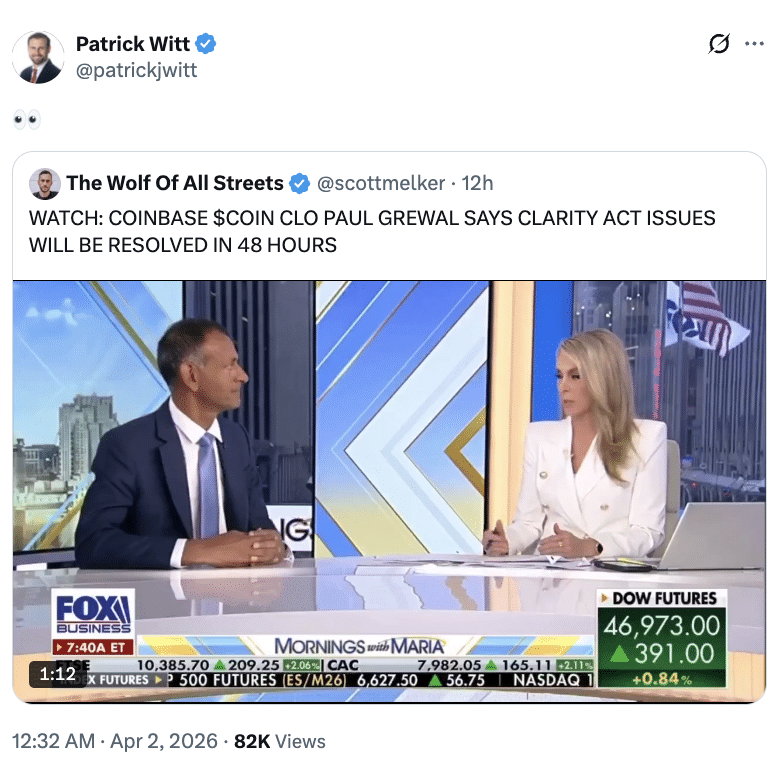
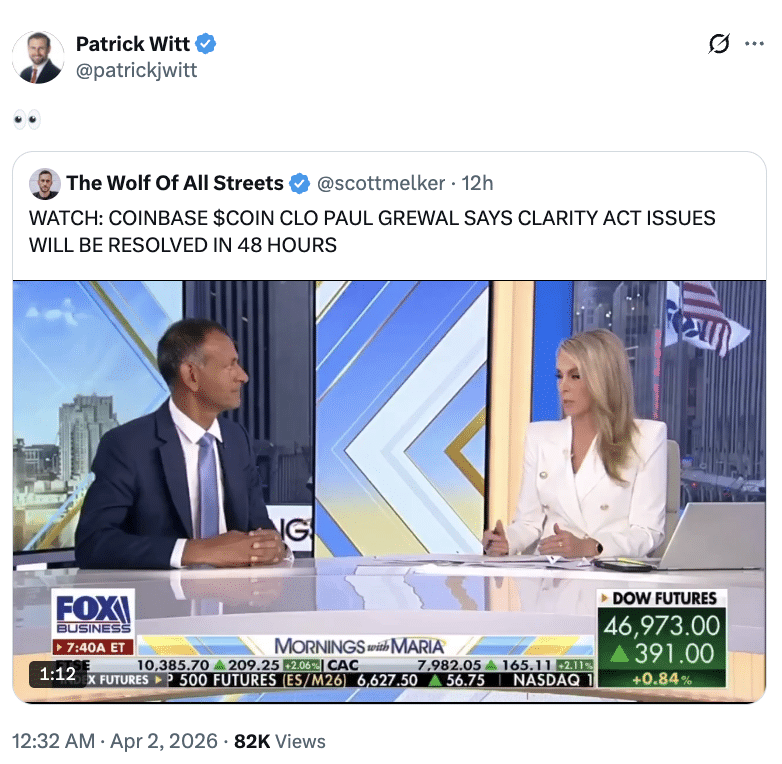
Coinbase Chief Legal Officer (CLO) Paul Grewal, in a recent television appearance, has shared his optimism about the passage of the crypto bill. He believes that the U.S. is on the verge of a major crypto breakthrough despite banks’ resistance.
More importantly, Grewal revealed that the deal between crypto and banks will likely pass within the next 48 hours.
I’m very confident we’re going to see progress.
However, he also pointed out that,
Other key elements of the bill are critically important to making sure that President Trump’s vision of the United States as the crypto capital world is fulfilled.
Coinbase’s CLO is confident about the CLARITY Act passage
Explaining his stance, Coinbase CLO underlined that rules might be different for banks and crypto because “the game is very different”.
While comparing traditional banks and stablecoins, Grewal highlighted how banks operate on fractional reserve lending—where they hold less and focus more on deposits and lend-outs.
However, as the ongoing debate around ‘yield generations’ surges, critics believe that stablecoin could halt people from withdrawing money from banks. But speaking in defense, Grewal rejected that notion, stating,
There has been no evidence of deposit flight whatsoever.
He also stressed how the GENIUS Act introduced the initial rule for crypto and that the CLARITY Act is the finish line for a complete regulatory framework.
Shift in stance shocks executives
This optimism from Grewal comes after Coinbase’s recent holdout. For those unaware, this stepback had pushed Patrick Witt, the executive director of the President’s Council on Digital Assets, to issue a hidden warning at Coinbase.
However, after hearing Paul Grewal’s shift in stance. Witt expressed his surprise.
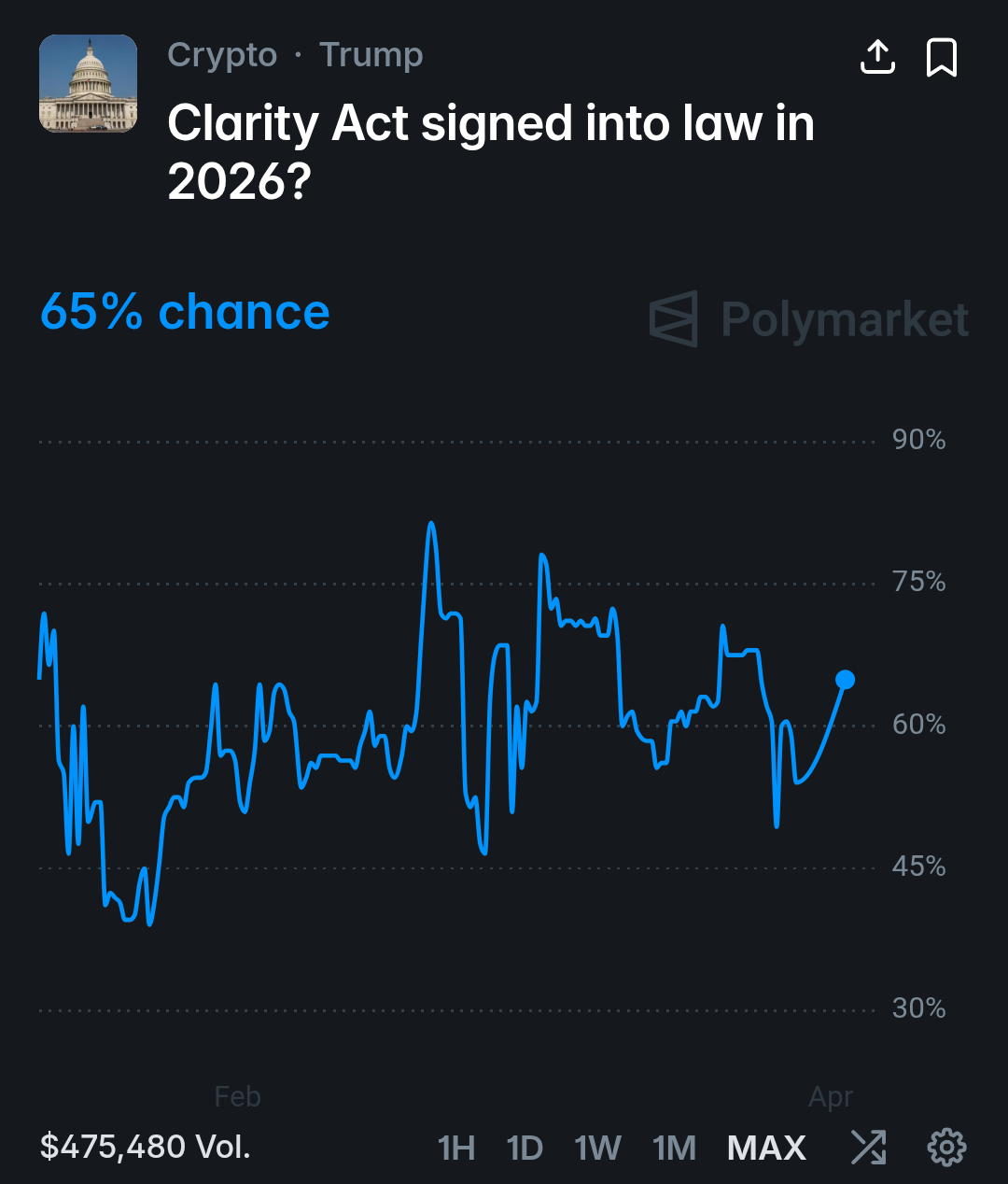
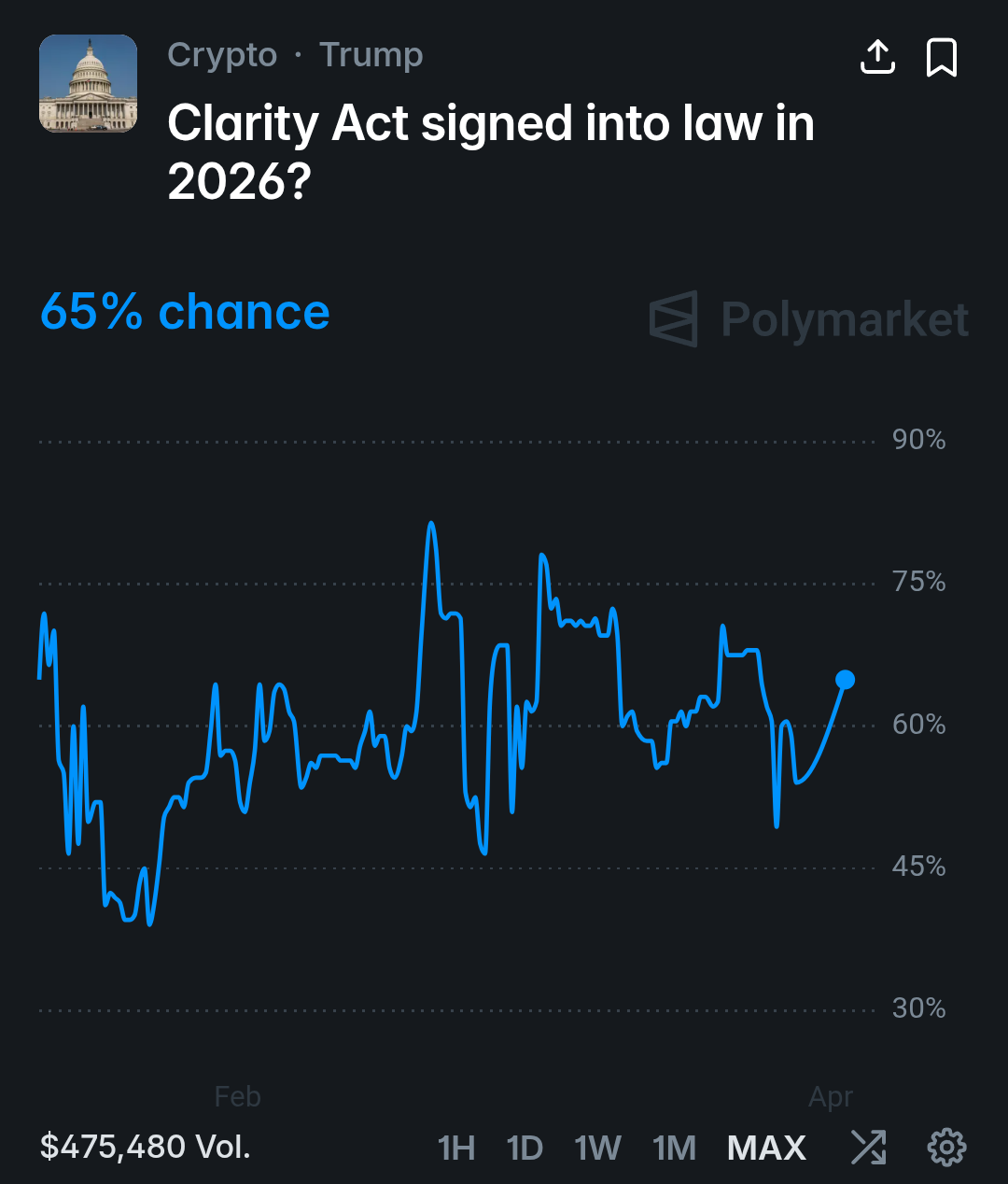
Meanwhile, the Polymarket odds of the CLARITY Act being signed into law in 2026 confirmed the positive sentiment, as it stood at 65% at the time of reporting.
Final Summary
- Paul Grewal’s optimism about the CLARTY Act shocks Patrick Witt, considering Coinbase’s past holdout.
- Polymarket odds rocketed to 65%, reflecting this increased optimism.