Industry News

Tracks company news, strategic changes, funding activities, and personnel adjustments across the blockchain and crypto industries, delivering a full-spectrum industry overview for our users.

Cross-Border Payments Giant Wise Lists on NASDAQ

Cross-border payment giant Wise has successfully transitioned its primary listing to Nasdaq (ticker: WSE), retaining a secondary listing in London. Starting trading on May 11, 2026, the company opened at $15.40, up approximately 6.21%. With a market valuation around $15.5 billion, this move signifies Wise's evolution from a low-cost international money transfer tool into a comprehensive global financial services platform. Founded by Taavet Hinrikus and Kristo Käärmann to solve personal frustrations with expensive and opaque bank fees, Wise (formerly TransferWise) pioneered transparent, low-cost foreign exchange and transfers. For its fiscal year ending March 31, 2026, Wise reported $243 billion in cross-border transaction volume, $39 billion in customer balances, $1.9 billion in transaction revenue, and $2.5 billion in net revenue, serving nearly 19 million personal and business customers. The strategic shift to a US primary listing aims to deepen investor reach, enhance liquidity, and align with the United States as a critical growth market. It supports Wise's broader business narrative, which now encompasses multi-currency accounts, business solutions, debit cards, and especially its B2B offering, Wise Platform. This platform allows banks and financial institutions like Itaú and Nubank to integrate Wise's payment infrastructure, with a long-term goal for it to drive over 50% of cross-border volume. Concurrently, Wise is strengthening its US operational capabilities, including applying for a national trust bank charter and a Federal Reserve master account to gain greater control over USD payment flows. While Wise facilitates payments into China via partners like Alipay, outbound RMB services rely on collaboration with licensed local payment institutions, adhering to regional regulations. The listing process included a controversial proposal to extend a dual-class share structure, highlighting governance challenges as the company balances founder influence with public market accountability. Moving forward, Wise must demonstrate to US investors that its low-fee model is sustainable and scalable, that Wise Platform can drive significant growth, and that its global compliance and network infrastructure can support its ambition to become an integral part of the worldwide money movement landscape.

链捕手05/16 01:15

Cross-Border Payments Giant Wise Lists on NASDAQ

链捕手05/16 01:15

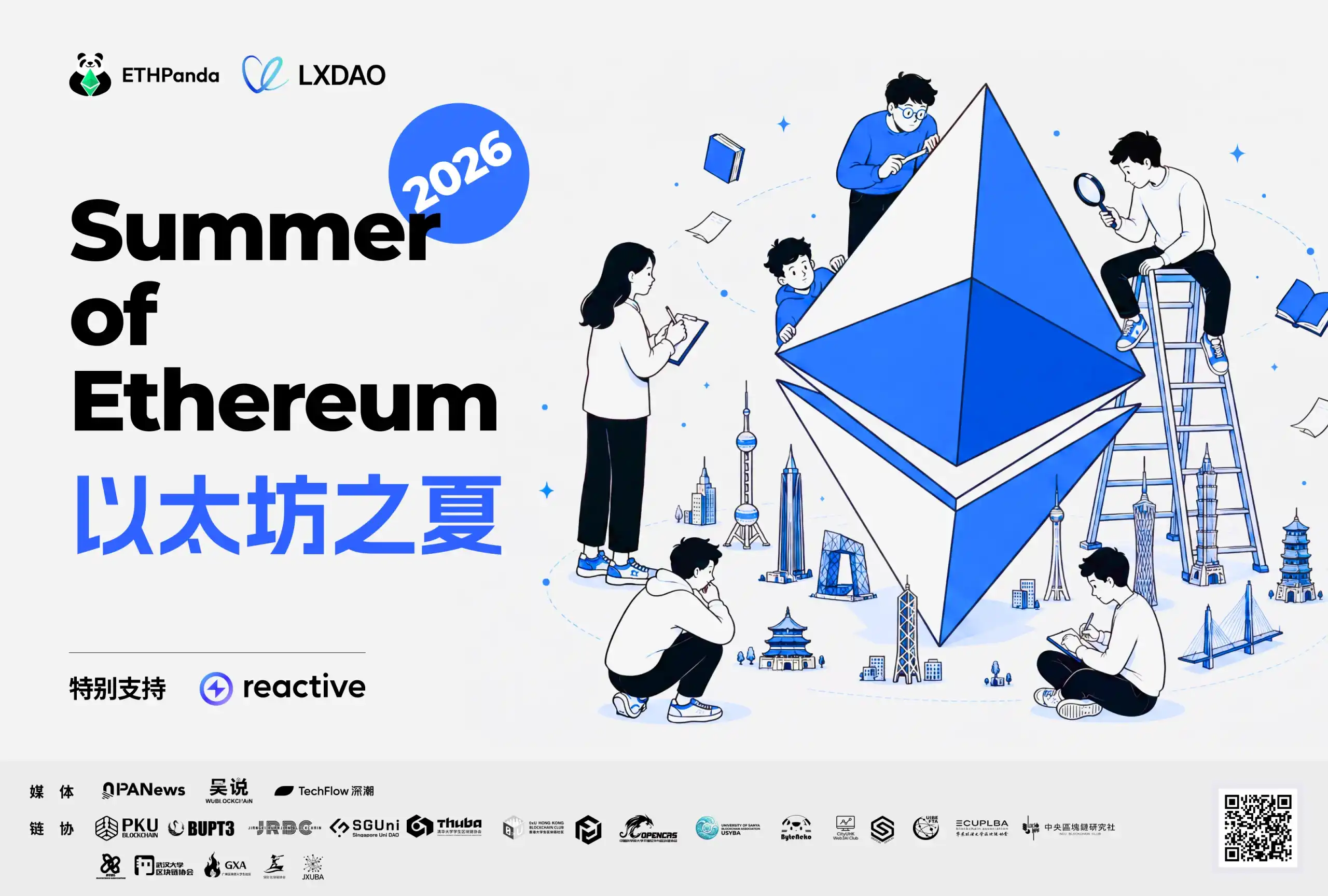
Some Issues Are Better Discussed in Person: Summer of Ethereum 2026 Is Here!

Summer of Ethereum 2026 is returning, focused on bringing crucial discussions about Ethereum's long-term development to in-person meetups across multiple cities. Organized by LXDAO and ETHPanda, the initiative aims to move beyond online discourse and event scheduling by addressing Ethereum's systemic challenges through real-world connections. The core question this year is the value of offline gatherings for the Ethereum community. While online discussions on topics like the roadmap, L2, account abstraction, and governance are abundant, they often lack depth and alignment. The goal is to bring these fragmented, complex issues—such as UX, developer tools, public goods, and local community building—into shared physical spaces to foster deeper understanding, trust, and actionable collaboration. The program will not follow a rigid format but will adapt to each city's context, potentially including talks, panels, workshops, and community gatherings. Key discussion areas include protocol evolution, Ethereum UX/account abstraction, real-world applications, developer tools, and sustainable community governance. The aim is for each event to leave behind clearer problems, stronger personal connections, and tangible follow-up actions. The call is open to developers, researchers, students, community members, local organizers, projects, and media partners. Participation is encouraged whether one brings deep expertise or just genuine curiosity. For Ethereum's ecosystem—built on principles of open networks and long-term collaboration—this "non-negotiable" effort seeks to translate belief into concrete, local cooperation. The ultimate hope is that these meetings will seed lasting partnerships and turn abstract challenges into progress, one city at a time. All event details and schedules will be updated on the Luma Calendar.

marsbit05/15 11:22

Some Issues Are Better Discussed in Person: Summer of Ethereum 2026 Is Here!

marsbit05/15 11:22

Surging 108% on Debut! The Biggest AI Dark Horse of 2026 is Born, Altman Profits 'Passively' Again

Cerebras, an AI chip company known for its wafer-scale "dinner plate-sized" WSE-3 processor, completed a landmark IPO on the NASDAQ in 2026. Its shares surged 108% on the first day of trading, with the valuation reaching approximately $100 billion at its peak. The offering raised $5.55 billion, marking one of the largest U.S. tech IPOs since Uber in 2019. The company's dramatic turnaround was a key driver, moving from a $482 million loss to a $238 million profit in 2025, with revenue growing 76% to $510 million. Major new contracts, including a multi-year deal with OpenAI potentially worth over $20 billion and a deployment agreement with AWS, boosted investor confidence. Founder Andrew Feldman emphasized to investors the coming explosion in AI inference demand, the viability of non-GPU compute, and the perceived overestimation of NVIDIA's CUDA ecosystem moat. The IPO created substantial returns for early investors like Foundation Capital (76x return) and Benchmark (12x return). OpenAI, through a strategic agreement linked to future compute purchases, secured an estimated $1.8 billion in paper gains, while Sam Altman's personal 2017 investment grew roughly tenfold to around $30 million. Cerebras' success is positioned as the opening act for a wave of massive AI-focused IPOs expected in 2026, including potential listings from SpaceX (targeting a $1.75 trillion valuation), OpenAI ($1 trillion), and Anthropic ($900 billion), collectively representing over $3 trillion in potential market value. The article concludes that these moves signal capital is placing foundational bets on the immense compute infrastructure required for the future development of Artificial Superintelligence (ASI).

marsbit05/15 11:20

Surging 108% on Debut! The Biggest AI Dark Horse of 2026 is Born, Altman Profits 'Passively' Again

marsbit05/15 11:20

Q1 Wall Street Institutional Holdings Revealed: Jane Street Slashes Bitcoin ETF Position by 71%, JPMorgan Increases Holdings by 174%

Wall Street's Q1 13F filings reveal divergent strategies among major institutions regarding crypto exposure amid a broad market downturn. Bitcoin fell nearly 24% in Q1, with total crypto market cap down 20.4%. Key moves include Jane Street sharply reducing its Bitcoin ETF holdings (cutting IBIT by 71%) while significantly increasing its Ethereum ETF positions and building a new stake in Galaxy Digital. In contrast, JPMorgan Chase aggressively bought the dip, increasing its IBIT holding by 174% and boosting stakes in other Bitcoin ETFs, while initiating a position in a Solana ETF and clearing its XRP ETF. Wells Fargo increased its Ethereum ETF exposure by over 60% despite outflows from the asset class, while nearly exiting its Galaxy Digital position. BlackRock continued buying Bitcoin on-chain (adding ~15,000 BTC) and increased its holdings of crypto-correlated stocks like MicroStrategy and Bitmine, though its overall crypto portfolio value shrank due to price declines. ARK Invest notably increased its bet on Circle, highlighting institutional interest in the stablecoin infrastructure narrative. The filings signal three trends: growing institutional interest in Ethereum for long-term infrastructure plays, strategic differences (not bearishness) driving Bitcoin positioning, and crypto-equities becoming a core, though contested, allocation (e.g., mixed views on Galaxy Digital). The Q1 accumulation by some institutions appears validated in Q2, with Bitcoin rebounding above $80,000 and spot Bitcoin ETFs seeing renewed net inflows.

marsbit05/15 11:07

Q1 Wall Street Institutional Holdings Revealed: Jane Street Slashes Bitcoin ETF Position by 71%, JPMorgan Increases Holdings by 174%

marsbit05/15 11:07

TechFlow Intelligence Brief: South Korean Stock Market Plunges, Trump's Q1 Holdings Revealed

This TechFlow intelligence report covers key developments across AI, crypto, hardware, tech companies, and finance. In AI, Anthropic's valuation surpasses OpenAI, while AWS users face massive bills from runaway Claude API calls, highlighting AI's cost risks. A local AI model executing 'rm -rf' sparks safety debates. Meanwhile, arXiv enforces bans for AI-generated paper errors, and ChatGPT's impact on education grading is questioned. The crypto sector sees a US Senate committee passing a market structure bill, $2B in Bitcoin options expiring, and debates on Bitcoin's seizure resistance and DeFi's value without stablecoin yields. Hardware news includes NVIDIA planning RTX 5090 price hikes and the US approving H200 chip sales to Chinese firms. Tech company updates feature a macOS M5 chip exploit, Apple's iPhone price cuts, a South Korean stock market plunge, and Cisco's record revenue alongside layoffs. In stocks, NVIDIA's market cap hits $5.7T as Trump's Q1 portfolio shifts toward AI infrastructure stocks like NVIDIA and Broadcom. Cerebras' IPO soars, and a Reddit user reports massive gains on a leveraged ETF, fueling discussions on an AI bubble. Macro developments show precious metals falling due to Indian tariff hikes and strong US data. The Iran conflict disrupts Hormuz Strait shipping, affecting oil supplies. New tech includes 'haptic dreaming' to improve robot task success and Meta's Ray-Ban Display glasses with virtual handwriting. The underlying theme is AI's dual reality: creating both massive unexpected costs and immense market valuations. As technology advances rapidly, academia, markets, and regulators are all grappling to find a new equilibrium between innovation, risk, and control.

marsbit05/15 10:59

TechFlow Intelligence Brief: South Korean Stock Market Plunges, Trump's Q1 Holdings Revealed

marsbit05/15 10:59

Listed and Halted, Surge Over 108% in a Single Day, Is Cerebras Really the 'Next Nvidia'?

Cerebras Systems (CBRS), labeled the "next Nvidia," debuted on the NASDAQ on May 14th, 2025. Its stock price surged over 108% from its $185 IPO price, briefly touching $385 before settling around $311. CEO Andrew Feldman claimed the company's wafer-scale AI chips are "58 times larger and 15-20 times faster" than competitors like Nvidia. The company's core innovation is the Wafer Scale Engine (WSE), a massive, dinner-plate-sized chip designed to avoid the bottlenecks of interconnecting multiple GPUs. Its latest system, the CS-3, offers high-performance computing for AI training and inference. While still a niche player with $5.1 billion in 2025 revenue, Cerebras has secured major contracts, most notably a multi-year, over $20 billion computing deal with OpenAI. This partnership is deep: OpenAI is a major customer, a creditor via a $1 billion loan, and holds warrants that could make it a 10-11% shareholder in Cerebras. Despite the hype, the article argues Cerebras is unlikely to dethrone Nvidia soon. Nvidia's ecosystem (CUDA), vast scale, manufacturing efficiency, and diversified product line present a formidable moat. Cerebras faces high costs, production challenges with its giant chips, and competition from AMD, Google, and others. However, strong demand for AI inference and its key partnerships could support its stock price in the short to medium term. In conclusion, Cerebras is positioned as a high-speed specialist in the AI hardware market, not a broad-market replacement for the current industry leader.

Odaily星球日报05/15 10:34

Listed and Halted, Surge Over 108% in a Single Day, Is Cerebras Really the 'Next Nvidia'?

Odaily星球日报05/15 10:34

Bankless Interview: Private Equity Insiders Reveal the Inside Story of Anthropic's Primary Market Trading

**Bankless Interview: A Private Equity Veteran Exposes the Dark Side of Anthropic's Pre-IPO Trading** In a Bankless podcast, Patagon founder Dio Casares reveals the opaque inner workings of the massive secondary market for shares in pre-IPO giants like Anthropic. The market, driven by private SPVs (special purpose vehicles), brokers, and even informal networks, sees hundreds of billions in notional value changing hands, with single-deal fees as high as 10%. However, an estimated 10-20% of transactions involve fraud or fabricated share certificates. Intermediaries often profit more from these deals than from their core investment businesses. Two types of "secondary" exist: company-sanctioned trades (like employee tender offers) that bring new money to the company, and disruptive "gray market" trades on platforms like Hive or Forge, which companies like Anthropic actively fight. The latter creates pricing chaos and complicates primary fundraising. A major risk involves multi-layered, nested SPV structures. When a company like Anthropic finally IPOs, delays in distributing shares down these chains, combined with discretionary powers of fund managers (GPs) to hold or sell, could trigger a wave of lawsuits and settlement nightmares lasting years. For small investors in "tokenized" versions of these assets, transparency is minimal, and due diligence is often impossible. Casares advises extreme caution, suggesting investors trust their gut and exit if something feels wrong. He warns that the post-IPO period will be a major "reckoning" for this wild and largely unregulated market.

marsbit05/15 09:44

Bankless Interview: Private Equity Insiders Reveal the Inside Story of Anthropic's Primary Market Trading

marsbit05/15 09:44

Behind the Coinbase Acquisition of USDH: Hyperliquid’s Interest-Driven Choice

The article discusses the transition of the Hyperliquid ecosystem's native stablecoin, USDH, following its acquisition by Coinbase. Last September, USDH, issued by Native Markets, was a focal point in the ecosystem. Recently, Coinbase announced it will become the official USDC treasury deployer on Hyperliquid. Native Markets granted Coinbase the rights to purchase the USDH brand assets, leading to the gradual phase-out of USDH. Users can convert USDH to USDC or fiat without fees during this period. USDC is now Hyperliquid's official stablecoin. The move is framed as a three-way win: * **Coinbase & Circle:** Deepen ties with Hyperliquid's on-chain economy. Both companies are staking HYPE tokens. Circle had already invested in HYPE previously. * **Hyperliquid:** Becomes the primary beneficiary, set to receive the vast majority (estimated ~90%) of the reserve yield income from the ~$5.16 billion in USDC on its platform. This could translate to significant daily HYPE buybacks. The alliance with Coinbase may also offer regulatory advantages in the US. * **Native Markets:** While exiting the stablecoin business, the team reportedly received economic compensation from Coinbase for the USDH brand assets, framing it as a successful conclusion to USDH's role. However, the article notes criticism from some Hyperliquid community members. They view the shift as a step back for decentralization and argue that the original USDH issuer vote was driven by internal interests rather than user benefit, leaving regular users with nothing. The conclusion reflects that the eventual partnership between Hyperliquid and the giants (Coinbase/Circle) underscores a reality of利益分配 (interest distribution) over initial ideals of community and ecosystem advocacy.

Odaily星球日报05/15 06:48

Behind the Coinbase Acquisition of USDH: Hyperliquid’s Interest-Driven Choice

Odaily星球日报05/15 06:48

活动图片