On August 13th, Galler Microelectronics Technology (Shanghai) Co., Ltd. (hereinafter referred to as "Galler") officially had its IPO application for the Science and Technology Innovation Board (STAR Market) accepted by the Shanghai Stock Exchange, with China International Capital Corporation Limited (CICC) as the sponsor. This automotive-grade millimeter-wave radar chip company, which emerged from the Berkeley Lab, plans to issue no more than 9,424,550 shares, accounting for no less than 25% of the total share capital after issuance, aiming to raise 3.489 billion yuan. Back-calculating the offering valuation is approximately 14 billion yuan.
Just half a year ago, its implied valuation in the completed E2 round of financing was only around 8.26 billion yuan, meaning that these institutional investors have seen their book gains nearly reach 70% in less than a year.
A company whose revenue just exceeded 600 million yuan last year and is still incurring losses annually—what capital story allows it to justify such a valuation?
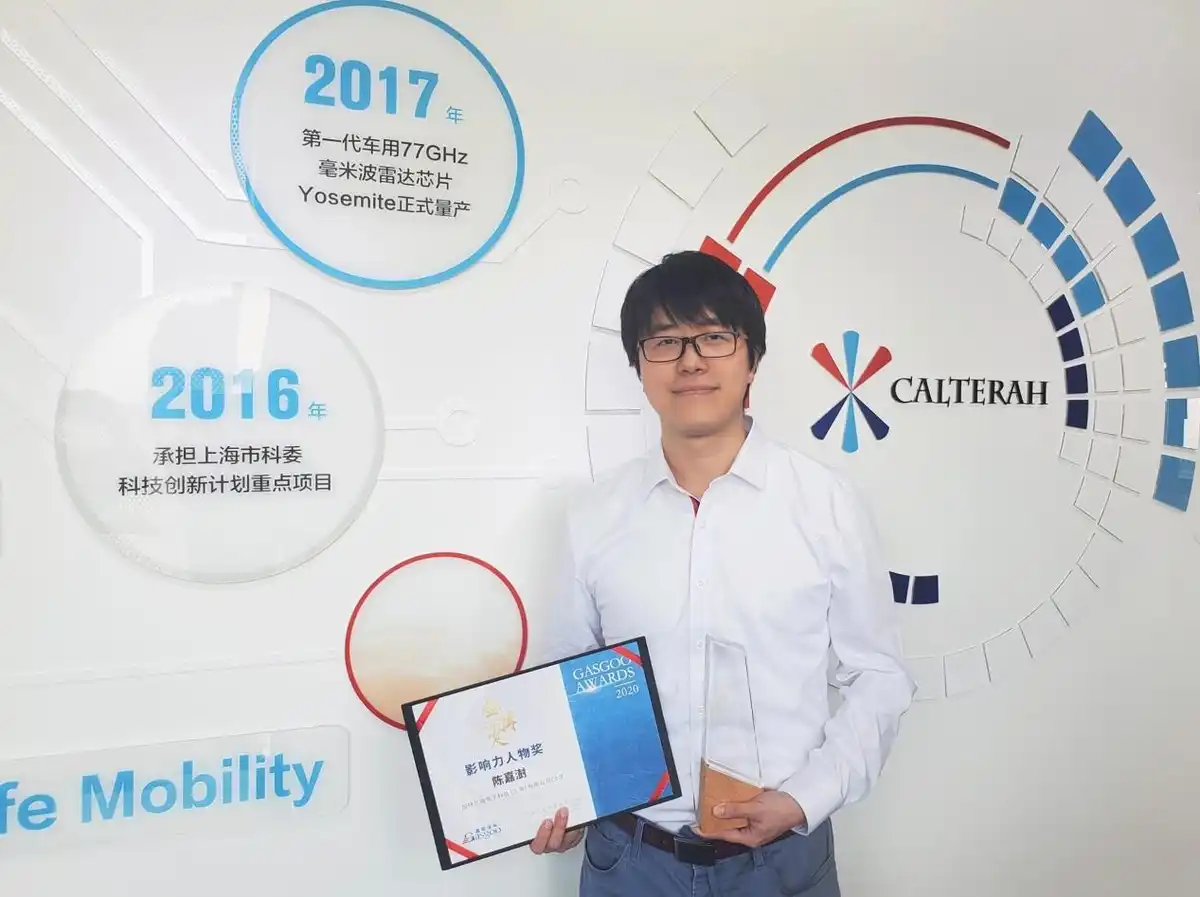
The story of Galler dates back to February 2014. After obtaining his Ph.D. in Electrical Engineering from Berkeley, 30-year-old Jashu Chen, along with his advisor, Ali Niknejad, Director of the Berkeley Wireless Research Center, returned from Silicon Valley to Zhangjiang, Shanghai, to start a business, tackling the millimeter-wave radar track monopolized by international giants. During his time in the US, he led the team that developed the world's first 60GHz WiGig CMOS SoC chip and received the Fulbright Science and Technology Award issued by the US State Department, being the only Chinese student among the 27 recipients that year.
From its inception, Galler chose a "minority path." The mainstream industry approach at the time used GaAs or SiGe for multi-chip solutions, which were costly and had low integration; Galler, however, bet on the CMOS process, once being questioned for its performance not meeting "automotive-grade" standards.
This gamble proved to be right. In 2015, just one year after its establishment, Galler taped out the world's first fully integrated 77GHz radar transceiver single-chip; in 2017, it mass-produced the world's first automotive-grade CMOS process RF front-end chip, Yosemite; in 2019, it launched the AiP SoC chip; and in 2024, it introduced the domestic supply chain Kunlun platform.
The real power of the CMOS route lies in cost reduction. Traditional solution modules cost hundreds of dollars each, only affordable for million-dollar luxury cars, while CMOS single-chips slash the cost to a fraction, making millimeter-wave radar a standard feature for family cars priced around 100,000 yuan.
By 2025, Galler ranked fourth in the global automotive millimeter-wave radar chip market, with a market share of about 4%; its domestic market share reached 31.1%, ranking second, with cumulative shipments exceeding 30 million chips, partnerships with over 30 automakers, covering more than 300 vehicle models. Most significantly, it became the first domestic supplier for the global platforms of two leading Tier1s, entering Volvo and Rivian—something almost unimaginable for domestic automotive-grade chips to enter overseas front-end supply chains a few years ago.
As of now, Galler's client list reads like a who's who of half of China's new energy vehicle sector: BYD, Geely, NIO, Chery, SAIC, FAW, Leapmotor, Seres, and overseas clients like Volvo and Rivian.
Among this list, BYD carries far more weight than all other customers. Galler entered BYD's advanced driver-assistance system supply chain relatively early. In 2025, benefiting from BYD's "Mass Intelligence Driving" strategy, procurement demand grew significantly, which was also the core driver for Galler's revenue doubling that year.
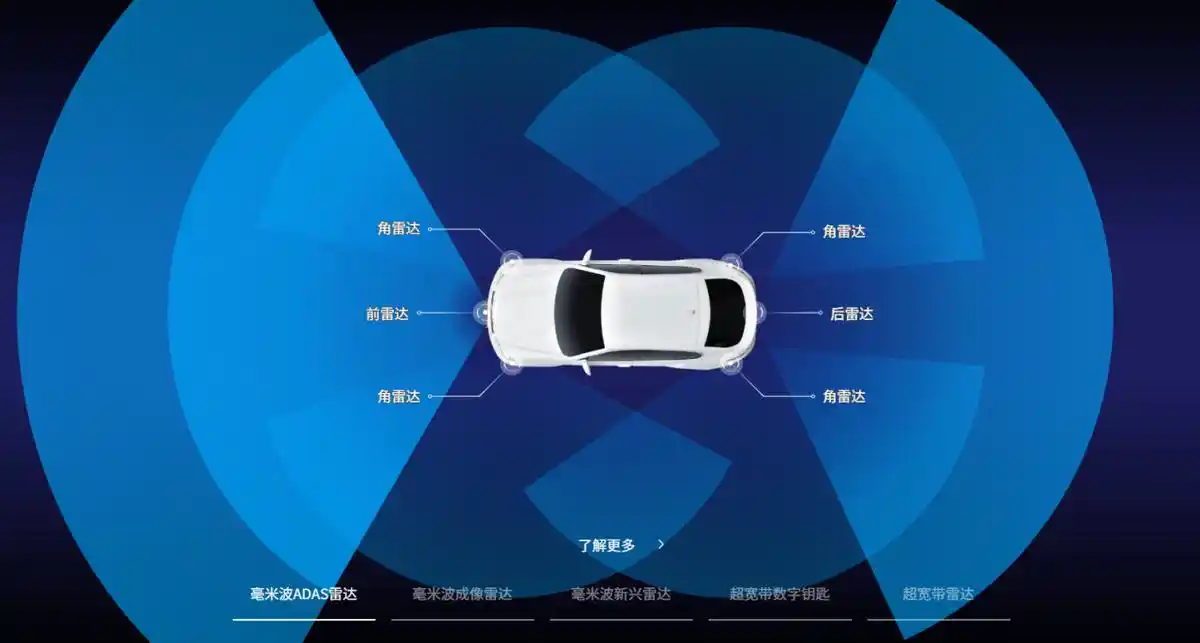
From 2023 to 2025, Galler's revenue grew from 206 million yuan to 303 million yuan, then to 632 million yuan, with a three-year compound annual growth rate exceeding 75%. The year-on-year growth rate in 2025 reached 108.44%, nearly doubling.
However, looking at the income statement, the net profit attributable to the parent company's shareholders for the same periods were -323 million yuan, -334 million yuan, and -193 million yuan respectively, accumulating a loss of 850 million yuan over three years. In the first quarter of 2026, it lost another 60 million yuan, bringing the cumulative loss over three years and three months to 910 million yuan. As of the end of March 2026, the company still had an unrecouped loss of 172 million yuan on its books.
It is worth mentioning that Galler's gross margin is not bad. The gross profit margin of its main business for the reporting periods were 47.80%, 43.81%, 47.25%, and 48.97% respectively, higher than the domestic peer average of about 35%–38%. In other words, the products themselves are profitable, but the profits are all consumed by high R&D and sales expenses.
R&D expenses from 2023 to Q1 2026 were 304 million yuan, 365 million yuan, 370 million yuan, and 98.33 million yuan respectively, with the R&D expense ratio once reaching as high as 147.75%. It decreased to 58.55% by 2025, still significantly higher than the peer average of 25% to 42%. As of March 2026, the company had 275 R&D personnel, accounting for 65.63% of the total workforce—two-thirds of the staff are focused on technology.
The sales expense ratio for the same periods also reached 15.24%, 13.90%, 7.42%, and 8.11% respectively, also higher than peer levels. Under such high investment, operating cash flow remained negative, from 2023 to Q1 2026 being -170 million yuan, -249 million yuan, -18.465 million yuan, and -121 million yuan respectively. Its self-"blood-making" capability has not yet turned positive, and the company relies on equity financing to sustain operations.
Galler's financing rhythm almost follows its technology milestones. In 2015, Silergy and Hong Kong Wisteria led the angel round; in 2017, FreeS Fund and Zhongguancun Development Investment completed the Series A; in 2019, CICC Capital, Shaanxi Hongchuang, China Renaissance, and China Mobile Innovation Industry Fund jointly participated in the Series B, with Gaolishan Zhu adding a Series B+ in August of the same year; in 2020, strategic investments from Shangqi Capital (SAIC-affiliated), GAC Capital, and Nest.Bio Ventures entered, beginning to lock in supply chain influence from the OEM side; in 2021, SDIC Investment led the Series C, with Langmafeng Venture Capital, BOCOM International, and China Renaissance Xinjingji Fund following, raising several hundred million yuan in a single round; in 2022, Fosun Capital, China Merchants Capital, Gopher Asset, Yinggang Capital, and Juntong Capital jointly added investment in the Series C+ round.
The valuation was truly pushed higher by the Series D in July 2024, with participation from the National Integrated Circuit Industry Investment Fund Phase II (Big Fund II), Shanghai Guoxin Chuangtou, Fujian Chuangtou, etc., along with existing shareholders like SDIC Investment and Walden International. The deep involvement of "national team" funds paved the way for credit endorsement for the subsequent IPO.
In the year before the IPO rush, financing density intensified suddenly: In the January 2025 capital increase, Big Fund II contributed 50 million yuan, with Shanghai Guoxin, Advanced Manufacturing Fund Phase II, Chuangxin Chuangke, and Hong Kong Wisteria following, totaling about 179 million yuan; in the September 2025 E1 round, Lingyinqu Fund, Zhangke Yaokun, Ruishi Phase IX, Greater Bay Area Fund, etc., collectively invested 208 million yuan; in the 2026 E2 round, Huaxin Dingxin exclusively invested 300 million yuan, with CCTV Media Convergence, Ruishi Phase VII, Guofengtou Xinzhi each investing 100 million yuan and several other institutions following, raising about 955 million yuan in a single round. These three rounds totaled approximately 1.34 billion yuan in financing. In the 12 months before the application, over 20 institutions were intensively introduced for "last-minute" shareholding increases, with a unified increase price of 292.25 yuan per share.
However, the prospectus hides three difficult questions the market will inevitably ask.
"Double Concentration" of Customers and End-Users. The sales revenue from Galler's top five direct customers (mostly integrated circuit distributors) accounted for as high as 99.77%, 99.07%, 99.90%, and 99.97% respectively; the sales revenue from the single end-user BYD consistently exceeded 50%. In 2026, after the OEM introduced a second supplier, revenue pressure from the largest end-user increased, and Q1 revenue growth rate plummeted to 8.10%, a cliff-like drop compared to the 286.94% growth rate in the same period of 2025. The customer qualification cycle for automotive-grade chips is as long as 3 to 4 years. If BYD orders significantly shrink, new customers will find it difficult to fill the gap in the short term.
The supply chain is also highly concentrated and heavily reliant on overseas sources. The proportion of overseas procurement has long exceeded 50%, with the top five suppliers' share rising to 80.16%, and the largest supplier accounting for 58.68%. Dependence on overseas EDA tools poses a suspension risk. Concentration on both customer and supply sides results in weak risk resilience.
Additionally, there is product singularity, with the second growth curve slow to gain traction. In 2025, millimeter-wave radar chips contributed 99.93% of revenue, with chips for advanced driver-assistance systems (ADAS) applications accounting for as high as 90.64%. The unit price of the core product dropped from 49.56 yuan/chip to 41.62 yuan/chip over more than three years, a cumulative decline of about 16%, typical of "trading price for volume." The company's much-anticipated ultra-wideband (UWB) chip has seen slow commercialization progress. In 2025, only a small number of samples were produced in Q4, with annual revenue of only 5,400 yuan, negligible. Jashu Chen admitted in an interview this year that compared to millimeter-wave radar, UWB chips still have gaps in distance and angle accuracy, point cloud richness, and target classification capabilities, making it difficult to replicate the market position and revenue scale of millimeter-wave radar in the short term.
Furthermore, from a global perspective, the three European and American giants—Texas Instruments, Infineon, and NXP—still collectively hold over 70% of the global millimeter-wave radar chip market share. Galler also frankly admits in its prospectus that compared to these international giants, it still has gaps in comprehensive R&D strength, core technology accumulation, and key customer coverage.
The 3.489 billion yuan Galler aims to raise this time will be divided into three parts: approximately 2.093 billion yuan will be invested in millimeter-wave radar R&D and industrialization, accounting for nearly 60%; 695 million yuan will go to the UWB chip project; and the remaining 702 million yuan will be used for the technological innovation center and headquarters construction.
Simply put, Galler plans to use this money to continue consolidating its core business in millimeter-wave radar while adding more fuel to the UWB chip, which hasn't yet gained momentum. At the "2026 Galler Day" in June this year, the company announced that its Dubhe UWB chip had entered the mass production stage—a substantial progress signal on the second growth curve, but large-scale volume still requires time to verify.
For Galler, the real test is not whether it can go public, but whether it can reduce its over-reliance on BYD in its customer structure, lower the proportion of overseas supply chain procurement, and enable the UWB chip to generate substantial revenue as soon as possible.
The capital story behind the 14 billion yuan valuation ultimately depends on the answers to these questions.
Source: Galaxy Business Review
This article is from "ZAKER Finance"