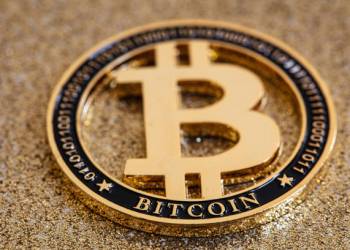
Broke the Cycle. How Bitcoin's Price Changed Over 10 Years on Christmas

RBK-cryptoPublished on 2025-12-25Last updated on 2025-12-25

Abstract

The article "Прервал цикличность. Как менялась цена биткоина за 10 лет в Рождество" (Breaking the Cycle: How Bitcoin's Price Changed Over 10 Christmases) analyzes the price of Bitcoin on December 25th for each year from 2015 to 2025. The key finding is that 2025 broke a recent pattern. After nine years where a price drop only occurred the year after three consecutive years of growth, Bitcoin's price in 2025 fell by 11% to $87,600 from the previous Christmas ($98,700 in 2024). This decline is attributed to macroeconomic shocks and large-scale liquidation events in October, making it only the third year in the dataset with a year-over-year Christmas decline. The summary of each year's price and key drivers is as follows: * **2015:** $456 - Consolidation phase. * **2016:** $894 (+96%) - Growth ahead of the halving. * **2017:** $14,300 (+1500%) - Peak of retail frenzy. * **2018:** $4,000 (-72%) - Deep correction after the bubble. * **2019:** $7,300 (+81%) - Initial recovery. * **2020:** $23,800 (+227%) - New institutional cycle begins. * **2021:** $50,900 (+114%) - New all-time high. * **2022:** $16,800 (-67%) - "Crypto winter" with major collapses. * **2023:** $43,000 (+155%) - Recovery on ETF approval hopes. * **2024:** $98,700 (+130%) - Bull run continues post-ETF launch. * **2025:** $87,600 (-11%) - Correction due to macroeconomics. The article concludes that while Bitcoin's growth cycles reach new levels with greater institutional adoption, the 2025 ...

"RBC-Crypto" does not provide investment advice, the material is published for informational purposes only. Cryptocurrency is a volatile asset that can lead to financial losses.

Almost every Bitcoin growth cycle occurs at a qualitatively new level, where not only capitalization grows but also institutional and regulatory recognition worldwide. And the sharp drop in the price of the main cryptocurrency in 2025 is another reminder that the crypto market, while maturing, does not cease to be volatile and sensitive to global risks.

On Catholic Christmas Day, December 25th, many members of the crypto community recall what the market was like for the main cryptocurrency in previous years. The service Coingecko published Bitcoin prices for the past ten years based on data for each December 25th.

The year 2025 was notable for breaking the pattern of the last nine years, where a decline occurred in the year following three consecutive years of price growth.

2015: $456

A period of consolidation and accumulation after the completion of the previous market cycle.

2016: $894

A 96% increase amid expectations of the upcoming halving (a reduction in Bitcoin's emission rate approximately every four years) and the formation of an upward trend.

2017: $14.3K

The peak of retail frenzy with a 1500% increase. Bitcoin becomes a phenomenon in financial markets.

2018: $4.0K

A phase of deep correction with a 72% drop after the speculative bubble of the previous year. The height of the bear market.

2019: $7.3K

A stage of Bitcoin price recovery with positive dynamics of 81%, the initial phase of exiting the bear market.

2020: $23.8K

The beginning of a new institutional cycle against the backdrop of unprecedented money printing by world central banks during the COVID pandemic. The annual increase was 227%.

2021: $50.9K

Reaching a new all-time high with a 114% increase, fueled by the activity of institutional investors.

2022: $16.8K

A period of crypto winter: a series of crises with the collapse of the Terra (LUNA) crypto project and the bankruptcy of the FTX crypto exchange, as well as the tightening of the US Federal Reserve's monetary policy, led to a 67% decline.

2023: $43.0K

A powerful recovery of 155%, driven by expectations of approval of spot Bitcoin exchange-traded funds (ETFs) in the US.

2024: $98.7K

Continuation of the bull trend with a 130% increase after the successful launch of ETFs and significant inflow of institutional capital.

2025: $87.6K

An 11% correction as a result of macroeconomic shocks and large-scale liquidation events in October. 2025 became the third year in history when the Bitcoin price on December 25th decreased compared to the previous Christmas.

How the Base blockchain ecosystem works. Top 5 applications

AI outperformed humans in a crypto trading tournament. What were the results

"Capitulation" of miners called a bullish factor for Bitcoin. Why

Related Questions

QWhat was the main reason Bitcoin broke its cyclical pattern in 2025 according to the article?

AThe article states that 2025 broke the pattern of the previous nine years due to macroeconomic shocks and large-scale liquidation events in October, which led to an 11% price correction.

QWhich year saw the highest percentage increase in Bitcoin's price on Christmas Day, and what was the driver?

A2017 saw the highest percentage increase of 1500%, driven by a peak in retail frenzy, making Bitcoin a phenomenon in financial markets.

QWhat were the two major events cited as causes for the 'crypto winter' and price drop in 2022?

AThe two major events were the collapse of the Terra (LUNA) crypto project and the bankruptcy of the FTX cryptocurrency exchange, combined with the tightening of the US Federal Reserve's monetary policy.

QWhat was the primary driver for Bitcoin's powerful 155% recovery in 2023?

AThe primary driver was the expectation of approval for spot Bitcoin Exchange-Traded Funds (ETFs) in the United States.

QHow many times in history has the Bitcoin price decreased on December 25th compared to the previous Christmas, with 2025 being one of them?

A2025 was the third year in history where the Bitcoin price on December 25th was lower than the previous Christmas.

Related Reads

How Many Tokens Away Is Yang Zhilin from the 'Moon Chasing the Light'?

The article explores the intense competition between two leading Chinese AI companies, DeepSeek and Kimi (Moon Dark Side), and the mounting pressure on Yang Zhilin, the founder of Kimi. While DeepSeek re-emerged after 15 months of silence with its powerful V4 model—boasting 1.6 trillion parameters and low-cost, long-context capabilities—Kimi has been focusing on long-context processing and multi-agent systems with its K2.6 model. Yang faces a threefold challenge: technological rivalry, commercialization pressure, and investor expectations. Despite Kimi’s high valuation (reaching $18 billion), its revenue heavily relies on a single product with low paid conversion rates, while DeepSeek’s strategic silence and open-source influence have strengthened its market position and valuation prospects, now targeting over $20 billion. Both companies reflect broader trends in China’s AI ecosystem: Kimi aims for global influence through open-source contributions and agent-based advancements, while DeepSeek prioritizes foundational innovation and hardware independence, notably shifting to Huawei’s chips. Their competition is seen as vital for China’s AI progress, with the gap between top Chinese and U.S. models narrowing to just 2.7% on the Elo rating scale. Ultimately, the article argues that this rivalry, though anxiety-inducing for leaders like Zhilin, is essential for driving innovation and solidifying China’s role in the global AI landscape.

marsbit9h ago

How Many Tokens Away Is Yang Zhilin from the 'Moon Chasing the Light'?

marsbit9h ago

Trading

Spot
Futures

Hot Articles

Discussions

Welcome to the HTX Community. Here, you can stay informed about the latest platform developments and gain access to professional market insights. Users' opinions on the price of S (S) are presented below.

活动图片