Eight Years of Entrepreneurship Notes from a16z's AI Partner

marsbitPublished on 2026-04-26Last updated on 2026-04-26

Abstract

An early generative AI entrepreneur reflects on his 8-year journey building Rosebud AI, founded in 2018—a time when the field was still called “synthetic media.” Initially experimenting with models like CycleGAN and StyleGAN, he believed AI could make creation as intuitive as playing a game. Over the years, his team launched multiple products, including the viral app TokkingHeads, which gained 2 million users, learning to design around imperfect model outputs to deliver “good enough” user experiences. The evolution from niche synthetic media to general-purpose AI infrastructure—especially after GPT-4’s release—reshaped product possibilities. Code generation matured enough by 2023 to enable text-to-game prototyping. The author emphasizes that the real differentiator now isn’t just model capability but product design, distribution, and business model innovation. Having stepped down as CEO of Rosebud AI, he joins a16z as a partner focused on investing in the frontier model stack—models, infrastructure, and tools. He remains optimistic about AI-driven progress in creative tools, coding, and scientific domains. The piece concludes with a forward-looking note: the next phase of AI will be less about what’s possible and more about how capabilities are productized and scaled in the real world.

Editor's Note: This article is an eight-year retrospective from an early generative AI entrepreneur. In 2018, before GPT emerged, he founded Rosebud AI, aiming to "make creation as easy as playing a game," and successively launched multiple AI creative tools, including TokkingHeads. At a time when model capabilities were still immature, these products amplified the "good enough but usable" experience through process and interaction design, achieving early user growth and product validation.

This journey almost covers the complete evolution cycle of generative AI from "synthetic media" to a general-purpose infrastructure: from experimental explorations with CycleGAN and StyleGAN to GPT-4 pushing the boundaries of code generation and interactive creation. Technological progress continuously rewrites product logic and entrepreneurial pace. The author's path also reflects a clearer structural shift—when models become variables, the real watershed is no longer just the technology itself, but how to build products, distribution, and commercialization around it.

After stepping down as CEO and joining a16z, the author will shift focus to investing in frontier model stacks and related infrastructure. But more important than the individual path is that these eight years of experience point to an emerging trend: the first phase of generative AI (proving what it can do) is ending, and the next, longer cycle of competition will revolve around how capabilities are organized, productized, and ultimately integrated into the real world.

The original text follows:

I have joined a16z as a partner, focusing on investments in infrastructure and AI. At the same time, after eight years at the helm of Rosebud AI, I will be stepping down as CEO.

Below are some reflections on these eight years. I have immense respect for those still building on the front lines. A single model release can obliterate your product roadmap or accelerate it by years. The forms of design, product, and engineering have changed compared to three months ago, let alone eight years ago. The pace of technological advancement makes this era the most exciting time for entrepreneurship, yet also the most challenging.

At a16z, I will focus on the frontier model stack: including the models themselves, as well as the infrastructure and development tools built around them. I am excited by the rapid evolution of model capabilities—more and more progress is being driven by AI itself. I am also optimistic about the breakthroughs AI will bring in mathematics and science. Additionally, having spent the past eight years building AI creative tools, I retain a particular interest in this direction.

Prior to this, I have also participated in some seed-round investments as an angel investor, including @fal, @periodiclabs, @SakanaAILabs, and @ExaAILabs. Moving forward, I look forward to dedicating all my energy to supporting the founders building this technology stack.

2018: Betting on Generative AI Before GPT

Eight years is a very long time for a startup in the generative AI space.

I started in late 2018, almost an "ancient era," when the field was still called "synthetic media." I was tinkering with CycleGAN and StyleGAN, whose generated content was both bizarre and fascinating, convincing me that one day, creation would be as light and free as playing in a game's build mode (the name "rosebud" itself comes from The Sims).

Creation, at its best, should be a form of play. The earliest glimmers of generative AI made me believe that this "play-like creation experience" could expand to more forms of creation. I began to imagine how generative AI would reshape video games (like that CycleGAN video I trained on footage from "Myst" in 2018).

Eight years later, we can now generate videos, games, and even music with a single prompt. That once-imagined future has finally arrived—and this is just the beginning.

Looking back, the reason I formed such a strong conviction so early might be that my life has always been at the intersection of technology and art: a background in mathematics and deep learning PhD on one side, and a passion for dance and music on the other. Generative AI entrepreneurship requires both: the technical background allowed me to see what was coming, and the artistic inclination made me eager to build it.

The entrepreneurial journey is always longer and harder than imagined. Finding something you almost irrationally believe in maximizes your chances of persevering.
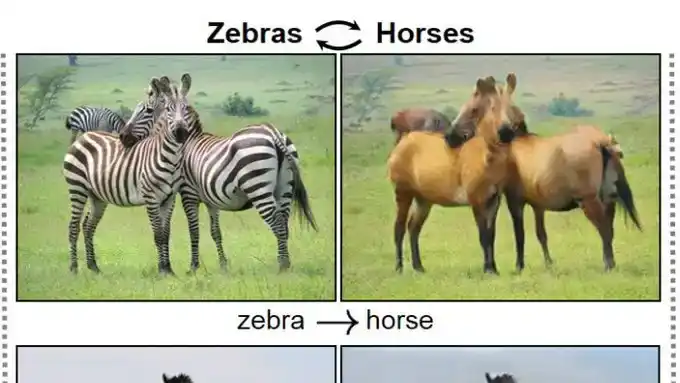
2018—2023: Winning Users Over with "Good Enough"

Screenshot of the third iOS app, Tokkingheads. The core of early generative AI was designing simple processes and actively embracing the product's roughness.

Along the way, we released numerous products to hone our intuition for cutting-edge model capabilities and learn to package them into magical experience that masked early flaws. The lesson from that stage: when model output is far from perfect, you can design consumer experiences that allow users to iterate and get feedback quickly. Users are discerning but not fragile—winning them over with "good enough" is sufficient.

By the third mobile app, we had accumulated enough insight for Tokkingheads to achieve viral organic growth, surpassing 2 million users in weeks. The next key lesson followed: as a founder, you must be clear about what product form keeps you motivated long-term. Tokkingheads could have gone the route of a viral smash hit, but I wasn't sure if that was the right soil to develop this creative magic into a more complete product—and that more complete product was what I truly wanted.

So we kept iterating. We worked on AI-generated stock photos, AI art for NFTs (yes... I naively thought artwork quality was key, only to find the real skill was hype and speculation), and AI game asset generation tools. Each product taught me something specific: what users are willing to pay for, and how fast models are improving. Sandwiched between these projects were a global pandemic and the Silicon Valley Bank and First Republic Bank runs—reminders to be grateful. The ability to keep building is itself a privilege.

2023: Code Generation Matures

Code generation finally became good enough, and the timing was ripe to build game tools for non-technical creators. After the release of GPT-4, that future became tangible. In March 2023, I shared a memo with the team and pieced together the initial version of Rosebud's text-to-game feature using the prototype below.
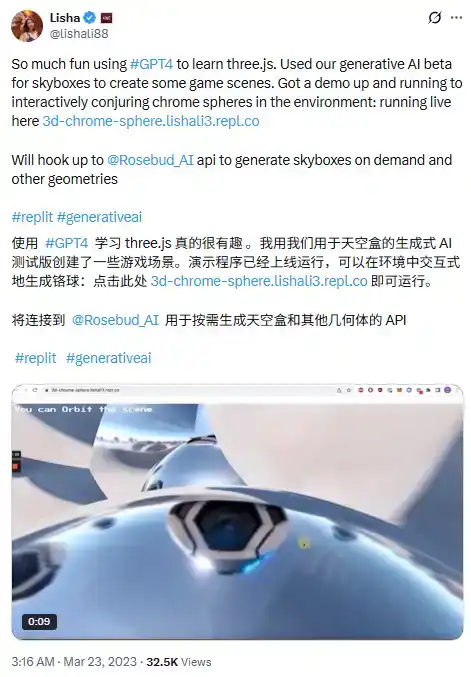
Screenshot of a tweet from March 23, 2023. I used GPT-4 to learn Three.js, combined with Rosebud's generative AI to generate a skybox, demonstrating an early prototype of summoning 3D scenes with text.
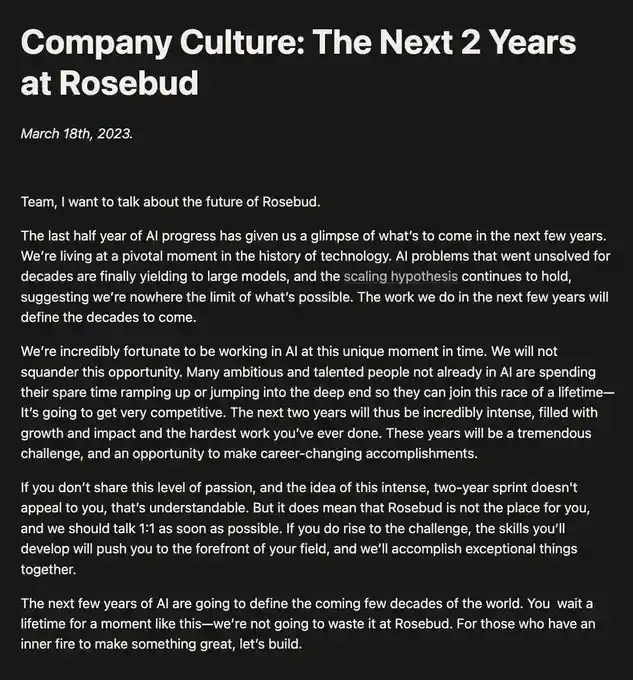
Internal memo from the author to the team in early 2023, documenting product judgments after the breakthrough in code generation capabilities. The core judgment of this internal letter was: AI is at a critical window that will define the next few decades, and the next two years will be a phase of highly intense competition—fast-paced, high-stakes, with clear elimination. The company would go all-in on this "sprint," suitable only for those with strong internal drive, willing to endure high pressure and make long-term commitments—because this is not just a job, but a historic opportunity that could change one's career trajectory.

2026 and Beyond: What Can You Build That Labs Won't?
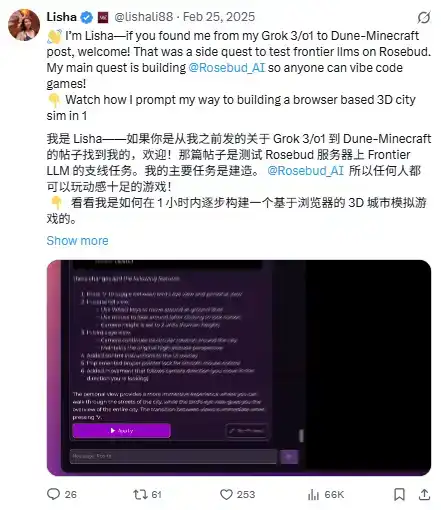
Figure: Demo video—the author builds a 3D city simulation game in the browser via prompts.

Making games requires mobilizing both creative intuition and technical ability. Generative AI is key to turning game creation itself into a form of play—any model progress in images, video, world models, or code is immediately absorbed and transformed. The business model of games is also most likely to remain outside the purview of frontier labs: the core monetization path is still player payments, and building a distribution system on the player side seems like an overly indirect side quest for labs sprinting full speed towards AGI. For founders, choosing what to build is always an ongoing game of finding space outside the lab's critical path.

Rosebud is thriving. We have organically accumulated a large, highly active community of creators. I will miss the casual chats with creators on Discord and the daily user support emails (a user willing to complain truly cares about your product). The next phase focuses on scaling distribution to the player side, making now a good time to hand the baton to the teammates who have been fighting alongside me.

Congratulations to @glazworks on becoming the new CEO of Rosebud! He possesses the rare combination of machine learning talent and product aesthetic.

Martin Casado and the a16z team have been with Rosebud throughout its growth. Martin and I had a key conversation about whether JavaScript was the right tech stack for Rosebud games—Unity or Roblox might be hotter, but JavaScript's code generation was improving much faster due to higher accessibility of training data. This team pursues the truth and is willing to bet on wagers that bring more builders. This is the path to the ideal future: we must build, we must innovate.

I look forward to working with you all from the other side of the table. DMs are always open.

Trending Cryptos

Related Questions

QWhat was the author's main focus when founding Rosebud AI in 2018, and what technological trends did they observe?

AThe author founded Rosebud AI in 2018 with the goal of making creation as easy as playing a game. They observed early generative AI technologies like CycleGAN and StyleGAN, which produced intriguing but imperfect results, and believed these were the precursors to a future where AI could democratize creative expression across various media.

QHow did the author's company, Rosebud AI, approach product development when model outputs were still imperfect?

ARosebud AI designed consumer-friendly experiences that allowed for rapid iteration and feedback to compensate for the粗糙 (rough) outputs of early models. They embraced a 'good enough to be useful' philosophy, focusing on intuitive workflows that masked the limitations of the technology, which helped them achieve viral growth with products like TokkingHeads.

QWhat significant shift in AI capabilities occurred around 2023, and how did it impact Rosebud AI's product strategy?

AThe release of GPT-4 marked a maturity in code generation capabilities. This breakthrough enabled Rosebud AI to develop tools that allowed non-technical creators to build games through text prompts, fundamentally shifting their product strategy towards leveraging AI for interactive and game creation.

QWhy does the author believe that gaming is a promising area for AI-driven innovation, despite the focus of major AI labs on AGI?

AThe author argues that gaming requires a blend of creative and technical skills, making it an ideal domain for generative AI. Additionally, the business model of gaming (player monetization) and the need for player-side distribution are often outside the core focus of major AI labs racing towards AGI, creating opportunities for startups to innovate in this space.

QWhat is the author's new role at a16z, and what investment areas are they particularly excited about?

AThe author has joined a16z as a partner focusing on infrastructure and AI investments. They are particularly excited about the frontier model stack, which includes the models themselves and the surrounding infrastructure and tools. They also have a continued interest in AI for creativity, given their background, and are optimistic about AI-driven breakthroughs in math and science.

Related Reads

Must-Watch Events Next Week|CLARITY Act Could Face Senate Vote; SpaceX, Circle to Report Earnings (8.3-8.9)

**Summary: Key Events and Developments to Watch (August 3-9)** The upcoming week is marked by significant financial disclosures, key legislative deadlines, and notable product updates. **Major Financial Events:** Several companies are scheduled to release their Q2 2026 earnings. American Bitcoin (ABTC) will report on August 3, followed by SpaceX and Hut 8 Mining Corp. on August 4, and Circle on August 5. Notably, a significant portion of SpaceX shares (up to 12% of total shares) will be unlocked on August 6 following their earnings release. **Key Legislative Deadline:** The U.S. Senate faces an August 7 deadline to secure 60 votes for the CLARITY Act, a bipartisan bill aiming to establish a federal regulatory framework for cryptocurrencies. The Senate may hold a full vote on the bill during the week. **Economic Data:** The U.S. July Non-Farm Payrolls report will be released on August 7, providing crucial labor market data. **Technology & Product Updates:** * **Shutdowns:** DeFi portfolio tracker Zapper and wallet app Ctrl Wallet will cease operations on August 3. * **Upgrades:** LayerZero will deprecate its v1 relayers on August 3. XRP Ledger's new version 3.3.0, featuring five new functions, is expected next week. * **AI:** Elon Musk announced that the advanced Grok 4.6 AI model is set for release around August 7. * **Bitcoin:** The BIP-110 forced signaling for a potential Bitcoin network change is scheduled to begin around August 8. **Other Notable Events:** Chinese robotics firm Unitree Tech has set its preliminary price inquiry for its IPO for August 5. South Korean exchange Upbit will delist AQT and AERGO tokens on August 3.

marsbit51m ago

Must-Watch Events Next Week|CLARITY Act Could Face Senate Vote; SpaceX, Circle to Report Earnings (8.3-8.9)

marsbit51m ago

Stocks Are Plummeting More Sharply Than Cryptocurrencies. Where Has the Money Gone?

Stock Markets Plunge Deeper Than Cryptocurrencies: Where Did the Money Go? In late July, Seoul's Kospi index triggered circuit breakers for two consecutive days, plummeting over 40% from its June high. The collapse was led by heavyweight stocks like SK Hynix, whose record profits still disappointed investors, and devastating leveraged ETFs, with one major product losing over 83% of its value. This signaled a global, forced deleveraging targeting the most crowded trades. Interestingly, while stocks exhibited extreme volatility akin to crypto markets, Bitcoin rose nearly 15% in July after a prior steep drop. Analysis shows the money fleeing equities did not flow into Bitcoin. Instead, Bitcoin had already absorbed its sell-off in May-June, when U.S. spot Bitcoin ETFs saw historic outflows. The true safe-haven beneficiary was gold, whose price rose over 20% year-on-year, highlighting a decoupling between Bitcoin and gold as "digital gold." The sell-off was a targeted unwinding of leveraged positions in tech and semiconductors, accelerated by broker-dealer risk management and shifts in the AI narrative, including new competition from Chinese memory chipmakers. The retreat path was clear: from high-valuation tech stocks to cash and U.S. Treasuries, then to gold. For Bitcoin to attract sustained institutional inflows, conditions like eased global liquidity pressure, a "soft-landing" Fed rate cut, and U.S. regulatory clarity via legislation like the stalled CLARITY Act are needed. Currently, Bitcoin is not a safe haven but an already-cleared asset. Its low correlation with tech stocks, however, makes it a potential diversification play for institutional portfolios once the storm passes. The money isn't here yet, but the positioning is underway.

marsbit51m ago

Stocks Are Plummeting More Sharply Than Cryptocurrencies. Where Has the Money Gone?

marsbit51m ago

In Conversation with Ray Dalio: We Are Currently in an AI Bubble, with 1% of My Portfolio in Bitcoin

Ray Dalio, founder of Bridgewater Associates, warns in an interview that the current AI boom shows classic bubble characteristics, which could lead to significant economic downturns as seen in past cycles like 1929 or 2000. He explains that speculative enthusiasm, fueled by debt and overvaluation, often precedes a crash when rising rates or taxation force asset sales, causing widespread losses and recession. Dalio also outlines his "Big Cycle" theory, describing an approximate 80-year pattern where widening wealth gaps, massive government deficits, and shifting geopolitical power (like China's rise) create internal conflict and global instability. He emphasizes that we are in a late-cycle, transitional phase where traditional powers like the US and UK face decline. For personal wealth protection, Dalio advises diversification beyond cash into assets like stocks, bonds, real estate, and particularly gold, which he prefers over Bitcoin. While he holds about 1% of his portfolio in Bitcoin as a non-printable hard asset, he views gold as more secure from technological or governmental threats. Regarding AI's impact, Dalio believes it will disproportionately benefit capital owners, worsening inequality by replacing both physical and cognitive labor. He suggests that human intuition and emotional intelligence, combined with AI, will be key for future workers. On taxation, Dalio argues that wealth taxes are impractical and risk triggering asset sell-offs, reducing productive investment. He points to the UK as a cautionary example of debt, low productivity, and political strife. Geopolitically, Dalio foresees a more regionalized world, with the US showing weakness in prolonged conflicts like with Iran, akin to past imperial declines. The ideal outcome, he suggests, is coexisting powerful blocs (e.g., Americas, China-Asia Pacific) without major war.

marsbit4h ago

In Conversation with Ray Dalio: We Are Currently in an AI Bubble, with 1% of My Portfolio in Bitcoin

marsbit4h ago

Daily 7.2 Trillion KRW: Foreign Capital's Record Net Buying on Friday! Wall Street Says Headwinds for Korean Stock Fund Flows Have Subsided

South Korean stock market sees a dramatic shift in fund flows. On July 31, foreign investors made a record net purchase of approximately KRW 7.2 trillion in KOSPI stocks, marking a fundamental reversal from the persistent large-scale net outflows seen in previous months. This contributed to a significant narrowing of foreign net selling in July to KRW 9.8 trillion, down sharply from KRW 48.4 trillion in June and KRW 44.5 trillion in May. Simultaneously, domestic institutional pressure eased. South Korean pension funds and asset managers turned to a net buying position in July, purchasing KRW 1.0 trillion worth of KOSPI shares, contrasting with net sales in May and June. Market volatility is expected to be dampened by new financial regulations. Effective July 31, the Financial Services Commission tightened access for retail investors to single-stock leveraged ETFs by raising the minimum cash deposit requirement. Trading volumes for these products subsequently dropped to about 50% of their monthly average. Citigroup Research maintains its year-end KOSPI target of 10,000 points. The firm cites several supportive factors: the substantial easing of headwinds from capital outflows, a robust fundamental outlook for the semiconductor sector, historically low market valuations, strong economic fundamentals, and the potential for policy support from financial authorities if needed.

marsbit4h ago

Daily 7.2 Trillion KRW: Foreign Capital's Record Net Buying on Friday! Wall Street Says Headwinds for Korean Stock Fund Flows Have Subsided

marsbit4h ago

Trading

Spot

Hot Articles

Discussions

Welcome to the HTX Community. Here, you can stay informed about the latest platform developments and gain access to professional market insights. Users' opinions on the price of S (S) are presented below.

活动图片















