On-chain data suggested Bitcoin may be approaching a bottom, with the potential for a rebound building, particularly when viewed through exchange activity and transaction behavior.
At the time of writing, Bitcoin [BTC] traded near $66,000 after declining over the past week, pressured by tightening macroeconomic conditions and persistent geopolitical uncertainty weighing on risk assets.
Are speculative traders exiting the market?
The Bitcoin Fund Flow Ratio, which tracks network activity relative to exchange flows, indicates that the market is at a decisive point.
The metric stood at 0.065 at press time, a level that historically acts as a pivot for price direction.
This range has often served as a support zone, where Bitcoin stabilizes before initiating a bullish reversal. Similar patterns emerged between late 2017 and early 2018, and again in 2019, 2020, and 2023.
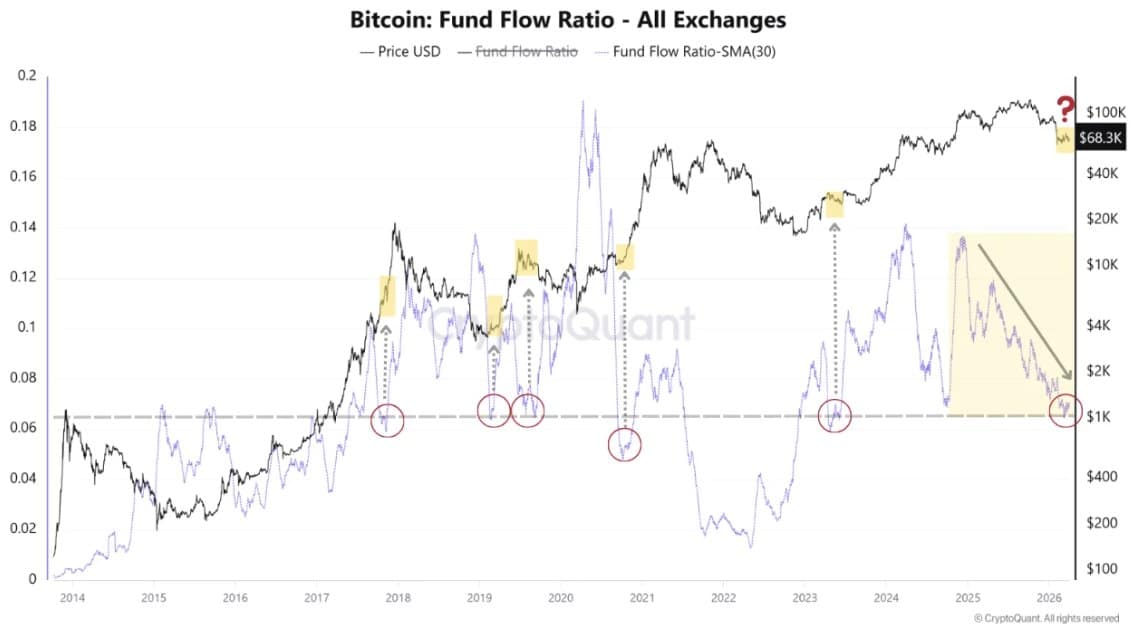
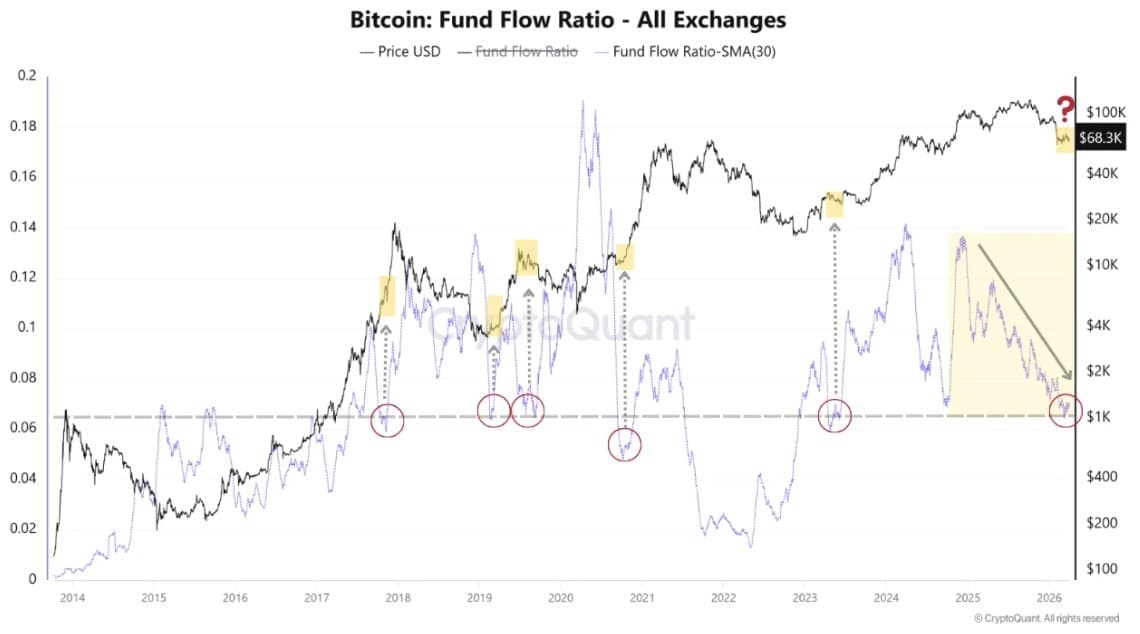
The case for a potential rebound rests on declining speculative activity and improving supply dynamics on exchanges. With fewer speculative trades and more stable supply conditions, the market structure begins to favor a bullish setup.
However, the Fund Flow Ratio is not fixed at this level. A move lower would shift the outlook, opening the door to continued distribution.
In that scenario, increased selling activity and renewed speculative pressure could extend Bitcoin’s downside.
Bitcoin fees point to cooling activity
Additional on-chain indicators reinforce the possibility of a rebound, although they also highlight weakening participation.
Bitcoin transaction fees, measured in USD, have fallen to one of their lowest levels in six years.
This decline mirrors conditions last seen in 2022, just before Bitcoin staged a notable recovery.
Low transaction fees typically reflect reduced on-chain demand, as fewer participants actively transact.
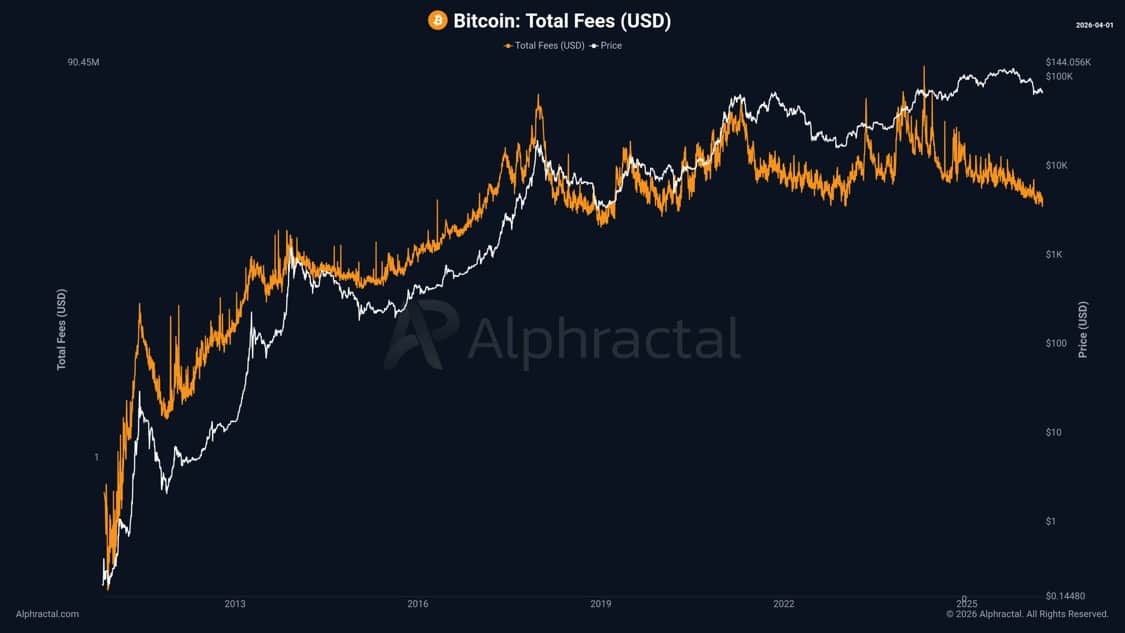
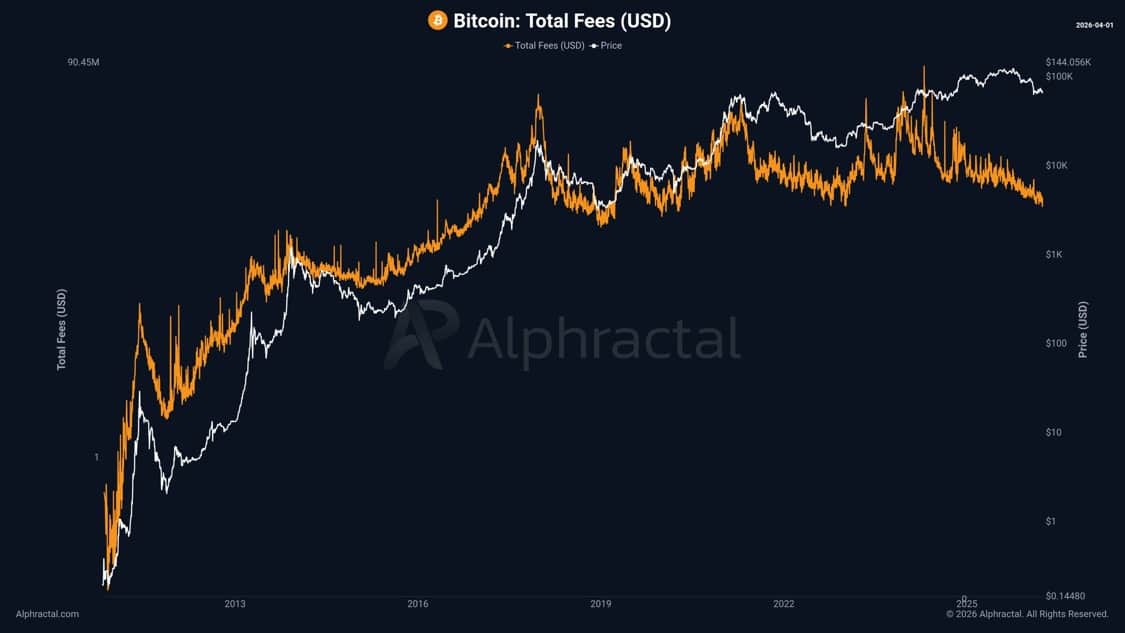
This suggests that many traders have either stepped back from the market or already redistributed their holdings across exchanges, aligning with signals from the Fund Flow Ratio.
If Bitcoin holds around current levels, the probability of a rebound remains intact. Still, any meaningful recovery will depend on renewed capital inflows.
Bitcoin capital remains thin
Spot market activity, a key indicator of retail participation through exchange inflows and outflows, remains weak.
Over the past week, the market has recorded limited buying and selling pressure. As of the 1st of April, net inflows totaled approximately $71 million, indicating relatively low sell-side activity.
However, since the 30th of March, liquidity has leaned toward sellers, with about $108 million worth of Bitcoin distributed into the market.
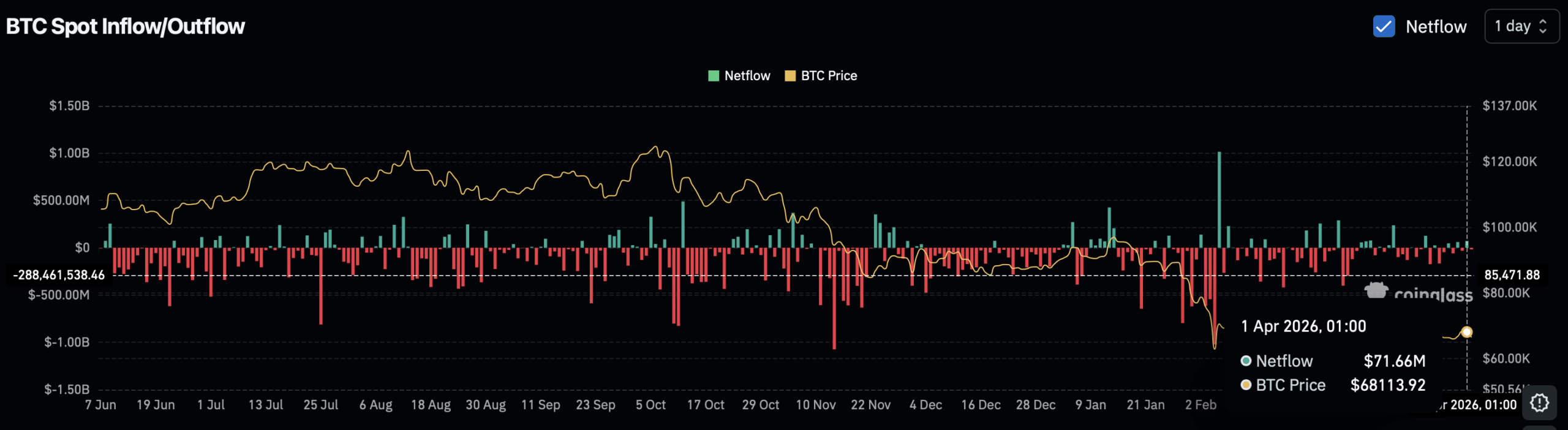
Until stronger capital inflows return, the likelihood of a sustained rebound remains limited, even as on-chain signals begin to hint at a potential bottom.
Final Summary
- Bitcoin [BTC] traded near $66K after a macro-driven pullback, with conditions hinting at a possible bottom forming.
- Spot market activity remains thin, with weak inflows and limited buying pressure constraining upside momentum.