Bitcoin Falls After Fed Pauses Meeting, While Gold Performs Strongly Amid Rising Risks

marsbitPublished on 2026-01-29Last updated on 2026-01-29

Abstract

The Federal Reserve's decision to pause rate cuts and maintain the federal funds target rate between 3.50% and 3.75% reinforced a cautious monetary policy stance, dampening market expectations for near-term easing. This led to a divergence in asset performance: gold prices strengthened as investors sought safe-haven assets amid rising macroeconomic uncertainty, including geopolitical tensions and potential U.S. government shutdown risks. In contrast, Bitcoin declined slightly, reflecting its sensitivity to liquidity conditions and risk appetite. The reaction underscores gold’s role as a defensive asset during periods of policy uncertainty, while Bitcoin behaved more like a risk-sensitive speculative asset. Broader macro risks continue to favor caution, with gold expected to outperform in the short term.

Just hours before the Federal Open Market Committee (FOMC) meeting, I wrote an article titled [How to Interpret the Fed's Interest Rate Cut Signals: Analyzing Tonight's FOMC Meeting Through Market Data], providing a brief analysis of the magnitude and depth of the rate cuts.

At the end of the article, I presented a clear bearish conclusion and simultaneously established short positions in Bitcoin and long positions in gold.

Now that the FOMC meeting has concluded, the market reaction has unfolded exactly as we predicted. Let's take a closer look.

Latest FOMC Meeting Decision and Interest Rate Policy Background

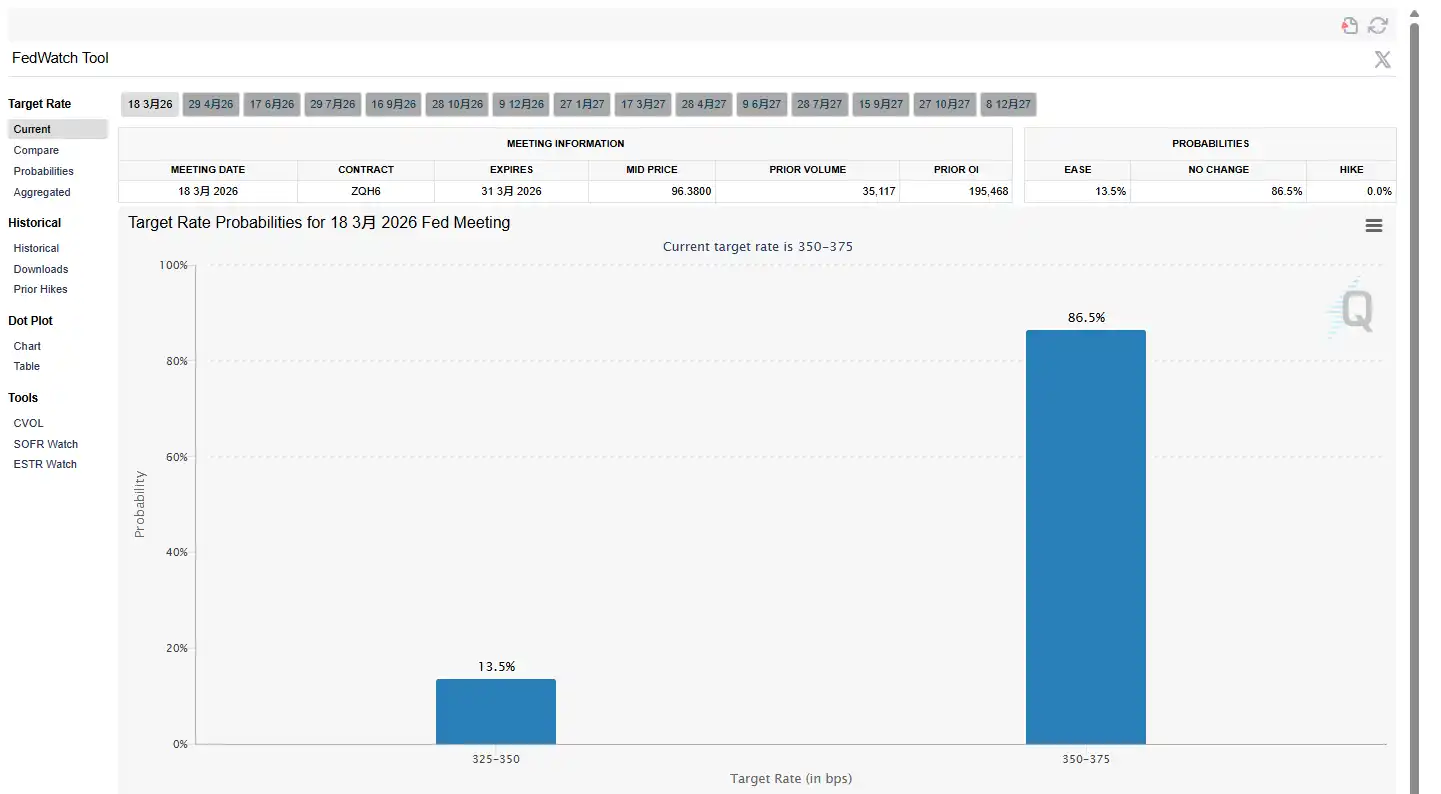
The decision from the recent Federal Open Market Committee (FOMC) meeting aligned with broad market expectations, yet its implications were far more complex than imagined. Policymakers voted to maintain the federal funds target rate unchanged at 3.50% to 3.75%, continuing the pause in rate hikes following multiple cuts in 2025. Although the final outcome was anticipated, the message conveyed was far from neutral.

This meeting essentially confirmed that the Fed is not prepared to accelerate monetary easing. Officials emphasized the need for sustained and convincing evidence that inflation is steadily moving toward the 2% target before making further policy adjustments. Consequently, investors were forced to reassess their previously growing expectations for a faster and smoother rate-cutting cycle.

The timing of the decision was also crucial. Global markets were already in a state of high uncertainty, with strong U.S. economic data reducing the urgency for stimulus, while fiscal and geopolitical risks continued to accumulate. Against this backdrop, the Fed's pause sent a signal of caution rather than reassurance.
Jerome Powell's Press Conference and Fed Policy Signals

During the post-meeting press conference, Chairman Jerome Powell reiterated a stance of patience and restraint. He stated that the U.S. economy is robust, pointing to stable economic growth and a labor market that is stabilizing without signs of sharp deterioration. Simultaneously, Powell acknowledged that inflation remains above target and progress across sectors is uneven.

Notably, Powell did not provide clear guidance on the timing of future rate cuts. He emphasized that monetary policy decisions will remain data-dependent, and the committee is prepared to maintain the current rates for a longer period if inflationary pressures persist. The market interpreted this lack of forward commitment as a signal that easing is not imminent.

Powell reiterated that the Fed's goal is not asset prices. He stressed that the Fed's focus remains on price stability and full employment. While this stance aligns with the Fed's long-standing principles, financial markets have become increasingly reliant on expectations of liquidity easing.

Interest Rate Expectations Post-FOMC Meeting

Prior to the meeting, futures markets reflected strong expectations for rate cuts in the coming months. Following the Fed's statement and Powell's remarks, these expectations noticeably weakened. This shift did not eliminate the possibility of future cuts but raised the threshold for action.

This adjustment is critical because markets react not only to policy moves but also to changes in expectations. Even without a rate hike, signaling a prolonged pause can tighten financial conditions by supporting the U.S. dollar, keeping real yields elevated, and dampening risk appetite.

In effect, the Fed reinforced the view that liquidity conditions will remain constrained in the near term. For assets sensitive to monetary expansion, this is undoubtedly a headwind.

Gold's Response to the Fed Meeting and Macroeconomic Uncertainty

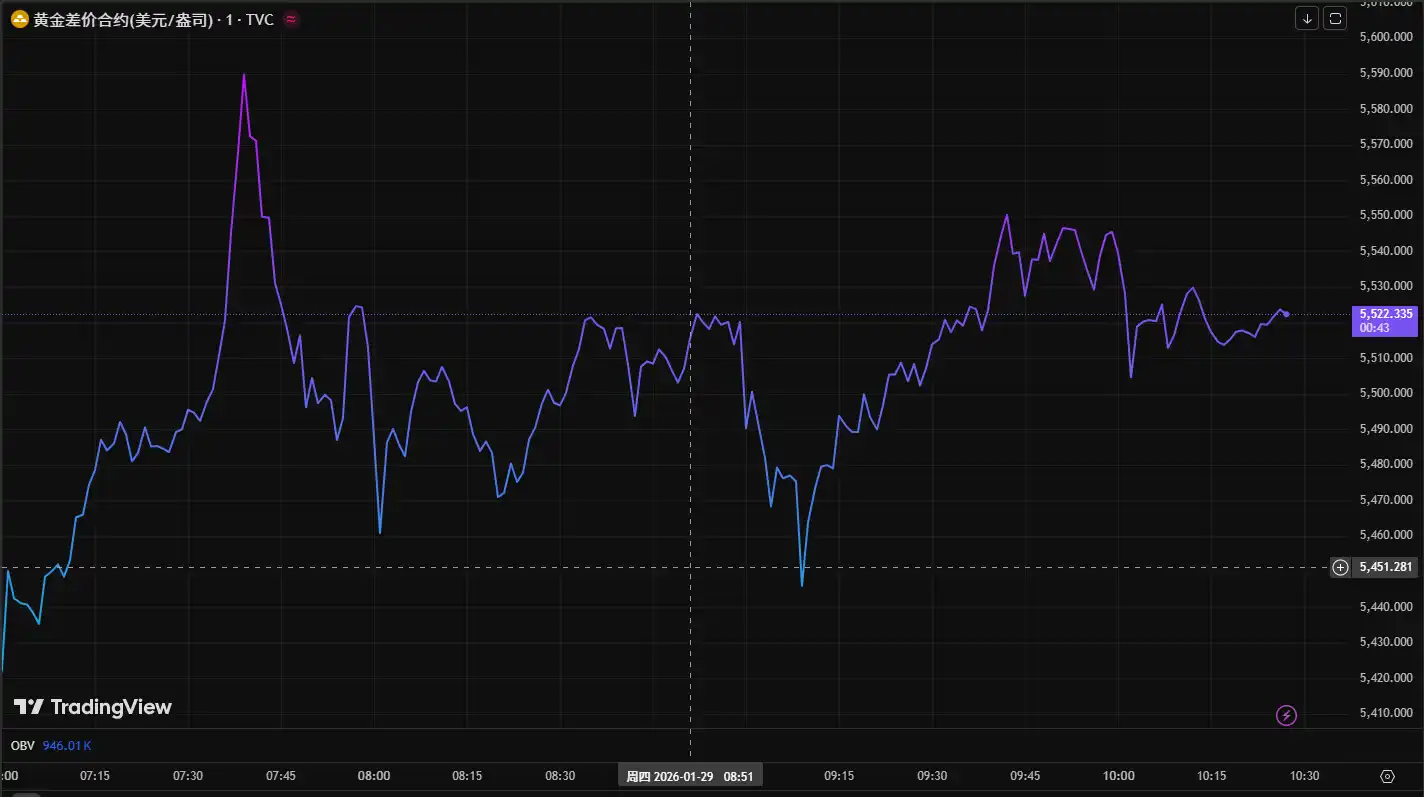
Gold emerged as one of the clearest beneficiaries following the FOMC meeting. Prices strengthened steadily after the decision was announced, reflecting renewed demand for safe-haven assets amid policy uncertainty.

Unlike growth or speculative assets, gold does not rely on economic expansion or earnings momentum. It tends to perform well when investors seek hedges against inflation risk, geopolitical tensions, or policy uncertainty. The Fed's cautious tone, while not explicitly hawkish, heightened concerns that tight policies might persist longer than expected.

Furthermore, broader macro factors enhanced gold's appeal. Ongoing debates over U.S. government funding and escalating geopolitical tensions increased demand for traditional safe-haven assets. In this context, gold's role as a store of value was reaffirmed.

For research on gold, please refer to my article dated January 6, 2026. Following the article's publication, I also purchased physical gold and low-leverage long contracts.

Recent sharp rises in the prices of gold, silver, and other precious metals have led some investors to hesitate at current levels. For investment advice at these price points, please stay tuned for my upcoming article.
Bitcoin Price Decline Post-Fed Decision

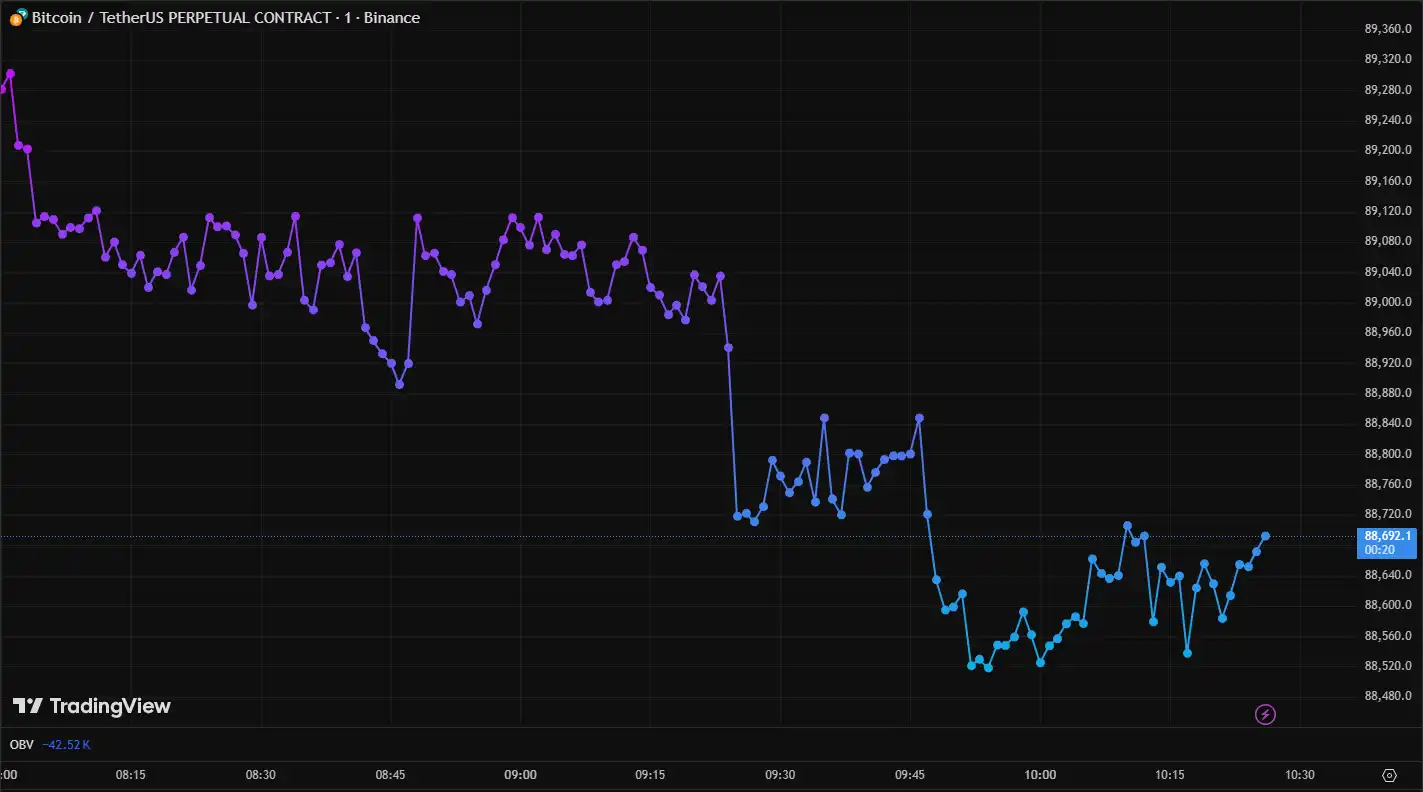
Bitcoin's reaction was markedly different from gold's. Within hours of the FOMC decision, Bitcoin's price fell from approximately $89,631 to $88,649, reflecting a modest but noticeable shift toward risk-off sentiment.

While the move was not dramatic, it was significant in context. Bitcoin had previously been trading in a fragile range, and the Fed's stance removed a potential catalyst for near-term gains. As expectations for imminent rate cuts diminished, traders' willingness to maintain aggressive long positions waned.

This reaction underscores a persistent reality: despite its long-touted role as a hedge against fiat devaluation, Bitcoin often behaves like a liquidity-sensitive risk asset during periods of monetary policy uncertainty. When the prospect of easing fades, crypto markets tend to face short-term pressure.
Why Did Gold Outperform Bitcoin After the FOMC Meeting?

The divergence between gold and Bitcoin reflects structural differences in investor behavior. Gold is widely viewed as a defensive asset, typically rising when confidence in monetary or fiscal stability wanes. In contrast, Bitcoin's status is more complex, straddling the line between macro hedge and speculative asset.

Institutional investors often adjust gold allocations as part of their overall risk management strategy. Crypto allocations, however, are more tactical and sensitive to short-term changes in liquidity expectations. Thus, even if Bitcoin is consolidating or declining, gold can still advance during periods of uncertainty.

This divergence does not negate Bitcoin's long-term narrative, but it highlights the importance of macro timing. In the short term, liquidity conditions continue to play a dominant role in crypto price action.

Macro Risks Beyond the FOMC Meeting

The FOMC decision does not exist in isolation. Several other risk factors are converging, adding pressure to an already fragile market environment.

A key concern is a potential U.S. government shutdown. Ongoing fiscal negotiations heighten the chance of a funding disruption, which could undermine investor confidence and increase financial market volatility.

Meanwhile, geopolitical tensions remain elevated. Developments in U.S.-Iran relations have reintroduced uncertainty into energy markets and the global security landscape. Any escalation could further complicate the outlook for inflation and dampen growth expectations.

These intertwined risks make markets more vulnerable to negative surprises and reduce tolerance for speculative positioning.

Risk Management and Market Outlook Post-FOMC

In summary, the recent FOMC meeting delivered another message of caution. The Fed remains focused on controlling inflation, even if that means maintaining restrictive monetary policy for longer than markets expect. At the same time, fiscal uncertainty and geopolitical risks continue to cloud the economic outlook.

Gold will likely continue to benefit from this environment, especially if uncertainty intensifies. Bitcoin and the broader crypto market, however, may remain volatile, with short-term moves influenced by shifts in liquidity expectations and macroeconomic news.

In this climate, disciplined risk management is essential. While long-term trends remain intact, the near-term landscape favors patience and vigilance over aggressive strategies.

The above views are from @AAAce4518

Related Questions

QWhat was the main outcome of the recent FOMC meeting regarding interest rates?

AThe Federal Open Market Committee (FOMC) voted to maintain the federal funds target rate unchanged at 3.50% to 3.75%, signaling a pause in rate cuts and emphasizing the need for sustained evidence of inflation moving toward the 2% target before any further policy adjustments.

QHow did Bitcoin react to the FOMC meeting decision, and why?

ABitcoin's price declined from approximately $89,631 to $88,649 following the FOMC decision, reflecting a risk-off sentiment. This reaction occurred because the Fed's cautious stance reduced expectations for near-term rate cuts, diminishing traders' willingness to maintain aggressive long positions in liquidity-sensitive risk assets like Bitcoin.

QWhy did gold perform strongly after the FOMC meeting?

AGold prices strengthened due to increased demand for safe-haven assets amid policy uncertainty. The Fed's cautious tone heightened concerns that tight monetary policy might persist longer than expected, and broader macro risks such as geopolitical tensions and U.S. government funding debates further boosted gold's appeal as a store of value.

QWhat key factors did Jerome Powell emphasize during his post-FOMC press conference?

AJerome Powell reiterated a patient and restrained stance, highlighting the U.S. economy's robustness with stable growth and a steady labor market. He acknowledged that inflation remains above target and progress across sectors is uneven, emphasizing that future policy decisions will be data-dependent and that the Fed is prepared to maintain current rates longer if inflationary pressures persist.

QWhat broader macro risks are currently affecting market sentiment besides the FOMC decision?

AAdditional macro risks include the potential U.S. government shutdown due to ongoing fiscal negotiations, which could undermine investor confidence, and heightened geopolitical tensions, particularly in U.S.-Iran relations, which may complicate inflation outlooks and dampen growth expectations, making markets more vulnerable to negative surprises.

Related Reads

Outpoll Review: A Prediction Market Platform Built for Active Traders

Outpoll Review: A Prediction Market Platform Built for Active Traders In recent years, prediction markets have grown from a niche sector to a mainstream arena, attracting billions in trading volume and institutional capital. However, the user experience and tools for traders have not kept pace. Outpoll, a new global prediction market platform, aims to fill this gap by providing enhanced trading infrastructure for active and professional traders. Built on standard prediction market principles, Outpoll allows users to trade on the outcome of specific events. It uses fully collateralized contracts with USDC settlement, charges a competitive 0.1% fee per trade, and provides clear settlement rules upfront to minimize disputes. A key focus for Outpoll is its professional-grade trading tools. The platform supports limit and market orders, as well as take-profit and stop-loss orders for open positions—features uncommon in prediction markets. For automated trading, Outpoll offers comprehensive REST and WebSocket APIs, enabling portfolio management, price arbitrage, and integration with existing tools. The platform also features a creator-led market model, where approved experts and community leaders can create and manage markets for niche topics under platform supervision. Its integrated interface combines news feeds directly with trading functions, allowing users to monitor events and manage positions seamlessly. Outpoll launched with a native Android app (available on Google Play) and plans an iOS version later this year. In summary, Outpoll distinguishes itself with trader-focused tools, practical APIs, transparent and collateralized markets, integrated news, and an expanding creator program. For active traders, its advanced order types and API access alone make it a platform worth watching. Outpoll is now globally accessible via outpoll.com and Google Play.

marsbit2m ago

Outpoll Review: A Prediction Market Platform Built for Active Traders

marsbit2m ago

Bitwise: Crypto Becomes a Contrarian Investment, Three Logics to Understand the Current Market

**Summary** Matt Hougan, Bitwise's CIO, analyzes the current crypto market through three key lenses, arguing it has shifted from a momentum-driven to a contrarian investment. **1) Crypto Becomes a Contrarian Play:** The market is weak, with major assets like Bitcoin and Ethereum down significantly. Capital has moved to hot sectors like AI, leaving crypto as an "unloved" asset class. This transforms crypto investing from trend-following to a test of patience and fundamental analysis. Investors now favor projects with solid fundamentals (e.g., Hyperliquid) over speculative ones. **2) Regulatory Overhang:** The uncertain fate of the U.S. CLARITY Act, a major crypto regulatory framework, is a key headwind. With its passage in 2024 seen as far from guaranteed (estimates range from 30-55%), institutional capital remains on the sidelines, choosing less risky alternatives like AI stocks. The market needs clarity—whether the bill passes or fails—more than any specific outcome to move decisively. **3) Capital Rotates to New Fundamentals:** This cycle differs from past bear markets where money fled to Bitcoin. Now, capital seeks smaller assets with strong use cases. While major cryptos fell in May 2024, tokens like Hyperliquid (+72%), Zcash (+50%), and XLM (+44%) rallied on their specific fundamentals. This rotation confirms the new contrarian, fundamentals-driven logic and signals the bear market may be in its later stages. **Conclusion:** Short-term pressure persists due to regulatory uncertainty and competition from AI narratives. Investing in crypto now requires a contrarian mindset—acting against the crowd and focusing on fundamental value. Patience and targeting high-quality projects based on their merits are essential for capturing long-term gains.

marsbit45m ago

Bitwise: Crypto Becomes a Contrarian Investment, Three Logics to Understand the Current Market

marsbit45m ago

ChatGPT Might Be Disappearing Soon

OpenAI announced at its "Intelligence at Work" event that its coding assistant, Codex, will be fully integrated into the ChatGPT app within weeks. This move marks a strategic shift from a conversational AI (Chat) towards a unified "agentic" platform capable of execution. Codex, originally launched to compete with Anthropic's Claude Code, has grown rapidly to 5 million weekly active users, with 20% being non-developers like analysts and designers. Its enterprise revenue now constitutes 40% of OpenAI's total. The integration is the first step in creating a super-app combining ChatGPT (interface), Codex (execution engine), and the Atlas browser (web access). OpenAI also unveiled new Codex features: specialized Agent plugins for six professional roles, an "Annotations" tool for direct document editing, and a "Sites" function to turn work into shareable web apps. Internally, this reflects a power shift; the Codex team now leads core product strategy. While the ChatGPT brand remains for its vast user base, the platform's future is focused on autonomous agents that perform tasks, not just chat. The article notes that competition with Claude Code pushed OpenAI's development, with Codex competing on cost-effectiveness and accessibility rather than raw coding quality. It concludes that the essence of "ChatGPT" is evolving from a chatbot into an AI agent platform, with the name potentially becoming a legacy symbol of its original function.

marsbit55m ago

ChatGPT Might Be Disappearing Soon

marsbit55m ago

WWDC26 Ultimate Preview: The All-New Siri is the Main Course, iOS 27 is Another Year of Refinements

Apple has confirmed WWDC26 will begin on June 8, with the keynote at 10 AM PT (1 AM Beijing Time, June 9). This year's focus is expected to shift significantly from routine OS updates to Apple's progress in AI, particularly a major overhaul of Siri. Reports indicate the highlight will be a new Siri, reportedly powered by Google's Gemini technology. This upgraded assistant is expected to appear as a lightweight bubble from the Dynamic Island and be accessible via a unified "Search or Ask" system-wide entry point. It aims to deeply integrate with iOS 27, iPadOS 27, and macOS 27, accessing personal data like messages, photos, and documents, with a potential standalone Siri app also in development. For iOS 27, leaks suggest incremental improvements rather than major redesigns. Key updates may include a redesigned, more customizable Camera app, enhanced photo editing tools within the Photos app, and potential early system optimizations for a future foldable iPhone. The update is also rumored to prioritize bug fixes, stability, and performance optimization. iPadOS 27 is anticipated to focus on improving productivity features like window management, file systems, and external display support to better utilize the iPad's hardware. macOS 27 is seen as a core platform for Apple Intelligence, likely receiving an optimized Siri, new AI features, and continued refinement of the "Liquid Glass" design language. Notably, macOS 27 may finally drop support for Intel-based Macs. The overarching theme for WWDC26 is whether Apple can effectively integrate AI across its ecosystem. The success of the new Siri and Apple Intelligence will be judged on their ability to move beyond standalone features and become a cohesive, context-aware system layer that understands user workflows across iPhone, iPad, Mac, and other devices, while maintaining Apple's emphasis on privacy and stability. The conference represents Apple's critical attempt to catch up and redefine the AI assistant experience after a perceived slow start in the generative AI era.

marsbit1h ago

WWDC26 Ultimate Preview: The All-New Siri is the Main Course, iOS 27 is Another Year of Refinements

marsbit1h ago

Trading

Spot
Futures

Hot Articles

What is $BITCOIN

DIGITAL GOLD ($BITCOIN): A Comprehensive Analysis Introduction to DIGITAL GOLD ($BITCOIN) DIGITAL GOLD ($BITCOIN) is a blockchain-based project operating on the Solana network, which aims to combine the characteristics of traditional precious metals with the innovation of decentralized technologies. While it shares a name with Bitcoin, often referred to as “digital gold” due to its perception as a store of value, DIGITAL GOLD is a separate token designed to create a unique ecosystem within the Web3 landscape. Its goal is to position itself as a viable alternative digital asset, although specifics regarding its applications and functionalities are still developing. What is DIGITAL GOLD ($BITCOIN)? DIGITAL GOLD ($BITCOIN) is a cryptocurrency token explicitly designed for use on the Solana blockchain. In contrast to Bitcoin, which provides a widely recognized value storage role, this token appears to focus on broader applications and characteristics. Notable aspects include: Blockchain Infrastructure: The token is built on the Solana blockchain, known for its capacity to handle high-speed and low-cost transactions. Supply Dynamics: DIGITAL GOLD has a maximum supply capped at 100 quadrillion tokens (100P $BITCOIN), although details regarding its circulating supply are currently undisclosed. Utility: While precise functionalities are not explicitly outlined, there are indications that the token could be utilized for various applications, potentially involving decentralized applications (dApps) or asset tokenization strategies. Who is the Creator of DIGITAL GOLD ($BITCOIN)? At present, the identity of the creators and development team behind DIGITAL GOLD ($BITCOIN) remains unknown. This situation is typical among many innovative projects within the blockchain space, particularly those aligning with decentralized finance and meme coin phenomena. While such anonymity may foster a community-driven culture, it intensifies concerns about governance and accountability. Who are the Investors of DIGITAL GOLD ($BITCOIN)? The available information indicates that DIGITAL GOLD ($BITCOIN) does not have any known institutional backers or prominent venture capital investments. The project seems to operate on a peer-to-peer model focused on community support and adoption rather than traditional funding routes. Its activity and liquidity are primarily situated on decentralized exchanges (DEXs), such as PumpSwap, rather than established centralized trading platforms, further highlighting its grassroots approach. How DIGITAL GOLD ($BITCOIN) Works The operational mechanics of DIGITAL GOLD ($BITCOIN) can be elaborated on based on its blockchain design and network attributes: Consensus Mechanism: By leveraging Solana’s unique proof-of-history (PoH) combined with a proof-of-stake (PoS) model, the project ensures efficient transaction validation contributing to the network's high performance. Tokenomics: While specific deflationary mechanisms have not been extensively detailed, the vast maximum token supply implies that it may cater to microtransactions or niche use cases that are still to be defined. Interoperability: There exists the potential for integration with Solana’s broader ecosystem, including various decentralized finance (DeFi) platforms. However, the details regarding specific integrations remain unspecified. Timeline of Key Events Here is a timeline that highlights significant milestones concerning DIGITAL GOLD ($BITCOIN): 2023: The initial deployment of the token occurs on the Solana blockchain, marked by its contract address. 2024: DIGITAL GOLD gains visibility as it becomes available for trading on decentralized exchanges like PumpSwap, allowing users to trade it against SOL. 2025: The project witnesses sporadic trading activity and potential interest in community-led engagements, although no noteworthy partnerships or technical advancements have been documented as of yet. Critical Analysis Strengths Scalability: The underlying Solana infrastructure supports high transaction volumes, which could enhance the utility of $BITCOIN in various transaction scenarios. Accessibility: The potential low trading price per token could attract retail investors, facilitating wider participation due to fractional ownership opportunities. Risks Lack of Transparency: The absence of publicly known backers, developers, or an audit process may yield skepticism regarding the project's sustainability and trustworthiness. Market Volatility: The trading activity is heavily reliant on speculative behavior, which can result in significant price volatility and uncertainty for investors. Conclusion DIGITAL GOLD ($BITCOIN) emerges as an intriguing yet ambiguous project within the rapidly evolving Solana ecosystem. While it attempts to leverage the “digital gold” narrative, its departure from Bitcoin's established role as a store of value underscores the need for a clearer differentiation of its intended utility and governance structure. Future acceptance and adoption will likely depend on addressing the current opacity and defining its operational and economic strategies more explicitly. Note: This report encompasses synthesised information available as of October 2023, and developments may have transpired beyond the research period.

363 Total ViewsPublished 2025.05.13Updated 2025.05.13

What is $BITCOIN

Discussions

Welcome to the HTX Community. Here, you can stay informed about the latest platform developments and gain access to professional market insights. Users' opinions on the price of BTC (BTC) are presented below.

活动图片















