Bitcoin Caught In The Crossfire As Trump’s Iran Deadline Nears

bitcoinistPublished on 2026-04-08Last updated on 2026-04-08

Abstract

Trump's threat to bomb Iranian civilian infrastructure by midnight Tuesday has escalated tensions, with Iran calling for human chains to protect power plants. Bitcoin dropped 2.5% to around $68,210 as ceasefire hopes faded, reflecting market anxiety. The cryptocurrency has been volatile since the conflict began, fluctuating between $66,000 and $71,000. Iran rejected a 45-day truce proposal, demanding a permanent end to hostilities, while Trump called the situation a "critical period." Israel confirmed killing a top IRGC commander, further intensifying the conflict.

Young Iranians were being called to form human chains around their country’s power plants Tuesday — a sign of just how seriously Tehran is taking US President Donald Trump’s threat to bomb the nation’s civilian infrastructure before the day was out.

Tehran Pushes Back On Trump’s Ultimatum

Iran’s deputy minister of youth and sports, Alireza Rahimi, posted a public call on X urging athletes, artists, and young citizens to stand beside power stations across the country at 2 p.m. local time.

“Attacking public infrastructure is a war crime,” he wrote. The appeal came hours after Trump told reporters Monday that the US holds a plan to wipe out every Iranian bridge and power plant by midnight Tuesday — a deadline he tied to Iran’s refusal to reopen the Strait of Hormuz, the narrow waterway through which a significant share of the world’s oil passes.

Trump would not say whether the war was winding down or intensifying. He called it a “critical period” that depended entirely on what Iran chose to do next. But he left little doubt about the consequences if Tehran held firm. Iran, he said, could be “taken out in one night” — and that night might be Tuesday.
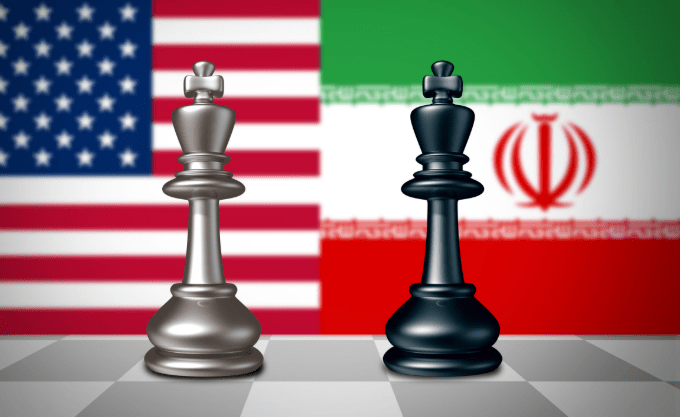
Image Credits: Photo: iStock: theasis

Iran’s Islamic Revolutionary Guards Corps fired back, calling Trump’s statements the “baseless” ramblings of a “delusional” president facing military setbacks. IRGC spokesman Ebrahim Zolfaqari warned that any repeated strikes on non-civilian sites would trigger a far larger retaliatory response. Iran’s foreign ministry separately urged Americans to hold their own government accountable for what it described as an unjust and aggressive war.

A ceasefire proposal drafted by mediating countries — calling for a 45-day pause and the reopening of the strait — went nowhere fast. Trump dismissed it Monday as a significant step but said it fell short. Iran rejected it outright, demanding a permanent end to the fighting rather than a temporary truce.

Commanders Killed, Nuclear Site Hit

The battlefield picture grew darker by the hour. Israel confirmed it killed Majid Khademi, the head of the IRGC’s intelligence organization, early Monday. Israel’s defense minister said Khademi bore direct responsibility for Israeli civilian deaths and was among the three most senior figures in the revolutionary guards.

BTCUSD now trading at $68,118. Chart: TradingView

Iran’s supreme leader, Mojtaba Khamenei — who has not appeared in public since taking over following the assassination of his father at the start of the war — issued a written statement vowing that the killings would not break his forces.

Bitcoin Slides As Ceasefire Hopes Collapse

Markets are feeling the tension. Bitcoin was trading around $68,210 on Tuesday, down roughly 2.50% as Trump’s deadline drew closer and ceasefire hopes faded. The cryptocurrency had briefly climbed to nearly $69,700 on Monday after news broke of the 45-day truce proposal, with trading volume spiking above $29 billion during a 3%-plus surge.

Reports indicate Bitcoin has been swinging between $66,000 and $71,000 since the conflict began in late February, mirroring how it behaved during earlier geopolitical shocks — dropping sharply on escalation, recovering when talks flicker.

Featured image from Unsplash, chart from TradingView

Trending Cryptos

Related Questions

QWhat action did Iran's deputy minister of youth and sports call for in response to Trump's threats?

AAlireza Rahimi called on athletes, artists, and young citizens to form human chains around power plants across Iran at 2 p.m. local time to denounce the U.S. bombing threats.

QWhat was the deadline set by President Trump for Iran, and what was the consequence if not met?

ATrump set a deadline of midnight Tuesday for Iran to reopen the Strait of Hormuz, threatening to bomb every Iranian bridge and power plant if the demand was not met.

QHow did Bitcoin's price react to the geopolitical tensions and the ceasefire proposal?

ABitcoin's price dropped roughly 2.50% to around $68,210 as Trump's deadline approached and ceasefire hopes faded, after briefly surging to nearly $69,700 on news of the 45-day truce proposal.

QWhat was Iran's response to the ceasefire proposal drafted by mediating countries?

AIran rejected the ceasefire proposal outright, demanding a permanent end to the fighting instead of a temporary 45-day truce.

QWhich senior Iranian official did Israel confirm killing, and what was his role?

AIsrael confirmed killing Majid Khademi, the head of the IRGC’s intelligence organization, who was among the three most senior figures in the revolutionary guards and bore direct responsibility for Israeli civilian deaths.

Related Reads

CPU Makes a Comeback to the Table, A $170 Billion "Power Seizure" Drama Begins

A new era is dawning for the server CPU (Central Processing Unit), driven by the shift from AI model training to large-scale reasoning and the rise of Agentic AI. This article explores how the CPU is reclaiming a central role in the AI data center. For years, the focus has been on the GPU (Graphics Processing Unit) for AI training. However, as AI moves to the inference and Agent phase—where tasks involve complex, multi-step reasoning, tool calls, and data management—the workload balance is flipping. Studies show CPUs now handle over 70% of the workload in Agentic AI, up from 10-30% in training. This is because Agent tasks generate massive intermediate data (KV Cache) that exceeds GPU memory, forcing it to be offloaded to the CPU's larger, more scalable memory pools. This increased importance is translating into market changes. Major players are taking note: NVIDIA launched its first standalone CPU line, Vera, based on ARM architecture and optimized for Agent performance. AMD doubled its server CPU market forecast to over $1200 billion by 2030. Analyst reports project the total server CPU market could reach $1700 billion by 2030, with AI-driven demand being a primary driver. Furthermore, the classic ratio of CPUs to GPUs in AI servers is rapidly changing, converging from 1:8 toward 1:1 for Agent deployments. This surge in demand has led to a rare industry-wide price increase of 10-15% for server CPUs from Intel and AMD, breaking a decade-long trend of "more performance for the same price." Demand is bifurcating into high-core-count CPUs for in-rack GPU support and moderate-core CPUs for standalone Agent task orchestration. In China, this global trend presents an opportunity for domestic CPU manufacturers like Hygon (海光信息) and Huawei Kunpeng, who are bolstered by both growing AI infrastructure needs and national policies promoting technological self-reliance ("xin chuang"). The maturity of their software ecosystems is also accelerating, evidenced by faster adaptation to new AI models. In conclusion, the narrative is shifting from a GPU-centric view to one where CPU-GPU synergy is critical. The CPU is no longer a peripheral component but a performance-defining bottleneck and a key growth driver in the AI hardware stack, opening a massive new market estimated in the hundreds of billions of dollars.

marsbit1h ago

CPU Makes a Comeback to the Table, A $170 Billion "Power Seizure" Drama Begins

marsbit1h ago

TechFlow Intelligence: AMD AI Director Publicly Criticizes Claude Code for "Becoming Dumber and Lazier", Trump Claims Full Ceasefire in Hormuz But Strait Still Has 80 Unexploded Mines

TechFlow Intelligence Report: This daily digest covers key developments in AI, crypto, hardware, and geopolitics. In AI, SK Telecom faces US export control scrutiny over its partnership with Anthropic, while a Gemini user reports being misled in a scam scenario, sparking safety debates. China's Z.AI launches the GLM-5.2 model, rivaling Claude Opus without NVIDIA chips. In crypto, Bithumb lists ReProtocol, and Upbit delists KernelDAO. On the hardware front, MIT researchers build a custom OS to study chips, ASML denies US claims its advanced lithography machines are in China, and Amazon considers selling its in-house AI chips. Apple's future A21 Pro chip may use TSMC's latest N2P process. Major tech issues include 10,000 GitHub repositories distributing malware and Apple patching a critical eavesdropping flaw in Beats earbuds. US stocks rise, led by semiconductors, with Intel surging 10.6%, while SpaceX falls 3.5%. Geopolitically, despite a US-Iran deal, the Strait of Hormuz remains risky with ~80 uncleared mines, stalling 80M barrels of oil on standby tankers. Iran postpones Switzerland talks, and Trump calls the agreement an "unconditional surrender." The report highlights a contrast: temporary geopolitical calm versus the ongoing, fundamental restructuring of tech supply chains and chip independence.

marsbit1h ago

TechFlow Intelligence: AMD AI Director Publicly Criticizes Claude Code for "Becoming Dumber and Lazier", Trump Claims Full Ceasefire in Hormuz But Strait Still Has 80 Unexploded Mines

marsbit1h ago

Trading

Spot
Futures

Hot Articles

Discussions

Welcome to the HTX Community. Here, you can stay informed about the latest platform developments and gain access to professional market insights. Users' opinions on the price of S (S) are presented below.

活动图片