Bitcoin catches a bid, but data shows pro traders skeptical of rally above $92K

cointelegraphPublished on 2025-12-08Last updated on 2025-12-08

Abstract

Bitcoin's attempt to break above $92,250 failed, leading to a $2,650 pullback amid broader economic uncertainty. Pro traders remain cautious, with futures premiums below 5% and increased demand for downside protection, as seen in elevated put option premiums. Weakness in U.S. job market data, rising layoffs, and a softening housing market have dampened sentiment. Additionally, stablecoins are trading at a discount in China, signaling capital flight from crypto markets. Despite a strong S&P 500, Bitcoin's underperformance reflects risk aversion. Near-term recovery to $100,000 depends on improved macroeconomic clarity, particularly stronger jobs and real estate data.

Key takeaways:

  • Economic uncertainty, a delayed jobs report and weakness in the housing market are causing traders to retreat from Bitcoin.

  • Pro traders are incurring high costs to protect against Bitcoin price drops, while in China, stablecoins are being sold at a discount to exit the crypto market.

Bitcoin (BTC) faced a $2,650 pullback after failing to break above $92,250 on Monday. The move followed a reversal in the US stock market amid uncertainty over job market conditions and growing unease about stretched valuations in artificial intelligence investments.

Traders now wait for the US Federal Reserve (Fed) monetary policy decision on Wednesday, but the odds of a quick recovery to $100,000 depend on risk perception.
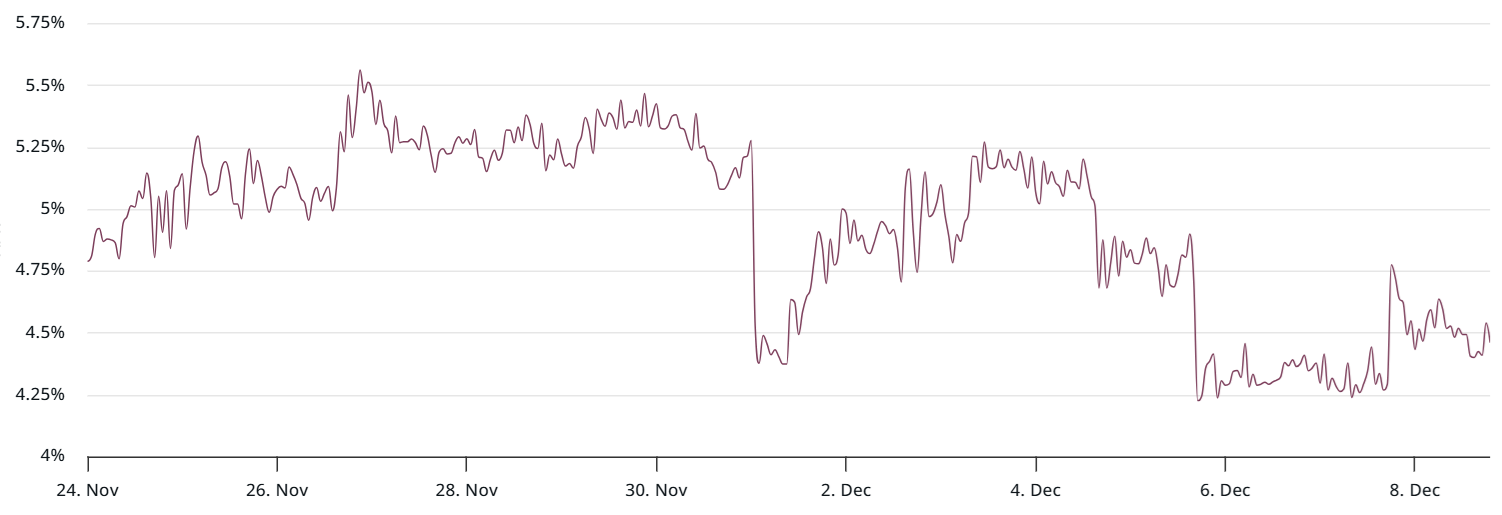
Bitcoin 3-month futures annualized basis rate. Source: Laevitas.ch

The Bitcoin monthly futures premium relative to spot prices (basis rate) has remained below the neutral 5% threshold for the past two weeks. The weak demand for bullish leverage mirrors Bitcoin’s 28% decline since its October all-time high. Still, worries about global economic growth have also influenced sentiment.

Official US government data on employment and inflation has been delayed due to the 43-day funding shutdown that ended in November, resulting in reduced visibility into economic conditions. As a result, the consensus around a 0.25% interest rate cut in December has not been enough to spark optimism, especially after a private job report showed 71,321 layoffs in November.

Additional pressure came from the US real estate market after Redfin data showed that 15% of home purchase agreements were cancelled in October, citing high housing costs and rising economic uncertainty. Moreover, CNBC reported that delistings rose 38% from October 2024, while the median list price in November slipped 0.4% from a year earlier.

Bitcoin underperformed the stock market, signaling risk-aversion

Bitcoin’s drop to $90,000 accelerated after the forceful liquidation of $92 million in bullish leveraged BTC futures. The weak macroeconomic outlook may have pressured Bitcoin traders’ sentiment, yet the S&P 500 index stood just 1.2% below its 6,920 all-time high.
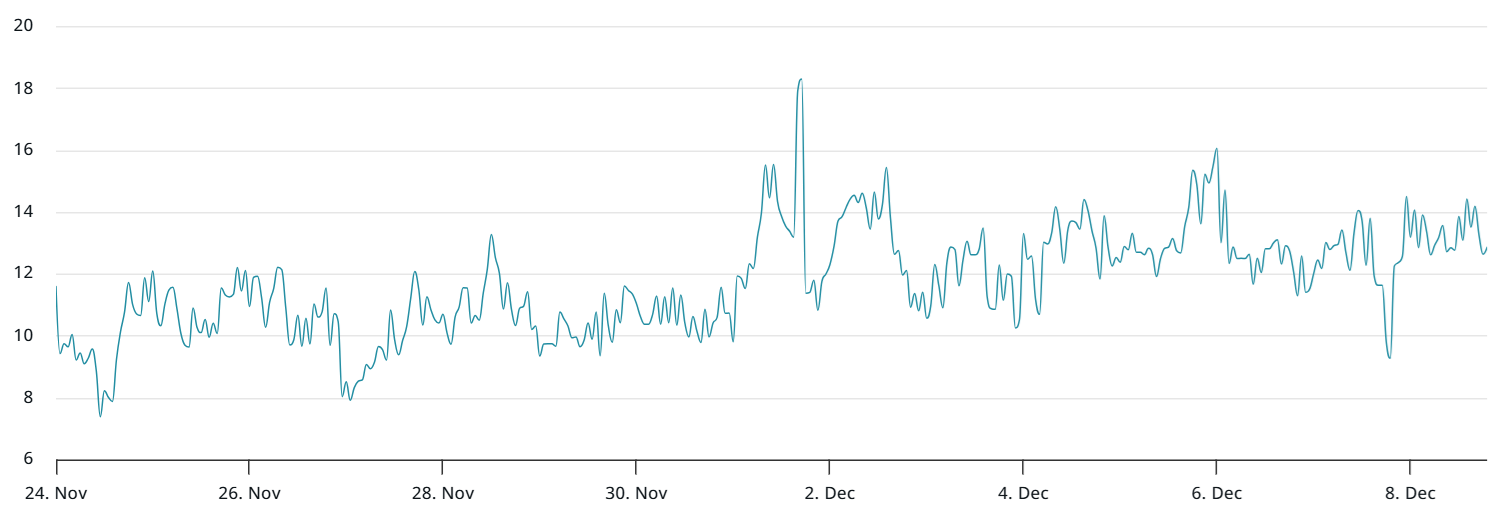
Bitcoin 30-day options skew (put-call) at Deribit. Source: laevitas.ch

Whales and market makers are demanding a 13% premium to sell Bitcoin put options on Deribit. The inflated cost of downside protection is typical of bearish markets. Still, the rejection at $92,000 on Monday did not affect traders’ positioning, reinforcing the $90,000 support level.

Traders have also been retreating from the cryptocurrency market in China as stablecoins have traded below parity against the local currency. This risk-off signal supports a short-term bearish outlook for Bitcoin, but it does not necessarily imply that traders expect prices to fall to $85,000 or lower.
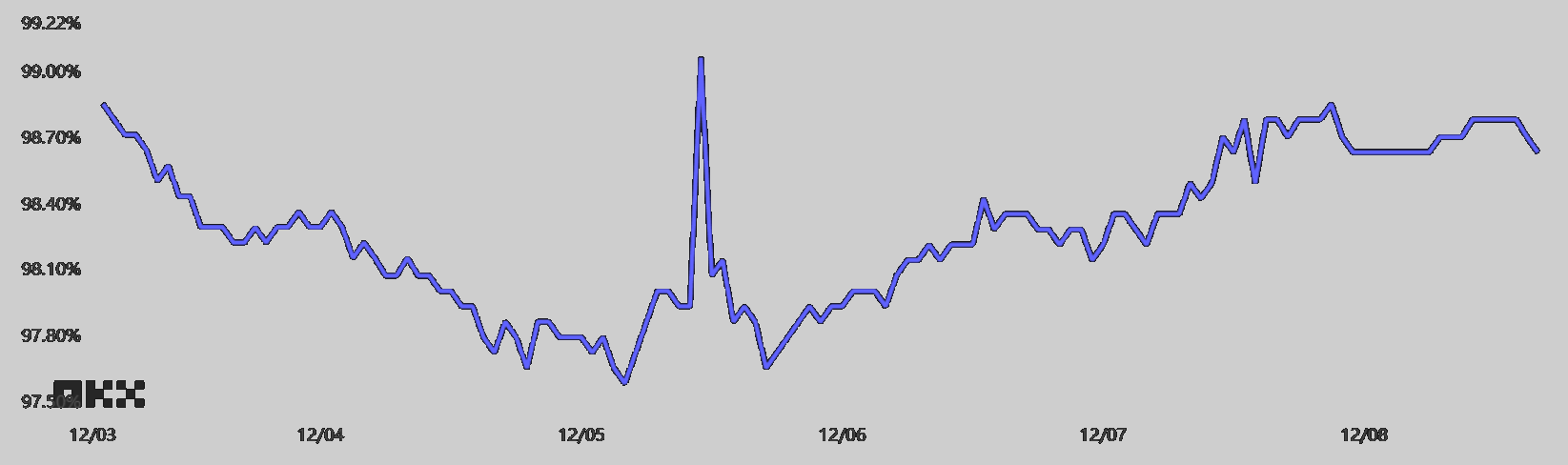
Tether (USDT/CNY) vs. US dollar/CNY. Source: OKX

Under neutral conditions, USDT should trade at a 0.2% to 1% premium versus the official USD rate to offset cross-border frictions, regulatory hurdles, and related fees. A discount relative to the official rate indicates strong demand to exit cryptocurrency markets, a pattern often seen during bearish phases.

The lack of inflows into US spot Bitcoin exchange-traded funds (ETFs) over the past couple of weeks has also weighed on demand for bullish exposure. Whether Bitcoin can reach $100,000 in the near term will depend largely on improved visibility in the US job market and real estate conditions, which may take longer to develop than a single Fed decision.

Related: Bitcoin buries the tulip myth after 17 years of proven resilience says ETF expert

This article is for general information purposes and is not intended to be and should not be taken as legal or investment advice. The views, thoughts, and opinions expressed here are the author’s alone and do not necessarily reflect or represent the views and opinions of Cointelegraph.


Related Reads

What's the Connection Between Pinduoduo's Huang Zheng and Blockchain?

This text explores the unexpected connection between Pinduoduo founder Colin Huang and blockchain, as suggested in his article *Turning Capitalism Upside Down*. Huang argues Pinduoduo's core business is about managing "uncertainty." He posits that wealth flows to the rich because they absorb life's uncertainties (e.g., illness, job loss) that devastate the poor, who pay a premium for certainty through insurance or stable prices. Pinduoduo's model attempts a "reverse insurance": by aggregating consumer demand via group-buying and flash sales, it creates a large, predictable order for manufacturers. This certainty allows factories to remove risk premiums, passing savings back as lower prices, thus partially reversing the wealth flow. The key obstacle, Huang notes, is that an individual's buying intent is an unreliable promise. He then asks if blockchain is the natural solution for this "reverse insurance." The text elaborates that blockchain, through smart contracts with binding deposits, could transform casual intent into a costly-to-break, enforceable commitment. This replaces interpersonal trust with coded rules, making promises credible, pricable, and resistant to fraud. Finally, the author draws a parallel to Bitcoin, framing two paths to creating certainty: the "Pinduoduo path" of aggregating decentralized will into scale, and the "Bitcoin path" of locking rules into immutable code. Both sacrifice something—personal freedom or system flexibility—to manufacture trust and predictability.

链捕手12m ago

What's the Connection Between Pinduoduo's Huang Zheng and Blockchain?

链捕手12m ago

The Storage Magnate Who Conquered a Trillion-Dollar Kingdom, Yet Ultimately Could Not Become the Richest

**Summary:** "The Memory Magnate Who Built a Trillion-Dollar Empire, Yet Never Became the Richest" explores the journey of Zhu Yiming, founder of GigaDevice (603986) and co-founder of the soon-to-IPO ChangXin Memory Technologies (CXMT). The article positions GigaDevice, a fabless chip designer now valued at ~¥340 billion, as a prequel to the massive IDM (Integrated Device Manufacturer) venture, CXMT. Starting in 2005 with minimal capital, Zhu strategically "picked up the pieces" by focusing on niche markets like NOR Flash and microcontrollers (MCUs), areas major players were exiting. This allowed GigaDevice to grow into a diversified semiconductor company, maintaining robust profitability even during industry downturns by controlling costs. However, the piece argues that in the highly cyclical and capital-intensive memory chip industry, the fabless model has limits. True resilience and scale require the ability for "counter-cyclical expansion" – investing heavily during downturns – a tactic only possible for IDMs like Samsung or SK Hynix. This insight led Zhu to partner with the Hefei city government in 2016 to establish CXMT, an IDM focused on DRAM. Zhu's symbolic moves, like forfeiting salary and diluting his equity, were crucial in securing the massive state and bank funding needed. CXMT's equipment base is now valued even higher than that of BYD's vast auto manufacturing empire. Despite the potential for CXMT to reach a market cap of ¥1-2 trillion upon its IPO, Zhu's indirect stake in both companies is estimated below 3%, placing his personal wealth far below that of China's top billionaires. The article concludes that his strategic vision built a trillion-yuan memory landscape, but the capital structure necessary to achieve it precluded a personal fortune of similar scale.

marsbit19m ago

The Storage Magnate Who Conquered a Trillion-Dollar Kingdom, Yet Ultimately Could Not Become the Richest

marsbit19m ago

XRP Ledger Daily Fees Drop Below $400 As Network Activity Question Returns

The XRP Ledger is drawing attention as daily network fees have fallen below $400. While low fees align with XRPL's design for affordable transactions and are often seen as a strength, the metric can also serve as an indicator of network demand and paid transaction volume. This data point of around $3,100 in weekly fee burn highlights the stark contrast with higher-fee chains like Ethereum and Bitcoin. The development fuels an ongoing debate. Proponents view low fees as a sign of efficiency and accessibility, while critics may question if the network is generating sufficient high-value activity relative to its market cap and payments-focused narrative. The article cautions against overstating the finding, noting a single low-fee day does not signify network failure. It instead adds context to discussions about XRPL's usage, especially alongside Ripple's broader initiatives in stablecoins (RLUSD), AI payments, and enterprise infrastructure. The report recommends monitoring for a fee rebound, checking transaction counts for a fuller picture, and confirming the trend via native explorers like Bithomp. It frames the story within a larger market shift where on-chain data, protocol updates, and infrastructure developments are becoming crucial alongside price action. The editorial stance is to present the verified data, explain its significance for assessing network activity, and avoid hype, positioning it as part of the daily crypto conversation.

bitcoinist4h ago

XRP Ledger Daily Fees Drop Below $400 As Network Activity Question Returns

bitcoinist4h ago

Trading

Spot
Futures

Hot Articles

What is USOIL

USOILUSDT Perpetual Contract is the trading symbol for West Texas Intermediate (WTI) Crude Oil priced in US dollars, representing 1 barrel of crude oil.

838 Total ViewsPublished 2026.05.25Updated 2026.05.25

What is USOIL

How to Buy USOIL

Welcome to HTX.com! We've made purchasing WTI Crude USOil/ CL (USOIL) simple and convenient. Follow our step-by-step guide to embark on your crypto journey.Step 1: Create Your HTX AccountUse your email or phone number to sign up for a free account on HTX. Experience a hassle-free registration journey and unlock all features.Get My AccountStep 2: Go to Buy Crypto and Choose Your Payment MethodCredit/Debit Card: Use your Visa or Mastercard to buy WTI Crude USOil/ CL (USOIL) instantly.Balance: Use funds from your HTX account balance to trade seamlessly.Third Parties: We've added popular payment methods such as Google Pay and Apple Pay to enhance convenience.P2P: Trade directly with other users on HTX.Over-the-Counter (OTC): We offer tailor-made services and competitive exchange rates for traders.Step 3: Store Your WTI Crude USOil/ CL (USOIL)After purchasing your WTI Crude USOil/ CL (USOIL), store it in your HTX account. Alternatively, you can send it elsewhere via blockchain transfer or use it to trade other cryptocurrencies.Step 4: Trade WTI Crude USOil/ CL (USOIL)Easily trade WTI Crude USOil/ CL (USOIL) on HTX's spot market. Simply access your account, select your trading pair, execute your trades, and monitor in real-time. We offer a user-friendly experience for both beginners and seasoned traders.

614 Total ViewsPublished 2026.05.25Updated 2026.05.25

How to Buy USOIL

Discussions

Welcome to the HTX Community. Here, you can stay informed about the latest platform developments and gain access to professional market insights. Users' opinions on the price of A (A) are presented below.

活动图片