Bitcoin at $68K – Is a breakout building or is demand still too weak?

ambcryptoPublished on 2026-03-27Last updated on 2026-03-27

Abstract

Bitcoin is consolidating near $68,500, trading within a tight $67,000–$76,000 range with shallow dips and limited selling pressure. Volatility has declined, indicating a period of market calm. Supply is tightening as Long-Term Holder supply increases to 14.74 million BTC, reducing available liquidity. Both whales and retail investors are accumulating, signaling confidence at current price levels. Exchange reserves have fallen from over 3.2 million BTC in early 2024 to around 2.75 million BTC by March 2026, indicating persistent outflows and reduced selling pressure. This supply squeeze, coupled with steady accumulation, strengthens market structure and increases the likelihood of a breakout once demand improves.

With its price action holding near $68,500 at press time, Bitcoin [BTC] has been consolidating within the tight $67,000–$76,000 range. As its price has tested the upper range, rejections have appeared while dips remained shallow – A sign of limited selling pressure.

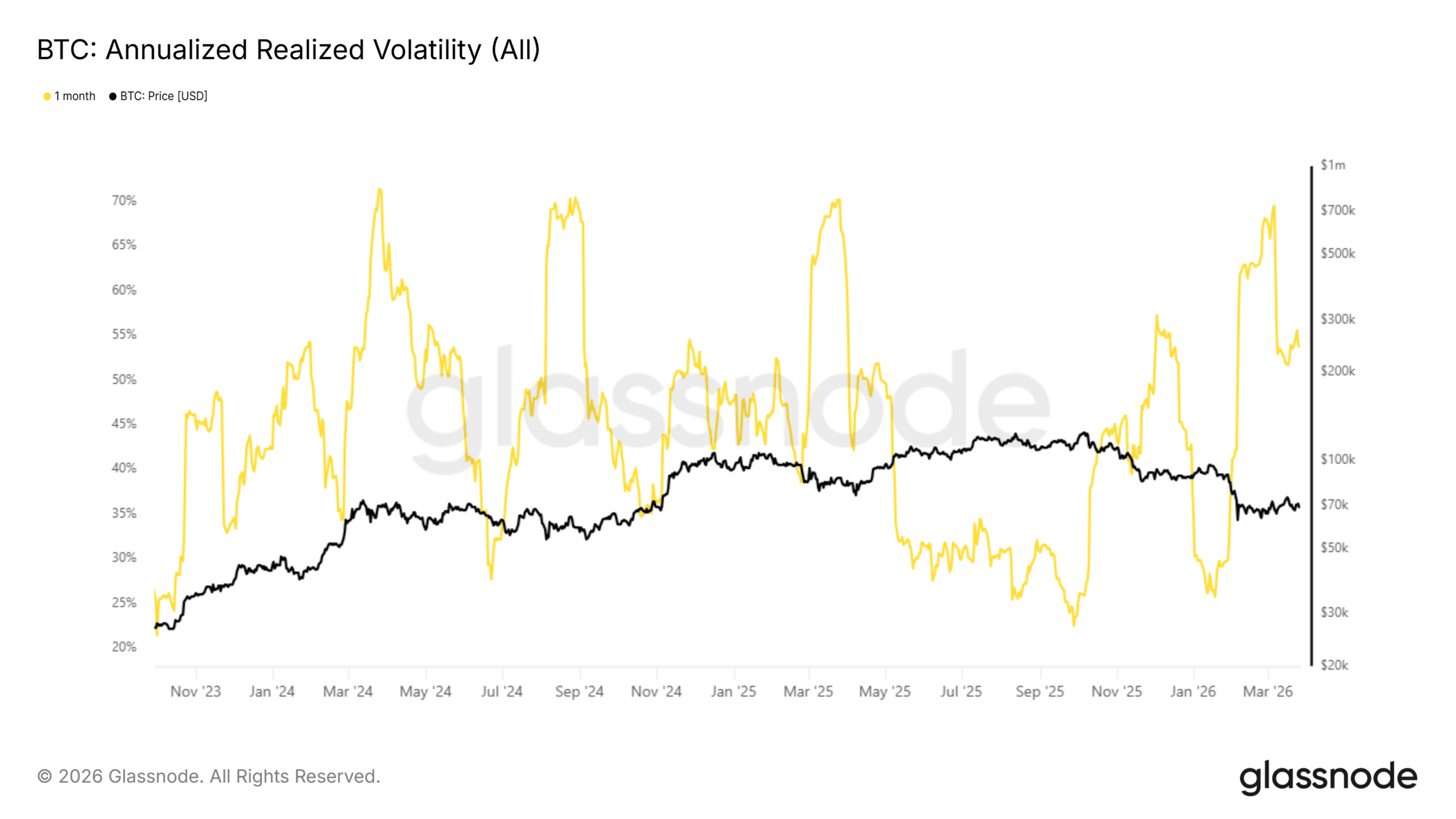
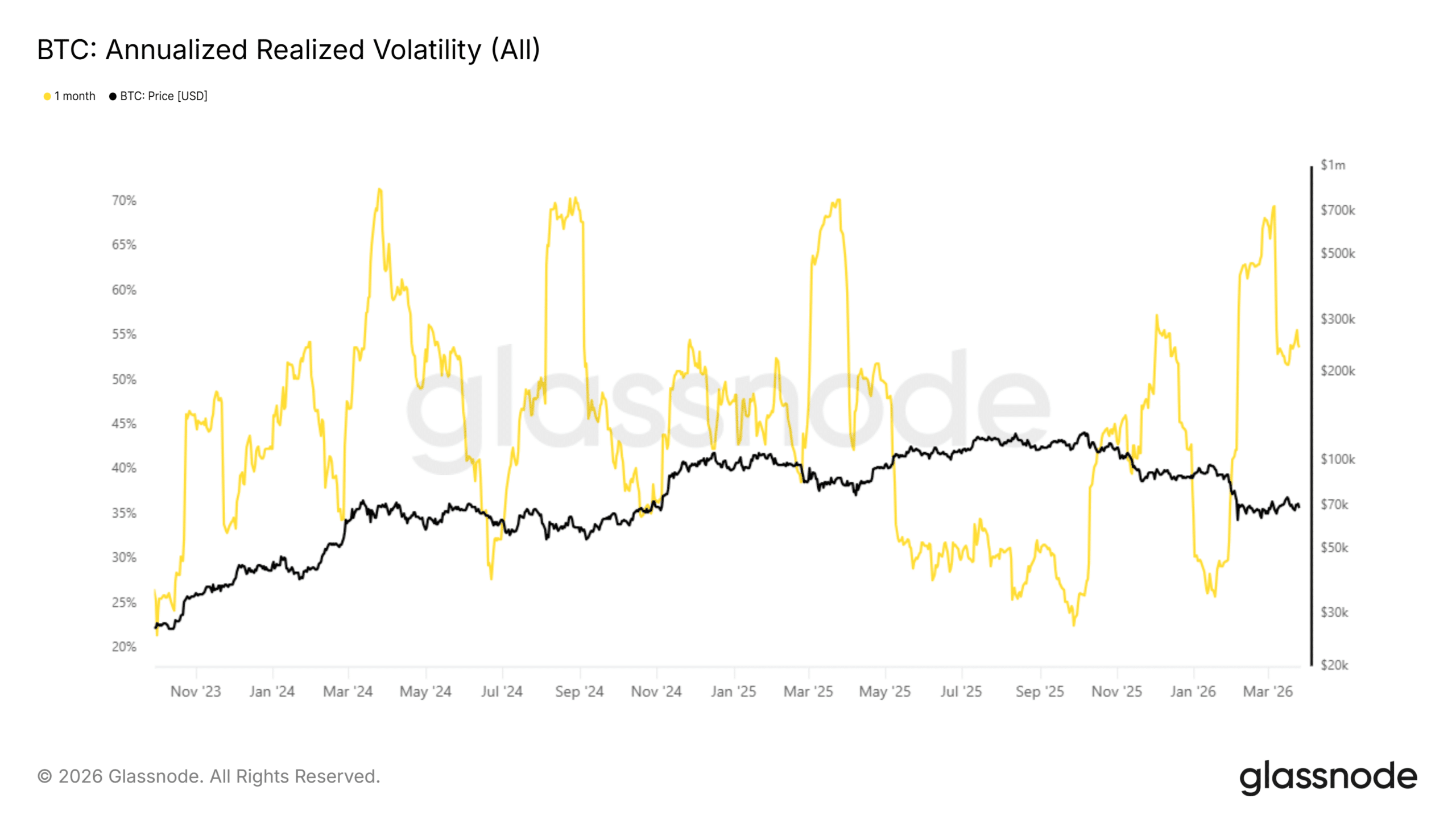
On the back of this range remaining consistent, volatility has declined too, with the 30-day realized volatility of 54% alluding to a fall in activity. In previous market cycles, such calm periods have often followed strong moves, where both buyers and sellers paused, allowing the market to reset.

Source: Glassnode

At the same time, supply trends seemed to be supporting this balance, as Long-Term Holder supply rose to approximately 14.74 million BTC. As more coins move into stronger hands, available supply tightens, which helps absorb short-term selling.

Meanwhile, low liquidity and weak volumes have kept the market sensitive to demand changes. As this balance holds, BTC will build pressure within the range, increasing the likelihood of a breakout once demand strengthens

Aligned accumulation across cohorts signals tightening Bitcoin supply

With consolidation continuing to hold, Bitcoin is now seeing active accumulation across both whales and retail.

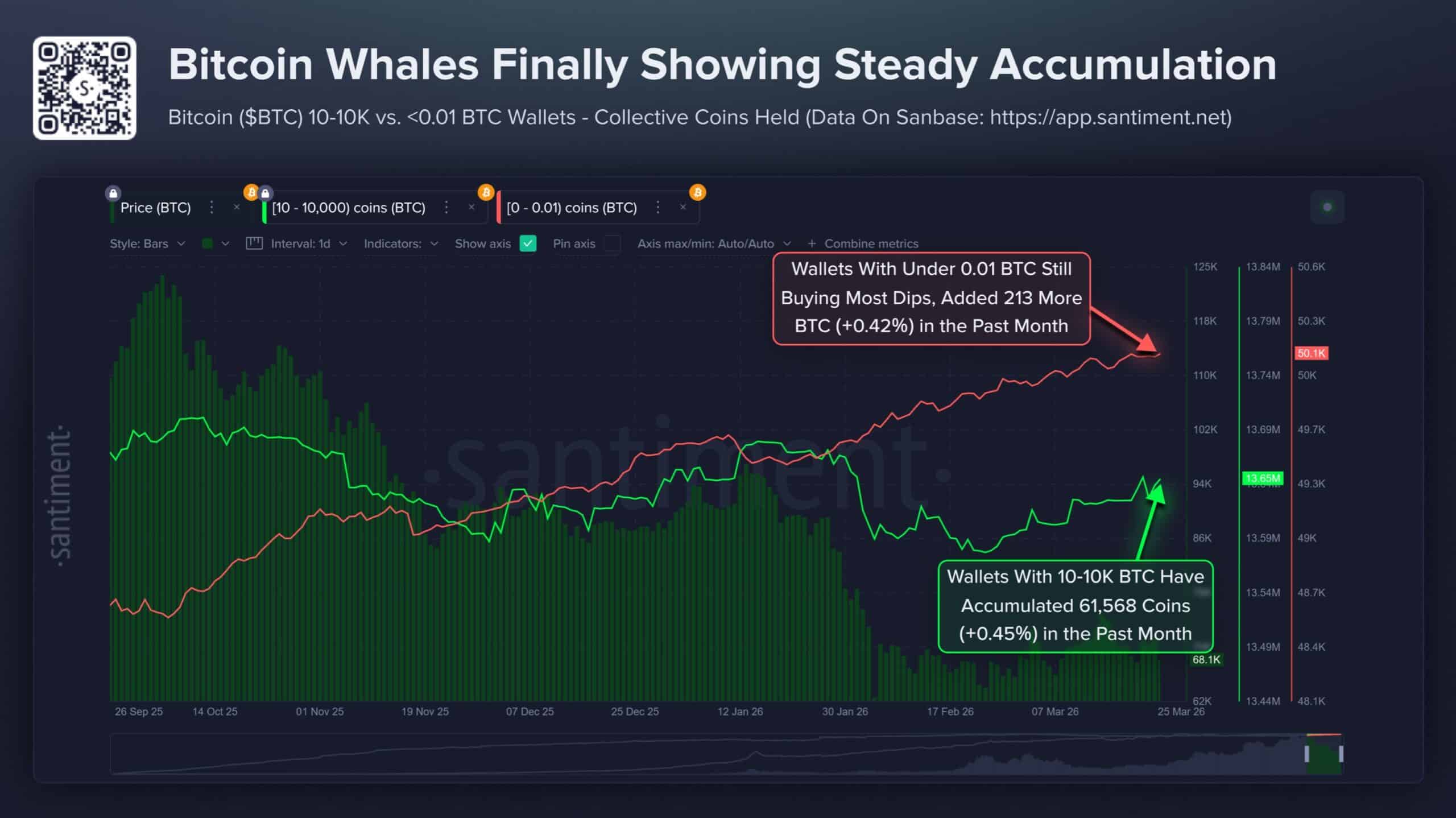
For example – Whales holding 10–10,000 BTC have added 61,568 BTC, lifting balances by 0.45% over the past month. Retail wallets under 0.01 BTC also increased holdings by 213 BTC, marking a 0.42% rise and closely matching larger players.

Source: Santiment/ X

Such a parallel behavior signals growing confidence at press time price levels, rather than hesitation. The range-bound structure allows participants to build positions without chasing price, which supports steady absorption. Supply therefore shifts into stronger hands, reducing available float instead of expanding it.

This alignment remains uncommon though. Especially since retail often provides exit liquidity during accumulation phases. Here, both sides absorb supply together, strengthening market structure and increasing the probability of a breakout once fresh demand enters.

Falling Exchange Reserves tighten Bitcoin supply

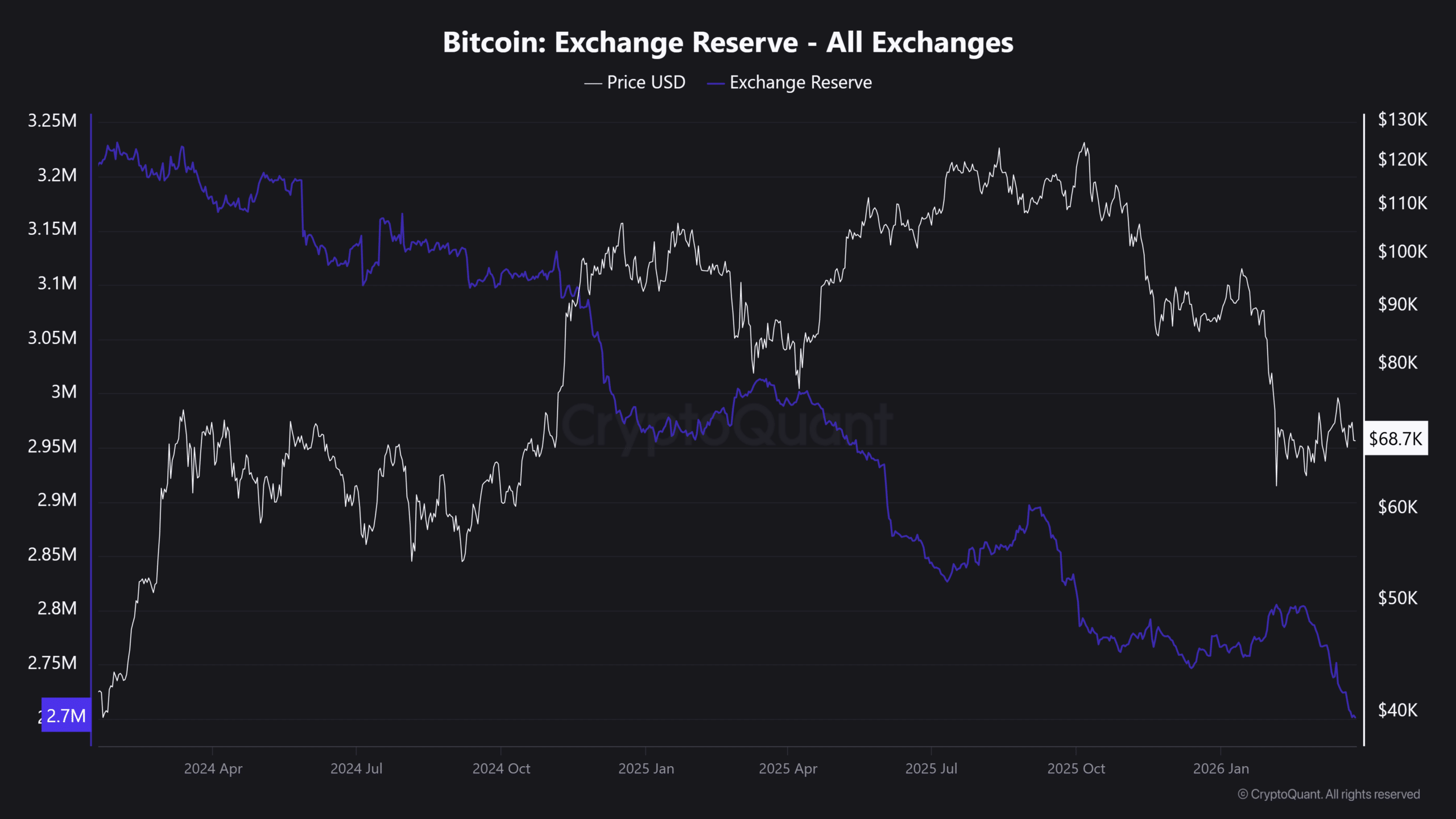
Finally, Exchange Reserves have continued to decline as Bitcoin supply steadily moves off trading venues into private storage.

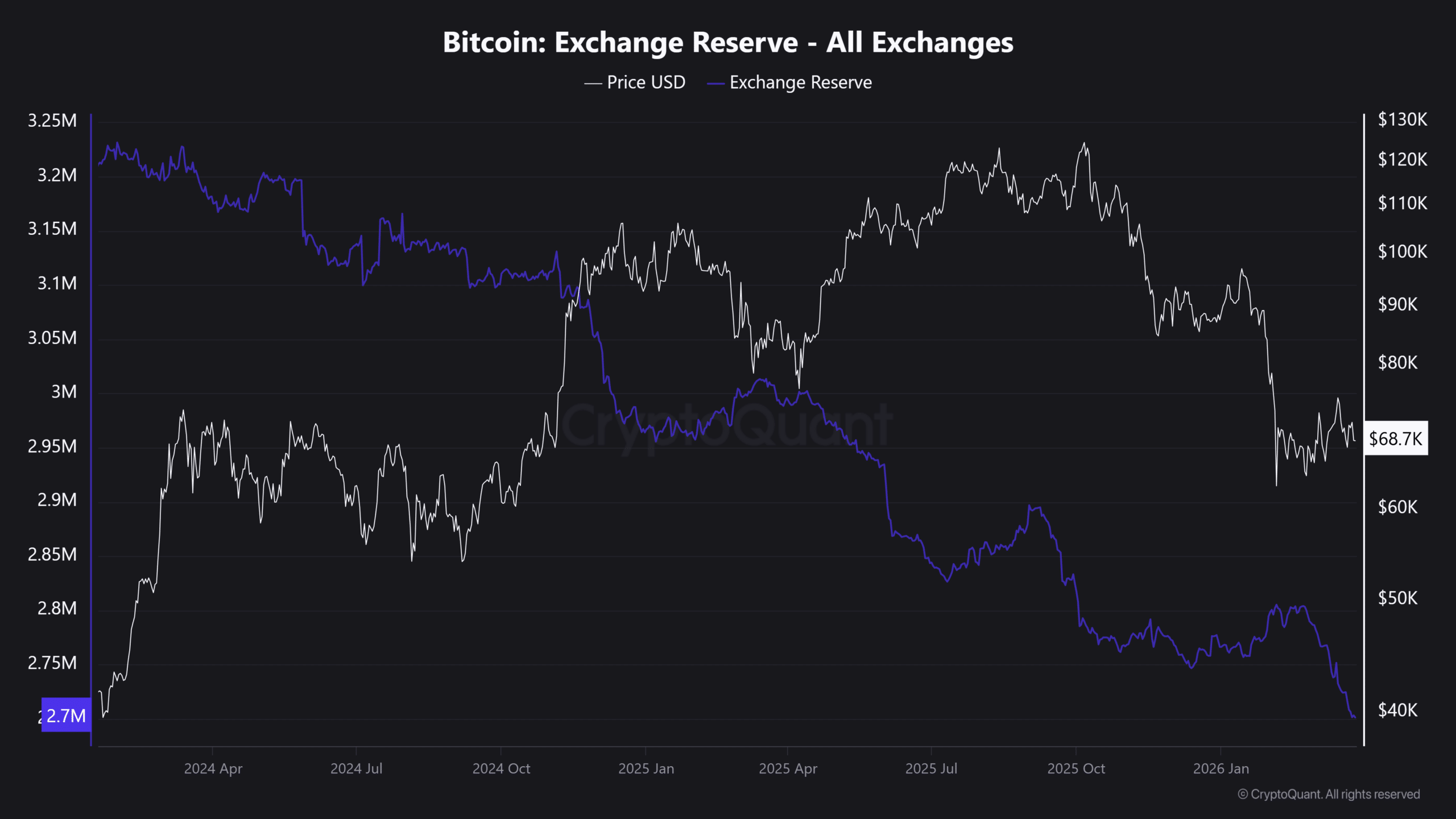
From above 3.2 million BTC in early 2024, reserves have trended south to nearly 2.75 million BTC in March 2026, marking persistent outflows. As this decline unfolded, prices rose towards the $110,000–$120,000 range. This seemed indicative of how reduced supply supported the crypto’s price action.

Source: CryptoQuant

However, despite the price later pulling back near $68,700, reserves kept falling, which signaled that selling pressure remained limited. This pattern revealed that holders might prefer storage over distribution, despite the weaker price action. Meanwhile, brief reserve upticks have failed to reverse the broader downtrend, reinforcing sustained accumulation.

With exchange supply shrinking and available float tightening further, there might be greater sensitivity to demand. This could also strengthen the setup for a supply-driven price expansion.


Final Summary

  • Bitcoin’s [BTC] consolidation near $68,000 hinted at tightening supply, especially as accumulation reduces sell pressure and builds breakout potential.
  • Bitcoin reserves dropped from 3.2 million to 2.75 million BTC, tightening float and increasing sensitivity to demand shifts.

Trending Cryptos

Related Questions

QWhat is the current price range Bitcoin is consolidating within, and what does the shallow dips indicate?

ABitcoin is consolidating within the tight $67,000–$76,000 range. The shallow dips indicate limited selling pressure.

QWhat does the rise in Long-Term Holder supply to 14.74 million BTC signify for the market?

AThe rise in Long-Term Holder supply signifies that more coins are moving into stronger hands, which tightens the available supply and helps absorb short-term selling.

QHow have both whale and retail accumulation patterns been described, and why is this alignment considered significant?

ABoth whales (holding 10-10,000 BTC) and retail wallets (under 0.01 BTC) have been actively accumulating, with their percentage increases closely matching. This alignment is significant because it signals growing confidence at current price levels and both sides are absorbing supply together, which strengthens market structure and increases breakout probability.

QWhat trend has been observed in Bitcoin Exchange Reserves since early 2024, and what does this trend suggest about holder behavior?

AExchange Reserves have declined from over 3.2 million BTC in early 2024 to nearly 2.75 million BTC in March 2026. This persistent outflow suggests that holders prefer moving coins into private storage (accumulation) over distribution, even during weaker price action, indicating limited selling pressure.

QAccording to the final summary, what are the two key factors that are tightening Bitcoin's supply and building potential?

AThe two key factors are: 1) Accumulation by holders which reduces sell pressure, and 2) The drop in exchange reserves from 3.2 million to 2.75 million BTC, which tightens the available float.

Related Reads

Weekly Editor's Picks (0725-0731)

Weekly Editor's Picks (0725-0731) provides a curated selection of deep analysis, filtering out market noise. Key themes from this week include: **Macro & Policy:** The Federal Reserve's upcoming meeting is marked by high uncertainty, balancing cooling inflation data against persistent price pressures. Meanwhile, the U.S. crypto regulatory Clarity Act faces critical political hurdles, with its 2026 passage probability seen as low. **Investing & Crypto:** Analysis suggests long-term crypto success depends on conviction through volatile cycles, focusing on assets like Bitcoin and core smart contract platforms. A trend noted is the increasing similarity between global equity markets (especially tech) and crypto, driven by narrative and leverage. Several major crypto protocols show strong revenue growth, but this isn't always translating to token price appreciation due to sell pressure and structural factors. **AI & Semiconductors:** Nvidia's rising credit default swap rates signal market concern over AI infrastructure financing risks. The storage sector experienced volatility as markets began pricing in potential 2027 oversupply. Despite a record profitable quarter, SK Hynix's results were deemed "below expectations," reflecting heightened investor demands for future growth visibility. **Markets & DeFi:** TradeXYZ demonstrated remarkable accuracy in pre-market pricing for a major A股 listing. The token ONDO saw gains, linked to its growing role in the on-chain tokenized stock ecosystem. **Ethereum:** Post-Pectra upgrade, a major structural shift is underway as Lido begins migrating millions of ETH to new validator architectures designed for capital efficiency. **Also Highlighted:** Butian's bullish stock market move; OpenAI's Altman promising major advances; Samsung and SK Hynix securing large AI chip deals; Apple reaching a $5T market cap; and ongoing discussions around exchange security following Poolin's bankruptcy case.

marsbit29m ago

Weekly Editor's Picks (0725-0731)

marsbit29m ago

Low Investment Isn't Apple's Immunity Pass

While Meta and Google face investor scrutiny over ballooning AI capital expenditures, Apple's minimal AI investment has paradoxically become a strength. Its market cap recently reclaimed the global top spot, surpassing $5 trillion. The irony is deep: Apple's own AI efforts have lagged, with "Apple Intelligence" delayed and core talent lost, forcing reliance on partners like Google Gemini and Alibaba's Qianwen. Its Q3 FY2026 (Q2 CY) earnings initially seemed stellar. Revenue hit $109.4B (up 16% YoY), with iPhone and Mac sales, growing 22% and 29% respectively, driving most of the growth. However, the stock fell over 8% post-earnings. The primary concern was a weaker Q4 revenue growth forecast of 9-11%, below expectations, due to looming supply chain constraints. Apple is feeling the indirect cost of the AI boom. Soaring memory and chip prices, fueled by massive data center investments from Microsoft, Amazon, and others, are forcing Apple to raise Mac and iPad prices significantly. The upcoming iPhone launch is also expected to see substantial price hikes. Despite avoiding heavy AI infrastructure spending—its capital expenditures are actually down 28%—Apple cannot escape the industry-wide supply and cost pressures. While Apple's operating cash flow remains robust, its substantial R&D spending (up 32% YoY) has yet to yield major AI breakthroughs. As Tim Cook prepares to step down as CEO, Apple faces a challenging transition: balancing its premium hardware success against the strategic and cost pressures of the AI era it has so far cautiously navigated.

marsbit1h ago

Low Investment Isn't Apple's Immunity Pass

marsbit1h ago

PA Graphics Explanation | One Chart to Understand the Major Web3 Events in August 2026

**PANews Crypto Calendar: Key Web3 Events in August 2026** PANews introduces its revamped crypto calendar, featuring comprehensive coverage, flexible filtering, and easy export options. The market in August will be shaped by multiple key events across macroeconomics, regulation, tokenomics, and project developments: * **Macro & Policy:** Key US economic data releases (July Non-Farm Payrolls, CPI), the Federal Reserve meeting minutes, and the Jackson Hole Economic Symposium will be in focus. On the regulatory front, the US Senate plans to release a new draft of the *CLARITY Act*, while the EU's expanded crypto ban against Belarus comes into effect. * **Token Unlocks:** Significant token unlocks are scheduled for assets including ENA, AVAX, CONX, ZRO, and KAITO, which may influence market volatility. * **Project Updates & Shutdowns:** Several services, including Exchange Art, Ctrl Wallet, Zapper, NFTfi, and Summer.fi, are set to cease operations or undergo major adjustments. Users are advised to manage their assets accordingly. * **Corporate Activity:** Q2 earnings reports from companies like SpaceX, Circle, and Nvidia are due. Unitree Robotics will initiate its IPO subscription on the STAR Market, and Moonshot AI plans to begin a Pre-IPO financing round. * **Industry Events:** Major conferences such as Bitcoin Asia 2026 and the 2026 Digital Expo will take place. The overarching market narrative for August will revolve around macroeconomic expectations, regulatory developments, token unlock schedules, and ongoing industry consolidation.

marsbit1h ago

PA Graphics Explanation | One Chart to Understand the Major Web3 Events in August 2026

marsbit1h ago

Wall Street's Most Famous 'Cassandra' Now Has His Sights Set on Nvidia

Michael Burry, the famed "Big Short" investor, has once again captured Wall Street's attention with a series of short positions against major tech and semiconductor stocks, most notably Nvidia. In late June and July, through his "Cassandra Unchained" newsletter, Burry disclosed short bets against Nvidia, Tesla, Applied Materials, Caterpillar, the SOXX semiconductor ETF, and later, Micron Technology. His core thesis revolves around potential distortions in the AI infrastructure boom, specifically questioning whether extended depreciation schedules (e.g., 6 years vs. a realistic 2-3 years for AI chips) by cloud giants like Microsoft and Google artificially inflate profits. He also raises concerns about possible "off-balance-sheet circular financing," where chip demand might be propped up by vendor-backed funding to clients. Nvidia's stock experienced volatility following these disclosures, briefly dipping but largely holding near Burry's reported entry points, leaving his positions roughly flat or slightly underwater as of late July. This move is part of a pattern for Burry, whose track record since his legendary 2008 bet is mixed. He has faced notable losses, such as on Tesla in 2021, while scoring on broader market turns like the 2020 pandemic crash. His methodology focuses intensely on free cash flow and scrutinizing original financial documents to spot overvaluation and structural risks, but it often struggles with timing the market. The article contrasts Burry's stance with other prominent investors. Steve Eisman, another "Big Short" figure, is not shorting Nvidia, citing strong fundamentals but expressing nervousness about sustainability. Jim Chanos agrees with the broad "accounting mismatch" concern—comparing it to the dot-com bubble—but targets financial leverage in private equity firms rather than the chip stocks themselves. While Nvidia's short interest remains relatively low at 1.3-1.4% of float, the massive stock size means absolute short losses have been significant, exceeding $5 billion earlier this year. The piece concludes that for ordinary investors, the key takeaway is not replicating specific short bets but learning from the critical frameworks these investors use: questioning rosy accounting, identifying structural vulnerabilities, and maintaining skepticism during market euphoria, even if pinpointing the exact catalyst for a downturn remains elusive.

marsbit1h ago

Wall Street's Most Famous 'Cassandra' Now Has His Sights Set on Nvidia

marsbit1h ago

Trading

Spot

Hot Articles

What is $BITCOIN

DIGITAL GOLD ($BITCOIN): A Comprehensive Analysis Introduction to DIGITAL GOLD ($BITCOIN) DIGITAL GOLD ($BITCOIN) is a blockchain-based project operating on the Solana network, which aims to combine the characteristics of traditional precious metals with the innovation of decentralized technologies. While it shares a name with Bitcoin, often referred to as “digital gold” due to its perception as a store of value, DIGITAL GOLD is a separate token designed to create a unique ecosystem within the Web3 landscape. Its goal is to position itself as a viable alternative digital asset, although specifics regarding its applications and functionalities are still developing. What is DIGITAL GOLD ($BITCOIN)? DIGITAL GOLD ($BITCOIN) is a cryptocurrency token explicitly designed for use on the Solana blockchain. In contrast to Bitcoin, which provides a widely recognized value storage role, this token appears to focus on broader applications and characteristics. Notable aspects include: Blockchain Infrastructure: The token is built on the Solana blockchain, known for its capacity to handle high-speed and low-cost transactions. Supply Dynamics: DIGITAL GOLD has a maximum supply capped at 100 quadrillion tokens (100P $BITCOIN), although details regarding its circulating supply are currently undisclosed. Utility: While precise functionalities are not explicitly outlined, there are indications that the token could be utilized for various applications, potentially involving decentralized applications (dApps) or asset tokenization strategies. Who is the Creator of DIGITAL GOLD ($BITCOIN)? At present, the identity of the creators and development team behind DIGITAL GOLD ($BITCOIN) remains unknown. This situation is typical among many innovative projects within the blockchain space, particularly those aligning with decentralized finance and meme coin phenomena. While such anonymity may foster a community-driven culture, it intensifies concerns about governance and accountability. Who are the Investors of DIGITAL GOLD ($BITCOIN)? The available information indicates that DIGITAL GOLD ($BITCOIN) does not have any known institutional backers or prominent venture capital investments. The project seems to operate on a peer-to-peer model focused on community support and adoption rather than traditional funding routes. Its activity and liquidity are primarily situated on decentralized exchanges (DEXs), such as PumpSwap, rather than established centralized trading platforms, further highlighting its grassroots approach. How DIGITAL GOLD ($BITCOIN) Works The operational mechanics of DIGITAL GOLD ($BITCOIN) can be elaborated on based on its blockchain design and network attributes: Consensus Mechanism: By leveraging Solana’s unique proof-of-history (PoH) combined with a proof-of-stake (PoS) model, the project ensures efficient transaction validation contributing to the network's high performance. Tokenomics: While specific deflationary mechanisms have not been extensively detailed, the vast maximum token supply implies that it may cater to microtransactions or niche use cases that are still to be defined. Interoperability: There exists the potential for integration with Solana’s broader ecosystem, including various decentralized finance (DeFi) platforms. However, the details regarding specific integrations remain unspecified. Timeline of Key Events Here is a timeline that highlights significant milestones concerning DIGITAL GOLD ($BITCOIN): 2023: The initial deployment of the token occurs on the Solana blockchain, marked by its contract address. 2024: DIGITAL GOLD gains visibility as it becomes available for trading on decentralized exchanges like PumpSwap, allowing users to trade it against SOL. 2025: The project witnesses sporadic trading activity and potential interest in community-led engagements, although no noteworthy partnerships or technical advancements have been documented as of yet. Critical Analysis Strengths Scalability: The underlying Solana infrastructure supports high transaction volumes, which could enhance the utility of $BITCOIN in various transaction scenarios. Accessibility: The potential low trading price per token could attract retail investors, facilitating wider participation due to fractional ownership opportunities. Risks Lack of Transparency: The absence of publicly known backers, developers, or an audit process may yield skepticism regarding the project's sustainability and trustworthiness. Market Volatility: The trading activity is heavily reliant on speculative behavior, which can result in significant price volatility and uncertainty for investors. Conclusion DIGITAL GOLD ($BITCOIN) emerges as an intriguing yet ambiguous project within the rapidly evolving Solana ecosystem. While it attempts to leverage the “digital gold” narrative, its departure from Bitcoin's established role as a store of value underscores the need for a clearer differentiation of its intended utility and governance structure. Future acceptance and adoption will likely depend on addressing the current opacity and defining its operational and economic strategies more explicitly. Note: This report encompasses synthesised information available as of October 2023, and developments may have transpired beyond the research period.

1.3k Total ViewsPublished 2025.05.13Updated 2025.05.13
What is $BITCOIN

Discussions

Welcome to the HTX Community. Here, you can stay informed about the latest platform developments and gain access to professional market insights. Users' opinions on the price of BTC (BTC) are presented below.

活动图片