Bitcoin – Assessing why BTC LTH selling fears may be overblown

ambcryptoPublished on 2025-12-20Last updated on 2025-12-20

Abstract

Recent data initially suggested Bitcoin long-term holders (LTHs) were selling heavily, sparking concerns about market stability. However, analysis reveals this was largely a technical distortion caused by Coinbase’s internal reshuffle of nearly 800,000 BTC in late November, which disrupted on-chain data. When these transactions are excluded, LTH selling appears steady and consistent with historical cycles. Market indicators support a more balanced outlook. The NVT Golden Cross, after dipping into undervalued territory, is recovering toward neutral levels—a pattern historically associated with accumulation phases. Bitcoin’s RSI also neared oversold conditions, often a precursor to relief rallies, though price action remains below key EMAs. Analysts like Alex Thorn of Galaxy Research note that while 2026 may bring continued volatility and uncertainty, the long-term perspective remains positive due to growing institutional involvement and Bitcoin’s use as a hedge. Some projections even suggest a potential rise to $250K by late 2026. Overall, fears of LTH panic selling are overblown, and the market shows signs of maturation and stability.

At first glance, the data looked worrying. The numbers showed long-term holders (LTHs) selling Bitcoin [BTC] heavily, with worries about whether BTC was starting to crack.

But a closer look tells you more.

Analysts now say the spike was distorted, which means the narrative around Bitcoin’s latest moves may be far less dramatic than perceived.

A narrative that’s falling apart

Claims that Bitcoin’s LTHs are dumping coins have been overstated.

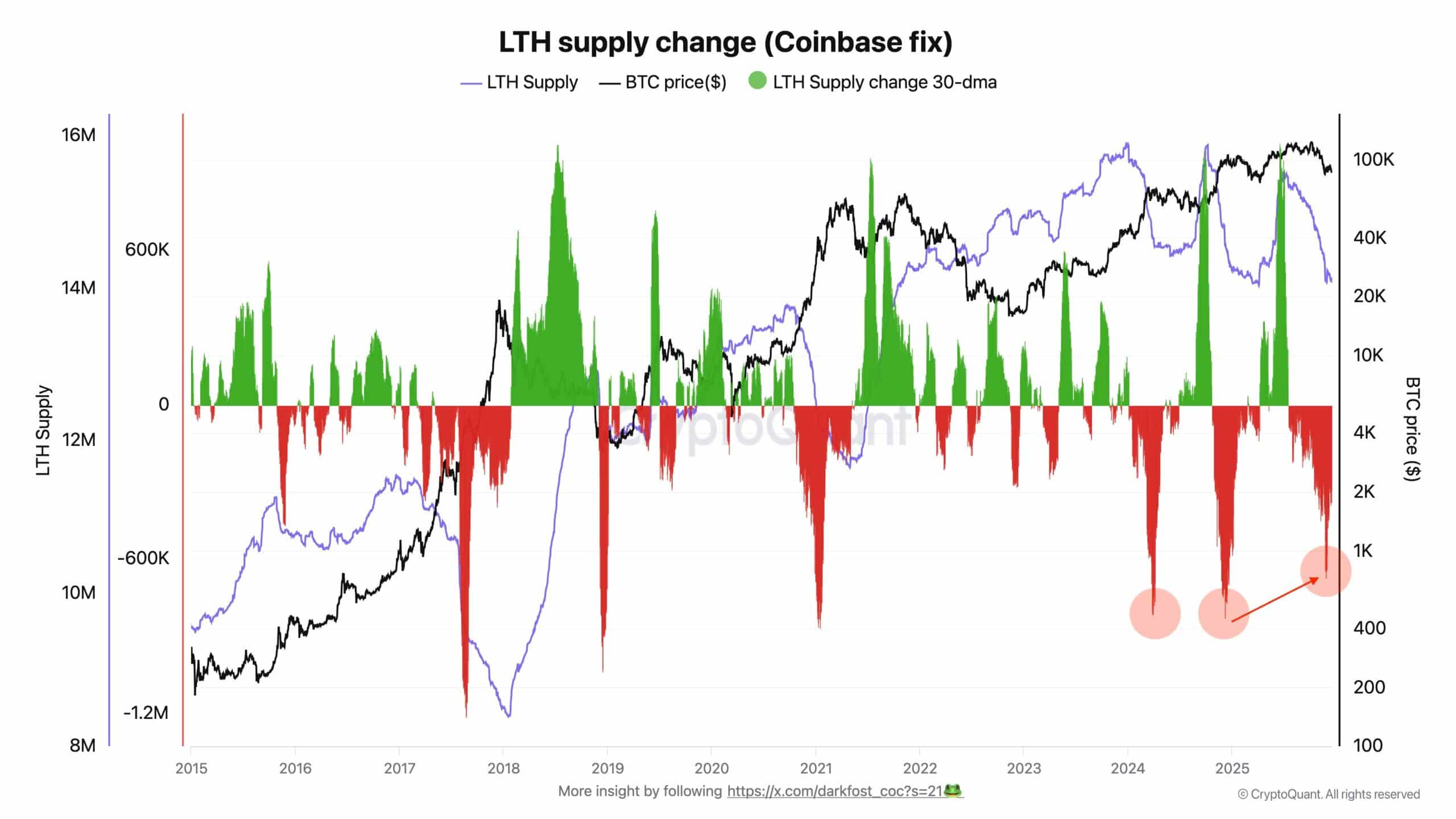
A recent post by analyst Darkfost on X said that the spike in selling pressure was largely the result of a technical distortion.

In late November, Coinbase moved nearly 800,000 BTC, destroying old long-term holder UTXOs and creating new ones when Bitcoin traded around $85,000.

Source: X

The recent internal reshuffle distorted on‑chain data, creating the impression that LTHs were selling more than they actually were. 

Once Coinbase‑related transactions are excluded, the data reveal that LTHs are selling at a steady, normal pace consistent with previous cycles.

Adding to that…

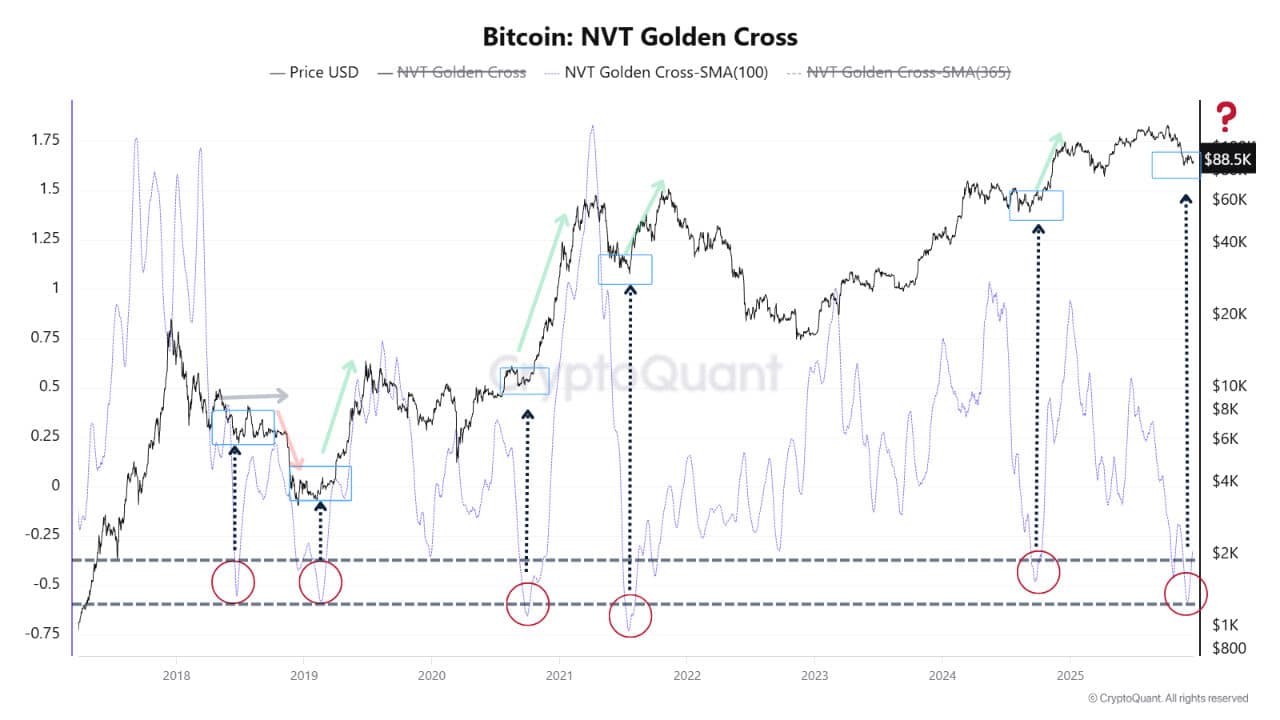
When the NVT Golden Cross drops into deeply undervalued territory, it has preceded accumulation. We’re seeing a similar move now, with the indicator climbing back toward neutral levels.

Source: CryptoQuant

The market is transitioning into a more balanced valuation. In past cycles, that pattern was in tandem with steadier demand and healthier price discovery.

While it doesn’t guarantee immediate gains, it does show the current environment is more consistent with accumulation.

What next for BTC

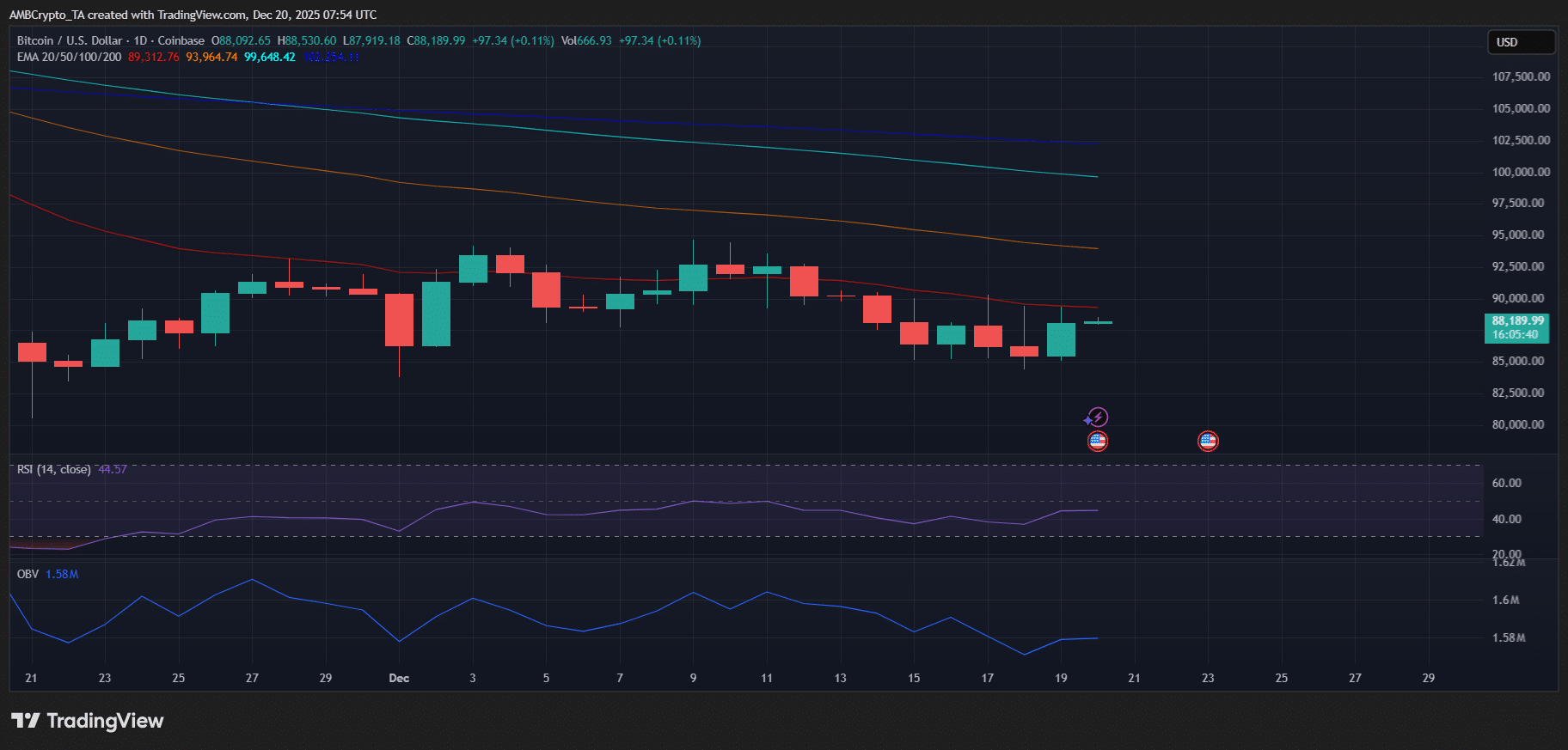
Source: TradingView

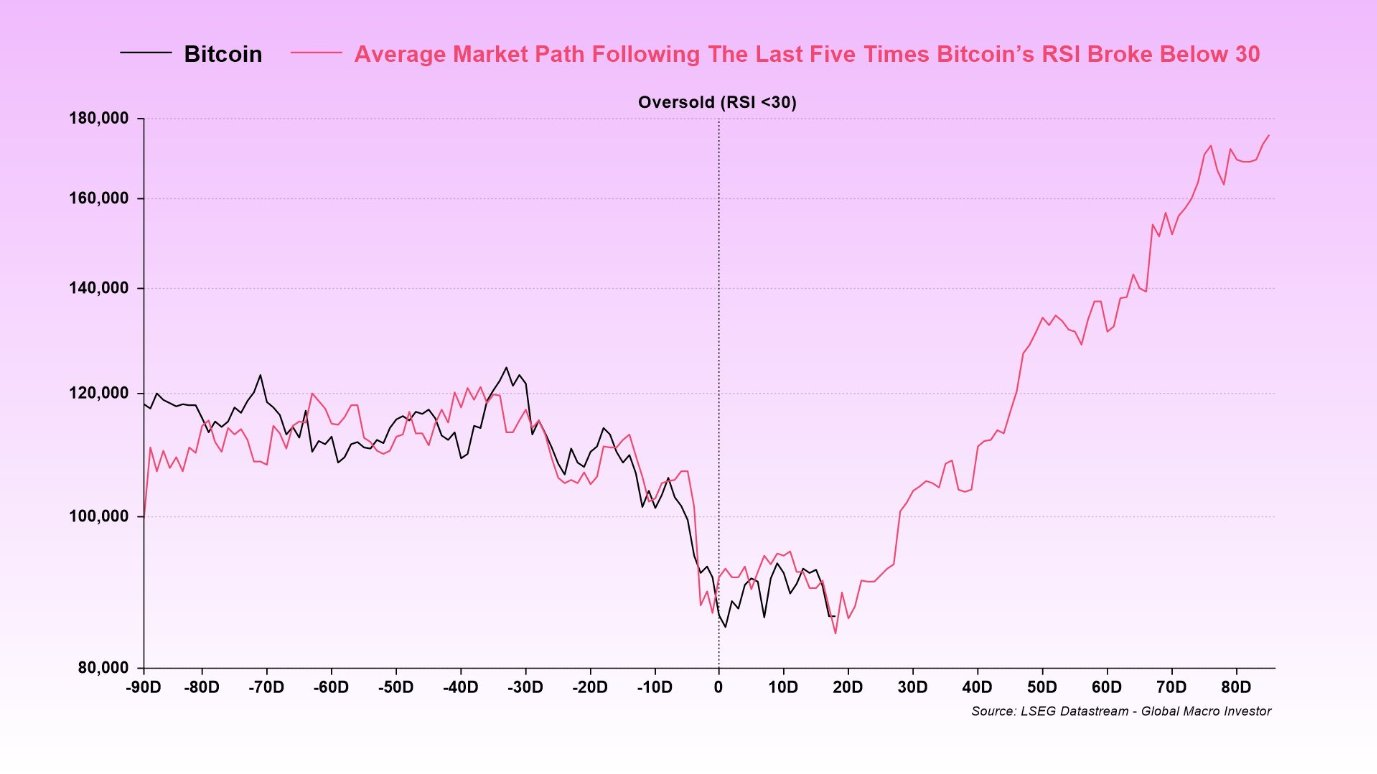
Bitcoin’s RSI was near oversold levels, and past data shows that such dips often happen before relief rallies. However, price action remains below major EMAs, so bullishness isn’t yet fully restored.

Source: X

Analysts like Galaxy Research’s Alex Thorn argue that 2026 may stay uncertain, with wide price ranges showing the current ambiguity.

Bitcoin’s market is maturing, with more institutional involvement and use as a hedge. While it might struggle to stay above $100k in the short term, the long-term outlook is positive.

This is evident with their bold $250K prediction for late next year!


Final Thoughts

  • Bitcoin’s LTHs are selling normally, not panicking.
  • Indicators and institutional activity show a maturing market. There’s potential for $250K BTC by late 2026.
Next: Solana vs. Ethereum heats up – Is the ‘ETH killer’ narrative finally real?
Share
  • Share
  • Tweet

Related Questions

QWhat was the initial concern about Bitcoin long-term holders (LTHs) based on the data, and why is it considered overblown?

AThe initial data showed LTHs selling Bitcoin heavily, raising concerns about a potential market crack. However, this was distorted by Coinbase's internal reshuffle of nearly 800,000 BTC in late November, which created new UTXOs and made it appear like excessive selling. When excluding Coinbase-related transactions, LTH selling is actually at a normal, steady pace consistent with previous cycles.

QHow did the NVT Golden Cross indicator behave, and what does it suggest for Bitcoin's market phase?

AThe NVT Golden Cross dropped into deeply undervalued territory, which historically precedes accumulation phases. It is now climbing back toward neutral levels, indicating the market is transitioning into a more balanced valuation with steadier demand and healthier price discovery, consistent with past cycles.

QWhat does Bitcoin's RSI and price action relative to EMAs indicate about its short-term trajectory?

ABitcoin's RSI was near oversold levels, which often precedes relief rallies. However, the price remains below major Exponential Moving Averages (EMAs), suggesting bullish sentiment isn't fully restored yet in the short term.

QWhat is the long-term price prediction for Bitcoin mentioned in the article, and what supports this outlook?

AThe article mentions a bold prediction of $250K for Bitcoin by late 2026. This is supported by the market's maturation, increased institutional involvement, Bitcoin's use as a hedge, and indicators showing a normal accumulation phase despite short-term uncertainties.

QAccording to analysts, why is 2026 expected to be uncertain for Bitcoin, and what factors contribute to this ambiguity?

AAnalysts like Alex Thorn argue that 2026 may remain uncertain with wide price ranges due to the market's current ambiguity. Factors include the ongoing maturation of Bitcoin's market, institutional dynamics, and macroeconomic conditions, though the long-term outlook remains positive.

Related Reads

Three Frameworks for Ordinary People to Achieve AI Capability Leap: Say Goodbye to the Dilemma of 'Repeating Inputs Every Day'

Summary: This article outlines three frameworks for maximizing AI efficiency, moving beyond basic prompt usage. 1. **Three-Layer Evolution**: Users progress from (1) **Prompt** (one-off instructions, reset each session), to (2) **Project** (context-aware within a specific project), to (3) **Skill** (permanent, auto-applied knowledge). Most users stagnate at the first layer, repeating the same instructions daily with no cumulative improvement. Skills transform the AI from a chat tool into a personalized work system. 2. **Transaction vs. Compound Interest Mindset**: Using prompts is a linear transaction—effort and output are 1:1, and stopping resets progress. Investing time in building Skills is compound interest; a small initial time investment pays continuous dividends, as each Skill permanently elevates the AI's baseline performance. 3. **Thin Harness, Fat Skills**: The system architecture should prioritize thick, well-defined Skills (90% of the value—containing processes, standards, and domain knowledge) and a thin "harness" (the minimal technical environment). Avoid over-engineering the toolchain while neglecting the AI's actual knowledge. Skills are permanent assets that automatically improve with model updates. The key takeaway: Identify tasks you repeat, encode them into Skills (using tools like Claude's Skill Creator), and shift focus from daily prompting to building a compounding, self-improving AI system.

marsbit19m ago

Three Frameworks for Ordinary People to Achieve AI Capability Leap: Say Goodbye to the Dilemma of 'Repeating Inputs Every Day'

marsbit19m ago

Trading

Spot
Futures

Hot Articles

What is $BITCOIN

DIGITAL GOLD ($BITCOIN): A Comprehensive Analysis Introduction to DIGITAL GOLD ($BITCOIN) DIGITAL GOLD ($BITCOIN) is a blockchain-based project operating on the Solana network, which aims to combine the characteristics of traditional precious metals with the innovation of decentralized technologies. While it shares a name with Bitcoin, often referred to as “digital gold” due to its perception as a store of value, DIGITAL GOLD is a separate token designed to create a unique ecosystem within the Web3 landscape. Its goal is to position itself as a viable alternative digital asset, although specifics regarding its applications and functionalities are still developing. What is DIGITAL GOLD ($BITCOIN)? DIGITAL GOLD ($BITCOIN) is a cryptocurrency token explicitly designed for use on the Solana blockchain. In contrast to Bitcoin, which provides a widely recognized value storage role, this token appears to focus on broader applications and characteristics. Notable aspects include: Blockchain Infrastructure: The token is built on the Solana blockchain, known for its capacity to handle high-speed and low-cost transactions. Supply Dynamics: DIGITAL GOLD has a maximum supply capped at 100 quadrillion tokens (100P $BITCOIN), although details regarding its circulating supply are currently undisclosed. Utility: While precise functionalities are not explicitly outlined, there are indications that the token could be utilized for various applications, potentially involving decentralized applications (dApps) or asset tokenization strategies. Who is the Creator of DIGITAL GOLD ($BITCOIN)? At present, the identity of the creators and development team behind DIGITAL GOLD ($BITCOIN) remains unknown. This situation is typical among many innovative projects within the blockchain space, particularly those aligning with decentralized finance and meme coin phenomena. While such anonymity may foster a community-driven culture, it intensifies concerns about governance and accountability. Who are the Investors of DIGITAL GOLD ($BITCOIN)? The available information indicates that DIGITAL GOLD ($BITCOIN) does not have any known institutional backers or prominent venture capital investments. The project seems to operate on a peer-to-peer model focused on community support and adoption rather than traditional funding routes. Its activity and liquidity are primarily situated on decentralized exchanges (DEXs), such as PumpSwap, rather than established centralized trading platforms, further highlighting its grassroots approach. How DIGITAL GOLD ($BITCOIN) Works The operational mechanics of DIGITAL GOLD ($BITCOIN) can be elaborated on based on its blockchain design and network attributes: Consensus Mechanism: By leveraging Solana’s unique proof-of-history (PoH) combined with a proof-of-stake (PoS) model, the project ensures efficient transaction validation contributing to the network's high performance. Tokenomics: While specific deflationary mechanisms have not been extensively detailed, the vast maximum token supply implies that it may cater to microtransactions or niche use cases that are still to be defined. Interoperability: There exists the potential for integration with Solana’s broader ecosystem, including various decentralized finance (DeFi) platforms. However, the details regarding specific integrations remain unspecified. Timeline of Key Events Here is a timeline that highlights significant milestones concerning DIGITAL GOLD ($BITCOIN): 2023: The initial deployment of the token occurs on the Solana blockchain, marked by its contract address. 2024: DIGITAL GOLD gains visibility as it becomes available for trading on decentralized exchanges like PumpSwap, allowing users to trade it against SOL. 2025: The project witnesses sporadic trading activity and potential interest in community-led engagements, although no noteworthy partnerships or technical advancements have been documented as of yet. Critical Analysis Strengths Scalability: The underlying Solana infrastructure supports high transaction volumes, which could enhance the utility of $BITCOIN in various transaction scenarios. Accessibility: The potential low trading price per token could attract retail investors, facilitating wider participation due to fractional ownership opportunities. Risks Lack of Transparency: The absence of publicly known backers, developers, or an audit process may yield skepticism regarding the project's sustainability and trustworthiness. Market Volatility: The trading activity is heavily reliant on speculative behavior, which can result in significant price volatility and uncertainty for investors. Conclusion DIGITAL GOLD ($BITCOIN) emerges as an intriguing yet ambiguous project within the rapidly evolving Solana ecosystem. While it attempts to leverage the “digital gold” narrative, its departure from Bitcoin's established role as a store of value underscores the need for a clearer differentiation of its intended utility and governance structure. Future acceptance and adoption will likely depend on addressing the current opacity and defining its operational and economic strategies more explicitly. Note: This report encompasses synthesised information available as of October 2023, and developments may have transpired beyond the research period.

363 Total ViewsPublished 2025.05.13Updated 2025.05.13
What is $BITCOIN

Discussions

Welcome to the HTX Community. Here, you can stay informed about the latest platform developments and gain access to professional market insights. Users' opinions on the price of BTC (BTC) are presented below.

活动图片