Assessing Sonic’s [S] 12% price drop and why more selling may be next

ambcryptoPublished on 2026-06-26Last updated on 2026-06-26

Abstract

Sonic (S) has dropped 12% in 24 hours, with further declines anticipated. Despite a notable 23% surge in daily active users and over 228,000 on-chain transactions, key metrics suggest selling pressure is driving the activity. Total Value Locked (TVL) fell by $4.47 million to around $16.07 million, indicating capital outflows. While DEX volume spiked to $3.27 million and overall trading volume rose 51% to $26.8 million, this high volume alongside a falling price points to dominant selling momentum. Spot market data shows slight positive net inflows of about $20,000, hinting at minor accumulation, but this buying pressure is currently insufficient to counter the selling or fuel a near-term price recovery.

Sonic SVM [S] has shed 12% of its value over the past 24 hours in one of the steepest losses across the market. That’s not all though as at press time, the decline looked likely to extend further as the week wears on.

A convergence of off-chain and on-chain metrics seemed to build the case for a deeper drop. Hence, investors may have to offload more of their S holdings at discounted prices.

Sonic’s users and on-chain activity surge in tandem

On-chain activity across the Sonic blockchain has spiked notably over the past week, with two metrics standing out in particular—Daily Active Users (DAU) and the volume of chain transactions.

At the time of writing, the data revealed a clear surge in users on the network, with the count climbing week-over-week from 6,200 to 7,600. This hinted at an increase of roughly 22.6% in just seven days.
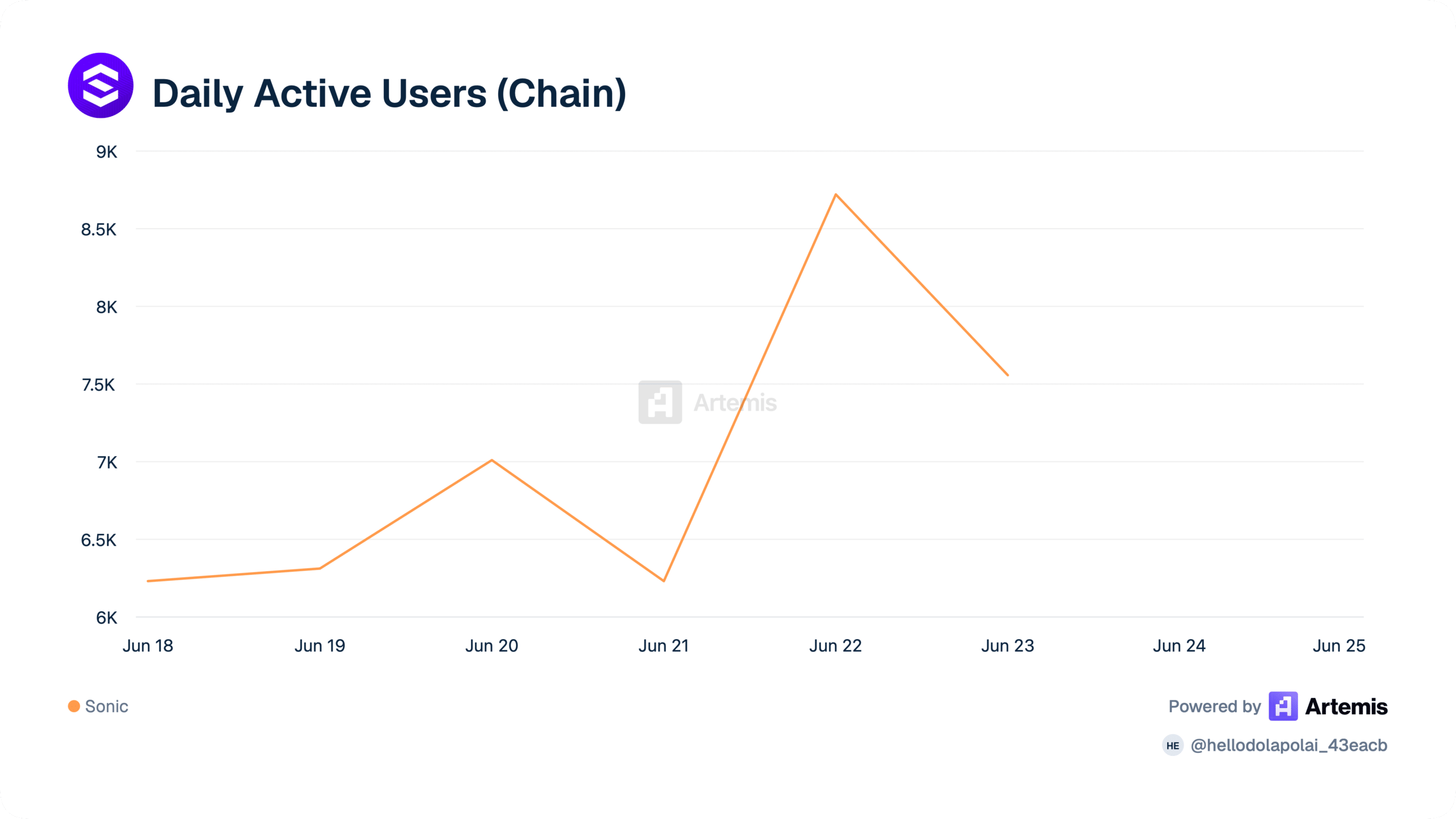
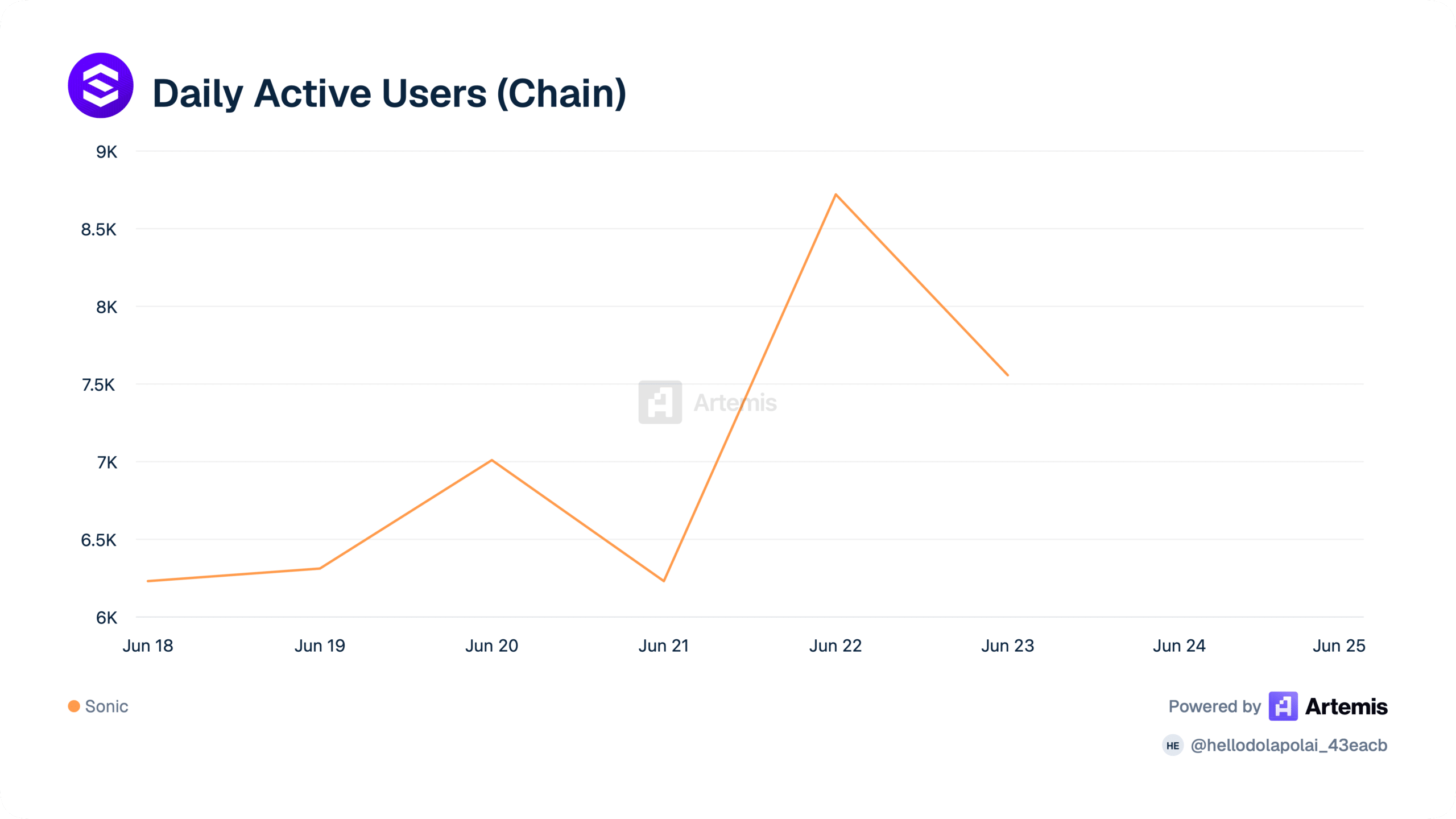
Source: Artemis

This kind of surge rarely happens in isolation and tends to pull broader chain activity higher with it. Sonic has followed that pattern closely with a matching jump in its transaction count.

Artemis data highlighted on-chain transactions at 228,000 too – A figure that underscores how active participants have remained across the network, despite the price weakness.

A build-up like this would normally signal price strength. And yet, the opposite may be playing out since S has dropped by 25% over the past 30 days. In fact, a closer look at the numbers might tie the recent rise in on-chain activity to selling, rather than to fresh demand.

Sonic’s on-chain activity is tracking outflows, not inflows

The uptick in on-chain activity can be correlated with capital leaving the network rather than flowing into it. This finding could reframe what the surge actually represents.

One of the clearest markers of this liquidity drain is total value locked (TVL). It declined over the very same period that users and transactions were climbing.

TVL measures how much capital sits deposited on a blockchain and often serves as a gauge of investor outlook, with inflows pointing to longer-term conviction and a greater willingness to hold, while outflows signal that short-term selling pressure could be building beneath the surface.
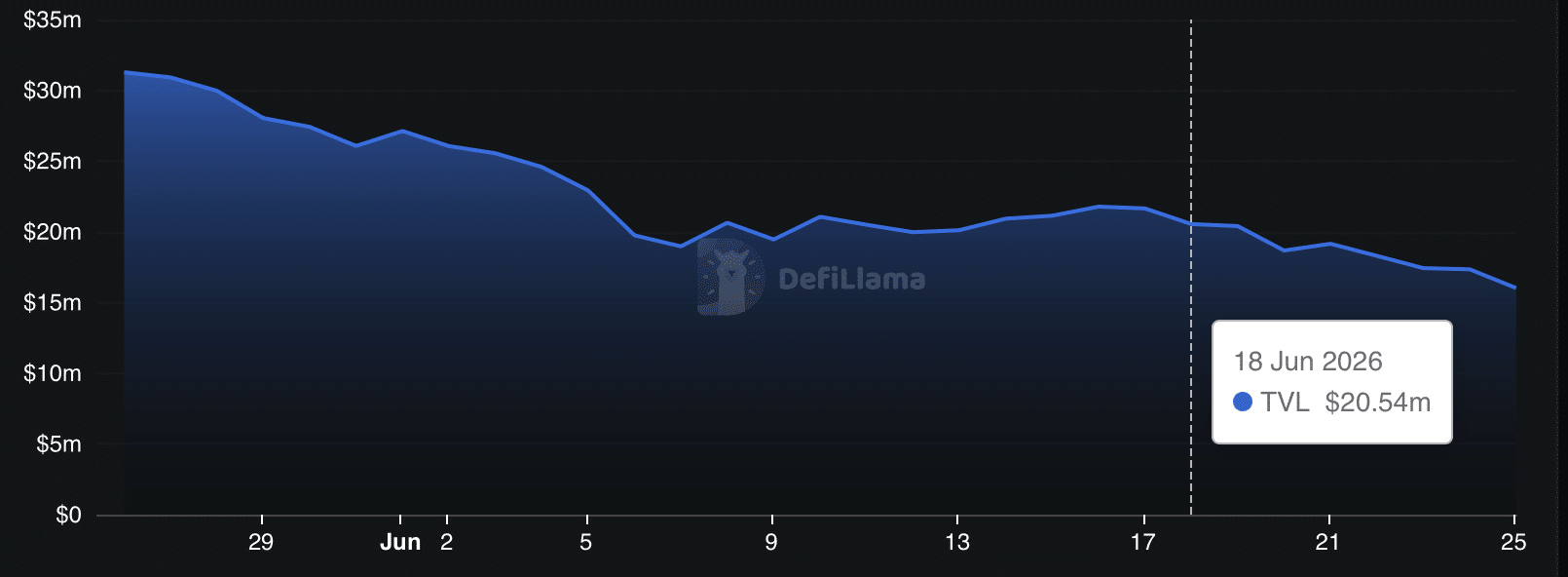
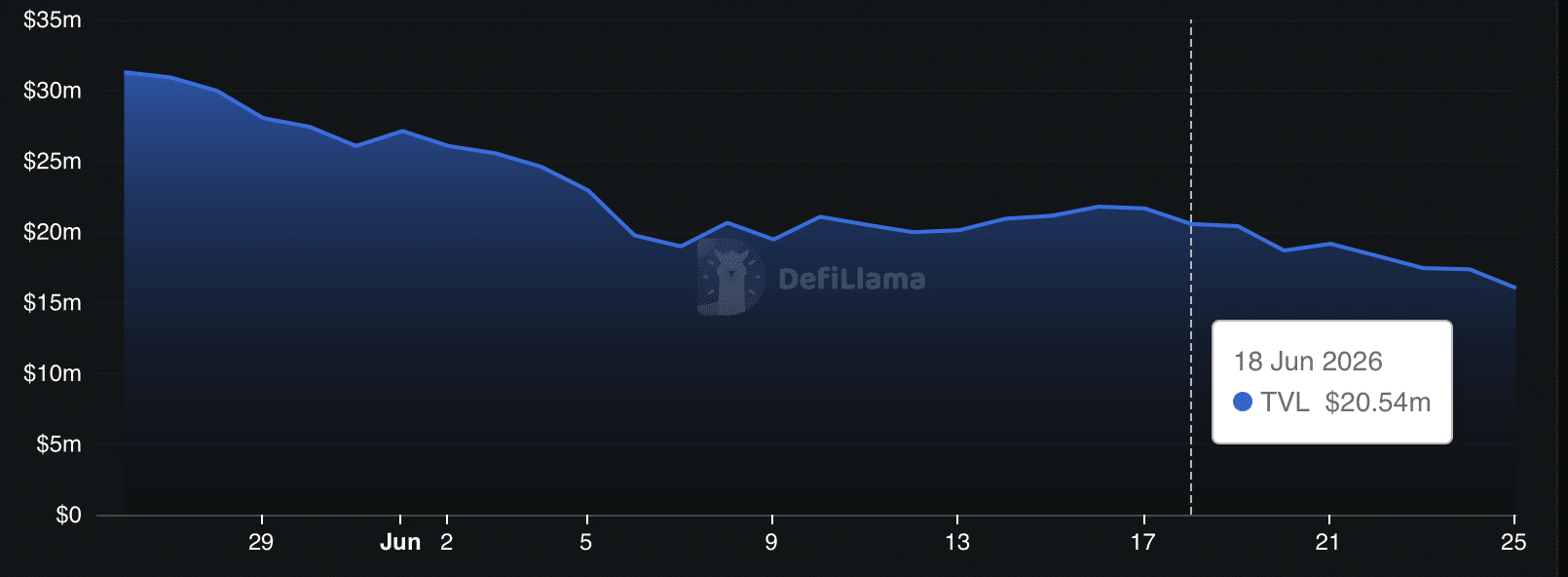
Source: DeFiLlama

At the time of writing, $4.47 million had left Sonic’s TVL, dragging it down to roughly $16.07 million. This, even as decentralized exchange (DEX) volume pushed it in the other direction.

DeFiLlama data also highlighted DEX volume surging to $3.27 million—its second-highest reading of the month and third-highest since March—while Sonic’s own trading volume sat around 51% higher on the day at $26.8 million.

A hike in volume set against a falling price points to selling momentum holding the upper hand. Traders may be ready to keep pressing in that direction for as long as volume stays elevated at press time levels.

Are buyers holding back?

Activity in the spot market, by contrast, has stayed largely muted, with little meaningful buying or selling moving through it.

Spot netflows for the week has nonetheless leaned supportive and could allude to buyers quietly accumulating, carrying a net inflow of roughly $20,000 on total buys of about $231,000 across the week. However, any meaningful rebound from here would demand that buying scale up far more sharply.

For now, buying pressure remains too thin to fuel a sustained upward move in the near term.


Final Summary

  • Sonic’s DAUs rose 23% and transactions topped 228,000, but TVL saw outflows.
  • Positive spot netflow hinted at light accumulation, too thin to absorb the selling, leaving S exposed to more downside.


Trending Cryptos

Related Questions

QAccording to the article, what is the main reason Sonic (S) price dropped 12% and may continue to decline?

AThe price drop and potential for further decline are attributed to on-chain activity surging due to capital outflows (evidenced by a decrease in Total Value Locked) rather than new demand, indicating underlying selling pressure despite increased user numbers and transactions.

QWhat two key on-chain metrics for Sonic showed significant growth recently, and by how much did Daily Active Users increase?

AThe two key metrics were Daily Active Users (DAU) and the volume of chain transactions. Daily Active Users increased by approximately 22.6% week-over-week, climbing from 6,200 to 7,600.

QHow does the article interpret the relationship between Sonic's rising DEX/on-chain volume and its falling price?

AThe article interprets the rise in trading volume (including DEX volume hitting $3.27M) concurrent with a falling price as a signal that selling momentum is dominant, suggesting traders are actively selling rather than buying.

QWhat does the change in Sonic's Total Value Locked (TVL) indicate about investor behavior according to the analysis?

AThe decrease in Total Value Locked (TVL) by $4.47 million to around $16.07 million indicates capital is leaving the network, signaling a build-up of short-term selling pressure and a lack of longer-term holding conviction among investors.

QDoes the article suggest buying pressure is currently strong enough to reverse Sonic's price trend? Why or why not?

ANo, the article suggests buying pressure is not strong enough. While spot netflows showed a slight positive inflow ($20k on ~$231k buys), this accumulation is described as 'too thin to absorb the selling' and insufficient to fuel a sustained upward price move in the near term.

Related Reads

Tornado Cash Suffers Another Governance Attack: A Fake Proposal Targets $23 Million Community Treasury

On June 25, 2026, a deceptive governance proposal (#67) appeared in the Tornado Cash DAO, masquerading as an upgrade to implement fee adjustments and token burns. Security researchers, including Sergey Shemyakov and Pascal Caversaccio, quickly identified it as malicious. The proposal's unverified code contained a hidden function designed to stealthily replace the protocol's legitimate governance address (0x5efda50f22d34F262c29268506C5Fa42cB56A1Ce) with an attacker-controlled address (0x5efda50f22d34f272c7077689d6abc42f15e285f). If passed, this would have granted the attacker control over the DAO's treasury, containing approximately $23 million in TORN tokens, and the ability to drain all relayers. The attacker's wallet (0xd4eca8c9242b9f9faa3cf19a78defc21dc97a925) was funded via the privacy protocol Railgun four days prior, obscuring the source. The community response was swift, with the proposal receiving 27,163 TORN votes against (100%) and 0 for, far below the 100,000 TORN quorum required for validity. It is set to expire on June 30. This incident marks the second major governance attack on Tornado Cash, following a May 2023 exploit that stole $2.17 million. It highlights persistent vulnerabilities in DAO structures where power derives from token ownership. The article advises users to follow security researchers, vote against unverified proposals, and delegate voting power. For developers, implementing timelocks—a delay between proposal approval and execution—is presented as a critical security measure to allow for community review and intervention.

Foresight News14m ago

Tornado Cash Suffers Another Governance Attack: A Fake Proposal Targets $23 Million Community Treasury

Foresight News14m ago

Stablecoins Becoming the Next Policy Challenge for the Fed's Walsh Version

Fed Governor Christopher Waller's speech at the June 22 conference on the U.S. dollar's international role signifies a notable policy shift: stablecoins like USDT and USDC are now being formally considered as potential channels for transmitting U.S. dollar liquidity globally. With their combined market cap surpassing $250 billion and high transaction volumes, these digital assets are moving from the periphery of crypto policy to the core of monetary system research. The key concern for policymakers is how stablecoin flows interact with traditional dollar infrastructure. Their growth could affect bank deposits, demand for short-term Treasury securities (like T-bills), and global access to dollars, depending on whether demand originates overseas or substitutes for domestic bank balances. Issuers' reserve management—holding assets in banks, money market funds, or Treasuries—links stablecoin activity directly to these core markets. The Fed's research agenda now examines whether stablecoins, by combining payment and balance-holding functions on digital rails, could complicate monetary policy implementation or transmit liquidity stress to banks. While current Treasury holdings by issuers are under 1% of the total market, their concentrated demand could marginally impact yields, especially during periods of stress. Consequently, stablecoins are evolving from mere crypto trading tools into a private-layer dollar transmission system with public policy implications, prompting closer regulatory scrutiny of their reserve robustness, redemption mechanisms, and systemic integration.

marsbit1h ago

Stablecoins Becoming the Next Policy Challenge for the Fed's Walsh Version

marsbit1h ago

Trading

Spot
Futures

Hot Articles

Discussions

Welcome to the HTX Community. Here, you can stay informed about the latest platform developments and gain access to professional market insights. Users' opinions on the price of S (S) are presented below.

活动图片