Analyst States Bitcoin Remains Within $61-68k Range

cryptonews.ruPublished on 2026-08-17Last updated on 2026-08-17

Abstract

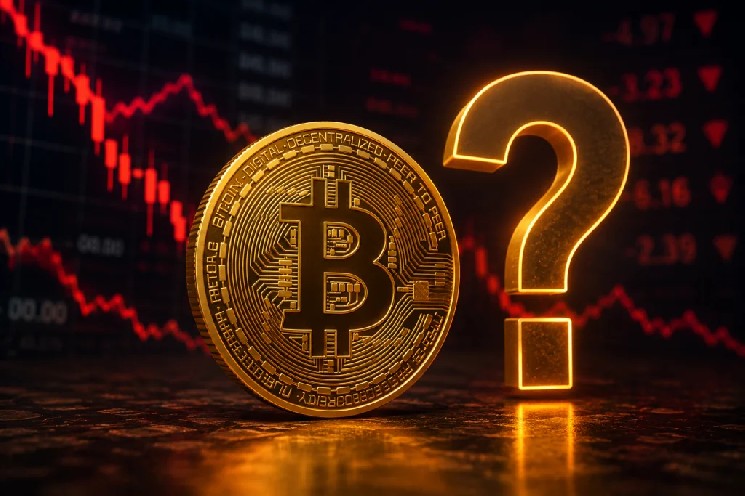
An analyst stated that Bitcoin is likely to remain within a trading range of $61,000 to $68,000. According to Kirill Komalenkov, director of strategic communications at Bitbanker, Bitcoin continues to trade sideways amidst declining market volatility. He attributes its current stability to high market liquidity, with volatility near three-year lows. Komalenkov warned that sustained low activity carries risks of a price decline, with potential tests of support at $62,300 and $61,600. He suggested that major market players might use the current situation to accumulate liquidity, meaning any initial breakout from the range could be a false move. The analyst expects this sideways movement to persist until the latter part of August. Key factors for determining future market direction include fund flows into Exchange-Traded Funds (ETFs) and trader activity. However, Komalenkov noted a potential negative scenario for the second half of August, where heightened geopolitical tensions or hawkish rhetoric from US monetary authorities could trigger a new decline. In such a case, Bitcoin could fall to a range of $45,000–$50,000 by early autumn, which might form a new base for a potential market recovery later in the season. Separately, a Russian deputy finance minister recently announced that non-qualified investors in Russia will soon be allowed to legally purchase Bitcoin, Ethereum, and popular stablecoins, with an annual limit of 300,000 rubles per intermediary.

Bitcoin continues to trade sideways amid decreasing volatility in the cryptocurrency market. In the near term, the digital asset may maintain movement within the $61-68k corridor, but a deeper correction is possible if the situation worsens. This was stated to Izvestia on August 17 by Kirill Komalenkov, Director of Strategic Communications at Bitbanker.

According to the expert, Bitcoin is currently in the $61-68k range due to high market liquidity. At the same time, volatility has approached its lowest levels in the past three years. With low activity persisting, risks of a decline in the price of the first cryptocurrency remain. In the near term, a test of the $62,300 and $61,600 levels is possible.

In the analyst's opinion, large market participants may use the current situation to gather liquidity from both sellers and buyers, so Bitcoin's first breakout beyond the current range could turn out to be a false move.

"Until the beginning of the third decade of August, Bitcoin's movement will likely remain within the price corridor from the lows to the $68k mark," Komalenkov noted.

The expert named fund flows into exchange-traded funds (ETFs) and trader activity as among the key indicators for the market's further direction. According to him, these factors will help assess the sustainability of the future trend.

At the same time, the probability of a negative scenario for the cryptocurrency market remains in the second half of August. Escalating geopolitical tensions or more hawkish rhetoric from US monetary authorities could trigger a new decline.

In such a case, Bitcoin could fall to the $45-50k range by early autumn. According to the analyst, this level could become a potential point for forming a new base for the subsequent market recovery in the second half of autumn.

On June 16, Deputy Finance Minister Ivan Chebeskov stated that non-qualified investors in Russia will soon be able to legally buy Bitcoin, Ether, and popular stablecoins. Furthermore, he clarified that a limit of 300,000 rubles per year through one intermediary has been proposed for "non-quals".

end-content

Trending Cryptos

Related Questions

QAccording to the analyst, what is the current trading range for Bitcoin?

AThe analyst states that Bitcoin is currently trading in the range of $61,000 to $68,000.

QWhat factors did the expert name as key indicators for the future movement of the cryptocurrency market?

AThe expert identified inflows into exchange-traded funds (ETFs) and trader activity as key indicators for assessing the sustainability of the future trend.

QWhat potential negative scenario for the crypto market is mentioned for the second half of August?

AThere is a probability of a negative scenario triggered by an escalation of geopolitical tensions or more hawkish rhetoric from US monetary authorities, which could provoke a new decline.

QWhat possible price range does the analyst suggest Bitcoin could fall to in early autumn under a negative scenario?

AUnder a negative scenario, Bitcoin could fall to the range of $45,000 to $50,000 in early autumn, which might form a new base for a subsequent market recovery in the second half of autumn.

QWhat recent regulatory news regarding cryptocurrency investment in Russia was mentioned in the article?

AThe article mentions that Deputy Finance Minister Ivan Chebeskov stated on June 16th that non-qualified investors in Russia will soon be able to legally buy Bitcoin, Ether, and popular stablecoins, with a proposed annual limit of 300,000 rubles per intermediary.

Related Reads

Tencent Reaps a Paper Profit of 50 Billion

A decade ago, China held no share in the global DRAM market. Today, Changxin Technology, after listing on the STAR Market, has become the most valuable A-share company. Its landmark IPO has generated historic returns for investors. Among them, Tencent, which invested approximately 2 billion RMB in 2022 through its entity Beijing Fengyi, now holds an estimated paper gain of around 50 billion RMB based on Changxin's current market valuation of approximately 4 trillion RMB. Alibaba also made significant bets. Its affiliates invested a total of roughly 7.6 billion RMB across two funding rounds in 2022 and 2025. Their combined stake is now worth an estimated 170 billion RMB—a paper profit surpassing Alibaba's entire net profit for fiscal year 2026. The shareholder registry reveals a who's who of Chinese capital. Major state-backed funds like the National Integrated Circuit Industry Investment Fund (Big Fund II) and Anhui provincial capital hold stakes worth hundreds of billions. Early and crucial support came from the Hefei municipal government, which played a foundational role in the company's establishment and growth. Strategic industrial investor GigaDevice, under the same leadership as Changxin, invested about 2.3 billion RMB, now worth roughly 53 billion. Home appliance giant Midea's 1 billion RMB investment has ballooned to an estimated 22 billion RMB. Virtually all major domestic financial institutions, venture capital, and private equity firms participated. However, the story also includes a notable exit: Country Garden's venture arm sold its stake for 2 billion RMB in late 2024 to address its own liquidity crisis. Those shares would be worth approximately 44 billion RMB at the IPO price, highlighting a stark contrast in timing between the downturn of the real estate cycle and the rise of the semiconductor sector.

marsbit4m ago

Tencent Reaps a Paper Profit of 50 Billion

marsbit4m ago

Calterah Races for the STAR Market: 31% Market Share, Over 900 Million in Losses, the Berkeley Mentor-Student Duo's Path to Breakthrough in Millimeter-Wave Radar

Calterah Microelectronics (Calterah), a Shanghai-based automotive chip company specializing in millimeter-wave radar chips, has filed for a listing on China's Sci-Tech Innovation Board (STAR Market), seeking to raise 3.49 billion yuan. Founded in 2014 by Dr. Chen Jiashu, a UC Berkeley PhD, and his professor Ali Niknejad, Calterah pioneered the use of CMOS technology for automotive-grade 77GHz radar chips, challenging the dominance of global giants like Texas Instruments. The company has grown rapidly, with revenue soaring from 206 million yuan in 2023 to 632 million yuan in 2025. It holds a 31.1% share in China's automotive millimeter-wave radar chip market and a 4% global share, with cumulative shipments exceeding 30 million chips for clients including BYD, Geely, NIO, Volvo, and Rivian. Despite strong market traction, Calterah faces significant financial challenges. It has reported cumulative net losses exceeding 900 million yuan over the past three and a half years, driven by massive R&D spending, which accounted for 147.75% of revenue in 2023. Operating cash flow remains negative, and the company relies heavily on external financing. Other risks include high customer and supplier concentration, with its top five distributors accounting for over 99% of revenue and overseas procurement exceeding 50%. Supply chain security is a concern due to reliance on foundries like TSMC. The proceeds from the IPO will fund R&D for high-performance radar chips, ultra-wideband (UWB) chips for applications like digital car keys, and a new technology center. Calterah aims to expand beyond automotive into industrial and consumer sectors. However, it faces intense competition, potential price wars, and the long, costly cycle of automotive-grade certification. Its path forward hinges on achieving profitability, maintaining technological leadership, and building a sustainable business model in a fiercely competitive global market.

marsbit4m ago

Calterah Races for the STAR Market: 31% Market Share, Over 900 Million in Losses, the Berkeley Mentor-Student Duo's Path to Breakthrough in Millimeter-Wave Radar

marsbit4m ago

Burning Through Billions, Market Cap Evaporates 200 Billion: SenseTime Suddenly Turns a Profit

Chinese AI giant SenseTime, once a star in the AI "Four Dragons," recently projected its first-ever profit for H1 2026, sparking a temporary stock surge. However, its current market cap of ~HK$64.6 billion remains over 80% below its peak of ~HK$300 billion in early 2022. The article analyzes SenseTime's dramatic fall from grace. It excelled in the "AI 1.0" era, dominating computer vision for applications like facial recognition and smart cities. However, it was disrupted by the "AI 2.0" generative AI revolution led by ChatGPT, which shifted focus from recognition to creation. Compounded by US sanctions, the death of its founder, a short-seller report, and a decline in its core smart city business, the company faced a perfect storm. Its workforce was cut by nearly 60%. To survive, SenseTime pivoted, actively "killing" its old self. It transitioned from project-based solutions to a generative AI and visual AI dual-engine model. Now, over 70% of its revenue comes from large language models, a more scalable, subscription-like business. Cost-control measures on expensive model training have also contributed to its path to profitability. Yet, significant challenges remain. The current AI race is an ecosystem battle dominated by giants like Microsoft/OpenAI, Google, and Chinese tech firms with integrated clouds, apps, and vast user bases. SenseTime, as an independent AI company, lacks such a super app or traffic gateway. The key question is whether it can build a sustainable moat based solely on model capability and industry deployment in this new competitive landscape.

marsbit8m ago

Burning Through Billions, Market Cap Evaporates 200 Billion: SenseTime Suddenly Turns a Profit

marsbit8m ago

Shanghai Sees a Semiconductor Equipment IPO Emerge, Led by Former Grace Semiconductor Employee

A Shanghai-based semiconductor equipment company, Mifee Technology, has filed for an IPO on the Shanghai Stock Exchange's STAR Market. The company specializes in developing and manufacturing Automatic Material Handling Systems (AMHS), a core automation system in semiconductor wafer fabrication that directly impacts production efficiency and yield. Mifee is one of the few domestic Chinese companies with proprietary AMHS technology, offering both hardware and software systems. While the global AMHS market is dominated by Japanese giants like Daifuku and Murata Machinery, which hold approximately 90% market share, Mifee has captured about 1.6% globally. The company's revenue has grown significantly, reaching 393 million yuan in 2025, and it achieved profitability that year with a net income of 60.45 million yuan, following losses in 2023 and 2024. Its revenue streams include sales of individual AMHS equipment and complete factory AMHS projects, with the latter starting to contribute revenue from 2024. The company faces risks including high customer concentration, with its top five clients accounting for over 90% of revenue in 2025, and significant fluctuations in gross margin, which was 48.97% in 2025 after dropping to 24.67% in 2024. Mifee is controlled by an 80s-born couple, Chairman/CEO Feng Miao and Deputy General Manager Na Ke, who previously worked at Shanghai Grace Semiconductor Manufacturing Co. The company plans to raise approximately 1.191 billion yuan from its IPO to fund production, R&D, overseas expansion, and working capital.

marsbit9m ago

Shanghai Sees a Semiconductor Equipment IPO Emerge, Led by Former Grace Semiconductor Employee

marsbit9m ago

Trading

Spot

Hot Articles

What is $BITCOIN

DIGITAL GOLD ($BITCOIN): A Comprehensive Analysis Introduction to DIGITAL GOLD ($BITCOIN) DIGITAL GOLD ($BITCOIN) is a blockchain-based project operating on the Solana network, which aims to combine the characteristics of traditional precious metals with the innovation of decentralized technologies. While it shares a name with Bitcoin, often referred to as “digital gold” due to its perception as a store of value, DIGITAL GOLD is a separate token designed to create a unique ecosystem within the Web3 landscape. Its goal is to position itself as a viable alternative digital asset, although specifics regarding its applications and functionalities are still developing. What is DIGITAL GOLD ($BITCOIN)? DIGITAL GOLD ($BITCOIN) is a cryptocurrency token explicitly designed for use on the Solana blockchain. In contrast to Bitcoin, which provides a widely recognized value storage role, this token appears to focus on broader applications and characteristics. Notable aspects include: Blockchain Infrastructure: The token is built on the Solana blockchain, known for its capacity to handle high-speed and low-cost transactions. Supply Dynamics: DIGITAL GOLD has a maximum supply capped at 100 quadrillion tokens (100P $BITCOIN), although details regarding its circulating supply are currently undisclosed. Utility: While precise functionalities are not explicitly outlined, there are indications that the token could be utilized for various applications, potentially involving decentralized applications (dApps) or asset tokenization strategies. Who is the Creator of DIGITAL GOLD ($BITCOIN)? At present, the identity of the creators and development team behind DIGITAL GOLD ($BITCOIN) remains unknown. This situation is typical among many innovative projects within the blockchain space, particularly those aligning with decentralized finance and meme coin phenomena. While such anonymity may foster a community-driven culture, it intensifies concerns about governance and accountability. Who are the Investors of DIGITAL GOLD ($BITCOIN)? The available information indicates that DIGITAL GOLD ($BITCOIN) does not have any known institutional backers or prominent venture capital investments. The project seems to operate on a peer-to-peer model focused on community support and adoption rather than traditional funding routes. Its activity and liquidity are primarily situated on decentralized exchanges (DEXs), such as PumpSwap, rather than established centralized trading platforms, further highlighting its grassroots approach. How DIGITAL GOLD ($BITCOIN) Works The operational mechanics of DIGITAL GOLD ($BITCOIN) can be elaborated on based on its blockchain design and network attributes: Consensus Mechanism: By leveraging Solana’s unique proof-of-history (PoH) combined with a proof-of-stake (PoS) model, the project ensures efficient transaction validation contributing to the network's high performance. Tokenomics: While specific deflationary mechanisms have not been extensively detailed, the vast maximum token supply implies that it may cater to microtransactions or niche use cases that are still to be defined. Interoperability: There exists the potential for integration with Solana’s broader ecosystem, including various decentralized finance (DeFi) platforms. However, the details regarding specific integrations remain unspecified. Timeline of Key Events Here is a timeline that highlights significant milestones concerning DIGITAL GOLD ($BITCOIN): 2023: The initial deployment of the token occurs on the Solana blockchain, marked by its contract address. 2024: DIGITAL GOLD gains visibility as it becomes available for trading on decentralized exchanges like PumpSwap, allowing users to trade it against SOL. 2025: The project witnesses sporadic trading activity and potential interest in community-led engagements, although no noteworthy partnerships or technical advancements have been documented as of yet. Critical Analysis Strengths Scalability: The underlying Solana infrastructure supports high transaction volumes, which could enhance the utility of $BITCOIN in various transaction scenarios. Accessibility: The potential low trading price per token could attract retail investors, facilitating wider participation due to fractional ownership opportunities. Risks Lack of Transparency: The absence of publicly known backers, developers, or an audit process may yield skepticism regarding the project's sustainability and trustworthiness. Market Volatility: The trading activity is heavily reliant on speculative behavior, which can result in significant price volatility and uncertainty for investors. Conclusion DIGITAL GOLD ($BITCOIN) emerges as an intriguing yet ambiguous project within the rapidly evolving Solana ecosystem. While it attempts to leverage the “digital gold” narrative, its departure from Bitcoin's established role as a store of value underscores the need for a clearer differentiation of its intended utility and governance structure. Future acceptance and adoption will likely depend on addressing the current opacity and defining its operational and economic strategies more explicitly. Note: This report encompasses synthesised information available as of October 2023, and developments may have transpired beyond the research period.

1.9k Total ViewsPublished 2025.05.13Updated 2025.05.13

What is $BITCOIN

Discussions

Welcome to the HTX Community. Here, you can stay informed about the latest platform developments and gain access to professional market insights. Users' opinions on the price of BTC (BTC) are presented below.

活动图片